Translate this page:
Summary
Physical Characteristics

 Panax ginseng is a PERENNIAL growing to 0.8 m (2ft 7in) by 0.7 m (2ft 4in).
See above for USDA hardiness. It is hardy to UK zone 6. The species is hermaphrodite (has both male and female organs).
Suitable for: light (sandy), medium (loamy) and heavy (clay) soils. Suitable pH: mildly acid, neutral and basic (mildly alkaline) soils. It can grow in full shade (deep woodland) or semi-shade (light woodland). It prefers moist soil.
UK Hardiness Map
US Hardiness Map
Synonyms
Aralia ginseng. Panax chin-seng. Panax verus.
Plant Habitats
Woodland Garden Shady Edge; not Deep Shade;
Edible Uses
Edible Parts: Root
Edible Uses: Tea
Root - chewed. This probably refers to its medicinal uses. A tea is made from the root.
References More on Edible Uses
Medicinal Uses
Plants For A Future can not take any responsibility for any adverse effects from the use of plants. Always seek advice from a professional before using a plant medicinally.
Adaptogen Antianxiety Anticholesterolemic Appetizer Emetic Expectorant Hypoglycaemic Nervine
Tonic
Ginseng has a history of herbal use going back over 5,000 years[238]. It is one of the most highly regarded of herbal medicines in the Orient, where it has gained an almost magical reputation for being able to promote health, general body vigour and also to prolong life[218]. The root is adaptogen, alterative, carminative, demulcent, emetic, expectorant, stimulant and tonic[165, 176, 178, 218]. It both stimulates and relaxes the nervous system, encourages the secretion of hormones, improves stamina, lowers blood sugar and cholesterol levels and increases resistance to disease[238]. It is used internally in the treatment of debility associated with old age or illness, lack of appetite, insomnia, stress, shock and chronic illness[238]. Ginseng is not normally prescribed for pregnant women, or for patients under the age of 40, or those with depression, acute anxiety or acute inflammatory disease[238]. It is normally only taken for a period of 3 weeks[238]. Excess can cause headaches, restlessness, raised blood pressure and other side effects, especially if it is taken with caffeine, alcohol, turnips and bitter or spicy foods[238]. The roots are harvested in the autumn, preferably from plants 6 - 7 years old, and can be used fresh or dried[238]. A dose of 10ug/ml of ginseng saponins has been shown to be significantly radio-protective when it is administered prior to gamma-irradiation[218]. The leaf is emetic and expectorant[218]. The German Commission E Monographs, a therapeutic guide to herbal medicine, approve Panax ginseng for lack of stamina (see [302] for critics of commission E).
References More on Medicinal Uses
The Bookshop: Edible Plant Books
Our Latest books on Perennial Plants For Food Forests and Permaculture Gardens in paperback or digital formats.

Edible Tropical Plants
Food Forest Plants for Hotter Conditions: 250+ Plants For Tropical Food Forests & Permaculture Gardens.
More

Edible Temperate Plants
Plants for Your Food Forest: 500 Plants for Temperate Food Forests & Permaculture Gardens.
More

More Books
PFAF have eight books available in paperback and digital formats. Browse the shop for more information.
Shop Now
Other Uses
References More on Other Uses
Cultivation details
Requires a moist humus rich soil in a shady position in a woodland[200]. Ginseng is widely cultivated and also collected from the wild in the Orient for its root which is commonly used as a medicine[178]. The root is prepared in a number of different ways, including by steaming it for 4 hours in wicker baskets over boiling water[200].
References Carbon Farming Information and Carbon Sequestration Information
Temperature Converter
Type a value in the Celsius field to convert the value to Fahrenheit:
Fahrenheit:
The PFAF Bookshop
Plants For A Future have a number of books available in paperback and digital form. Book titles include Edible Plants, Edible Perennials, Edible Trees,Edible Shrubs, Woodland Gardening, and Temperate Food Forest Plants. Our new book is Food Forest Plants For Hotter Conditions (Tropical and Sub-Tropical).
Shop Now
Plant Propagation
Seed - sow in a shady position in a cold frame preferably as soon as it is ripe, otherwise as soon as the seed is obtained. It can be very slow and erratic to germinate. Prick out the seedlings into individual pots when they are large enough to handle and grow them on in a shady position in the greenhouse or frame for at least their first winter. Make sure the pots are deep enough to accommodate the roots. Plant out into their permanent positions in late summer. Division in spring.
Other Names
If available other names are mentioned here
Native Range
TEMPERATE ASIA: Russian Federation (Primorye), China (Heilongjiang Sheng (east), Jilin Sheng (east), Liaoning Sheng (east)), Korea, North
Weed Potential
Right plant wrong place. We are currently updating this section.
Please note that a plant may be invasive in one area but may not in your area so it's worth checking.
Conservation Status
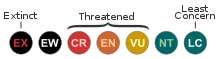
IUCN Red List of Threatened Plants Status :
Growth: S = slow M = medium F = fast. Soil: L = light (sandy) M = medium H = heavy (clay). pH: A = acid N = neutral B = basic (alkaline). Shade: F = full shade S = semi-shade N = no shade. Moisture: D = dry M = Moist We = wet Wa = water.
Now available:
Food Forest Plants for Mediterranean Conditions
350+ Perennial Plants For Mediterranean and Drier Food Forests and Permaculture Gardens.
[Paperback and eBook]
This is the third in Plants For A Future's series of plant guides for food forests tailored to
specific climate zones. Following volumes on temperate and tropical ecosystems, this book focuses
on species suited to Mediterranean conditions—regions with hot, dry summers and cool, wet winters,
often facing the added challenge of climate change.
Read More
Expert comment
Author
C.A.Mey.
Botanical References
200
Links / References
For a list of references used on this page please go here
Readers comment