 |
|
http://commons.wikimedia.org/wiki/File:92_Nepeta_cataria.jpg |
 |
| http://commons.wikimedia.org/wiki/User:Raghith |
Translate this page:
Summary
Physical Characteristics

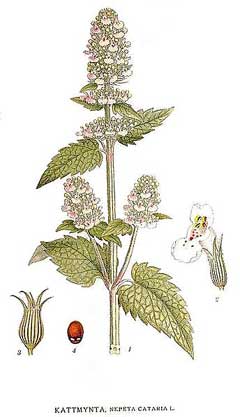
 Nepeta cataria is a PERENNIAL growing to 1 m (3ft 3in) by 0.6 m (2ft).
See above for USDA hardiness. It is hardy to UK zone 3 and is not frost tender. It is in flower from July to November, and the seeds ripen from September to October. The species is hermaphrodite (has both male and female organs) and is pollinated by Bees.
It is noted for attracting wildlife.
Suitable for: light (sandy) and medium (loamy) soils and prefers well-drained soil. Suitable pH: mildly acid, neutral and basic (mildly alkaline) soils and can grow in very alkaline soils.
It cannot grow in the shade. It prefers dry or moist soil.
UK Hardiness Map
US Hardiness Map
Synonyms
Cataria vulgaris. Calamintha albiflora. Glechoma cataria. Nepeta mollis.
Plant Habitats
Hedgerow; Cultivated Beds;
Edible Uses
Edible Parts: Leaves
Edible Uses: Condiment Tea
Young leaves - raw[7, 20]. A mint-like flavour, they make an aromatic flavouring in salads[7, K]. Older leaves are used as a flavouring in cooked foods[2, 27, 105]. They can be used fresh or dried to make an aromatic herb tea[21, 105, 183]. The tea should be infused in a closed container in order to preserve the essential oils, boiling is said to spoil it[218].
References More on Edible Uses
Medicinal Uses
Plants For A Future can not take any responsibility for any adverse effects from the use of plants. Always seek advice from a professional before using a plant medicinally.
Antianxiety Antispasmodic Antitussive Astringent Carminative Diaphoretic Emmenagogue Nervine
Refrigerant Sedative Stimulant Stomachic Tonic
Catmint has a long history of use as a household herbal remedy, being employed especially in treating disorders of the digestive system and, as it stimulates sweating, it is useful in reducing fevers[254]. The herbs pleasant taste and gentle action makes it suitable for treating colds, flu and fevers in children. It is more effective when used in conjunction with elder flower (Sambucus nigra)[254]. The leaves and flowering tops are strongly antispasmodic, antitussive, astringent, carminative, diaphoretic, slightly emmenagogue, refrigerant, sedative, slightly stimulant, stomachic and tonic[4, 7, 9, 14, 21, 165, 218, 238]. The flowering stems are harvested in August when the plant is in full flower, they are dried and stored for use as required[4]. An infusion produces free perspiration, it is considered to be beneficial in the treatment of fevers and colds[4]. It is also very useful in the treatment of restlessness and nervousness, being very useful as a mild nervine for children[4]. A tea made from the leaves can also be used[213]. The infusion is also applied externally to bruises, especially black eyes[245].
References More on Medicinal Uses
The Bookshop: Edible Plant Books
Our Latest books on Perennial Plants For Food Forests and Permaculture Gardens in paperback or digital formats.

Edible Tropical Plants
Food Forest Plants for Hotter Conditions: 250+ Plants For Tropical Food Forests & Permaculture Gardens.
More

Edible Temperate Plants
Plants for Your Food Forest: 500 Plants for Temperate Food Forests & Permaculture Gardens.
More

More Books
PFAF have eight books available in paperback and digital formats. Browse the shop for more information.
Shop Now
Other Uses
Essential Herbicide Pot-pourri Repellent
The plant is said to deter insects such as ants and flea beetles[14, 20, 201] as well as rats and mice[4, 200, 201]. (The idea behind it being a rat repellent is probably based on the plants attraction to cats, see notes above.) A strong infusion can be used to repel fleas from carpets or the fur of animals[201]. An extract from the leaves (called nepetalactone) has herbicidal and insect repellent properties[222]. The freshly harvested flowering tops contain 0.3 - 1% essential oil by distillation[218]. It is mainly used for medicinal purposes[218]. The dried leaves retain their fragrance and can be used in pot-pourri[245].
Special Uses
Attracts Wildlife Scented Plants
References More on Other Uses
Cultivation details
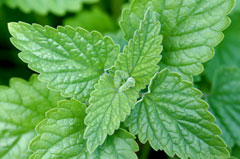
Easily grown in a light sandy soil in a sunny position[200]. Succeeds in heavier soils if the drainage is very good. Plants are hardy to about -25°c[187]. Catmint emits a scent that is irresistible to many cats, who will then avidly attack the plant[4, 7, 20, 46, 200]. The smell is said to be similar to certain cat hormones and is more effective with male cats. Quite often a cat will completely destroy even a fairly large plant, small plants especially might need protection until well established[K]. Sometimes grown in the herb garden, there are some named varieties[183]. 'Citriodora' has lemon-scented leaves that are more attractive to people and less attractive to cats[183, 187]. If the plants are cut back hard when they are flowering a second crop of leaves will be produced[238]. Members of this genus are rarely if ever troubled by browsing deer or rabbits[233]. Catmint is a good companion plant to grow in the garden[238]. It is said to repel various cabbage pests, aphis (including peach aphis), flea beetles, cucumber beetles, squash bugs and ants from plants they grow near to[238]. The flowers are very attractive to bees[108].
References Carbon Farming Information and Carbon Sequestration Information
Temperature Converter
Type a value in the Celsius field to convert the value to Fahrenheit:
Fahrenheit:
The PFAF Bookshop
Plants For A Future have a number of books available in paperback and digital form. Book titles include Edible Plants, Edible Perennials, Edible Trees,Edible Shrubs, Woodland Gardening, and Temperate Food Forest Plants. Our new book is Food Forest Plants For Hotter Conditions (Tropical and Sub-Tropical).
Shop Now
Plant Propagation
Seed - best sown as soon as it is ripe in a cold frame in the autumn[200]. The germination of spring sown seed can be erratic[200], it is best sown in a cold frame. Prick out the seedlings into individual pots when they are large enough to handle and plant them out into their permanent positions in the summer. The seed remains viable for about 5 years[4]. A fast-growing plant, the seedlings can reach flowering size in their first year[238]. If you have sufficient freshly ripe seed then it is well worth trying a sowing outdoors in situ in the autumn. Division in spring or autumn[200]. Very easy, large divisions can be planted out direct into their permanent positions. We have found that it is better to pot up the smaller divisions and grow them on in light shade in a cold frame until they are well established before planting them out in late spring or early summer. Basal cuttings in late spring or early summer. Harvest the shoots with plenty of underground stem when they are about 8 - 10cm above the ground. Pot them up into individual pots and keep them in light shade in a cold frame or greenhouse until they are rooting well. Plant them out in the summer.
Other Names
If available other names are mentioned here
Native Range
TEMPERATE ASIA: Afghanistan, Iran, Iraq, Lebanon, Turkey, Russian Federation-Ciscaucasia (Ciscaucasia), Armenia, Azerbaijan, Georgia, Russian Federation (Dagestan), Kazakhstan, Kyrgyzstan, Tajikistan, Turkmenistan TROPICAL ASIA: India (north), Nepal, Pakistan EUROPE: Hungary, Russian Federation-European part (European part (south)), Moldova, Ukraine (incl. Krym), Former Yugoslavia, Albania, Bulgaria, Greece, Italy (incl. Sicily), Romania, Spain (incl. Baleares), France (incl. Corsica)
Weed Potential
Right plant wrong place. We are currently updating this section.
Please note that a plant may be invasive in one area but may not in your area so it's worth checking.
Conservation Status
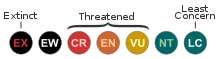
IUCN Red List of Threatened Plants Status :
Growth: S = slow M = medium F = fast. Soil: L = light (sandy) M = medium H = heavy (clay). pH: A = acid N = neutral B = basic (alkaline). Shade: F = full shade S = semi-shade N = no shade. Moisture: D = dry M = Moist We = wet Wa = water.
Now available:
Food Forest Plants for Mediterranean Conditions
350+ Perennial Plants For Mediterranean and Drier Food Forests and Permaculture Gardens.
[Paperback and eBook]
This is the third in Plants For A Future's series of plant guides for food forests tailored to
specific climate zones. Following volumes on temperate and tropical ecosystems, this book focuses
on species suited to Mediterranean conditions—regions with hot, dry summers and cool, wet winters,
often facing the added challenge of climate change.
Read More
Expert comment
Author
L.
Botanical References
17200
Links / References
For a list of references used on this page please go here
Readers comment