Translate this page:
Summary
Bloom Color: White.
Main Bloom Time: Late spring, Mid spring. Form: Spreading or horizontal.
Physical Characteristics

 Convallaria majalis is a PERENNIAL growing to 0.2 m (0ft 8in) by 0.3 m (1ft) at a fast rate.
See above for USDA hardiness. It is hardy to UK zone 3 and is not frost tender. It is in flower from May to June, and the seeds ripen in October. The species is hermaphrodite (has both male and female organs) and is pollinated by Bees, flies. The plant is self-fertile.
It is noted for attracting wildlife.
Suitable for: light (sandy), medium (loamy) and heavy (clay) soils and can grow in heavy clay and nutritionally poor soils. Suitable pH: mildly acid, neutral and basic (mildly alkaline) soils. It can grow in full shade (deep woodland) semi-shade (light woodland) or no shade. It prefers dry moist or wet soil.
UK Hardiness Map
US Hardiness Map
Synonyms
Convallaria bracteata. Convallaria fragrans. Convallaria latifolia. Polygonatum majale.
Plant Habitats
Woodland Garden Sunny Edge; Dappled Shade; Shady Edge; not Deep Shade; Ground Cover; Bog Garden;
Edible Uses
A wine can be prepared from the flowers, mixed with raisins[183].
References More on Edible Uses
Medicinal Uses
Plants For A Future can not take any responsibility for any adverse effects from the use of plants. Always seek advice from a professional before using a plant medicinally.
Antianxiety Antiarrhythmic Anticonvulsant Antispasmodic Cardiotonic Diuretic Emetic Febrifuge
Laxative Poultice Sedative
Lily of the valley has a long and proven reputation in herbal medicine in the treatment of heart complaints. It contains the glycosides convallarin and convallamarin which are powerful cardiac tonics and diuretics and are also used in allopathic medicine[244]. However, because of the plants potential toxic properties it should never be used without expert advice[9]. All parts of the plant are antispasmodic, cardiotonic, strongly diuretic, emetic, febrifuge, laxative and sedative[4, 7, 9, 21, 46, 165, 222, 254]. The plant is usually harvested when in flower and can be dried for later use[4], though it is stronger acting when fresh[238]. The inflorescence is said to be the most active medicinally and is often harvested separately[4]. An infusion of the flowers and roots is a digitalis substitute (obtained from Digitalis species), though less powerful, that is especially useful in the treatment of valvula heart diseases, cardiac debility, dropsy and chronic lung problems such as emphysema[4, 222, 254]. Lily of the valley encourages the heart to beat more slowly, regularly and efficiently, at the same time it is strongly diuretic, reducing blood volume and lowering blood pressure[254]. Its effect is less cumulative than digitalis which makes it safer for elderly patients[238]. It is often prescribed combined with the fruits of Crataegus spp[238]. An ointment made from the roots is used in the treatment of burns and to prevent scar tissue[222]. The German Commission E Monographs, a therapeutic guide to herbal medicine, approve Convallaria majalis : Lily Of The Valley for arrhythmia, cardiac insufficiency, nervous heart complaints (see [302] for critics of commission E).
References More on Medicinal Uses
The Bookshop: Edible Plant Books
Our Latest books on Perennial Plants For Food Forests and Permaculture Gardens in paperback or digital formats.

Edible Tropical Plants
Food Forest Plants for Hotter Conditions: 250+ Plants For Tropical Food Forests & Permaculture Gardens.
More

Edible Temperate Plants
Plants for Your Food Forest: 500 Plants for Temperate Food Forests & Permaculture Gardens.
More

More Books
PFAF have eight books available in paperback and digital formats. Browse the shop for more information.
Shop Now
Other Uses
Dye Essential
An essential oil is obtained from the flowers[46, 171]. It is used in perfumery and for snuff[238]. A green dye is obtained from the leaves in spring[13, 14, 115]. A yellow dye is obtained from the leaves in autumn[14]. Plants can be grown as a ground cover in woodland shade or in a shrubbery[200, 208]. As a garden ornamental it has gained the Royal Horticultural Society's Award of Garden Merit.
Special Uses
Attracts Wildlife Ground cover Scented Plants
References More on Other Uses
Cultivation details
Landscape Uses:Border, Container, Erosion control, Ground cover, Massing, Specimen, Woodland. garden Succeeds in almost any situation, including the dense dry shade of large trees[1, 4, 24]. Prefers a position in semi-shade in a moderately fertile well-drained moist woodland soil[200, 208]. Grows well in heavy clay, sand or chalky soils[208]. Dislikes pure clay soils and boggy sites[233]. Plants are hardy to -20°c or lower[200]. A polymorphic species[200]. It is a very ornamental plant, though it can become very invasive once it is established[28]. Plants can take a couple of years to become established[208]. There are several named varieties, selected for their ornamental value[233]. The flowers are sweetly scented[245]. Lily of the valley is occasionally cultivated as a medicinal plant for herbalists and allopaths. Plants seem to be immune to the predations of rabbits[233]. A good bee plant[4]. Special Features:
Not North American native, Naturalizing, All or parts of this plant are poisonous, Suitable for cut flowers, Fragrant flowers.
References Carbon Farming Information and Carbon Sequestration Information
Temperature Converter
Type a value in the Celsius field to convert the value to Fahrenheit:
Fahrenheit:
The PFAF Bookshop
Plants For A Future have a number of books available in paperback and digital form. Book titles include Edible Plants, Edible Perennials, Edible Trees,Edible Shrubs, Woodland Gardening, and Temperate Food Forest Plants. Our new book is Food Forest Plants For Hotter Conditions (Tropical and Sub-Tropical).
Shop Now
Plant Propagation
Seed - best sown as soon as it is ripe, otherwise in late winter, in a cold frame[164]. Germination, particularly of stored seed can be very slow, taking 2 - 12 months or more at 15°c[164]. Sow the seed thinly so that the seedlings can be allowed to grow on undisturbed in the pot for their first year. Apply a liquid feed during the growing season to ensure that the seedlings are well fed. Divide the young plants into individual pots when they die down in late summer and grow them on in pots in a shady position in a cold frame for at least another year before planting them out into their permanent positions when they are dormant[K]. Division in September[111]. Very easy, larger clumps can be replanted direct into their permanent positions, though it is best to pot up smaller clumps and grow them on in a cold frame until they are rooting well. Plant them out in the spring.
Other Names
If available other names are mentioned here
European lily of the valley,
lily-of-the-valley
Native Range
TEMPERATE ASIA: Russian Federation-Ciscaucasia (Ciscaucasia), Armenia, Azerbaijan, Georgia, Russian Federation (Dagestan), Russian Federation (Chita, Irkutsk, Krasnoyarsk (south)), Mongolia (east), Russian Federation (Habarovskij kraj, Primorye, Amur, Sakhalin), China (Gansu Sheng, Hebei Sheng, Heilongjiang Sheng, Henan Sheng, Hunan Sheng, Jilin Sheng, Liaoning Sheng, Nei Mongol Zizhiqu, Ningxia Huizi Zizhiqu, Shaanxi Sheng, Shandong Sheng, Shanxi Sheng, Zhejiang Sheng), Korea, Japan (Hokkaidô, Honshu, Kyushu) TROPICAL ASIA: Myanmar (north) NORTHERN AMERICA: United States (West Virginia, Georgia (north), Kentucky (southeast), North Carolina (west), South Carolina (northwest), Tennessee (east), Virginia (west)) EUROPE: Denmark, Finland, United Kingdom, Norway, Sweden, Czechoslovakia, Austria, Belgium, Germany, Hungary, Netherlands, Poland, Russian Federation (European part), Belarus, Moldova, Russian Federation (Astrakhan, Saratov, Volgogradskaja oblast), Ukraine (incl. Krym), Former Yugoslavia, Albania, Bulgaria, Greece, Italy, Romania, Spain, France
Weed Potential
Right plant wrong place. We are currently updating this section.
Please note that a plant may be invasive in one area but may not
in your area so it's worth checking.
This plant can be weedy or invasive.
Conservation Status
IUCN Red List of Threatened Plants Status : This taxon has not yet been assessed.
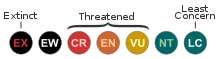
IUCN Red List
| Related Plants
|
| Latin Name | Common Name | Habit | Height | Hardiness | Growth | Soil | Shade | Moisture | Edible | Medicinal | Other |
| Aspidistra elatior | Aspidistra, Cast Iron Plant | Perennial | 0.6 |
7-11
| S | LMH | FS | DM | 0 | 2 | 3 |
| Clintonia borealis | Bluebeard | Perennial | 0.3 |
3-7
| | LM | FS | M | 2 | 1 | 2 |
| Clintonia udensis | | Perennial | 0.3 |
3-7
| | LM | FS | M | 2 | 0 | |
| Clintonia umbellulata | Speckled Wood Lily, White clintonia | Perennial | 0.2 |
4-8
| | LM | FS | M | 2 | 0 | |
| Convallaria keiskei | Lily Of The Valley | Perennial | 0.3 |
3-7
| | LMH | FSN | DMWe | 1 | 0 | 2 |
| Maianthemum canadense | Canada Beadruby, Canada mayflower | Perennial | 0.1 |
3-7
| F | LMH | FS | M | 1 | 1 | 2 |
| Maianthemum dilatatum | Wild Lily Of The Valley, False lily of the valley | Perennial | 0.2 |
3-7
| | LMH | FS | M | 2 | 1 | |
| Ophiopogon japonicus | Snake's Beard, Dwarf lilyturf, Mondo Grass, Monkey Grass, Dwarf Lilyturf | Perennial | 0.3 |
7-11
| S | LM | SN | MWeWa | 2 | 3 | 2 |
| Polygonatum biflorum | Small Solomon's Seal | Perennial | 1.0 |
3-7
| | LMH | FS | M | 2 | 1 | 2 |
| Polygonatum cirrhifolium | | Perennial | 1.2 |
-
| | LMH | FS | M | 2 | 2 | |
| Polygonatum commutatum | King Solomon's Seal, Smooth Solomon's seal | Perennial | 2.0 |
4-8
| | LMH | FS | M | 2 | 1 | 1 |
| Polygonatum cyrtonema | | Perennial | 0.0 |
-
| | LMH | FS | M | 0 | 2 | |
| Polygonatum falcatum | | Perennial | 0.6 |
4-8
| | LMH | FS | DM | 2 | 1 | 0 |
| Polygonatum humile | | Perennial | 0.3 |
4-8
| | LMH | FS | M | 2 | 1 | |
| Polygonatum inflatum | | Perennial | 0.6 |
-
| | LMH | FS | M | 2 | 1 | |
| Polygonatum involucratum | | Perennial | 0.3 |
-
| | LMH | FS | M | 2 | 0 | |
| Polygonatum kingianum | | Perennial | 2.0 |
-
| | LMH | FS | M | 0 | 2 | |
| Polygonatum lasianthum | | Perennial | 0.6 |
-
| | LMH | FS | M | 2 | 0 | |
| Polygonatum macropodum | | Perennial | 1.0 |
-
| | LMH | FS | M | 2 | 1 | |
| Polygonatum maximowiczii | | Perennial | 1.0 |
-
| | LMH | FS | M | 2 | 0 | |
| Polygonatum multiflorum | Solomon's Seal, Eurasian Solomon's seal | Perennial | 1.2 |
4-8
| | LMH | FS | DM | 2 | 3 | 3 |
| Polygonatum odoratum | Solomon's Seal | Perennial | 0.9 |
4-8
| M | LMH | FS | DM | 2 | 3 | |
| Polygonatum odoratum thunbergii | | Perennial | 0.5 |
4-8
| | LMH | FS | M | 2 | 0 | |
| Polygonatum pubescens | Hairy Solomon's Seal | Perennial | 1.0 |
3-7
| | LMH | FS | M | 2 | 1 | |
| Polygonatum sibiricum | Huang Jing | Perennial | 1.0 |
3-7
| | LMH | FS | M | 2 | 2 | 1 |
| Polygonatum stenanthum | | Perennial | 1.2 |
6-9
| | LMH | FS | M | 2 | 0 | |
| Polygonatum verticillatum | Whorled Solomon's Seal | Perennial | 1.2 |
4-8
| | LMH | FS | M | 2 | 0 | |
| Reineckia carnea | | Perennial | 0.1 |
6-9
| | LMH | FS | M | 0 | 1 | 3 |
| Rohdea japonica | | Perennial | 0.3 |
6-9
| | LMH | S | M | 0 | 2 | 1 |
|
|
Growth: S = slow M = medium F = fast. Soil: L = light (sandy) M = medium H = heavy (clay). pH: A = acid N = neutral B = basic (alkaline). Shade: F = full shade S = semi-shade N = no shade. Moisture: D = dry M = Moist We = wet Wa = water.
Now available:
Food Forest Plants for Mediterranean Conditions
350+ Perennial Plants For Mediterranean and Drier Food Forests and Permaculture Gardens.
[Paperback and eBook]
This is the third in Plants For A Future's series of plant guides for food forests tailored to
specific climate zones. Following volumes on temperate and tropical ecosystems, this book focuses
on species suited to Mediterranean conditions—regions with hot, dry summers and cool, wet winters,
often facing the added challenge of climate change.
Read More
Expert comment
Author
L.
Botanical References
17200
Links / References
For a list of references used on this page please go here
Readers comment