 |
|
http://www.flickr.com/photos/69024001@N00 |
 |
| http://de.wikipedia.org/wiki/Benutzer:Michael_w |
Translate this page:
Summary
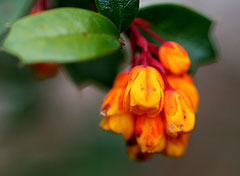
Bloom Color: Orange, Yellow. Main Bloom Time: Late spring, Mid spring. Form: Spreading or horizontal, Upright or erect. Barberries are dense, neat-growing, medium to large deciduous and evergreen shrubs. Native species exist in many areas, including Europe and North America. Deciduous forms often have spectacular autumn leaf colour and berries. Barberries will grow in sun or light shade but will fruit better in full sun and not flower in deep shade. Ornamental leaves, yellow flowers, and attractive berries make them popular garden plants. The dense and spiny growth habit makes them excellent hedges and barriers and shelter for wildlife. Many species have pleasant edible fruit that is eaten raw or cooked.
Physical Characteristics

 Berberis darwinii is an evergreen Shrub growing to 3 m (9ft) by 3.5 m (11ft) at a medium rate.
See above for USDA hardiness. It is hardy to UK zone 7 and is not frost tender. It is in leaf all year, in flower from April to May, and the seeds ripen from July to August. The species is hermaphrodite (has both male and female organs) and is pollinated by Insects. The plant is self-fertile.
It is noted for attracting wildlife.
Suitable for: light (sandy), medium (loamy) and heavy (clay) soils and can grow in heavy clay and nutritionally poor soils. Suitable pH: mildly acid, neutral and basic (mildly alkaline) soils and can grow in very acid soils.
It can grow in semi-shade (light woodland) or no shade. It prefers moist soil. The plant can tolerate maritime exposure.
UK Hardiness Map
US Hardiness Map
Synonyms
Plant Habitats
Woodland Garden Dappled Shade; Shady Edge; Hedge;
Edible Uses
Edible Parts: Fruit
Edible Uses:
Fruit - raw or cooked and used in preserves[2, 3, 105, 183]. An acid but very pleasant flavour, children seem particularly fond of the fruit[2, K]. When fully ripe, the fruit loses most of its acidity and makes very pleasant eating[K]. Unfortunately there is a lot of seed compared to the amount of flesh and this does detract somewhat from the pleasure of eating it[K]. The fruit goes very well raw in a muesli or cooked in a porridge[K]. The fruits are about 7mm long[200].
References More on Edible Uses
Medicinal Uses
Plants For A Future can not take any responsibility for any adverse effects from the use of plants. Always seek advice from a professional before using a plant medicinally.
Antibacterial Cancer Dysentery Tonic Urinary
The root bark is tonic[46, 61]. Berberine, universally present in all parts of Berberis species but especially the rhizomes, has marked antibacterial effects, especially upon the urinary system. Since it is not appreciably absorbed by the body, it is used orally in the treatment of various enteric infections, especially bacterial dysentery[218]. It should not be used with Glycyrrhiza species (Liquorice) because this nullifies the effects of the berberine[218]. Berberine has also shown antitumour activity[218].
References More on Medicinal Uses
The Bookshop: Edible Plant Books
Our Latest books on Perennial Plants For Food Forests and Permaculture Gardens in paperback or digital formats.
Edible Tropical Plants
Food Forest Plants for Hotter Conditions: 250+ Plants For Tropical Food Forests & Permaculture Gardens.
More
Edible Temperate Plants
Plants for Your Food Forest: 500 Plants for Temperate Food Forests & Permaculture Gardens.
More
More Books
PFAF have eight books available in paperback and digital formats. Browse the shop for more information.
Shop Now
Other Uses
Dye Hedge Hedge
Agroforestry uses: Barberry can be used as a hedge, providing dense foliage that offers shelter for wildlife. Additionally, its deep roots can help with soil stabilization. Plants are very amenable to trimming and can be used as a formal hedge. They also make a very good informal hedge, their long arching branches looking especially attractive when in flower or bearing fruit. The plants tolerate maritime exposure, though they are slow-growing [75]. A yellow dye is obtained from the root and bark[46, 61]. 1. Nectary - Flowers rich in nectar and pollen:
Yes – Barberry flowers are small but rich in nectar and pollen, attracting bees and other pollinators.
2. Wildlife - Food (Fruit, Seeds, Leaf litter, Shelter, Nesting, Roosting):
Yes – Barberry produces edible berries that are a food source for birds and other wildlife. The dense, thorny branches provide good shelter and protection for nesting and roosting birds.
3. Invertebrate Shelter (Overwintering sites, Leaf litter, Groundcover):
Yes – Barberry shrubs' dense structure and leaf litter can offer overwintering sites and shelter for invertebrates.
4. Pest Confuser (Smell):
No – Barberry is not known for emitting a smell that confuses pests.
Special Uses
Attracts Wildlife Food Forest Hedge Hedge
References More on Other Uses
Cultivation details
Landscape Uses: Border, Erosion control, Pest tolerant, Hedge, Massing, Seashore. Prefers a warm moist loamy soil in full sun or light shade but it is by no means fastidious, succeeding in thin, dry and shallow soils[11, 200]. Grows well in heavy clay soils. Succeeds on chalky soils if other conditions are suitable but prefers an acid soil[184]. Dislikes exposure to strong winds according to one report[11], whilst others say that it is a very wind hardy plant, tolerating maritime exposure[49, 75, 200]. Does not flower well in exposed positions[49]. Plants growing in a very exposed position on our trial grounds in Cornwall are flowering and fruiting well, they are rather slow growing but are looking very happy and healthy[K]. A very ornamental plant, it is hardy to about -15°c[184]. A good bee plant[108]. Birds love this fruit and will happily eat it all before it is fully ripe[K]. If you want to experience the fully ripe fruit then it might be necessary to find ways of keep the birds off the plants[K]. Hybridizes freely with other members of this genus[1]. Plants can be pruned back quite severely, they resprout well from the base[200]. This species is notably resistant to honey fungus[200]. Special Features: Not North American native.
The berries are typically harvested in late summer to early autumn when they are ripe. Barberry generally flowers in spring, depending on the species and local climate.
References Carbon Farming Information and Carbon Sequestration Information
Temperature Converter
Type a value in the Celsius field to convert the value to Fahrenheit:
Fahrenheit:
The PFAF Bookshop
Plants For A Future have a number of books available in paperback and digital form. Book titles include Edible Plants, Edible Perennials, Edible Trees,Edible Shrubs, Woodland Gardening, and Temperate Food Forest Plants. Our new book is Food Forest Plants For Hotter Conditions (Tropical and Sub-Tropical).
Shop Now
Plant Propagation
Seed - best sown as soon as it is ripe in a cold frame, when it should germinate in late winter or early spring[78]. Seed from over-ripe fruit will take longer to germinate[78], whilst stored seed may require cold stratification and should be sown in a cold frame as early in the year as possible[80]. The seedlings are subject to damping off, so should be kept well ventilated[113]. When the seedlings are large enough to handle, prick them out into individual pots and grow them on in a cold frame. If growth is sufficient, it can be possible to plant them out into their permanent positions in the autumn, but generally it is best to leave them in the cold frame for the winter and plant them out in late spring or early summer of the following year. Cuttings of half-ripe wood, July/August in a frame. Cuttings of mature wood of the current season's growth, preferably with a heel, October/November in a frame[78].
Other Names
If available other names are mentioned here
Michay,
Native Range
SOUTHERN AMERICA: Argentina, Chile
Weed Potential
Right plant wrong place. We are currently updating this section.
Please note that a plant may be invasive in one area but may not in your area so it's worth checking.
Conservation Status
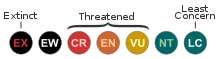
IUCN Red List of Threatened Plants Status :
Growth: S = slow M = medium F = fast. Soil: L = light (sandy) M = medium H = heavy (clay). pH: A = acid N = neutral B = basic (alkaline). Shade: F = full shade S = semi-shade N = no shade. Moisture: D = dry M = Moist We = wet Wa = water.
Now available:
Food Forest Plants for Mediterranean Conditions
350+ Perennial Plants For Mediterranean and Drier Food Forests and Permaculture Gardens.
[Paperback and eBook]
This is the third in Plants For A Future's series of plant guides for food forests tailored to
specific climate zones. Following volumes on temperate and tropical ecosystems, this book focuses
on species suited to Mediterranean conditions—regions with hot, dry summers and cool, wet winters,
often facing the added challenge of climate change.
Read More
Expert comment
Author
Hook.
Botanical References
1167200
Links / References
For a list of references used on this page please go here
Readers comment