Translate this page:
Summary
Physical Characteristics

 Tanacetum balsamita is a PERENNIAL growing to 0.9 m (3ft) by 1 m (3ft 3in).
See above for USDA hardiness. It is hardy to UK zone 6. It is in flower from September to October. The species is hermaphrodite (has both male and female organs) and is pollinated by Insects.
Suitable for: light (sandy), medium (loamy) and heavy (clay) soils and prefers well-drained soil. Suitable pH: mildly acid, neutral and basic (mildly alkaline) soils. It can grow in semi-shade (light woodland) or no shade. It prefers dry or moist soil.
UK Hardiness Map
US Hardiness Map
Synonyms
Balsamita major. (L.)Desf. Chrysanthemum balsamita.
Plant Habitats
Cultivated Beds;
Edible Uses
Edible Parts: Leaves
Edible Uses: Condiment Tea
Leaves - raw or used as a flavouring in soups, beer etc[2, 4, 14, 27, 52, 177, 183]. They can be chopped and added sparingly to salads[183]. They have a very pleasant aroma, but can be overpowering in the food if you are not careful[K]. The leaves were at one time widely used in brewing beer, before being superseded by hops (Humulus lupulus)[238]. The whole leaves can be laid in cake trays to flavour the cake whilst it is baking[183]. The flower petals are used for conserves[183]. A delicious tea is made from the dried leaves[14, 21, 183].
References More on Edible Uses
Medicinal Uses
Plants For A Future can not take any responsibility for any adverse effects from the use of plants. Always seek advice from a professional before using a plant medicinally.
Antiseptic Astringent Digestive Dysentery Laxative
Alecost is seldom used in herbal medicine, though it does have a beneficial effect upon the digestive system[268]. The leaves are antiseptic, astringent, digestive and laxative[4, 14, 238]. They have been used internally as an aperient in the treatment of dysentery, and as a remedy for liver and gall bladder complaints[238]. Externally, they have been used as a salve to treat burns and insect stings[238, 268]. They are considered to be virtually obsolete in modern herbalism[4, 238].
References More on Medicinal Uses
The Bookshop: Edible Plant Books
Our Latest books on Perennial Plants For Food Forests and Permaculture Gardens in paperback or digital formats.

Edible Tropical Plants
Food Forest Plants for Hotter Conditions: 250+ Plants For Tropical Food Forests & Permaculture Gardens.
More

Edible Temperate Plants
Plants for Your Food Forest: 500 Plants for Temperate Food Forests & Permaculture Gardens.
More

More Books
PFAF have eight books available in paperback and digital formats. Browse the shop for more information.
Shop Now
Other Uses
Insecticide Pot-pourri Strewing
The plant was traditionally used for its insecticidal properties[200]. The dried leaves retain their fragrance well and so are used in pot-pourri[4, 238], they are also used as a strewing herb[200].
Special Uses
Scented Plants
References More on Other Uses
Cultivation details
An easily grown plant, it prefers a sunny warm position[52] in a dry soil[14, 37] but thrives under most conditions[4]. Tolerates a pH in the range 5.0 to 7.6. The leaves emit a soft balsamic odour[4]. The sub-species T. balsamita tomentosum is called the camphor plant because of its camphor-scented foliage[238]. Plants produces lot of leaves but no flowers when grown in the shade[4], though this is an advantage when the plant is being grown for its useful leaves[200]. Alecost used to be commonly grown in the herb garden but it has fallen out of favour in recent times[4].
References Carbon Farming Information and Carbon Sequestration Information
Temperature Converter
Type a value in the Celsius field to convert the value to Fahrenheit:
Fahrenheit:
The PFAF Bookshop
Plants For A Future have a number of books available in paperback and digital form. Book titles include Edible Plants, Edible Perennials, Edible Trees,Edible Shrubs, Woodland Gardening, and Temperate Food Forest Plants. Our new book is Food Forest Plants For Hotter Conditions (Tropical and Sub-Tropical).
Shop Now
Plant Propagation
The seed is seldom produced in Britain[4]. If seed is obtained it would probably be best sown in a cold frame in early spring. When they are large enough to handle, prick the seedlings out into individual pots and grow them on in the greenhouse for their first winter. Plant them out into their permanent positions in late spring or early summer, after the last expected frosts. Division in spring or autumn[4]. Very easy, it can be done successfully at almost any time of the year. Larger divisions can be planted out direct into their permanent positions. We have found that it is best to pot up smaller divisions and grow them on in light shade in a greenhouse or cold frame until they are growing away well. Plant them out in the summer or the following spring. Basal cuttings in late spring[K]. Harvest the shoots with plenty of underground stem when they are about 8 - 10cm above the ground. Pot them up into individual pots and keep them in light shade in a cold frame or greenhouse until they are rooting well. Plant them out in the summer.
Other Names
If available other names are mentioned here
Native Range
TEMPERATE ASIA: Iran (northwest), Iraq (north), Turkey (east), Armenia, Azerbaijan, Georgia
Weed Potential
Right plant wrong place. We are currently updating this section.
Please note that a plant may be invasive in one area but may not
in your area so it's worth checking.
Conservation Status
IUCN Red List of Threatened Plants Status :
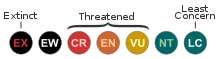
IUCN Red List
Growth: S = slow M = medium F = fast. Soil: L = light (sandy) M = medium H = heavy (clay). pH: A = acid N = neutral B = basic (alkaline). Shade: F = full shade S = semi-shade N = no shade. Moisture: D = dry M = Moist We = wet Wa = water.
Now available:
Food Forest Plants for Mediterranean Conditions
350+ Perennial Plants For Mediterranean and Drier Food Forests and Permaculture Gardens.
[Paperback and eBook]
This is the third in Plants For A Future's series of plant guides for food forests tailored to
specific climate zones. Following volumes on temperate and tropical ecosystems, this book focuses
on species suited to Mediterranean conditions—regions with hot, dry summers and cool, wet winters,
often facing the added challenge of climate change.
Read More
Expert comment
Author
L.
Botanical References
200
Links / References
For a list of references used on this page please go here
Readers comment