Translate this page:
Summary
Physical Characteristics

 Smilax glabra is a deciduous Climber growing to 3 m (9ft 10in). It is in flower from July to November, and the seeds ripen from November to April. The species is dioecious (individual flowers are either male or female, but only one sex is to be found on any one plant so both male and female plants must be grown if seed is required). . The plant is not self-fertile.
Suitable for: light (sandy), medium (loamy) and heavy (clay) soils. Suitable pH: mildly acid, neutral and basic (mildly alkaline) soils. It can grow in semi-shade (light woodland) or no shade. It prefers moist soil.
UK Hardiness Map
US Hardiness Map
Synonyms
Plant Habitats
Woodland Garden Sunny Edge; Dappled Shade; Shady Edge;
Edible Uses
Edible Parts: Fruit Root
Edible Uses:
Root - cooked[105, 177]. It can be dried and ground into a powder. The root contains nearly 70% starch[218]. Fruit[177]. The fruit is up to 10mm in diameter[266]. No more details are given.
References More on Edible Uses
Medicinal Uses
Plants For A Future can not take any responsibility for any adverse effects from the use of plants. Always seek advice from a professional before using a plant medicinally.
Antiarthritic Antipsoriatic Antirheumatic Antiscrophulatic Cancer Dysentery Skin Stomachic
VD
The aerial tubers are used in the treatment of abscesses, boils, cystitis, diarrhoea etc[218]. The rhizome is antiarthritic, antiscrophulatic, depurative, skin, stomachic[147, 174, 176]. It has been used in the treatment of cancer, mercury poisoning, acute bacterial dysentery, rheumatoid arthritis and syphilis[147, 174, 176, 218, 238]. It is said to be clinically 90% effective in the treatment of primary syphilis[218].
References More on Medicinal Uses
The Bookshop: Edible Plant Books
Our Latest books on Perennial Plants For Food Forests and Permaculture Gardens in paperback or digital formats.

Edible Tropical Plants
Food Forest Plants for Hotter Conditions: 250+ Plants For Tropical Food Forests & Permaculture Gardens.
More

Edible Temperate Plants
Plants for Your Food Forest: 500 Plants for Temperate Food Forests & Permaculture Gardens.
More

More Books
PFAF have eight books available in paperback and digital formats. Browse the shop for more information.
Shop Now
Other Uses
References More on Other Uses
Cultivation details
We have very little information on this species and do not know if it will be hardy in Britain, though judging by its native range it should succeed outdoors in many parts of the country. The following notes are based on the general needs of the genus. Succeeds in most soils in sun or semi-shade[200]. Dioecious. Male and female plants must be grown if seed is required.
References Carbon Farming Information and Carbon Sequestration Information
Temperature Converter
Type a value in the Celsius field to convert the value to Fahrenheit:
Fahrenheit:
The PFAF Bookshop
Plants For A Future have a number of books available in paperback and digital form. Book titles include Edible Plants, Edible Perennials, Edible Trees,Edible Shrubs, Woodland Gardening, and Temperate Food Forest Plants. Our new book is Food Forest Plants For Hotter Conditions (Tropical and Sub-Tropical).
Shop Now
Plant Propagation
Seed - sow March in a warm greenhouse[1]. This note probably refers to the tropical members of the genus, seeds of plants from cooler areas seem to require a period of cold stratification, some species taking 2 or more years to germinate[K]. We sow the seed of temperate species in a cold frame as soon as we receive it, and would sow the seed as soon as it is ripe if we could obtain it then[K]. When the seedlings eventually germinate, prick them out into individual pots when they are large enough to handle and grow them on in the greenhouse for at least their first year, though we normally grow them on in pots for 2 years. Plant them out into their permanent positions in early summer. Division in early spring as new growth begins[238]. Larger divisions can be planted out direct into their permanent positions. We have found it best to pot up the smaller divisions and grow them on in a lightly shaded position in a cold frame, planting them out once they are well established in the summer. Cuttings of half-ripe shoots, July in a frame[238].
Other Names
If available other names are mentioned here
Native Range
TEMPERATE ASIA: China (Anhui Sheng, Fujian Sheng, Gansu Sheng, Guangdong Sheng, Guangxi Zhuangzu Zizhiqu, Guizhou Sheng, Hubei Sheng, Hunan Sheng, Jiangsu Sheng, Jiangxi Sheng, Sichuan Sheng, Xizang Zizhiqu, Yunnan Sheng, Zhejiang Sheng), Taiwan TROPICAL ASIA: India, Myanmar, Thailand, Vietnam
Weed Potential
Right plant wrong place. We are currently updating this section.
Please note that a plant may be invasive in one area but may not
in your area so it's worth checking.
Conservation Status
IUCN Red List of Threatened Plants Status :
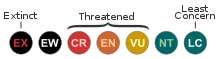
IUCN Red List
Growth: S = slow M = medium F = fast. Soil: L = light (sandy) M = medium H = heavy (clay). pH: A = acid N = neutral B = basic (alkaline). Shade: F = full shade S = semi-shade N = no shade. Moisture: D = dry M = Moist We = wet Wa = water.
Now available:
Food Forest Plants for Mediterranean Conditions
350+ Perennial Plants For Mediterranean and Drier Food Forests and Permaculture Gardens.
[Paperback and eBook]
This is the third in Plants For A Future's series of plant guides for food forests tailored to
specific climate zones. Following volumes on temperate and tropical ecosystems, this book focuses
on species suited to Mediterranean conditions—regions with hot, dry summers and cool, wet winters,
often facing the added challenge of climate change.
Read More
Expert comment
Author
Roxb.
Botanical References
109266
Links / References
For a list of references used on this page please go here
Readers comment