 |
|
http://www.kurtstueber.de/ |
 |
| biolib.de |
Translate this page:
Summary
Pineapple Sage (S. elegans) has smaller leaves and is used similarly to Fruity Sage. Salvia dorisiana ‘Fruity Sage’ has leaves and flowers that are intensely aromatic, with a fragrance of mixed fruits. The large leaves make for an easy harvest for drying and storage. They are used to make flavourful tea. They are likened to a sweeter version of Pineapple Sage (S. elegans) and are used as flavourings in salads, fruit salads, iced teas, fruit punches and salad dressings.
Bloom Color: Red. Main Bloom Time: Late summer. Form: Irregular or sprawling. Salvias are a large group of plants in the mint family. They are native to many parts of the world, including Europe, Asia, Africa, and the Americas, and they are distributed throughout the temperate and tropical regions. There are over 900 species of Salvia, making it one of the largest genera in the mint family. The centre of diversity for Salvia is Mexico, with about 500 species. Salvias have aromatic leaves and flowers, typically purple, blue, or white. The leaves are usually green, but some species have variegated foliage. Harvest all year from the first year.
Physical Characteristics

 Salvia elegans is an evergreen Perennial growing to 1 m (3ft 3in) by 1 m (3ft 3in) at a medium rate.
See above for USDA hardiness. It is hardy to UK zone 8. It is in leaf all year, in flower from March to May. The species is hermaphrodite (has both male and female organs) and is pollinated by Bees. The plant is self-fertile.
It is noted for attracting wildlife.
Suitable for: light (sandy) and medium (loamy) soils and prefers well-drained soil. Suitable pH: mildly acid, neutral and basic (mildly alkaline) soils. It cannot grow in the shade. It prefers dry or moist soil.
UK Hardiness Map
US Hardiness Map
Synonyms
Plant Habitats
Cultivated Beds;
Edible Uses
Edible Parts:
Edible Uses: Condiment
The leaves have a pleasant scent of pineapple and can be used fresh or dried as a flavouring[238]. They are added to cold drinks and fruit salads, fresh leaves can be placed under sponge cake mixtures to give a subtle scent, whilst the fresh or dried leaves can be added to savoury dishes to give a sausage-like flavour[238, K]. Edible flowers.
References More on Edible Uses
Medicinal Uses
Plants For A Future can not take any responsibility for any adverse effects from the use of plants. Always seek advice from a professional before using a plant medicinally.
Pineapple sage tea has been used to calm nerves, and it aids in digestion.
References More on Medicinal Uses
The Bookshop: Edible Plant Books
Our Latest books on Perennial Plants For Food Forests and Permaculture Gardens in paperback or digital formats.

Edible Tropical Plants
Food Forest Plants for Hotter Conditions: 250+ Plants For Tropical Food Forests & Permaculture Gardens.
More

Edible Temperate Plants
Plants for Your Food Forest: 500 Plants for Temperate Food Forests & Permaculture Gardens.
More

More Books
PFAF have eight books available in paperback and digital formats. Browse the shop for more information.
Shop Now
Other Uses
Ornamental. Landscape Uses: Border, Container, Massing, Seashore. Attracts hummingbirds and butterflies. Tolerates Deer. Dried leaves may be added to potpourris.
Special Uses
Attracts Wildlife Food Forest Scented Plants
References More on Other Uses
Cultivation details
Requires a very well-drained light sandy soil in a warm sunny position[200]. Prefers a rich soil[1]. Plants can be killed by excessive winter wet[200]. This species is not hardy in the colder areas of the country, it tolerates temperatures down to between -5 and -10°c[200]. The top growth will be cut back to the ground in cold winters but, if the roots are given a good mulch in the autumn, plants will often survive the winter outdoors and resprout freely from the base in the spring[200]. There are some named varieties. 'Scarlet Pineapple' has leaves with a pineapple-like scent[238]. The flowers are very attractive to bees, providing a good source of nectar[61]. Members of this genus are rarely if ever troubled by browsing deer[233]. Special Features:Attracts birds, North American native, Edible, Fragrant foliage, Attracts butterflies, Suitable for cut flowers. Sage leaves can be harvested throughout the growing season, with the best flavor typically from spring to early summer, just before flowering.
Sage usually flowers in late spring to early summer, generally between May and June (Northern Hemisphere), depending on the specific species and growing conditions. Sage is a moderately fast-growing herb, often reaching maturity in about 1 to 2 years under optimal conditions.
References Carbon Farming Information and Carbon Sequestration Information
Temperature Converter
Type a value in the Celsius field to convert the value to Fahrenheit:
Fahrenheit:
The PFAF Bookshop
Plants For A Future have a number of books available in paperback and digital form. Book titles include Edible Plants, Edible Perennials, Edible Trees,Edible Shrubs, Woodland Gardening, and Temperate Food Forest Plants. Our new book is Food Forest Plants For Hotter Conditions (Tropical and Sub-Tropical).
Shop Now
Plant Propagation
Seed - sow March/April in a greenhouse[200]. Germination usually takes place within 2 weeks. Prick out the seedlings into individual pots when they are large enough to handle and plant them out in early summer. In areas where the plant is towards the limits of its hardiness, it is best to grow the plants on in a greenhouse for their first winter and plant them out in late spring of the following year. Cuttings of half-ripe wood succeed at almost any time in the growing season[200].
Other Names
If available other names are mentioned here
Tangerine sage, Pineapple Sage, Pineapple-scented Sage,
Native Range
NORTHERN AMERICA: Mexico, Chihuahua, Durango, Sonora, Guanajuato, Guerrero, Hidalgo, Jalisco, México, Michoacán de Ocampo, Morelos, Nayarit, Oaxaca, Puebla, Tlaxcala, Veracruz de Ignacio de la Llave,
Weed Potential
Right plant wrong place. We are currently updating this section.
Please note that a plant may be invasive in one area but may not in your area so it's worth checking.
Conservation Status
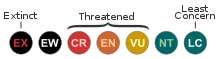
IUCN Red List of Threatened Plants Status :
| Related Plants
|
| Latin Name | Common Name | Habit | Height | Hardiness | Growth | Soil | Shade | Moisture | Edible | Medicinal | Other |
| Cistus salviifolius | Rock Rose, Salvia cistus, Sage Leaf Rock Rose | Shrub | 0.6 |
8-11
| F | LM | N | DM | 1 | 0 | 3 |
| Salvia apiana | White Sage, Compact white sage | Perennial | 3.0 |
7-10
| M | LM | N | DM | 3 | 1 | 3 |
| Salvia ballotaeflora | | Annual | 0.0 |
-
| | LM | N | DM | 1 | 0 | |
| Salvia carduacea | Thistle Sage | Annual/Perennial | 0.7 |
7-10
| | LM | N | DM | 2 | 0 | |
| Salvia carnosa | Purple Sage | Shrub | 0.8 |
6-9
| | LM | N | DM | 1 | 2 | |
| Salvia clevelandii | Blue Sage, Fragrant sage, Chaparral Sage | Shrub | 0.6 |
8-11
| M | LM | N | DM | 1 | 0 | 2 |
| Salvia columbariae | Chia, Ziegler's sage | Annual/Perennial | 0.7 |
6-9
| | LM | N | DM | 3 | 2 | |
| Salvia dorisiana | Sage Fruity Pineapple | Perennial | 1.3 |
9-12
| F | LMH | SN | M | 3 | 0 | 3 |
| Salvia dorrii | Purple Sage | Shrub | 0.6 |
5-9
| F | LM | N | DM | 3 | 2 | 3 |
| Salvia fruticosa | Greek Sage, Greek oregano | Shrub | 1.0 |
8-11
| M | LM | N | DM | 2 | 3 | 3 |
| Salvia glabrescens | | Perennial | 0.3 |
-
| | LM | SN | DM | 1 | 0 | |
| Salvia glutinosa | Jupiter's Distaff, Sticky Sage | Perennial | 1.2 |
4-8
| | LM | SN | DM | 1 | 0 | 3 |
| Salvia hispanica | Mexican Chia, Chia | Annual | 1.0 |
8-11
| M | LM | N | DM | 3 | 0 | 2 |
| Salvia japonica | | Perennial | 0.8 |
7-10
| | LM | SN | DM | 1 | 0 | 2 |
| Salvia lanata | | Perennial | 0.3 |
6-9
| | LM | N | DM | 1 | 1 | |
| Salvia lanigera | Wrinkle-Leaved Sage | Shrub | 0.0 |
-
| | LM | N | DM | 1 | 0 | |
| Salvia lavandulifolia | Spanish Sage | Shrub | 0.3 |
4-8
| | LM | N | DM | 2 | 3 | 2 |
| Salvia leucantha | Mexican Bush Sage | Shrub | 1.2 |
8-10
| F | LMH | N | M | 0 | 1 | 3 |
| Salvia lyrata | Cancer Weed, Lyreleaf Sage | Perennial | 0.6 |
4-9
| M | LM | N | DM | 0 | 2 | 0 |
| Salvia mellifera | Californian Black Sage | Shrub | 2.0 |
7-10
| | LM | N | DM | 1 | 2 | |
| Salvia microphylla | Blackcurrant Sage | Perennial | 1.2 |
7-10
| | LM | N | DM | 2 | 2 | |
| Salvia moorcroftiana | | Perennial | 0.9 |
6-9
| | LM | N | DM | 1 | 1 | |
| Salvia multicaulis | | Shrub | 0.3 |
7-10
| | LM | N | DM | 1 | 0 | |
| Salvia multiorrhiza | Dan Shen | Perennial | 0.6 |
5-9
| | LM | N | DM | 0 | 3 | |
| Salvia officinalis | Sage, Kitchen sage, Small Leaf Sage, Garden Sage | Shrub | 0.6 |
5-10
| M | LM | N | DM | 4 | 5 | 5 |
| Salvia plebeia | | Biennial | 0.5 |
-
| | LM | N | MWe | 1 | 1 | |
| Salvia pomifera | Apple Sage | Shrub | 1.0 |
7-10
| M | LM | N | DM | 2 | 2 | 2 |
| Salvia pratensis | Meadow Clary, Introduced sage | Perennial | 1.0 |
3-7
| | LM | N | DM | 1 | 0 | 0 |
| Salvia reflexa | Mintweed, Lanceleaf sage | Annual | 0.8 |
0-0
| | LM | N | DM | 1 | 0 | 0 |
|
|
Growth: S = slow M = medium F = fast. Soil: L = light (sandy) M = medium H = heavy (clay). pH: A = acid N = neutral B = basic (alkaline). Shade: F = full shade S = semi-shade N = no shade. Moisture: D = dry M = Moist We = wet Wa = water.
Now available:
Food Forest Plants for Mediterranean Conditions
350+ Perennial Plants For Mediterranean and Drier Food Forests and Permaculture Gardens.
[Paperback and eBook]
This is the third in Plants For A Future's series of plant guides for food forests tailored to
specific climate zones. Following volumes on temperate and tropical ecosystems, this book focuses
on species suited to Mediterranean conditions—regions with hot, dry summers and cool, wet winters,
often facing the added challenge of climate change.
Read More
Expert comment
Author
Vahl.
Botanical References
200
Links / References
For a list of references used on this page please go here
Readers comment
© 2010, Plants For A Future. Plants For A Future is a charitable company limited by guarantee, registered in England and Wales. Charity No. 1057719, Company No. 3204567.