Translate this page:
Summary
Main Bloom Time: Early spring, Mid spring. Form: Rounded, Upright or erect.
Physical Characteristics

 Salix alba is a deciduous Tree growing to 25 m (82ft) by 10 m (32ft) at a fast rate.
See above for USDA hardiness. It is hardy to UK zone 2 and is not frost tender. It is in flower from April to May, and the seeds ripen in June. The species is dioecious (individual flowers are either male or female, but only one sex is to be found on any one plant so both male and female plants must be grown if seed is required). and is pollinated by Bees. The plant is not self-fertile.
It is noted for attracting wildlife.
Suitable for: light (sandy), medium (loamy) and heavy (clay) soils and can grow in heavy clay soil. Suitable pH: mildly acid and neutral soils. It cannot grow in the shade. It prefers moist or wet soil. The plant can tolerate maritime exposure.
UK Hardiness Map
US Hardiness Map
Synonyms
Plant Habitats
Woodland Garden Canopy;
Edible Uses
Edible Parts: Inner bark Leaves Shoots
Edible Uses: Tea
Inner bark - raw or cooked. It can be dried, ground into a powder and added to cereal flour then used in making bread etc[2]. A very bitter flavour, especially when fresh[2, 115], it is used as a famine food when all else fails[172]. Leaves and young shoots - raw or cooked[2, 177]. Not very palatable[172]. They are used only in times of scarcity[105]. The leaves can be used as a tea substitute[61].
References More on Edible Uses
Medicinal Uses
Plants For A Future can not take any responsibility for any adverse effects from the use of plants. Always seek advice from a professional before using a plant medicinally.
Anodyne Antiinflammatory Antiperiodic Antirheumatic Antiseptic Astringent Diaphoretic Diuretic
Dysentery Febrifuge Hypnotic Sedative Tonic
Justly famous as the original source of salicylic acid (the precursor of aspirin), white willow and several closely related species have been used for thousands of years to relieve joint pain and manage fevers[254]. The bark is anodyne, anti-inflammatory, antiperiodic, antiseptic, astringent, diaphoretic, diuretic, febrifuge, hypnotic, sedative and tonic[4, 7, 9, 21, 165]. It has been used internally in the treatment of dyspepsia connected with debility of the digestive organs[4], rheumatism, arthritis, gout, inflammatory stages of auto-immune diseases, feverish illnesses, neuralgia and headache[238]. Its tonic and astringent properties render it useful in convalescence from acute diseases, in treating worms, chronic dysentery and diarrhoea[4]. The fresh bark is very bitter and astringent[222]. It contains salicin, which probably decomposes into salicylic acid (closely related to aspirin) in the human body[213]. This is used as an anodyne and febrifuge[213]. The bark is harvested in the spring or early autumn from 3 - 6 year old branches and is dried for later use[7, 9]. The leaves are used internally in the treatment of minor feverish illnesses and colic[238]. An infusion of the leaves has a calming effect and is helpful in the treatment of nervous insomnia[7]. When added to the bath water, the infusion is of real benefit in relieving widespread rheumatism[7]. The leaves can be harvested throughout the growing season and are used fresh or dried[238]. The German Commission E Monographs, a therapeutic guide to herbal medicine, approve Salix / Willow for diseases accompanied by fever, rheumatic ailments, headaches (see [302] for critics of commission E).
References More on Medicinal Uses
The Bookshop: Edible Plant Books
Our Latest books on Perennial Plants For Food Forests and Permaculture Gardens in paperback or digital formats.
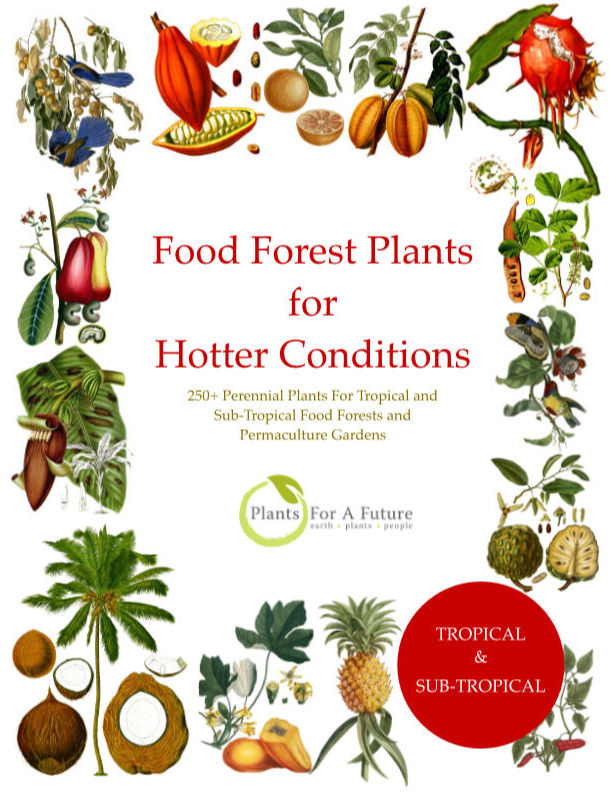
Edible Tropical Plants
Food Forest Plants for Hotter Conditions: 250+ Plants For Tropical Food Forests & Permaculture Gardens.
More
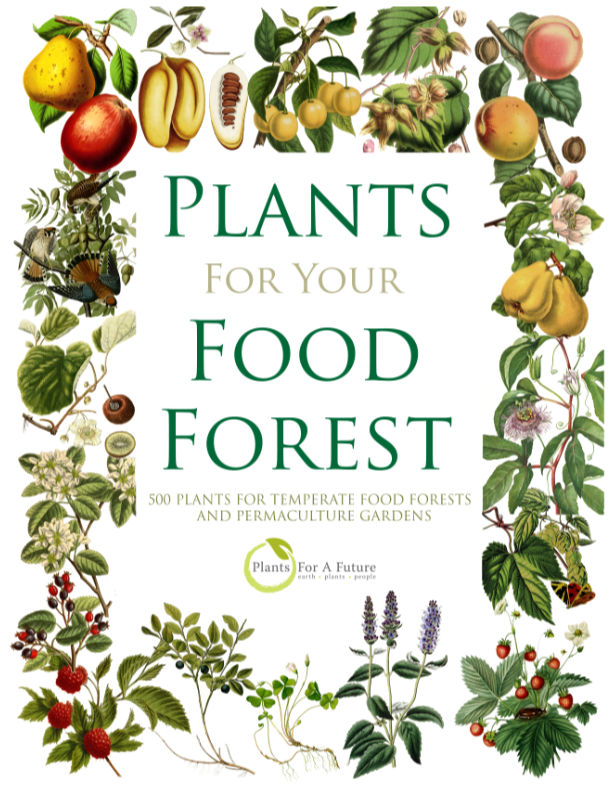
Edible Temperate Plants
Plants for Your Food Forest: 500 Plants for Temperate Food Forests & Permaculture Gardens.
More
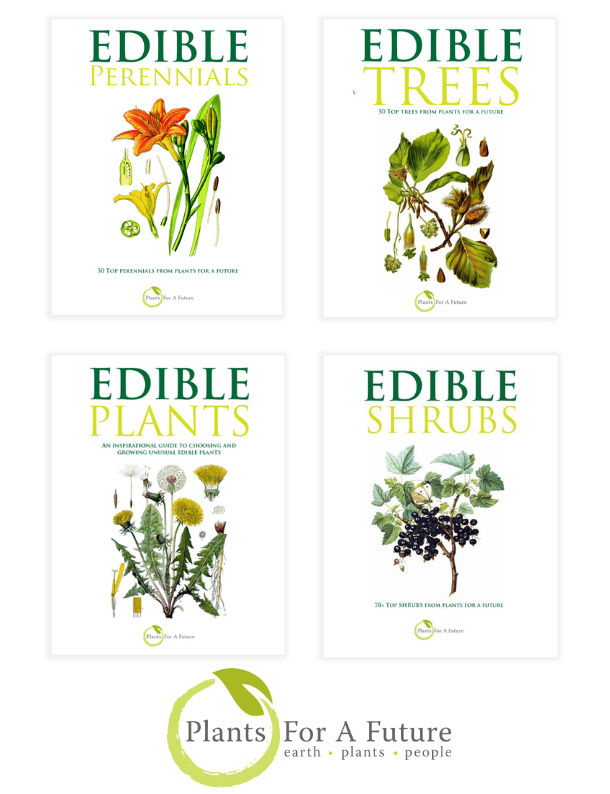
More Books
PFAF have eight books available in paperback and digital formats. Browse the shop for more information.
Shop Now
Other Uses
Basketry Charcoal Paper Pioneer Shelterbelt String Wood
Landscape Uses: Aggressive surface roots possible, Pollard, Specimen. The young stems are very flexible and are used in basket making[13, 46, 61]. The plant is usually coppiced annually when grown for basket making, though it is possible to coppice it every two years if thick poles are required as uprights. The bark can be used for tying plants[61]. A fibre obtained from the stems is used in making paper[189]. The stems are harvested in spring or summer, the leaves are removed and the stems steamed until the fibres can be stripped. The fibres are cooked for 2 hours with lye and then beaten with mallets or put through a blender. The paper is red/brown in colour[189]. A fast growing tree and tolerant of maritime exposure, it can be grown as a shelterbelt[75]. The plant's rapid growth and wind tolerance make it a very good pioneer species to use in establishing woodland conditions in difficult sites. Spacing cuttings about every 5 metres will soon provide shelter and a suitable environment for planting out woodland trees that are not so wind tolerant. The main disadvantage in using this species is that the roots are far-ranging and the plant is quite greedy, so it will not as much effect as species such as the alders (Alnus species) in enriching the soil and thus feeding the woodland plants[K]. Wood - elastic, soft, easy to split, does not splinter. Used for construction, turnery, poles, tool handles etc[11, 46, 61]. The wood is also used to make charcoal[11], which has medicinal uses[7]. Dynamic accumulator.
Special Uses
Attracts Wildlife Dynamic accumulator
References More on Other Uses
Cultivation details
A very easily grown plant, it succeeds in most soils, including wet, ill-drained or intermittently flooded soils[1], but prefers a damp, heavy soil in a sunny position[200]. Rarely thrives on chalk[200] and dislikes poor thin soils[186]. Very tolerant of maritime exposure and atmospheric pollution[75, 186]. Trees respond well to coppicing or pollarding[186]. Best planted into its permanent position as soon as possible, trees respond badly to transplanting unless they are moved regularly. The root system is rather aggressive and can cause problems with drains[200]. A very important food plant for the caterpillars of many species of butterflies[30] and a good bee plant, providing an early source of nectar and pollen[11]. A very good wildlife habitat, more than 200 species of insects are associated with this tree[24]. There are many sub-species and cultivars in this species[182]. S. alba caerulea is the cricket bat willow, cultivated for its wood[11, 131]. S. alba vitellina. (L.)Stokes. has been cultivated for its very tough stems that are used as tie rods in basket making[123, 131]. The cultivar 'Cardinal' is also grown for its use in basket making[131]. This species is used commercially in papermaking[189]. Hybridizes freely with other members of this genus, especially S. fragilis, to which it is closely related[11]. Trees cast a relatively light shade. Dioecious. Male and female plants must be grown if seed is required. Special Features:
Attractive foliage, Not North American native, Wetlands plant, Inconspicuous flowers or blooms.
References Carbon Farming Information and Carbon Sequestration Information
Temperature Converter
Type a value in the Celsius field to convert the value to Fahrenheit:
Fahrenheit:
The PFAF Bookshop
Plants For A Future have a number of books available in paperback and digital form. Book titles include Edible Plants, Edible Perennials, Edible Trees,Edible Shrubs, Woodland Gardening, and Temperate Food Forest Plants. Our new book is Food Forest Plants For Hotter Conditions (Tropical and Sub-Tropical).
Shop Now
Plant Propagation
Seed - must be surface sown as soon as it is ripe in late spring. It has a very short viability, perhaps as little as a few days. Cuttings of mature wood of the current year's growth, November to February in a sheltered outdoor bed or planted straight into their permanent position and given a good weed-suppressing mulch. Branches of older wood as long as 2.5 metres can be used[1]. Very easy. Plant into their permanent positions in the autumn. Cuttings of half-ripe wood, June to August in a frame. Very easy.
Other Names
If available other names are mentioned here
Native Range
TEMPERATE ASIA: Cyprus, Iran, Iraq, Israel, Jordan, Lebanon, Syria, Turkey, Russian Federation-Ciscaucasia (Ciscaucasia), Armenia, Azerbaijan, Georgia, Russian Federation (Dagestan), Russian Federation-Western Siberia (Western Siberia), Kazakhstan, Kyrgyzstan, Tajikistan, Turkmenistan, Uzbekistan, China (Gansu Sheng, Qinghai Sheng, Xinjiang Uygur Zizhiqu, Xizang Zizhiqu) EUROPE: Austria, Belgium, Switzerland, Czech Republic, Germany, Hungary, Netherlands, Poland, Slovakia, Russian Federation (European part), Belarus, Lithuania, Latvia, Moldova, Ukraine (incl. Krym), Albania, Bulgaria, Bosnia and Herzegovina, Greece, Croatia, Italy (incl. Sardinia, Sicily), North Macedonia, Montenegro, Romania, Serbia, Slovenia, Spain, France (incl. Corsica), Portugal AFRICA: Algeria (north), Libya, Morocco
Weed Potential
Right plant wrong place. We are currently updating this section.
Please note that a plant may be invasive in one area but may not in your area so it's worth checking.
Conservation Status
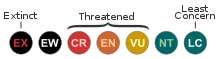
IUCN Red List of Threatened Plants Status :
| Related Plants
|
| Latin Name | Common Name | Habit | Height | Hardiness | Growth | Soil | Shade | Moisture | Edible | Medicinal | Other |
| Salix acutifolia | Sharp-Leaf Willow | Shrub | 10.0 |
4-8
| | LMH | N | MWe | 1 | 2 | 3 |
| Salix aegyptiaca | | Shrub | 4.0 |
5-9
| | LMH | N | MWe | 1 | 2 | 2 |
| Salix alaxensis | Feltleaf Wiillow | Tree | 10.0 |
3-7
| | LMH | N | MWe | 1 | 2 | 2 |
| Salix alba caerulea | Cricket Bat Willow | Tree | 25.0 |
-
| F | LMH | N | MWe | 1 | 3 | 3 |
| Salix alba vitellina | Golden Willow | Tree | 20.0 |
-
| F | LMH | N | MWe | 1 | 3 | 3 |
| Salix 'Americana' | | Tree | 0.0 |
0-0
| | LMH | N | MWe | 0 | 2 | 3 |
| Salix amygdaloides | Peach Leaved Willow | Tree | 20.0 |
4-8
| F | LMH | N | MWe | 0 | 2 | 3 |
| Salix appendiculata | | Shrub | 6.0 |
6-9
| | LMH | N | MWe | 1 | 2 | 3 |
| Salix arenaria | | Shrub | 1.0 |
5-9
| | LMH | N | MWe | 1 | 2 | 3 |
| Salix atrocinerea | Rusty Sallow, large gray willow | Tree | 10.0 |
-
| | LMH | N | MWe | 0 | 3 | 3 |
| Salix aurita | Eared Sallow | Shrub | 2.5 |
4-8
| | LMH | N | DMWe | 0 | 2 | 3 |
| Salix babylonica | Weeping Willow, Babylon Weeping Willow | Tree | 12.0 |
6-9
| F | LMH | N | MWe | 1 | 3 | 4 |
| Salix bakko | | Tree | 0.0 |
-
| | LMH | N | MWe | 1 | 2 | |
| Salix bebbiana | Beak Willow, Bebb Willow | Shrub | 7.0 |
3-7
| F | LMH | N | MWe | 0 | 2 | 4 |
| Salix bonplandiana | Sauce, Bonpland willow | Tree | 10.0 |
9-11
| F | LMH | N | MWe | 0 | 0 | 4 |
| Salix 'Bowles hybrid' | | Tree | 5.0 |
0-0
| F | LMH | N | MWe | 1 | 2 | 3 |
| Salix brachycarpa | shortfruit willow | Shrub | 1.4 |
4-8
| | LMH | N | MWe | 1 | 2 | 3 |
| Salix caprea | Goat Willow, Kilmarnock Willow, Pink Pussy Willow, Pussy Willow | Tree | 10.0 |
4-9
| F | LMH | SN | DMWe | 1 | 2 | 4 |
| Salix chaenomeloides | Japanese Pussy Willow | Tree | 6.0 |
6-8
| F | LMH | N | MWe | 1 | 2 | 3 |
| Salix cinerea | Grey Willow, Large gray willow | Shrub | 5.0 |
2-7
| | LMH | N | MWe | 0 | 3 | 3 |
| Salix commutata | undergreen willow | Shrub | 3.0 |
4-8
| | LMH | SN | MWe | 1 | 2 | 3 |
| Salix daphnoides | Violet Willow, Daphne willow | Tree | 10.0 |
4-8
| F | LMH | N | MWe | 1 | 2 | 3 |
| Salix decipiens | | Tree | 0.0 |
-
| | LMH | N | MWe | 1 | 2 | 3 |
| Salix eriocephala | Missouri Willow, Missouri River willow | Shrub | 4.0 |
5-9
| | LMH | N | MWe | 0 | 2 | 3 |
| Salix exigua | Coyote Willow, Narrowleaf willow | Tree | 9.0 |
0-0
| | LMH | N | MWe | 1 | 2 | 3 |
| Salix fluviatilis | River Willow | Tree | 7.0 |
3-7
| | LMH | N | MWe | 0 | 2 | 3 |
| Salix 'Forbiana' | | Shrub | 0.0 |
0-0
| F | LMH | N | MWe | 1 | 2 | 3 |
| Salix fragilis | Crack Willow | Tree | 15.0 |
4-8
| F | LMH | N | MWe | 1 | 3 | 3 |
| Salix gilgiana | Willow | Shrub | 0.0 |
0-0
| F | LMH | N | MWe | 1 | 2 | 3 |
|
|
Growth: S = slow M = medium F = fast. Soil: L = light (sandy) M = medium H = heavy (clay). pH: A = acid N = neutral B = basic (alkaline). Shade: F = full shade S = semi-shade N = no shade. Moisture: D = dry M = Moist We = wet Wa = water.
Now available:
Food Forest Plants for Mediterranean Conditions
350+ Perennial Plants For Mediterranean and Drier Food Forests and Permaculture Gardens.
[Paperback and eBook]
This is the third in Plants For A Future's series of plant guides for food forests tailored to
specific climate zones. Following volumes on temperate and tropical ecosystems, this book focuses
on species suited to Mediterranean conditions—regions with hot, dry summers and cool, wet winters,
often facing the added challenge of climate change.
Read More
Expert comment
Author
L.
Botanical References
1117200
Links / References
For a list of references used on this page please go here
Readers comment