Translate this page:
Summary
Physical Characteristics

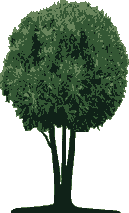 Quercus robur is a deciduous Tree growing to 30 m (98ft) by 30 m (98ft) at a slow rate.
See above for USDA hardiness. It is hardy to UK zone 4. It is in flower from April to May, and the seeds ripen from September to October. The species is monoecious (individual flowers are either male or female, but both sexes can be found on the same plant) and is pollinated by Wind.
It is noted for attracting wildlife.
Suitable for: medium (loamy) and heavy (clay) soils and can grow in heavy clay soil. Suitable pH: mildly acid, neutral and basic (mildly alkaline) soils. It can grow in semi-shade (light woodland) or no shade. It prefers moist or wet soil and can tolerate drought. The plant can tolerates strong winds but not maritime exposure.
UK Hardiness Map
US Hardiness Map
Synonyms
Quercus longaeva. Quercus pedunculata.
Plant Habitats
Woodland Garden Canopy; Bog Garden;
Edible Uses
Edible Parts: Seed
Edible Uses: Coffee Gum
Seed - cooked[2, 5, 8, 13]. Nourishing but indigestible[4]. Chopped and roasted, the seed is used as an almond substitute[8]. It can be dried, ground into a powder and used as a thickening in stews etc or mixed with cereals for making bread[183]. The seed contains bitter tannins, these can be leached out by thoroughly washing the seed in running water though many minerals will also be lost[63]. Either the whole seed can be used or the seed can be dried and ground it into a powder. It can take several days or even weeks to properly leach whole seeds, one method was to wrap them in a cloth bag and place them in a stream. Leaching the powder is quicker. A simple taste test can tell when the tannin has been leached. The traditional method of preparing the seed was to bury it in boggy ground overwinter. The germinating seed was dug up in the spring when it would have lost most of its astringency. The roasted seed is a coffee substitute[21, 61]. An edible gum is obtained from the bark[177]. Another report says that an edible manna is obtained from the plant and that it is used instead of butter in cooking[183]. This report probably refers to the gum[K].
References More on Edible Uses
Medicinal Uses
Plants For A Future can not take any responsibility for any adverse effects from the use of plants. Always seek advice from a professional before using a plant medicinally.
Antiseptic Astringent Bach Decongestant Dysentery Haemostatic Tonic
The oak tree has a long history of medicinal use. It is anti-inflammatory, antiseptic, astringent, decongestant, haemostatic and tonic[4, 7, 9, 13, 21, 165]. The bark is the part of the plant that is most commonly used[4], though other parts such as the galls, seeds and seed cups are also sometimes used[7]. A decoction of the bark is useful in the treatment of chronic diarrhoea, dysentery, intermittent fevers, haemorrhages etc[4]. Externally, it is used to bathe wounds, skin eruptions, sweaty feet, piles etc[9]. It is also used as a vaginal douche for genital inflammations and discharge, and also as a wash for throat and mouth infections[9]. The bark is harvested from branches 5 - 12 years old, and is dried for later use[9]. Any galls produced on the tree are strongly astringent and can be used in the treatment of haemorrhages, chronic diarrhoea, dysentery etc[4]. The plant is used in Bach flower remedies - the keywords for prescribing it are 'Despondency', 'Despair, but never ceasing effort'[209]. A homeopathic remedy is made from the bark. It is used in the treatment of disorders of the spleen and gall bladder[9]. The German Commission E Monographs, a therapeutic guide to herbal medicine, approve Quercus robur Pedunculate Oak for coughs/bronchitis, diarrhoea, inflammation of mouth and pharynx, inflammation of the skin (see [302] for critics of commission E).
References More on Medicinal Uses
The Bookshop: Edible Plant Books
Our Latest books on Perennial Plants For Food Forests and Permaculture Gardens in paperback or digital formats.
Edible Tropical Plants
Food Forest Plants for Hotter Conditions: 250+ Plants For Tropical Food Forests & Permaculture Gardens.
More
Edible Temperate Plants
Plants for Your Food Forest: 500 Plants for Temperate Food Forests & Permaculture Gardens.
More
More Books
PFAF have eight books available in paperback and digital formats. Browse the shop for more information.
Shop Now
Other Uses
Basketry Charcoal Compost Fuel Gum Ink Repellent Tannin Wood
A mulch of the leaves repels slugs, grubs etc, though fresh leaves should not be used as these can inhibit plant growth[20, 201]. The bark is an ingredient of 'Quick Return' herbal compost activator[32]. This is a dried and powdered mixture of several herbs that can be added to a compost heap in order to speed up bacterial activity and thus shorten the time needed to make the compost[K]. The bark is very rich in calcium[18]. Oak galls are excrescences that are sometimes produced in great numbers on the tree and are caused by the activity of the larvae of different insects. The insects live inside these galls, obtaining their nutrient therein. When the insect pupates and leaves, the gall can be used as a rich source of tannin, that can also be used as a dyestuff[4]. A black dye and an excellent long-lasting ink is made from the oak galls, mixed with salts of iron[4, 7, 66]. The colour is not very durable[4]. When mixed with alum, the dye is brown and with salts of tin it is yellow[4]. Trees can be coppiced to provide material for basket making, fuel, construction etc[23]. The wood is a source of tar, quaiacol, acetic acid, creosote and tannin[123]. Tannin is extracted commercially from the bark and is also found in the leaves[223]. On a 10% moisture basis, the bark contains11.6% tannin and the wood 9.2%[223]. The bark strips easily from the wood in April and May[4]. A purplish dye is obtained from an infusion of the bark with a small quantity of copperas[4]. It is not bright, but is said to be durable[4]. Wood - hard, tough, durable even under water - highly valued for furniture, construction etc[4, 13, 61, 66]. It is also a good fuel[6] and charcoal[61].
Special Uses
Attracts Wildlife Food Forest
References More on Other Uses
Cultivation details
Prefers a good deep fertile loam which can be on the stiff side[11]. Young plants tolerate reasonable levels of side shade[200]. Succeeds in heavy clay soils[13] and in wet soils so long as the ground is not water-logged for long periods[186]. Dislikes dry or shallow soils but is otherwise drought tolerant once it is established[186]. Tolerant of exposed sites though it dislikes salt-laden winds[186]. The oak is a very important timber tree in Britain, it is also a very important food plant for the caterpillars of many species of butterfly[30], there are 284 insect species associated with this tree[24]. It has often been coppiced or pollarded for its wood in the past[23], though this should not be done too frequently[186], about once every 50 years is the average. The tree flowers on new growth produced in spring, the seed ripening in its first year[200, 229]. Older trees have a thick corky bark and this can protect them from forest fires, young trees will often regenerate from the base if cut down or killed back by a fire[186]. Intolerant of root disturbance, trees should be planted in their permanent positions whilst young[11]. Hybridizes freely with other members of the genus[200]. Immune to attacks by the tortix moth[1]. This species is notably resistant to honey fungus[88, 200].
References Carbon Farming Information and Carbon Sequestration Information
Temperature Converter
Type a value in the Celsius field to convert the value to Fahrenheit:
Fahrenheit:
The PFAF Bookshop
Plants For A Future have a number of books available in paperback and digital form. Book titles include Edible Plants, Edible Perennials, Edible Trees,Edible Shrubs, Woodland Gardening, and Temperate Food Forest Plants. Our new book is Food Forest Plants For Hotter Conditions (Tropical and Sub-Tropical).
Shop Now
Plant Propagation
Seed - it quickly loses viability if it is allowed to dry out. It can be stored moist and cool overwinter but is best sown as soon as it is ripe in an outdoor seed bed, though it must be protected from mice, squirrels etc. Small quantities of seed can be sown in deep pots in a cold frame. Plants produce a deep taproot and need to be planted out into their permanent positions as soon as possible, in fact seed sown in situ will produce the best trees[11]. Trees should not be left in a nursery bed for more than 2 growing seasons without being moved or they will transplant very badly.
Other Names
If available other names are mentioned here
Native Range
TEMPERATE ASIA: Iran, Turkey, Russian Federation-Ciscaucasia (Ciscaucasia), Armenia, Azerbaijan, Georgia, Russian Federation (Dagestan) EUROPE: Denmark, Finland (south), United Kingdom, Ireland, Norway (south), Sweden (south), Austria, Belgium, Switzerland, Czech Republic, Germany, Hungary, Netherlands, Poland, Slovakia. Russian Federation (European part), Belarus, Estonia, Lithuania, Latvia, Moldova, Ukraine (incl. Krym), Albania, Bulgaria, Bosnia and Herzegovina, Greece, Croatia, Italy (incl. Sicily), North Macedonia, Montenegro, Romania, Serbia, Slovenia, Spain (north), France (incl. Corsica), Portugal
Weed Potential
Right plant wrong place. We are currently updating this section.
Please note that a plant may be invasive in one area but may not in your area so it's worth checking.
Conservation Status
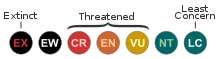
IUCN Red List of Threatened Plants Status :
| Related Plants
|
| Latin Name | Common Name | Habit | Height | Hardiness | Growth | Soil | Shade | Moisture | Edible | Medicinal | Other |
| Quercus × schuettei | Schuette's oak | Tree | 18.0 |
4-8
| F | MH | N | MWe | 3 | 0 | 3 |
| Quercus acuta | Japanese Evergreen Oak | Tree | 25.0 |
6-9
| M | MH | SN | M | 2 | 2 | 2 |
| Quercus acutissima | Sawthorn Oak | Tree | 5.0 |
5-9
| M | MH | SN | M | 2 | 2 | 3 |
| Quercus agrifolia | Encina, California live oak, Coast Live Oak | Tree | 15.0 |
8-11
| S | MH | SN | M | 3 | 2 | 2 |
| Quercus alba | White Oak, Hybrid oak | Tree | 20.0 |
3-9
| S | MH | SN | DM | 3 | 2 | 4 |
| Quercus aliena | Oriental White Oak | Tree | 20.0 |
4-8
| | MH | SN | M | 2 | 2 | 2 |
| Quercus arizonica | Arizona White Oak | Tree | 8.0 |
7-10
| S | LMH | N | DM | 2 | 2 | 2 |
| Quercus aucheri | Boz-Pirnal Oak | Shrub | 5.0 |
7-10
| S | MH | SN | DM | 4 | 2 | 2 |
| Quercus bicolor | Swamp White Oak | Tree | 25.0 |
4-8
| M | MH | SN | MWe | 4 | 2 | 3 |
| Quercus brantii | Barro, Brant's oak | Tree | 8.0 |
7-9
| F | LMH | N | DM | 3 | 2 | 3 |
| Quercus cerris | Turkey Oak, European turkey oak | Tree | 35.0 |
5-9
| F | MH | SN | M | 3 | 2 | 2 |
| Quercus chrysolepis | Live Oak, Canyon live oak | Tree | 25.0 |
8-11
| S | MH | SN | M | 2 | 2 | 2 |
| Quercus coccifera | Kermes Oak | Shrub | 4.0 |
5-9
| | MH | SN | M | 3 | 2 | 3 |
| Quercus coccinea | Scarlet Oak | Tree | 25.0 |
4-8
| M | MH | SN | M | 2 | 2 | 3 |
| Quercus dentata | Japanese Emperor Oak, Daimyo oak | Tree | 20.0 |
4-8
| F | MH | SN | M | 2 | 2 | 2 |
| Quercus douglasii | Blue Oak | Tree | 12.0 |
8-11
| S | MH | SN | DM | 3 | 2 | 4 |
| Quercus durata | California Scrub Oak, Leather oak | Shrub | 4.0 |
7-10
| | MH | SN | M | 2 | 2 | 2 |
| Quercus ellipsoidalis | Northern Pin Oak | Tree | 20.0 |
4-6
| M | MH | SN | M | 2 | 2 | 3 |
| Quercus emoryi | Black Oak, Emory oak | Tree | 12.0 |
6-9
| S | MH | SN | M | 3 | 2 | 3 |
| Quercus engelmannii | Evergreen Oak, Engelmann oak, Mesa Oak | Tree | 10.0 |
8-11
| M | MH | SN | M | 2 | 2 | 3 |
| Quercus falcata | Southern Red Oak, Cherrybark Oak, Spanish Oak, Southern Red Oak | Tree | 25.0 |
7-9
| M | MH | SN | M | 1 | 2 | 2 |
| Quercus floribunda | | Tree | 0.0 |
-
| | MH | SN | M | 2 | 2 | 3 |
| Quercus frainetto | Hungarian Oak, Italian Oak, Forest Green Oak | Tree | 30.0 |
5-8
| F | MH | SN | M | 4 | 2 | 2 |
| Quercus fruticosa | Gall Oak, Lusitanian Oak | Shrub | 2.0 |
7-10
| | MH | N | M | 3 | 2 | 2 |
| Quercus gambelii | Shin Oak, Gambel oak, Rocky Mountain White Oak | Shrub | 4.5 |
4-8
| S | MH | SN | DM | 3 | 2 | 3 |
| Quercus garryana | Oregon White Oak, Garry Oak | Tree | 18.0 |
7-9
| S | MH | SN | M | 2 | 2 | 3 |
| Quercus glauca | Ring-cup oak , Ring Cupped Oak, Blue Japanese Oak | Tree | 15.0 |
8-9
| S | MH | SN | M | 3 | 2 | 3 |
| Quercus grisea | Gray Oak | Tree | 6.0 |
7-10
| | LMH | N | DM | 2 | 2 | 2 |
| Quercus hispanica | | Tree | 20.0 |
6-9
| | MH | SN | M | 3 | 2 | 3 |
| Quercus hypoleucoides | Silverleaf Oak | Tree | 8.0 |
7-10
| S | LMH | N | M | 1 | 2 | 2 |
|
|
Growth: S = slow M = medium F = fast. Soil: L = light (sandy) M = medium H = heavy (clay). pH: A = acid N = neutral B = basic (alkaline). Shade: F = full shade S = semi-shade N = no shade. Moisture: D = dry M = Moist We = wet Wa = water.
Now available:
Food Forest Plants for Mediterranean Conditions
350+ Perennial Plants For Mediterranean and Drier Food Forests and Permaculture Gardens.
[Paperback and eBook]
This is the third in Plants For A Future's series of plant guides for food forests tailored to
specific climate zones. Following volumes on temperate and tropical ecosystems, this book focuses
on species suited to Mediterranean conditions—regions with hot, dry summers and cool, wet winters,
often facing the added challenge of climate change.
Read More
Expert comment
Author
L.
Botanical References
1117200
Links / References
For a list of references used on this page please go here
Readers comment