Translate this page:
Summary
Boz-Pirnal Oak (Q. aucheri) is an evergreen Shrub that grows to 5m/16ft and is lime-tolerant. Its sweet seeds can be roasted and eaten; they taste like a cross between sunflower seeds and popcorn. The roasted seed is a coffee substitute. Quercus species,
Oaks are deciduous or evergreen trees or shrubs in the beech family, Fagaceae. They are native to the Northern Hemisphere, from cool temperate to tropical areas in North America, Asia, Europe and Africa. North America has over 90 species. Oak trees have characteristic nuts called acorns that follow the inconspicuous flowers. The acorns and leaves contain tannic acid, which protects the tree from fungi and insects. Tannins are used in photography, dyeing, clarifying wine, and as astringents in medicine. Tannins make the acorns slightly acidic or bitter and poisonous to humans. Several oaks have low tannin levels leached out of the acorn to make them edible. Washing the acorns thoroughly in running water removes the water-soluble tannins. The whole acorn is used or dried and ground into a powder first. It can take several days or even weeks to leach the acorns properly. Many oaks can tolerate semi-shade.
Physical Characteristics

 Quercus aucheri is an evergreen Shrub growing to 5 m (16ft) by 4 m (13ft) at a slow rate.
See above for USDA hardiness. It is hardy to UK zone 8. It is in leaf all year. The species is monoecious (individual flowers are either male or female, but both sexes can be found on the same plant) and is pollinated by Wind. The plant is not self-fertile.
It is noted for attracting wildlife.
Suitable for: medium (loamy) and heavy (clay) soils and can grow in heavy clay soil. Suitable pH: mildly acid, neutral and basic (mildly alkaline) soils. It can grow in semi-shade (light woodland) or no shade. It prefers dry or moist soil. The plant can tolerates strong winds but not maritime exposure.
UK Hardiness Map
US Hardiness Map
Synonyms
Plant Habitats
Woodland Garden Sunny Edge; Dappled Shade; Shady Edge;
Edible Uses
Edible Parts: Seed
Edible Uses: Coffee
Seed - raw or cooked. A sweet flavour[200]. The seed is about 2cm long and 1.5cm wide[200]. It is low in tannin and needs little if any leaching. Any bitter tannins can be leached out by thoroughly washing the dried and ground up seed in water, though many minerals will also be lost. It can take several days or even weeks to properly leach whole seeds, one method was to wrap them in a cloth bag and place them in a stream. Leaching the powder is quicker. A simple taste test can tell when the tannin has been leached. The traditional method of preparing the seed was to bury it in boggy ground overwinter. The germinating seed was dug up in the spring when it would have lost most of its astringency. The seed can be roasted and then eaten, its taste is something like a cross between sunflower seeds and popcorn[183]. The roasted seed is a coffee substitute.
References More on Edible Uses
Medicinal Uses
Plants For A Future can not take any responsibility for any adverse effects from the use of plants. Always seek advice from a professional before using a plant medicinally.
Astringent Dysentery
Any galls produced on the tree are strongly astringent and can be used in the treatment of haemorrhages, chronic diarrhoea, dysentery etc[4].
References More on Medicinal Uses
The Bookshop: Edible Plant Books
Our Latest books on Perennial Plants For Food Forests and Permaculture Gardens in paperback or digital formats.

Edible Tropical Plants
Food Forest Plants for Hotter Conditions: 250+ Plants For Tropical Food Forests & Permaculture Gardens.
More

Edible Temperate Plants
Plants for Your Food Forest: 500 Plants for Temperate Food Forests & Permaculture Gardens.
More

More Books
PFAF have eight books available in paperback and digital formats. Browse the shop for more information.
Shop Now
Other Uses
Repellent Tannin
Agroforestry uses: Oaks are valuable in agroforestry for providing shade, timber, and wildlife habitat. They can also help with soil improvement and erosion control. The following uses are for the closely related Q. coccifera, they should also be applicable here[K]. A mulch of the leaves repels slugs, grubs etc, though fresh leaves should not be used as these can inhibit plant growth[20]. Oak galls are excrescences that are sometimes produced in great numbers on the tree and are caused by the activity of the larvae of different insects. The insects live inside these galls, obtaining their nutrient therein. When the insect pupates and leaves, the gall can be used as a rich source of tannin, that can also be used as a dyestuff[4]. The bark is rich in tannin[148]. A black dye can be obtained from the bark[89] and also from the seeds[148]. 1. Nectary - Flowers rich in nectar and pollen:
Yes – Oak trees produce catkins that provide pollen, though they are wind-pollinated, so nectar production is limited.
2. Wildlife - Food (Fruit, Seeds, Leaf litter, Shelter, Nesting, Roosting):
Yes – Oaks are a major food source, particularly through their acorns, which are eaten by birds, mammals, and insects. The dense foliage and structure provide excellent shelter for nesting birds and roosting wildlife. Oak leaf litter supports many beneficial insects and fungi.
3. Invertebrate Shelter (Overwintering sites, Leaf litter, Groundcover):
Yes – Oak trees offer overwintering sites with rough bark and dense canopies. The leaf litter also provides habitat for insects, supporting biodiversity in ecosystems.
4. Pest Confuser (Smell):
No – Oak trees do not produce strong scents that repel or confuse pests.
Special Uses
References More on Other Uses
Cultivation details
Prefers a good deep fertile loam which can be on the stiff side[1, 11]. Plants are lime tolerant[188]. Young plants tolerate reasonable levels of side shade[200]. Tolerates moderate exposure, surviving well but being somewhat stunted[200]. Prefers warmer summers than are usually experienced in Britain, but trees usually grow well in Britain[200]. The seed takes two years to ripen but is seldom produced in this country[11]. This species is closely related to Q. coccifera and considered to be no more than a synonym of that species by some authorities[11]. Hybridizes freely with other members of the genus[200]. Many species in this genus are notably resistant to honey fungus[200]. Intolerant of root disturbance, trees should be planted in their permanent positions whilst young[11]. Acorns are harvested in Autumn, usually from September to November(Northern Hemisphere) , depending on the species and local climate. Oaks flower in Spring, with male flowers (catkins) appearing in April to June (Northern Hemisphere). Oaks generally have a slow to moderate growth rate, often taking several decades to reach full maturity. Some species may grow 1-2 feet per year under optimal conditions. Oaks are generally not self-fertile; they require cross-pollination between different trees for acorn production.
References Carbon Farming Information and Carbon Sequestration Information
Temperature Converter
Type a value in the Celsius field to convert the value to Fahrenheit:
Fahrenheit:
The PFAF Bookshop
Plants For A Future have a number of books available in paperback and digital form. Book titles include Edible Plants, Edible Perennials, Edible Trees,Edible Shrubs, Woodland Gardening, and Temperate Food Forest Plants. Our new book is Food Forest Plants For Hotter Conditions (Tropical and Sub-Tropical).
Shop Now
Plant Propagation
Seed - it quickly loses viability if it is allowed to dry out. It can be stored moist and cool overwinter but is best sown as soon as it is ripe in an outdoor seed bed, though it must be protected from mice, squirrels etc. Small quantities of seed can be sown in deep pots in a cold frame. Plants produce a deep taproot and need to be planted out into their permanent positions as soon as possible, in fact seed sown in situ will produce the best trees[11]. Trees should not be left in a nursery bed for more than 2 growing seasons without being moved or they will transplant very badly.
Other Names
If available other names are mentioned here
Boz-Pirnal Oak, Quercus aucheri, Aucher's oak, Boz Pirnal oak
Native Range
TEMPERATE ASIA: Turkey. EUROPE: East Aegean Islands, Turkey,
Weed Potential
Right plant wrong place. We are currently updating this section.
Please note that a plant may be invasive in one area but may not
in your area so it's worth checking.
Conservation Status
IUCN Red List of Threatened Plants Status :
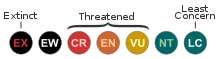
IUCN Red List
| Related Plants
|
| Latin Name | Common Name | Habit | Height | Hardiness | Growth | Soil | Shade | Moisture | Edible | Medicinal | Other |
| Quercus × schuettei | Schuette's oak | Tree | 18.0 |
4-8
| F | MH | N | MWe | 3 | 0 | 3 |
| Quercus acuta | Japanese Evergreen Oak | Tree | 25.0 |
6-9
| M | MH | SN | M | 2 | 2 | 2 |
| Quercus acutissima | Sawthorn Oak | Tree | 5.0 |
5-9
| M | MH | SN | M | 2 | 2 | 3 |
| Quercus agrifolia | Encina, California live oak, Coast Live Oak | Tree | 15.0 |
8-11
| S | MH | SN | M | 3 | 2 | 2 |
| Quercus alba | White Oak, Hybrid oak | Tree | 20.0 |
3-9
| S | MH | SN | DM | 3 | 2 | 4 |
| Quercus aliena | Oriental White Oak | Tree | 20.0 |
4-8
| | MH | SN | M | 2 | 2 | 2 |
| Quercus arizonica | Arizona White Oak | Tree | 8.0 |
7-10
| S | LMH | N | DM | 2 | 2 | 2 |
| Quercus bicolor | Swamp White Oak | Tree | 25.0 |
4-8
| M | MH | SN | MWe | 4 | 2 | 3 |
| Quercus brantii | Barro, Brant's oak | Tree | 8.0 |
7-9
| F | LMH | N | DM | 3 | 2 | 3 |
| Quercus cerris | Turkey Oak, European turkey oak | Tree | 35.0 |
5-9
| F | MH | SN | M | 3 | 2 | 2 |
| Quercus chrysolepis | Live Oak, Canyon live oak | Tree | 25.0 |
8-11
| S | MH | SN | M | 2 | 2 | 2 |
| Quercus coccifera | Kermes Oak | Shrub | 4.0 |
5-9
| | MH | SN | M | 3 | 2 | 3 |
| Quercus coccinea | Scarlet Oak | Tree | 25.0 |
4-8
| M | MH | SN | M | 2 | 2 | 3 |
| Quercus dentata | Japanese Emperor Oak, Daimyo oak | Tree | 20.0 |
4-8
| F | MH | SN | M | 2 | 2 | 2 |
| Quercus douglasii | Blue Oak | Tree | 12.0 |
8-11
| S | MH | SN | DM | 3 | 2 | 4 |
| Quercus durata | California Scrub Oak, Leather oak | Shrub | 4.0 |
7-10
| | MH | SN | M | 2 | 2 | 2 |
| Quercus ellipsoidalis | Northern Pin Oak | Tree | 20.0 |
4-6
| M | MH | SN | M | 2 | 2 | 3 |
| Quercus emoryi | Black Oak, Emory oak | Tree | 12.0 |
6-9
| S | MH | SN | M | 3 | 2 | 3 |
| Quercus engelmannii | Evergreen Oak, Engelmann oak, Mesa Oak | Tree | 10.0 |
8-11
| M | MH | SN | M | 2 | 2 | 3 |
| Quercus falcata | Southern Red Oak, Cherrybark Oak, Spanish Oak, Southern Red Oak | Tree | 25.0 |
7-9
| M | MH | SN | M | 1 | 2 | 2 |
| Quercus floribunda | | Tree | 0.0 |
-
| | MH | SN | M | 2 | 2 | 3 |
| Quercus frainetto | Hungarian Oak, Italian Oak, Forest Green Oak | Tree | 30.0 |
5-8
| F | MH | SN | M | 4 | 2 | 2 |
| Quercus fruticosa | Gall Oak, Lusitanian Oak | Shrub | 2.0 |
7-10
| | MH | N | M | 3 | 2 | 2 |
| Quercus gambelii | Shin Oak, Gambel oak, Rocky Mountain White Oak | Shrub | 4.5 |
4-8
| S | MH | SN | DM | 3 | 2 | 3 |
| Quercus garryana | Oregon White Oak, Garry Oak | Tree | 18.0 |
7-9
| S | MH | SN | M | 2 | 2 | 3 |
| Quercus glauca | Ring-cup oak , Ring Cupped Oak, Blue Japanese Oak | Tree | 15.0 |
8-9
| S | MH | SN | M | 3 | 2 | 3 |
| Quercus grisea | Gray Oak | Tree | 6.0 |
7-10
| | LMH | N | DM | 2 | 2 | 2 |
| Quercus hispanica | | Tree | 20.0 |
6-9
| | MH | SN | M | 3 | 2 | 3 |
| Quercus hypoleucoides | Silverleaf Oak | Tree | 8.0 |
7-10
| S | LMH | N | M | 1 | 2 | 2 |
|
|
Growth: S = slow M = medium F = fast. Soil: L = light (sandy) M = medium H = heavy (clay). pH: A = acid N = neutral B = basic (alkaline). Shade: F = full shade S = semi-shade N = no shade. Moisture: D = dry M = Moist We = wet Wa = water.
Now available:
Food Forest Plants for Mediterranean Conditions
350+ Perennial Plants For Mediterranean and Drier Food Forests and Permaculture Gardens.
[Paperback and eBook]
This is the third in Plants For A Future's series of plant guides for food forests tailored to
specific climate zones. Following volumes on temperate and tropical ecosystems, this book focuses
on species suited to Mediterranean conditions—regions with hot, dry summers and cool, wet winters,
often facing the added challenge of climate change.
Read More
Expert comment
Author
Jaub.&Spach.
Botanical References
11200
Links / References
For a list of references used on this page please go here
Readers comment
| Add a comment |
|
If you have important information about this plant that may help other users please add a comment or link below. Only comments or links that are felt to be directly relevant to a plant will be included. If you think a comment/link or information contained on this page is inaccurate or misleading we would welcome your feedback at [email protected]. If you have questions about a plant please use the Forum on this website as we do not have the resources to answer questions ourselves.
* Please note: the comments by website users are not necessarily those held by PFAF and may give misleading or inaccurate information.
|
Subject : Quercus aucheri
|
|
|
|