Translate this page:
Summary
Punica granatum,
Pomegranates are attractive, deciduous, bushy shrubs or small trees growing 4 to 10m (13 to 33ft). Pomegranates have a native range from North East Turkey to Afghanistan, initially spreading throughout the Mediterranean region. Spanish settlers introduced it into Spanish America in the late 16th century and California in 1769. The fruit is available from mid-autumn into winter and stores well. Pomegranates fruits in two to three years. The sizable juicy fruit is eaten raw and has a refreshing taste with a sub-acid flavour. It contains 1.5% protein, 1.6% fat and 17% carbohydrate and is high in vitamin C. Use fruit juice in soups, sauces, jellies, ice creams, cakes, smoothies and alcoholic beverages, such as cocktails and wine. The root pattern is flat, with shallow roots spreading near the soil surface and suckering. Plants are grown as hedges in Mediterranean climates. Heat zone: 12-7.
Harvesting: autumn. Ripe fruit will have a deep colour and sound hollow when tapped. Bloom Color: Orange, Red. Main Bloom Time: Early summer, Early spring, Late summer, Late spring, Mid summer, Mid spring. Form: Rounded.
Physical Characteristics

 Punica granatum is a deciduous Tree growing to 5 m (16ft) by 8 m (26ft) at a medium rate.
See above for USDA hardiness. It is hardy to UK zone 9 and is frost tender. It is in flower from June to September. The species is hermaphrodite (has both male and female organs). The plant is self-fertile.
It is noted for attracting wildlife.
Suitable for: light (sandy), medium (loamy) and heavy (clay) soils and prefers well-drained soil. Suitable pH: mildly acid, neutral and basic (mildly alkaline) soils. It cannot grow in the shade. It prefers dry or moist soil.
UK Hardiness Map
US Hardiness Map
Synonyms
Punica florida, Punica grandiflora, Punica nana. Punica spinosa.
Plant Habitats
Woodland Garden Sunny Edge; Hedge; South Wall. By.
Edible Uses
Edible Parts: Fruit Leaves Seed
Edible Uses: Condiment
Fruit - raw[1, 2, 3, 4]. Juicy and refreshing with a sub-acid flavour[183], they are considered delicious by many people though others do not like the large number of seeds with relatively little fruit pulp[K]. The fruit juice can be used in soups, sauces, jellies, ice cream, cakes etc[183]. The fruit contains about 1.5% protein, 1.6% fat, 16.8% carbohydrate, 0.6% ash[149, 179]. Annual yields from wild trees in the Himalayas averaged 32kg per tree[194]. The fruit is about 12cm in diameter[200]. The fresh seed is soft and can be eaten raw[227]. When dried it is used as a seasoning in dal, fried samosa, stuffings and chutneys[183]. The boiled leaves are said to be eaten[183].
References More on Edible Uses
| Composition
|
| Figures in grams (g) or miligrams (mg) per 100g of food.
|
|
|
Fruit (Dry weight)
|
|
- 362 Calories per 100g
- Water : 0%
- Protein: 5g; Fat: 2.2g; Carbohydrate: 90.5g; Fibre: 12g; Ash: 2.6g;
- Minerals - Calcium: 40mg; Phosphorus: 180mg; Iron: 3mg; Magnesium: 0mg; Sodium: 4.35mg; Potassium: 1250mg; Zinc: 0mg;
- Vitamins - A: 90mg; Thiamine (B1): 0.27mg; Riboflavin (B2): 0.25mg; Niacin: 3.2mg; B6: 0mg; C: 43mg;
- Reference: [ 218]
- Notes: The figures given here are the median of a wide range quoted in the report.
|
|
Medicinal Uses
Plants For A Future can not take any responsibility for any adverse effects from the use of plants. Always seek advice from a professional before using a plant medicinally.
Antibacterial Antidiarrhoeal Antiviral Astringent Cardiac Demulcent Dysentery Emmenagogue
Refrigerant Stomachic Vermifuge
The pomegranate has a long history of herbal use dating back more than 3,000 years[238
]. All parts of the plant contain unusual alkaloids, known as 'pelletierines', which paralyse tapeworms so that they are easily expelled from the body by using a laxative[238
]. The plant is also rich in tannin, which makes it an effective astringent. It is used externally in the treatment of vaginal discharges, mouth sores and throat infections[238
].
The whole plant, but in particular the bark, is antibacterial, antiviral and astringent[21
, 46
, 57
, 89
, 176
, 194
]. This remedy should be used with caution, overdoses can be toxic[21
, 218
].
The flowers are used in the treatment of dysentery, stomach ache and cough[218
]. Along with the leaves and seeds, they have been used to remove worms[4
]. The juice of the flowers is used to treat nose bleeds[311
].
The seeds are demulcent and stomachic[4
, 240
]. A decoction of the seed is used to treat syphilis[311
].
The fruit is a mild astringent and refrigerant in some fevers and especially in biliousness[4
]. It is also cardiac and stomachic[240
]. The juice of the fruit is used to treat jaundice and diarrhoea[311
]. Combined with the juice of Cynodon dactylon leaves, it is used for treating runny noses and colds[311
].
The dried rind of the fruit is used in the treatment of amoebic dysentery, diarrhoea etc[4
, 238
]. It is a specific remedy for tapeworm infestation[254
]. The rind of the fruit is ground in water and drunk every morning by diabetics[311
].
The stem bark is emmenagogue[218
]. Both the stem and the root barks are used to expel tapeworms[4
]. Use this with caution, the root bark can cause serious poisoning[7
]. The bark is harvested in the autumn and dried for later use[238
].
The dried pericarp is decocted with other herbs and used in the treatment of colic, dysentery, leucorrhoea etc[218
].
An ethyl alcohol extract of the fruit has shown interesting oestrogenic properties. In addition, it has been shown to reduce cell death from oxidation. The plant has potential as an active ingredient in preparations for the treatment of skin-ageing in post-menopausal women[1574
].
References More on Medicinal Uses
The Bookshop: Edible Plant Books
Our Latest books on Perennial Plants For Food Forests and Permaculture Gardens in paperback or digital formats.
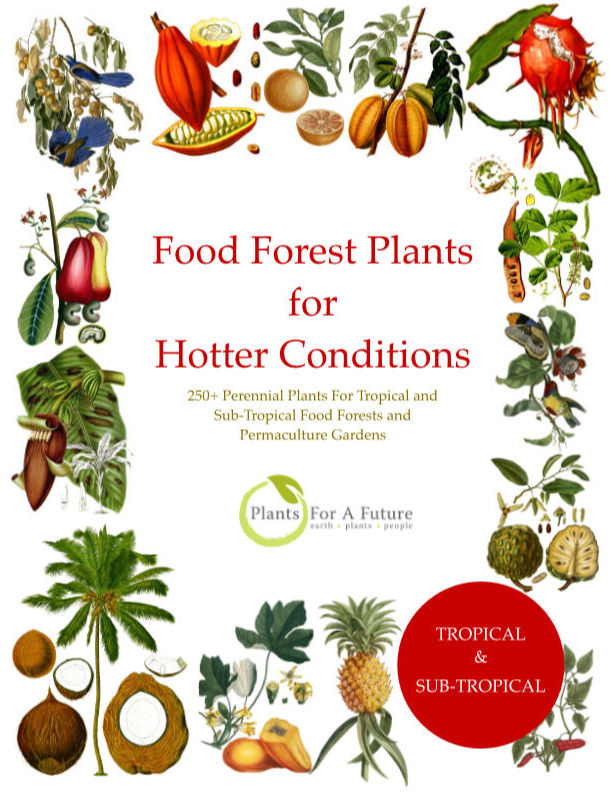
Edible Tropical Plants
Food Forest Plants for Hotter Conditions: 250+ Plants For Tropical Food Forests & Permaculture Gardens.
More
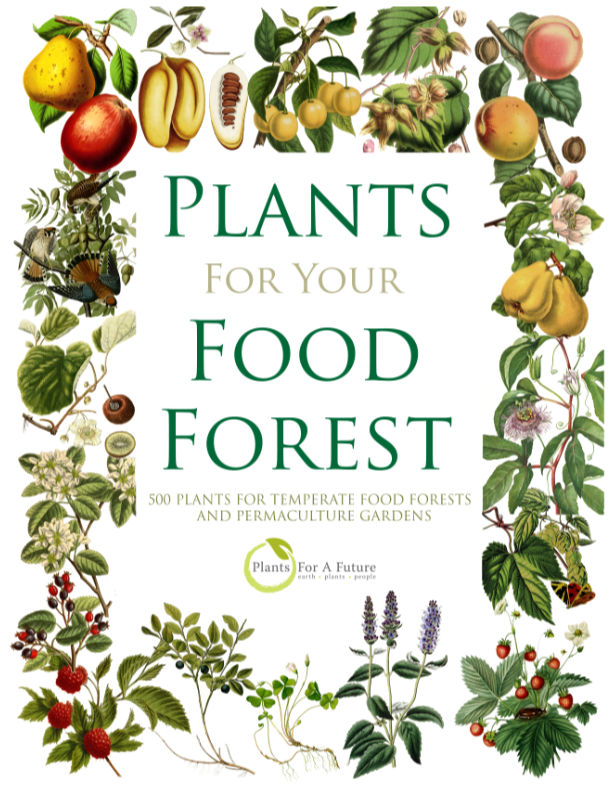
Edible Temperate Plants
Plants for Your Food Forest: 500 Plants for Temperate Food Forests & Permaculture Gardens.
More
More Books
PFAF have eight books available in paperback and digital formats. Browse the shop for more information.
Shop Now
Other Uses
Dye Hedge Hedge Ink Tannin Wood
Agroforestry uses: Pomegranates can be used as a windbreak, hedgerow, or landscape plant. They also improve soil health by providing organic matter through leaf drop. Landscape Uses: Border, Container, Espalier, Foundation, Hedge, Massing, Superior hedge. Special Features: Not North American native, Attractive flowers or blooms.
A deep rooting tree, it is important in soil erosion control, and is planted along rivers to stabilize banks[303
].
A drought-tolerant tree, it is suitable for arid and semi-arid zone reforestation[303
].
The leaf litter decomposes slowly and is suitable for mulching[303
].
The plant is also used in water purification schemes[303
].
Plants are grown as hedges in Mediterranean climates[200
]. Their wind firm stature makes them a good wind break[303
]. They are also sometimes used for fencing[303
].
The plant is traditionally grown in living fences in the northwestern Himalayas, where it helps to exclude livestock and other animals; mark out land boundaries; whilst also providing a range of medicinal and other uses[1174
]. Other Uses: A red dye is obtained from the flowers and also from the rind of unripened fruits[89, 100, 158, 168]. The dye can be red or black and it is also used as an ink[149]. It is coppery-brown in colour[168]. No mordant is required[168]. A fast yellow dye is obtained from the dried rind[194]. The dried peel of the fruit contains about 26% tannin[46, 223]. The bark can also be used as a source of tannin[146]. The root bark contains about 22% tannin, a jet-black ink can be made from it[194]. Plants are grown as hedges in Mediterranean climates[200]. Wood - very hard, compact, close-grained, durable, yellow. Used for making agricultural implements. A possible substitute for box, Buxus spp[146, 149, 158, 194]. 1. Nectary - Flowers rich in nectar and pollen:
Yes – Pomegranate flowers are known to attract pollinators, especially bees, due to their nectar and pollen production.
2. Wildlife - Food (Fruit, Seeds, Leaf litter, Shelter, Nesting, Roosting):
Yes – The fruits provide a food source for birds, small mammals, and other wildlife. The dense foliage can offer shelter and some nesting opportunities for small birds and insects.
3. Invertebrate Shelter (Overwintering sites, Leaf litter, Groundcover):
Yes – While not a primary plant for groundcover, pomegranates do provide shelter for insects through leaf litter and rough bark, making it suitable for some overwintering invertebrates.
4. Pest Confuser (Smell):
No – Pomegranate is not known for having a strong smell that would confuse or repel pests.
Special Uses
Espalier Food Forest Hedge Hedge
References More on Other Uses
Cultivation details
An easily grown plant, it prefers a well-drained fertile soil[1, 182, 260] and succeeds in a hot dry position[166]. Requires a sheltered sunny position[219]. Not very hardy in Britain, the pomegranate tolerates temperatures down to about -11°c[3], but it is best grown on a south facing wall even in the south of the country because it requires higher summer temperatures than are normally experienced in this country in order to ripen its fruit and its wood[11, 166]. The wood is also liable to be cut back by winter frosts when it is grown away from the protection of a wall[11]. Trees do not grow so well in the damper western part of Britain[182]. Most plants of this species grown in Britain are of the dwarf cultivar 'Nana'. This is hardier than the type but its fruit is not such good quality[11]. This sub-species fruited on an east-facing wall at Kew in the hot summer of 1989[K]. The pomegranate is often cultivated in warm temperate zones for its edible fruit, there are many named varieties[183]. In Britain fruits are only produced after very hot summers. Plants often sucker freely[7]. Flowers are produced on the tips of the current years growth[200]. Plants in this genus are notably resistant to honey fungus[200]. In garden design, as well as the above-ground architecture of a plant, root structure considerations help in choosing plants that work together for their optimal soil requirements including nutrients and water. The root pattern is flat with shallow roots spreading near the soil surface. The root pattern is suckering with new plants from runners away from the plant [2-1]. Heat zone: 12-7. Espalier: tree or other plant that is trained to grow flat against a support (such as a trellis or wall). Pomegranates are typically harvested in the autumn depending on the climate and variety. The flowering period usually occurs in late spring to early summer. Pomegranate trees are considered moderately fast-growing, reaching a height of 10 to 12 feet (3 to 4 meters) in about 3 to 4 years under optimal conditions. Pomegranate trees are generally self-fertile, but cross-pollination can improve fruit set and quality.
References Carbon Farming Information and Carbon Sequestration Information
Temperature Converter
Type a value in the Celsius field to convert the value to Fahrenheit:
Fahrenheit:
The PFAF Bookshop
Plants For A Future have a number of books available in paperback and digital form. Book titles include Edible Plants, Edible Perennials, Edible Trees,Edible Shrubs, Woodland Gardening, and Temperate Food Forest Plants. Our new book is Food Forest Plants For Hotter Conditions (Tropical and Sub-Tropical).
Shop Now
Plant Propagation
Seed - sow spring in a greenhouse, preferably at a temperature of 22°c[200, 238]. Prick out the seedlings into individual pots when they are large enough to handle and grow them on in the greenhouse for at least their first 2 growing seasons. Plant out in late spring or early summer. Cuttings of half-ripe wood, 4 - 5cm with a heel, June/July in a frame[78, 113]. Good percentage[78]. Cuttings of mature wood, 20 - 25cm long, November in a warm greenhouse[113]. Layering. Division of suckers in the dormant season[200]. They can be planted out direct into their permanent positions, though we prefer to pot them up first and plant them out when they are growing away well in late spring or early summer.
Other Names
If available other names are mentioned here
Anar, Chimanga cha chizungu, Dadam, Dadima, Dahua, Dalim, Dalima, Dalimba, Danimma, Delima, Dulim, Dulima, Gangsalan, Granada, Granado, Granatapgelbaum, Grenade, Luu, Madulai, Matalam, Melograna, Mkomamanga, Nar, Nkoma mawanga, Nkomawawanga, Roma, Romazeira, Romeira, Shi liu pi, Shi liu, Soekryunamu, Tab sim, Thapthim, Totim, Tuptim, Turchi, Zakuro, anaar, anar, anar (barg), anar danu, anar patta, anar-ke-per, anara, anardana, barg-e-anar, bijapura, carthaginian apple, cortex granati, dadam, dadam chal, dadam phala, dadama, dadima, dadima-phalam, dadimacchada, dadimam, dadimamu, dadimasara, dadimba, dadimbakaya, dadimma, daiimba, dalilmbe kayi, dalim, dalim patra, dalima, dalimb, dalimba, dalimbay, dalimbe haonu, dalimbe-kayi, dalimbo patro, dalimbuhannu, dalimgach, dalimma, dalimo, daluma, danimma, danposh, dantabija, dantabija, dan?abija, darakte-naiar, daran, darim, darimba, darinko bokra, dariun, daru, ddima, delima, delum, delun, dhale, dhalim, dhalima, dila dae lok, dlima, da?ima (fresh fruit), da?ima (fruit rind), da?ima (leaf), da?ima (seed), da?imacchada, ende limau, fulladanimma, gangsalan, glima glineu mekah, granada, granade, granado, granatapfel, granatapfelbaum, granatapfelstrauch, granatbaum, granate bark, granati cortex, granati pericarpium, granati semen, granatum, granatäpple, grenadier, grenadillo, gul armini, gulnar, habh-ur-rumman, humma, jaman, jeliman kalumal, kanthakasi, karakamu, karakmu, kulekhara, kupchaphala, lalimse, lelo kase, lohitapuspa, lohitapu?pa, lohitapu?pa, lohi?apu?pa, maadalai, maadalai. madalam, madala, madalai, madalam, madalangkai, madhubija, madulam, madulam pazham, madulungam, mamtalam, mangrano, matalam, mathalam, mathalanarkom, mbona wesilungu, melograno, mkoma manga, mkomamanga, nar, ngukumaanga, pelkî henar, pericarpium granati, pomegranate, pomegranate fruit, pomegranate leaf, pomegranate rind, pomegranate tree, pomegranate tree|delum, pomenagrate, posnar, pumadalai, pumatalam, qsur roman, qsur rommam, quishr-al-romman, quishr-romman, raktabija, raktabijam, ranato, roman, roman amruj, romanzeira, romanzeiro, romeira, romeira-da-granada, rommam, romman, romã, romã-de-flor-dobrada, romãzeira, roumammam-goulnar, roumamman-goulnar, ruman, rumau, rumman, rummani, rumân, se-bru, sekiryuu-karpi, seog-ryu, seogrjunamu, seokryupi, shajratur-rummam, sham-al-rumman, shi liu, shi liu hua, shi liu pi, shi liu ye, shi liu zi, shih liu pi, shiliupi, shukadana, shíliúpí, suphala, svadvamta, talima, talimatalam, thab thim, thap thim, tiyyadanima, waraq-ur-rumman, ximani, zakuro, zakuro-hi.
Native Range
TEMPERATE ASIA: Dagestan, Iran, Iraq, Russian Federation, Tajikistan, Turkey, Turkmenistan,Afghanistan. TROPICAL ASIA: India, Himachal Pradesh, Jammu and Kashmir, Uttar Pradesh,
Weed Potential
Right plant wrong place. We are currently updating this section.
Please note that a plant may be invasive in one area but may not in your area so it's worth checking.
Conservation Status
IUCN Red List of Threatened Plants Status : Status: Least Concern
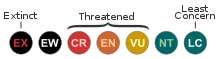
Growth: S = slow M = medium F = fast. Soil: L = light (sandy) M = medium H = heavy (clay). pH: A = acid N = neutral B = basic (alkaline). Shade: F = full shade S = semi-shade N = no shade. Moisture: D = dry M = Moist We = wet Wa = water.
Now available:
Food Forest Plants for Mediterranean Conditions
350+ Perennial Plants For Mediterranean and Drier Food Forests and Permaculture Gardens.
[Paperback and eBook]
This is the third in Plants For A Future's series of plant guides for food forests tailored to
specific climate zones. Following volumes on temperate and tropical ecosystems, this book focuses
on species suited to Mediterranean conditions—regions with hot, dry summers and cool, wet winters,
often facing the added challenge of climate change.
Read More
Expert comment
Author
L.
Botanical References
1151200
Links / References
For a list of references used on this page please go here
A special thanks to Ken Fern for some of the information used on this page.
Readers comment