 |
|
http://www.flickr.com/people/21932201@N04 |
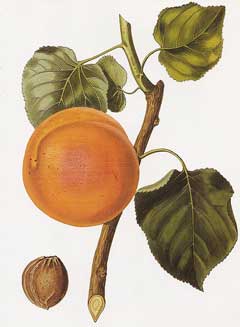 |
| http://commons.wikimedia.org/wiki/File:Turkey_apricot_RHS.jpeg |
Translate this page:
Summary
Apricot (P. armeniaca) is a dwarf to medium tree with attractive fragrant flowers. The best fruit forms are soft and juicy with a deliciously rich flavour. Yields up to 55kg (120lb) from larger trees are possible. The seeds are edible and, in warmer climates, are sweet. In colder temperate areas, they are often bitter and used as bitter almonds in making marzipan. The Italian liqueur amaretto and amaretti biscotti use the sweeter seeds. The pressed seed contains up to 50% of an edible semi-drying cooking oil known as the oil of almond. It is a protein-oil staple crop (16+ per cent protein, 16+ per cent oil). The fruit is available from mid to late summer. Earlier croppers include ‘Flavorcot’ and ‘Tomcot’. Later recommended croppers are ‘Goldcot’, ‘Golden Glow’ with smaller fruit, and ‘Vigama’. ‘Alfred’ is less prone to canker. They dislike clay and saline soils. Heat tolerant zones 8 through 1. Harvest late summer into autumn. Bloom Color: Pink. Main Bloom Time: Early spring, Late spring, Mid spring. Form: Rounded. Prunus species,
The genus Prunus includes deciduous or evergreen shrubs and trees with showy spring flowers and good autumn leaf colour; some have attractive ornamental bark. Prunus includes several species developed for fruit and nut production, such as apricots, cherries, peaches, nectarines, almonds, and plums. Other species are useful in food forests for their seed and fruit. Most edible fruit from this genus is eaten raw, cooked or dried for later use. Seeds are edible, but if they are bitter, eat them in strict moderation. Several Prunus species will succeed in light shade but fruit better in a sunny position. The seeds of all members of this genus could be used for oil extraction. The extracted oil is semi-drying. Consume in small quantities if it tastes strongly of bitter almonds. Most genus members are shallow-rooted, forming a plate near the soil surface, and will produce suckers if the roots are damaged.
Physical Characteristics

 Prunus armeniaca is a deciduous Tree growing to 9 m (29ft) by 6 m (19ft) at a medium rate.
See above for USDA hardiness. It is hardy to UK zone 5 and is not frost tender. It is in flower from March to April, and the seeds ripen from July to September. The species is hermaphrodite (has both male and female organs) and is pollinated by Insects. The plant is self-fertile.
It is noted for attracting wildlife.
Suitable for: light (sandy) and medium (loamy) soils and prefers well-drained soil. Suitable pH: mildly acid, neutral and basic (mildly alkaline) soils. It can grow in semi-shade (light woodland) or no shade. It prefers moist soil.
UK Hardiness Map
US Hardiness Map
Synonyms
Armeniaca vulgaris.
Plant Habitats
Woodland Garden Secondary; Sunny Edge; Dappled Shade; South Wall. By. West Wall. By.
Edible Uses
Edible Parts: Fruit Oil Oil Seed
Edible Uses: Gum Oil Oil
Fruit - raw, cooked or dried for later use[1, 2, 3, 34]. The best forms are soft and juicy with a delicious rich flavour[K]. Wild trees in the Himalayas yield about 47.5kg of fruit per year[194].The fruit of the wild form contains about 6.3% sugars, 0.7% protein, 2.5% ash, 2.5% pectin. There is about 10mg vitamin C per 100g of pulp[194]. The fruit is about 5cm in diameter and contains one large seed[200]. Seed - raw or cooked[183]. Bitter seeds should be eaten in strict moderation, but sweet ones can be eaten freely[132]. The bitter seeds can be used as a substitute for bitter almonds in making marzipan etc[4]. An edible gum is obtained from the trunk[64]. The seed contains up to 50% of an edible semi-drying oil[4, 57, 61, 183].
References More on Edible Uses
Medicinal Uses
Plants For A Future can not take any responsibility for any adverse effects from the use of plants. Always seek advice from a professional before using a plant medicinally.
Analgesic Anthelmintic Antiasthmatic Antidote Antipyretic Antiseptic Antispasmodic Antitussive
Demulcent Emetic Emollient Expectorant Laxative Ophthalmic Pectoral
Sedative Tonic Vitamin C Vulnerary
Apricot fruits contain citric and tartaric acid, carotenoids and flavonoids[283]. They are nutritious, cleansing and mildly laxative[254. They are a valuable addition to the diet working gently to improve overall health. The salted fruit is antiinflammatory and antiseptic[283]. It is used medicinally in Vietnam in the treatment of respiratory and digestive diseases[283]. Antipyretic, antiseptic, emetic, ophthalmic[194]. The flowers are tonic, promoting fecundity in women[218]. The bark is astringent[254]. The inner bark and/or the root are used for treating poisoning caused by eating bitter almond and apricot seeds (which contain hydrogen cyanide)[218]. Another report says that a decoction of the outer bark is used to neutralize the effects of hydrogen cyanide[238]. The decoction is also used to soothe inflamed and irritated skin conditions[254]. The seed is analgesic, anthelmintic, antiasthmatic, antispasmodic, antitussive, demulcent, emollient, expectorant, pectoral, sedative and vulnerary[176, 218]. It is used in the treatment of asthma, coughs, acute or chronic bronchitis and constipation[176, 279]. The seed contains 'laetrile', a substance that has also been called vitamin B17[218]. This has been claimed to have a positive effect in the treatment of cancer, but there does not at present seem to be much evidence to support this[K]. The pure substance is almost harmless, but on hydrolysis it yields hydrocyanic acid, a very rapidly acting poison - it should thus be treated with caution[218]. In small amounts this exceedingly poisonous compound stimulates respiration, improves digestion and gives a sense of well-being[238].
References More on Medicinal Uses
The Bookshop: Edible Plant Books
Our Latest books on Perennial Plants For Food Forests and Permaculture Gardens in paperback or digital formats.
Edible Tropical Plants
Food Forest Plants for Hotter Conditions: 250+ Plants For Tropical Food Forests & Permaculture Gardens.
More
Edible Temperate Plants
Plants for Your Food Forest: 500 Plants for Temperate Food Forests & Permaculture Gardens.
More
More Books
PFAF have eight books available in paperback and digital formats. Browse the shop for more information.
Shop Now
Other Uses
Adhesive Dye Gum Oil Oil Wood
Agroforestry uses:
Prunus species can be used as windbreaks and in alley cropping systems. They also improve biodiversity by providing habitats for pollinators and other wildlife. Some varieties can fix nitrogen in the soil, contributing to soil health.
Landscape Uses : Specimen, Espalier. An edible semi-drying oil is obtained from the seed[57]. Used for lighting[194]. The oil has a softening effect on the skin and so it is used in perfumery and cosmetics, and also in pharmaceuticals[4, 61]. A green dye can be obtained from the leaves[168]. A dark grey to green dye can be obtained from the fruit[168]. Wood - handsome, hard, durable. Agricultural implements etc[146, 194]. Espalier: tree or other plants that is trained to grow flat against a support (such as a trellis or wall). 1. Nectary - Flowers rich in nectar and pollen:
Yes – Prunus species are known for their showy flowers that produce both nectar and pollen, attracting bees, butterflies, and other pollinators.
2. Wildlife - Food (Fruit, Seeds, Leaf litter, Shelter, Nesting, Roosting):
Yes – The fruits are an important food source for birds and mammals, and the trees provide shelter through their dense foliage. Some species, especially cherries and plums, are known to support wildlife with both food and roosting/nesting sites.
3. Invertebrate Shelter (Overwintering sites, Leaf litter, Groundcover):
Yes – Prunus species offer shelter for invertebrates, particularly in their rough bark and leaf litter. They also support beneficial insects by providing overwintering sites.
4. Pest Confuser (Smell):
No – While Prunus species are fragrant when blooming, they are not known for emitting strong pest-repelling scents.
Special Uses
Carbon Farming Espalier Food Forest
References More on Other Uses
Cultivation details
Global Fruit Crop Industrial Crop: Oil Management: Standard Staple Crop: Protein-oil
Requires a well-drained moisture-retentive fertile soil in a warm sunny position[11, 200]. Succeeds in light shade but fruits better in a sunny position[200]. Thrives in a loamy soil, doing well on limestone[11]. Prefers some chalk in the soil but is apt to become chlorotic if too much is present[11]. Prefers a pH in the range 6.5 to 7.5[200]. Dislikes clay soils[37, 61]. Intolerant of saline soils[200]. Trees drop their fruit buds if there is a summer drought[200]. The apricot is widely cultivated for its edible fruit in temperate areas that have long hot summers, there are many named varieties[183, 200]. The tree is perfectly hardy in Britain but it usually flowers very early in the spring and the flowers are then liable to be destroyed by frosts[11]. It really requires a more continental climate (with its clearly defined seasons) than it gets in Britain. However, if given the benefit of a south or west facing wall and some protection from frosts when it is in flower, reasonable crops can usually be produced in southern England[1, 219]. The plants are self-fertile[200], but hand pollination would be advisable since they are normally flowering before many pollinating insects are active. In Britain apricots are usually grown on plum rootstocks, 'St. Julien A' is the most widely used[200]. The dwarfing rootstock 'Pixie' is also a possibility, but this must be double worked with 'St. Julien A' because it is incompatible with apricots[200]. Any pruning should be carried out in the summer to allow rapid healing and therefore less risk of infection[201]. Oats should not be grown near apricots because their roots have an antagonistic effect on the roots of the apricot[201]. Tomatoes and potatoes are also bad companions for apricots[201]. If nasturtiums (Tropaeoleum spp) are grown under apricots they will make the fruit less palatable to insects, though this is not detectable by the human palate[201]. Most members of this genus are shallow-rooted and will produce suckers if the roots are damaged[238]. Plants in this genus are notably susceptible to honey fungus[200]. Special Features:
Edible, Not North American native, All or parts of this plant are poisonous, Fragrant flowers, Attractive flowers or blooms. The plant is heat tolerant in zones 8 through 1. (Plant Hardiness Zones show how well plants withstand cold winter temperatures.
Plant Heat Zones show when plants would start suffering from the heat.
The Plant Heat Zone map is based on the number of "heat days" experienced in a given area where the temperature climbs to over 86 degrees F (30°C).
At this temperature, many plants begin to suffer physiological damage. Heat Zones range from 1 (no heat days) to 12 (210 or more heat days).
For example Heat Zone. 11-1 indicates that the plant is heat tolerant in zones 11 through 1.) For polyculture design as well as the above-ground architecture (form - tree, shrub etc. and size shown above) information on the habit and root pattern is also useful and given here if available. The plant growth habit is a standard with a non-suckering single trunk [1-2]. Harvesting typically occurs in late summer to early autumn, with specific timing varying by species. For instance, plums and peaches are usually harvested from July to September (Northern Hemisphere), while almonds are harvested in August to September (Northern Hemisphere).
Prunus species usually flower in early spring, often between March and April (Northern Hemisphere), depending on the species and local climate. Growth rates vary among species, but Prunus trees generally grow moderately fast, often reaching full height in 3 to 5 years. However, they may take several years to bear fruit, depending on the species and growing conditions. It varies by species. Some Prunus species (like many plums and almonds) are self-fertile, while others (like sweet cherries and certain apricots) require cross-pollination with another compatible variety for optimal fruit set.
Carbon Farming
-
Global Fruit Crop
These crops are already grown or traded around the world. The annual value of each is more than $1 billion US.
-
Industrial Crop: Oil
Materials, chemicals and energy include bioplastics, biomass, glycerin, soaps, lubricants, paints, biodiesel. Oilseed crop types.
-
Management: Standard
Plants grow to their standard height. Harvest fruit, seeds, or other products. Non-Destructive management systems.
-
Staple Crop: Protein-oil
(16+ percent protein, 16+ percent oil). Annuals include soybeans, peanuts, sunflower seeds. Perennials include seeds, beans, nuts, and fruits such as almond, Brazil nut, pistachio, walnut, hazel, and safou.
References Carbon Farming Information and Carbon Sequestration Information
Temperature Converter
Type a value in the Celsius field to convert the value to Fahrenheit:
Fahrenheit:
The PFAF Bookshop
Plants For A Future have a number of books available in paperback and digital form. Book titles include Edible Plants, Edible Perennials, Edible Trees,Edible Shrubs, Woodland Gardening, and Temperate Food Forest Plants. Our new book is Food Forest Plants For Hotter Conditions (Tropical and Sub-Tropical).
Shop Now
Plant Propagation
Seed - requires 2 - 3 months cold stratification and is best sown in a cold frame as soon as it is ripe[200]. Sow stored seed in a cold frame as early in the year as possible[200]. Protect the seed from mice etc. The seed can be rather slow, sometimes taking 18 months to germinate[113]. Prick out the seedlings into individual pots when they are large enough to handle. Grow them on in a greenhouse or cold frame for their first winter and plant them out in late spring or early summer of the following year. Cuttings of half-ripe wood with a heel, July/August in a frame[11, 200]. Difficult[113]. Softwood cuttings from strongly growing plants in spring to early summer in a frame[200]. Difficult. Layering in spring.
Other Names
If available other names are mentioned here
Native Range
TEMPERATE ASIA: China, Korea,Kyrgyzstan.
Weed Potential
Right plant wrong place. We are currently updating this section.
Please note that a plant may be invasive in one area but may not in your area so it's worth checking.
Conservation Status
IUCN Red List of Threatened Plants Status :

| Related Plants
|
| Latin Name | Common Name | Habit | Height | Hardiness | Growth | Soil | Shade | Moisture | Edible | Medicinal | Other |
| Prunus africana | Pygeum | Tree | 18.0 |
10-12
| F | LM | N | M | 0 | 5 | 2 |
| Prunus alabamensis | Alabama Cherry | Tree | 8.0 |
-
| | LMH | SN | M | 2 | 1 | 1 |
| Prunus alleghaniensis | Allegheny Plum, Davis' plum | Tree | 3.5 |
4-8
| F | LMH | SN | M | 3 | 1 | 2 |
| Prunus americana | American Plum, American Wild Plum, Wild Plum | Tree | 6.0 |
3-8
| M | LMH | SN | M | 3 | 2 | 3 |
| Prunus americana lanata | | Tree | 10.0 |
3-7
| | LMH | SN | M | 3 | 1 | 2 |
| Prunus andersonii | Desert Peach | Shrub | 1.8 |
-
| | LMH | SN | M | 2 | 2 | 1 |
| Prunus angustifolia | Chickasaw Plum, Watson's plum, Hally Jolivette Cherry | Tree | 3.0 |
5-9
| M | LMH | SN | M | 3 | 1 | 3 |
| Prunus angustifolia watsonii | Sand Plum | Shrub | 3.0 |
5-9
| | LMH | SN | M | 4 | 1 | 2 |
| Prunus apetala | Clove Cherry | Shrub | 7.0 |
-
| | LMH | SN | M | 2 | 1 | 1 |
| Prunus arabica | | Shrub | 0.0 |
-
| | LMH | SN | DM | 2 | 1 | 2 |
| Prunus armeniaca mandschurica | Manchurian apricot | Tree | 6.0 |
3-9
| M | LM | SN | M | 4 | 3 | 3 |
| Prunus avium | Wild Cherry, Sweet cherry | Tree | 18.0 |
3-7
| F | LMH | SN | M | 4 | 2 | 4 |
| Prunus besseriana | Dwarf Almond | Tree | 0.0 |
-
| | LMH | SN | M | 2 | 1 | 2 |
| Prunus besseyi | Western Sand Cherry | Shrub | 1.2 |
3-6
| M | LMH | SN | M | 4 | 1 | 2 |
| Prunus bifrons | | Shrub | 1.8 |
-
| | LMH | SN | M | 2 | 1 | 1 |
| Prunus bokharensis | Bokhara Plum | Tree | 0.0 |
-
| | LMH | SN | M | 2 | 1 | 1 |
| Prunus brigantina | Briançon Apricot | Tree | 6.0 |
6-9
| M | LMH | SN | DM | 4 | 1 | 3 |
| Prunus buergeriana | | Tree | 9.0 |
4-8
| | LMH | SN | M | 2 | 1 | 1 |
| Prunus campanulata | Taiwan Cherry | Tree | 7.0 |
7-9
| M | LMH | SN | M | 2 | 1 | 1 |
| Prunus canescens | Greyleaf Cherry | Shrub | 3.0 |
5-9
| | LMH | SN | M | 3 | 1 | 2 |
| Prunus capsica | | Tree | 0.0 |
-
| | LMH | SN | M | 2 | 1 | 1 |
| Prunus caroliniana | American Cherry Laurel, Carolina laurelcherry, Laurel Cherry, | Shrub | 12.0 |
7-10
| F | LMH | SN | DM | 2 | 1 | 3 |
| Prunus cerasifera | Cherry Plum, Myrobalan Plum, Newport Cherry Plum, Pissard Plum | Tree | 9.0 |
5-8
| M | LMH | SN | M | 4 | 1 | 3 |
| Prunus cerasifera divaricata | | Tree | 10.0 |
4-8
| | LMH | SN | M | 4 | 1 | 1 |
| Prunus cerasoides | Wild Himalayan Cherry | Tree | 30.0 |
7-10
| | LMH | SN | M | 2 | 2 | 2 |
| Prunus cerasus | Sour Cherry | Tree | 6.0 |
3-7
| | LMH | SN | M | 1 | 2 | 3 |
| Prunus cerasus austera | Morello Cherry | Tree | 9.0 |
3-7
| | LMH | SN | M | 3 | 1 | 3 |
| Prunus cerasus caproniana | Kentish Red Cherry | Tree | 9.0 |
3-7
| | LMH | SN | M | 3 | 1 | 3 |
| Prunus cerasus frutescens | Bush Sour Cherry | Tree | 1.0 |
3-7
| | LMH | SN | M | 3 | 1 | 3 |
|
|
Growth: S = slow M = medium F = fast. Soil: L = light (sandy) M = medium H = heavy (clay). pH: A = acid N = neutral B = basic (alkaline). Shade: F = full shade S = semi-shade N = no shade. Moisture: D = dry M = Moist We = wet Wa = water.
Now available:
Food Forest Plants for Mediterranean Conditions
350+ Perennial Plants For Mediterranean and Drier Food Forests and Permaculture Gardens.
[Paperback and eBook]
This is the third in Plants For A Future's series of plant guides for food forests tailored to
specific climate zones. Following volumes on temperate and tropical ecosystems, this book focuses
on species suited to Mediterranean conditions—regions with hot, dry summers and cool, wet winters,
often facing the added challenge of climate change.
Read More
Expert comment
Author
L.
Botanical References
11200266
Links / References
For a list of references used on this page please go here
Readers comment
© 2010, Plants For A Future. Plants For A Future is a charitable company limited by guarantee, registered in England and Wales. Charity No. 1057719, Company No. 3204567.