Translate this page:
Summary
Form: Upright or erect.
Physical Characteristics

 Phyllostachys nigra is an evergreen Bamboo growing to 7.5 m (24ft) by 6 m (19ft) at a fast rate.
See above for USDA hardiness. It is hardy to UK zone 7. It is in leaf all year. The species is hermaphrodite (has both male and female organs) and is pollinated by Wind.
Suitable for: light (sandy), medium (loamy) and heavy (clay) soils. Suitable pH: mildly acid, neutral and basic (mildly alkaline) soils. It can grow in semi-shade (light woodland). It prefers moist soil.
UK Hardiness Map
US Hardiness Map
Synonyms
Bambusa nigra.
Plant Habitats
Woodland Garden Sunny Edge; Dappled Shade; Shady Edge;
Edible Uses
Edible Parts: Shoots Stem
Edible Uses:
Young shoots - cooked[25, 46, 105, 177]. Somewhat acrid when raw[61], they are prepared for eating by boiling in one change of water, the water being changed after 8 - 10 minutes[183]. A distinctive taste and aroma[183]. The shoots, which are about 5cm in diameter[266], are harvested in the spring when they are about 8cm above the ground, cutting them about 5cm below soil level.
References More on Edible Uses
Medicinal Uses
Plants For A Future can not take any responsibility for any adverse effects from the use of plants. Always seek advice from a professional before using a plant medicinally.
Antiemetic Antitussive Astringent Depurative Diuretic Expectorant Febrifuge Sedative
Styptic
The leaves are antipyretic and diuretic[218]. They are used internally in the treatment of fevers (especially infantile convulsions), vomiting and nosebleeds[238]. The leave are harvested during the growing season and dried for later use[238]. The juice of the stems is antipyretic, antitussive, expectorant and sedative[147, 176, 218]. It is taken internally in the treatment of lung infections with cough and phlegm[238]. The sap is pressed from young stems in the summer and then dried for later use[238]. The epidermis of the stem bark is antiemetic, depurative and sedative[147, 176, 218]. It is used internally in the treatment of vomiting, nosebleeds, coughs etc[238]. The epidermis is collected from young stems in the summer and is dried for later use[238]. The root is astringent, antipyretic, diuretic and styptic[147, 176, 218]. It has been used in the treatment of rabies[238]. The roots are harvested in the winter and dried for later use[238].
References More on Medicinal Uses
The Bookshop: Edible Plant Books
Our Latest books on Perennial Plants For Food Forests and Permaculture Gardens in paperback or digital formats.
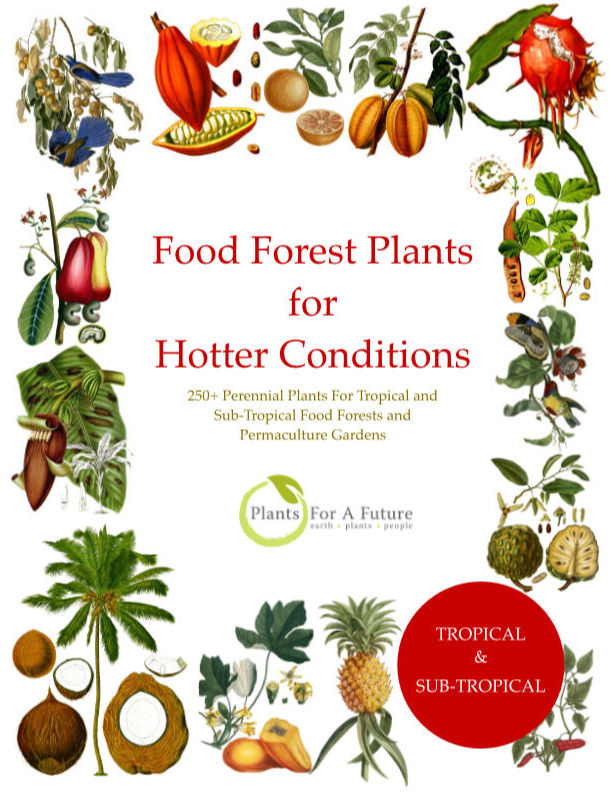
Edible Tropical Plants
Food Forest Plants for Hotter Conditions: 250+ Plants For Tropical Food Forests & Permaculture Gardens.
More
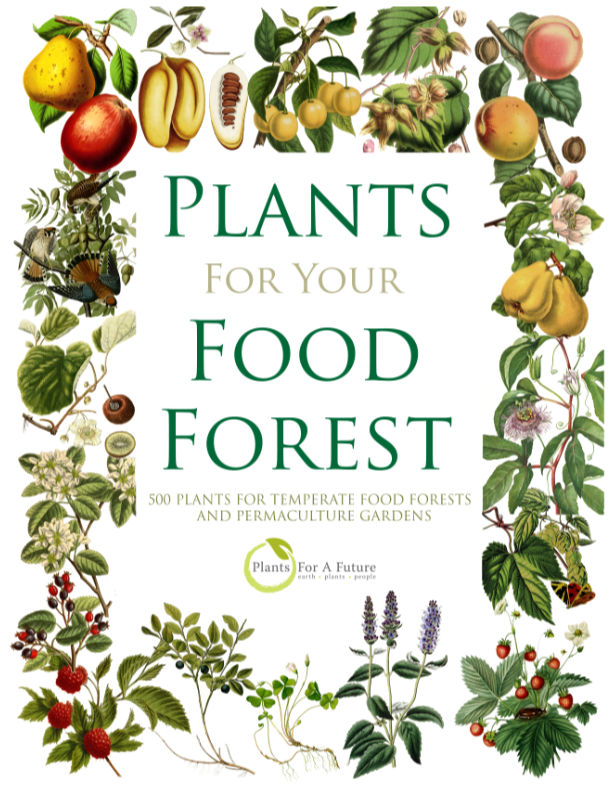
Edible Temperate Plants
Plants for Your Food Forest: 500 Plants for Temperate Food Forests & Permaculture Gardens.
More
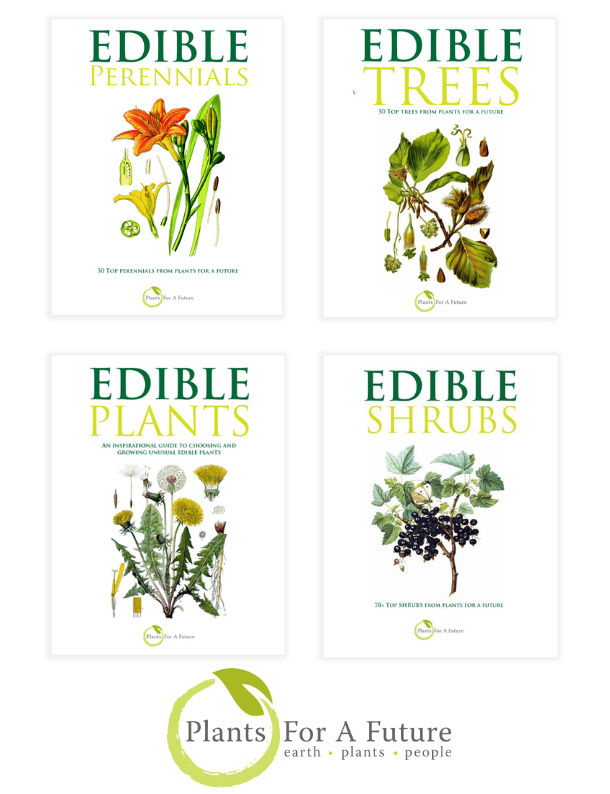
More Books
PFAF have eight books available in paperback and digital formats. Browse the shop for more information.
Shop Now
Other Uses
Basketry Plant support Wood
The canes make good plant supports. Thin walled but durable, the canes are also used for cabinet work and for decorative panels and inlays[195]. The rhizome is used in making umbrella handles, wickerwork, canes, musical instruments and various kinds of handicrafts[25, 74].
Special Uses
Food Forest
References More on Other Uses
Cultivation details
Landscape Uses:Container, Massing, Specimen. Requires a rich damp soil in a sheltered sunny position[200, 238] and plenty of moisture in the growing season[1]. A very hardy plant, tolerating temperatures down to at least -7°c, but it dislikes prolonged exposure to hard frosts[200]. Another report says that it is hardy to about -18°c[195]. A very ornamental plant[1]. There are many named forms of this species, some of them are given specific status by some botanists[11, 200]. These forms include 'Boryana', 'Fulva', 'Henonis' and 'Punctata'. It is the form 'Henonis' that is normally used medicinally in China[176]. Plants only flower at intervals of many years. When they do come into flower most of the plants energies are directed into producing seed and consequently the plant is severely weakened. They sometimes die after flowering, but if left alone they will usually recover though they will look very poorly for a few years. If fed with artificial NPK fertilizers at this time the plants are more likely to die[122]. This is a good companion species to grow in a woodland because the plants are shallow rooted and do not compete with deep rooted trees[195]. This species is notably resistant to honey fungus[200]. The plant has a running rootstock, though not aggressively so in the cooler climate of Britain[200]. and it produces new shoots from May[25]. Cultivated for its edible young shoots in China[61]. This species has been widely planted for ornament in the Mediterranean and is becoming established[50]. The ssp. P. nigra boryana and P. nigra henonis are also mentioned for their edible young shoots, they are both cultivated for their edible shoots which are similar in all respects to P. nigra. Dead stems can be removed at any time of the year[238]. It is also possible to thin the clumps in spring, leaving only the strongest stems and thus creating an open grove-like effect[238]. Special Features:
Attractive foliage.
References Carbon Farming Information and Carbon Sequestration Information
Temperature Converter
Type a value in the Celsius field to convert the value to Fahrenheit:
Fahrenheit:
The PFAF Bookshop
Plants For A Future have a number of books available in paperback and digital form. Book titles include Edible Plants, Edible Perennials, Edible Trees,Edible Shrubs, Woodland Gardening, and Temperate Food Forest Plants. Our new book is Food Forest Plants For Hotter Conditions (Tropical and Sub-Tropical).
Shop Now
Plant Propagation
Seed - surface sow as soon as it is ripe in a greenhouse at about 20°c. Do not allow the compost to dry out. Germination usually takes place fairly quickly so long as the seed is of good quality, though it can take 3 - 6 months. Grow on in a lightly shaded place in the greenhouse until large enough to plant out. Seed is rarely available. Division in spring as new growth commences. Divisions from the open ground do not transplant well, so will need careful treatment and nurturing under cover in pots until at least late spring[238]. Division is best carried out in wet weather and small divisions will establish better than large clumps[238]. Another report says that you can take large divisions from established clumps and transfer them straight to their permanent positions, misting or drenching them frequently until they are established[200]. Basal cane cuttings in spring.
Other Names
If available other names are mentioned here
Native Range
TEMPERATE ASIA: Hunan Sheng,China.
Weed Potential
Right plant wrong place. We are currently updating this section.
Please note that a plant may be invasive in one area but may not in your area so it's worth checking.
Conservation Status
IUCN Red List of Threatened Plants Status :

Growth: S = slow M = medium F = fast. Soil: L = light (sandy) M = medium H = heavy (clay). pH: A = acid N = neutral B = basic (alkaline). Shade: F = full shade S = semi-shade N = no shade. Moisture: D = dry M = Moist We = wet Wa = water.
Now available:
Food Forest Plants for Mediterranean Conditions
350+ Perennial Plants For Mediterranean and Drier Food Forests and Permaculture Gardens.
[Paperback and eBook]
This is the third in Plants For A Future's series of plant guides for food forests tailored to
specific climate zones. Following volumes on temperate and tropical ecosystems, this book focuses
on species suited to Mediterranean conditions—regions with hot, dry summers and cool, wet winters,
often facing the added challenge of climate change.
Read More
Expert comment
Author
(Lodd. ex Lindl.)Munro.
Botanical References
11200266
Links / References
For a list of references used on this page please go here
Readers comment