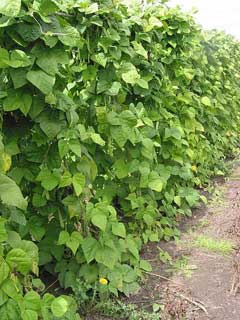
 |
|
http://commons.wikimedia.org/wiki/User:Rasbak |
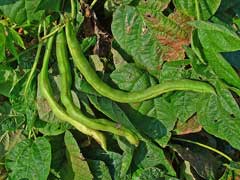 |
| http://commons.wikimedia.org/wiki/User:Llez |
Translate this page:
Summary
Physical Characteristics

 Phaseolus vulgaris is a ANNUAL growing to 2 m (6ft 7in).
See above for USDA hardiness. It is hardy to UK zone 3 and is frost tender. It is in leaf from May to October, in flower from July to September. The species is hermaphrodite (has both male and female organs) and is pollinated by Bees. The plant is self-fertile.
It can fix Nitrogen.
Suitable for: light (sandy), medium (loamy) and heavy (clay) soils and prefers well-drained soil. Suitable pH: neutral and basic (mildly alkaline) soils. It cannot grow in the shade. It prefers moist soil.
UK Hardiness Map
US Hardiness Map
Synonyms
Plant Habitats
Cultivated Beds;
Edible Uses
Edible Parts: Leaves Seed Seedpod
Edible Uses: Coffee Coffee Condiment
Immature seedpods - raw or cooked[46, 105]. The green pods are commonly used as a vegetable, they have a mild flavour and should only be cooked for a short time. When growing the plant for its seedpods, be sure to pick them whilst they are still small and tender. This will ensure the continued production of more pods by the plant. Flowering is reduced once the seeds begin to form inside the pods. The immature seeds are boiled or steamed and used as a vegetable[183]. The mature seeds are dried and stored for future use. They must be thoroughly cooked before being eaten and are best soaked in water for about 12 hours prior to this. They can be boiled, baked, pureed, ground into a powder or fermented into 'tempeh' etc[183]. The powdered seed makes a protein-enriching additive to flour, it can also be used in soups etc[K]. The seed can also be sprouted and used in salads or cooked[183]. The roasted seeds have been used as a coffee substitute[7]. Young leaves - raw or cooked as a potherb[177, 183]. The very young laves are sometimes eaten as a salad, the older leaves are cooked[269].
References More on Edible Uses
| Composition
|
| Figures in grams (g) or miligrams (mg) per 100g of food.
|
|
|
Leaves (Fresh weight)
|
|
- 36 Calories per 100g
- Water : 86.8%
- Protein: 3.6g; Fat: 0.4g; Carbohydrate: 6.6g; Fibre: 2.8g; Ash: 2.6g;
- Minerals - Calcium: 2.74mg; Phosphorus: 75mg; Iron: 9.2mg; Magnesium: 0mg; Sodium: 0mg; Potassium: 0mg; Zinc: 0mg;
- Vitamins - A: 3230mg; Thiamine (B1): 0.18mg; Riboflavin (B2): 0.06mg; Niacin: 1.3mg; B6: 0mg; C: 110mg;
- Reference: [ 269]
- Notes:
|
|
Medicinal Uses
Plants For A Future can not take any responsibility for any adverse effects from the use of plants. Always seek advice from a professional before using a plant medicinally.
Antiarthritic Antirheumatic Antitussive Cancer Diuretic Homeopathy Hypoglycaemic Hypotensive
Miscellany Narcotic Narcotic Urinary
The green pods are mildly diuretic and contain a substance that reduces the blood sugar level[218]. The dried mature pod is used according to another report[9]. It is used in the treatment of diabetes[9]. The seed is diuretic, hypoglycaemic and hypotensive[7]. Ground into a flour, it is used externally in the treatment of ulcers[7]. The seed is also used in the treatment of cancer of the blood[218]. When bruised and boiled with garlic they have cured intractable coughs[4]. The root is dangerously narcotic[4]. A homeopathic remedy is made from the entire fresh herb[9]. It is used in the treatment of rheumatism and arthritis, plus disorders of the urinary tract[9].
References More on Medicinal Uses
The Bookshop: Edible Plant Books
Our Latest books on Perennial Plants For Food Forests and Permaculture Gardens in paperback or digital formats.

Edible Tropical Plants
Food Forest Plants for Hotter Conditions: 250+ Plants For Tropical Food Forests & Permaculture Gardens.
More

Edible Temperate Plants
Plants for Your Food Forest: 500 Plants for Temperate Food Forests & Permaculture Gardens.
More

More Books
PFAF have eight books available in paperback and digital formats. Browse the shop for more information.
Shop Now
Other Uses
Biomass Dye Fungicide Miscellany
A brown dye is obtained from red kidney beans[168]. The plant contains phaseolin, which has fungicidal activity[218]. Water from the cooked beans is very effective in reviving woollen fabrics[7]. The plant residue remaining after harvesting the dried beans is a source of biomass[269].
Special Uses
Food Forest Nitrogen Fixer
References More on Other Uses
Cultivation details
Requires a warm sunny position in a rich well-drained preferably light soil with plenty of moisture in the growing season[27, 37, 200]. Dislikes heavy, wet or acid soils[16, 37]. Prefers a pH in the range 5.5 to 6.5[200]. The French bean is commonly cultivated in the temperate and subtropical zones and in montane valleys of the tropics for its edible mature seeds and immature seedpods. It is often grown to provide a major part of the protein requirement[183, 269]. A very variable plant, there are more than 1,000 named varieties ranging from dwarf forms about 30cm tall to climbing forms up to 3 metres tall[183, 186, 200, 269]. Plants are not frost-tolerant, air temperatures below 10°c can cause damage to seedlings[200]. When grown for their edible pods, the immature pods should be harvested regularly in order to promote extra flower production and therefore higher yields[200]. Yields of green pods averages about 3kg per square metre, though double this can be achieved[200]. French beans grow well with strawberries, carrots, cauliflowers, cucumbers, cabbage, beet, leek and celeriac[18, 20]. They are inhibited by alliums and fennel growing nearby[18, 20]. This species has a symbiotic relationship with certain soil bacteria, these bacteria form nodules on the roots and fix atmospheric nitrogen. Some of this nitrogen is utilized by the growing plant but some can also be used by other plants growing nearby[200]. When removing plant remains at the end of the growing season, it is best to only remove the aerial parts of the plant, leaving the roots in the ground to decay and release their nitrogen.
References Carbon Farming Information and Carbon Sequestration Information
Temperature Converter
Type a value in the Celsius field to convert the value to Fahrenheit:
Fahrenheit:
The PFAF Bookshop
Plants For A Future have a number of books available in paperback and digital form. Book titles include Edible Plants, Edible Perennials, Edible Trees,Edible Shrubs, Woodland Gardening, and Temperate Food Forest Plants. Our new book is Food Forest Plants For Hotter Conditions (Tropical and Sub-Tropical).
Shop Now
Plant Propagation
Pre-soak the seed for 12 hours in warm water and sow in mid spring in a greenhouse. Germination should take place within 10 days. When they are large enough to handle, prick the seedlings out into individual pots and plant them out after the last expected frosts. The seed can also be sown in situ in late spring though it may not ripen its seed in a cool summer.
Other Names
If available other names are mentioned here
Bush bean
Native Range
NORTHERN AMERICA: Mexico (Durango, Sinaloa, Tamaulipas, Chiapas, Guanajuato, Guerrero, Jalisco, México, Michoacán de Ocampo, Morelos, Nayarit, Oaxaca, Puebla, Querétaro, Veracruz de Ignacio de la Llave) SOUTHERN AMERICA: Costa Rica (Alajuela, San José), Guatemala (Chimaltenango, Chiquimula, Guatemala, Jalapa, Sacatepéquez, Santa Rosa, Sololá), Honduras (Francisco Morazán), Nicaragua (Estelí, Jinotega), El Salvador (Ahuachapán), Venezuela (Mérida (west), Portuguesa, Táchira, Trujillo), Bolivia (Cochabamba, Chuquisaca, Tarija), Colombia (Boyacá, Cundinamarca, Norte de Santander), Ecuador (Azuay, Chimborazo, Loja), Peru (Apurímac, Cajamarca, Cusco, Piura), Argentina (Catamarca, Jujuy, Salta, Santiago del Estero, Tucumán)
Weed Potential
Right plant wrong place. We are currently updating this section.
Please note that a plant may be invasive in one area but may not in your area so it's worth checking.
Conservation Status
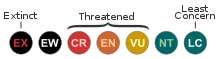
IUCN Red List of Threatened Plants Status :
Growth: S = slow M = medium F = fast. Soil: L = light (sandy) M = medium H = heavy (clay). pH: A = acid N = neutral B = basic (alkaline). Shade: F = full shade S = semi-shade N = no shade. Moisture: D = dry M = Moist We = wet Wa = water.
Now available:
Food Forest Plants for Mediterranean Conditions
350+ Perennial Plants For Mediterranean and Drier Food Forests and Permaculture Gardens.
[Paperback and eBook]
This is the third in Plants For A Future's series of plant guides for food forests tailored to
specific climate zones. Following volumes on temperate and tropical ecosystems, this book focuses
on species suited to Mediterranean conditions—regions with hot, dry summers and cool, wet winters,
often facing the added challenge of climate change.
Read More
Expert comment
Author
L.
Botanical References
200
Links / References
For a list of references used on this page please go here
A special thanks to Ken Fern for some of the information used on this page.
Readers comment