 |
|
|
 |
| http://commons.wikimedia.org/wiki/User:Radomil |
Translate this page:
Summary
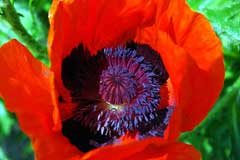
Bloom Color: Orange, Pink, Purple, Red, White. Main Bloom Time: Late spring, Mid spring. Form: Irregular or sprawling.
Physical Characteristics

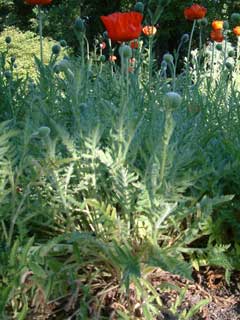
 Papaver orientale is a PERENNIAL growing to 1 m (3ft 3in) by 0.8 m (2ft 7in) at a medium rate.
See above for USDA hardiness. It is hardy to UK zone 3 and is not frost tender. It is in flower from May to June, and the seeds ripen from July to August. The species is hermaphrodite (has both male and female organs) and is pollinated by Bees. The plant is self-fertile.
It is noted for attracting wildlife.
Suitable for: light (sandy) and medium (loamy) soils, prefers well-drained soil and can grow in nutritionally poor soil. Suitable pH: mildly acid, neutral and basic (mildly alkaline) soils. It cannot grow in the shade. It prefers dry or moist soil and can tolerate drought.
UK Hardiness Map
US Hardiness Map
Synonyms
P. bracteatum. Lindley.
Plant Habitats
Meadow; Cultivated Beds;
Edible Uses
Edible Parts:
Edible Uses: Condiment
The young seed heads are used as a condiment, they are hot and acrid[2, 105, 183]. Some caution is advised, see the notes above on toxicity.
References More on Edible Uses
Medicinal Uses
Plants For A Future can not take any responsibility for any adverse effects from the use of plants. Always seek advice from a professional before using a plant medicinally.
Diaphoretic
The petals are sudorific[240].
References More on Medicinal Uses
The Bookshop: Edible Plant Books
Our Latest books on Perennial Plants For Food Forests and Permaculture Gardens in paperback or digital formats.
Edible Tropical Plants
Food Forest Plants for Hotter Conditions: 250+ Plants For Tropical Food Forests & Permaculture Gardens.
More
Edible Temperate Plants
Plants for Your Food Forest: 500 Plants for Temperate Food Forests & Permaculture Gardens.
More
More Books
PFAF have eight books available in paperback and digital formats. Browse the shop for more information.
Shop Now
Other Uses
References More on Other Uses
Cultivation details
Landscape Uses:Alpine garden, Container, Foundation, Rock garden, Specimen, Woodland garden. Prefers a well-drained sandy loam in a sunny position[1, 200]. Succeeds in an ordinary good soil[111, 200] and in dry soils, tolerating drought when established[190]. Plants prefer a deep soil that is poor and dry rather than rich, they dislike moist conditions[233]. Plants can be grown in quite coarse grass, which can be cut annually in the autumn[233]. A deep-rooting and almost indestructible plant, every scrap of the running root system that is left in the ground can grow into a new plant[190, 233]. There are many named varieties selected for their ornamental value[187, 200]. Members of this genus are rarely if ever troubled by browsing deer or rabbits[233]. A good bee plant[108]. Special Features:
Attractive foliage, All or parts of this plant are poisonous, Attracts butterflies, Suitable for cut flowers.
References Carbon Farming Information and Carbon Sequestration Information
Temperature Converter
Type a value in the Celsius field to convert the value to Fahrenheit:
Fahrenheit:
The PFAF Bookshop
Plants For A Future have a number of books available in paperback and digital form. Book titles include Edible Plants, Edible Perennials, Edible Trees,Edible Shrubs, Woodland Gardening, and Temperate Food Forest Plants. Our new book is Food Forest Plants For Hotter Conditions (Tropical and Sub-Tropical).
Shop Now
Plant Propagation
Seed - sow June in an outdoor seedbed. Plant into permanent positions in September. Seed can also be sown in spring and may then flower in late summer. Division in March or October with care[200]. Another report suggests that division is very simple[190]. Larger divisions can be planted out direct into their permanent positions. We have found that it is better to pot up the smaller divisions and grow them on in light shade in a cold frame until they are well established before planting them out in late spring or early summer. Root cuttings 10cm long, November/December in a cold frame[111].
Other Names
If available other names are mentioned here
Native Range
TEMPERATE ASIA: Iran (northwest), Turkey (northeast), Armenia, Azerbaijan, Georgia
Weed Potential
Right plant wrong place. We are currently updating this section.
Please note that a plant may be invasive in one area but may not
in your area so it's worth checking.
Conservation Status
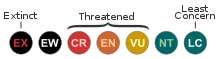
IUCN Red List of Threatened Plants Status :
IUCN Red List
| Related Plants
|
| Latin Name | Common Name | Habit | Height | Hardiness | Growth | Soil | Shade | Moisture | Edible | Medicinal | Other |
| Argemone albiflora | White Prickly Poppy, Bluestem pricklypoppy | Annual | 1.5 |
6-9
| | L | N | DM | 0 | 1 | |
| Argemone mexicana | Prickly Poppy, Mexican pricklypoppy | Perennial | 0.6 |
7-10
| | L | N | DM | 1 | 3 | 2 |
| Chelidonium majus | Greater Celandine, Swallow Wort, Greater Celandine | Perennial | 0.5 |
5-8
| F | LMH | FSN | M | 1 | 3 | 2 |
| Corydalis ambigua | | Perennial | 0.2 |
5-9
| | LM | S | M | 1 | 3 | |
| Corydalis aurea | Scrambled Eggs | Annual/Biennial | 0.5 |
5-9
| | LM | S | M | 0 | 2 | |
| Corydalis cava | | Perennial | 0.2 |
5-9
| | LM | S | M | 0 | 3 | |
| Corydalis edulis | | Perennial | 0.0 |
-
| | LM | S | M | 1 | 0 | |
| Corydalis falconeri | | Perennial | 0.0 |
-
| | LM | S | M | 0 | 0 | 1 |
| Corydalis govaniana | | Perennial | 0.0 |
-
| | LM | SN | M | 0 | 2 | |
| Corydalis incisa | Incised fumewort | Annual/Biennial | 0.3 |
6-10
| | LM | S | M | 1 | 1 | 0 |
| Corydalis intermedia | | Perennial | 0.2 |
-
| | LM | S | M | 0 | 1 | |
| Corydalis juncea | | Perennial | 0.0 |
-
| | LM | SN | M | 1 | 0 | |
| Corydalis ochotensis | | Biennial | 1.0 |
-
| | LM | SN | M | 1 | 0 | |
| Corydalis pallida | | Biennial | 0.3 |
-
| | LM | SN | M | 1 | 0 | |
| Corydalis solida | Fumewort, Spring fumewort | Perennial | 0.2 |
5-9
| | LM | S | M | 1 | 3 | |
| Corydalis ternata | Three-Leaf Corydalis | Perennial | 0.2 |
-
| | LM | SN | M | 0 | 2 | |
| Corydalis vaginans | | Annual/Biennial | 0.0 |
4-8
| | LM | SN | M | 0 | 1 | |
| Corydalis yanhusuo | Yan Hu Suo | Perennial | 0.0 |
-
| | LM | SN | M | 0 | 3 | |
| Dicentra canadensis | Squirrel Corn | Perennial | 0.2 |
4-8
| | LM | FS | M | 1 | 2 | |
| Dicentra cucullaria | Dutchman's Breeches | Perennial | 0.1 |
5-9
| M | LM | FS | M | 0 | 2 | |
| Dicentra eximia | Dwarf bleeding heart, turkey-corn | Perennial | 0.4 |
3-9
| M | LMH | FS | M | 0 | 0 | 4 |
| Dicentra spectabilis | Bleeding Heart, Japanese Bleeding Heart, Common Bleeding Heart | Perennial | 0.6 |
3-9
| M | LM | SN | M | 1 | 0 | |
| Eschscholzia californica | Californian Poppy | Perennial | 0.3 |
6-10
| F | LMH | N | DM | 1 | 3 | 3 |
| Glaucium flavum | Horned Poppy, Yellow hornpoppy | Perennial | 0.6 |
6-9
| S | LMH | N | DM | 2 | 1 | 2 |
| Macleaya cordata | Plume Poppy | Perennial | 2.0 |
4-10
| F | LMH | SN | M | 0 | 1 | 1 |
| Meconopsis aculeata | | Perennial | 0.6 |
6-9
| | LMH | S | M | 1 | 2 | |
| Meconopsis grandis | Blue Poppy | Perennial | 1.0 |
4-8
| | LMH | S | M | 1 | 0 | |
| Meconopsis napaulensis | Himalayan Poppy | Perennial | 2.0 |
7-10
| | LMH | S | M | 1 | 1 | |
| Papaver argemone | Prickly Poppy, Long pricklyhead poppy | Annual | 0.4 |
7-10
| | LMH | N | M | 0 | 1 | |
| Papaver dubium | Long-Head Poppy, Blindeyes | Annual | 0.5 |
6-9
| | LMH | N | M | 0 | 1 | 0 |
|
|
Growth: S = slow M = medium F = fast. Soil: L = light (sandy) M = medium H = heavy (clay). pH: A = acid N = neutral B = basic (alkaline). Shade: F = full shade S = semi-shade N = no shade. Moisture: D = dry M = Moist We = wet Wa = water.
Now available:
Food Forest Plants for Mediterranean Conditions
350+ Perennial Plants For Mediterranean and Drier Food Forests and Permaculture Gardens.
[Paperback and eBook]
This is the third in Plants For A Future's series of plant guides for food forests tailored to
specific climate zones. Following volumes on temperate and tropical ecosystems, this book focuses
on species suited to Mediterranean conditions—regions with hot, dry summers and cool, wet winters,
often facing the added challenge of climate change.
Read More
Expert comment
Author
L.
Botanical References
74200
Links / References
For a list of references used on this page please go here
Readers comment
| Add a comment |
|
If you have important information about this plant that may help other users please add a comment or link below. Only comments or links that are felt to be directly relevant to a plant will be included. If you think a comment/link or information contained on this page is inaccurate or misleading we would welcome your feedback at [email protected]. If you have questions about a plant please use the Forum on this website as we do not have the resources to answer questions ourselves.
* Please note: the comments by website users are not necessarily those held by PFAF and may give misleading or inaccurate information.
|
Subject : Papaver orientale
|
|
|
|