 |
|
http://commons.wikimedia.org/wiki/User:Epibase |
 |
| http://commons.wikimedia.org/wiki/User:Epibase |
Translate this page:
Summary
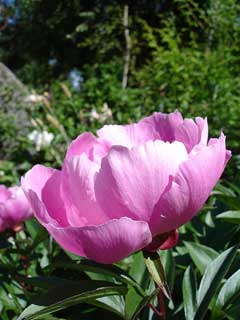
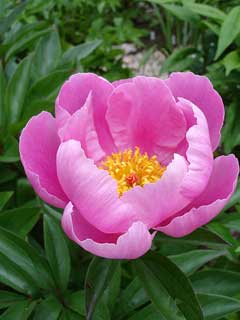
Bloom Color: Pink, Red, White, Yellow. Main Bloom Time: Early summer, Late spring. Form: Upright or erect.
Physical Characteristics

 Paeonia lactiflora is a PERENNIAL growing to 0.8 m (2ft 7in) by 0.5 m (1ft 8in) at a medium rate.
See above for USDA hardiness. It is hardy to UK zone 6. It is in flower in June, and the seeds ripen in August. The species is hermaphrodite (has both male and female organs) and is pollinated by Insects. The plant is self-fertile.
Suitable for: light (sandy), medium (loamy) and heavy (clay) soils and can grow in heavy clay soil. Suitable pH: mildly acid, neutral and basic (mildly alkaline) soils. It can grow in semi-shade (light woodland) or no shade. It prefers dry or moist soil.
UK Hardiness Map
US Hardiness Map
Synonyms
P. albiflora. P. edulis.
Plant Habitats
Woodland Garden Sunny Edge; Dappled Shade; Shady Edge;
Edible Uses
Edible Parts: Root Seed Stem
Edible Uses:
Root - cooked and eaten in a broth[2, 4, 46, 183]. Stems - cooked[177]. Seed - powdered and mixed with tea[4, 183].
References More on Edible Uses
Medicinal Uses
Plants For A Future can not take any responsibility for any adverse effects from the use of plants. Always seek advice from a professional before using a plant medicinally.
Alterative Analgesic Anodyne Antibacterial Antiinflammatory Antiseptic Antispasmodic Astringent
Carminative Diuretic Emmenagogue Expectorant Febrifuge Hypotensive Nervine
Tonic Women's complaints
The root of Chinese peony has been used for over 1,500 years in Chinese medicine. It is known most widely as one of the herbs used to make 'Four Things Soup', a woman's tonic, and it is also a remedy for gynaecological problems and for cramp, pain and giddiness[254]. When the whole root is harvested it is called Chi Shao Yao, if the bark is removed during preparation then it is called Bai Shao Yao[250]. The root is alterative, analgesic, anodyne, antibacterial, anti-inflammatory, antiseptic, antispasmodic, astringent, carminative, diuretic, emmenagogue, expectorant, febrifuge, hypotensive, nervine and tonic[176, 218, 238, 279]. The most important ingredient medicinally in the root is paeoniflorin, which has been shown to have a strong antispasmodic effect on mammalian intestines, it also reduces blood pressure, reduces body temperature caused by fever and protects against stress ulcers[250]. It is taken internally in the treatment of menstrual disorders, injuries, high blood pressure, pre-menstrual tension and liver disorders[238]. It should only be used under the supervision of a qualified practitioner and should not be prescribed for pregnant women[238]. The roots are harvested in the autumn from cultivated plants that are 4 - 5 years old and are boiled before being sun-dried for later use[238, 250]. The roots of wild plants are harvested in the spring or (preferably) in the autumn and are sun-dried for later use[238]. The root is an ingredient of 'Four Things Soup', the most widely used woman's tonic in China[254]. The other species used are Rehmannia glutinosa, Ligusticum wallichii and Angelica sinensis[254]. A tea made from the dried crushed petals of various peony species has been used as a cough remedy, and as a treatment for haemorrhoids and varicose veins[250].
References More on Medicinal Uses
The Bookshop: Edible Plant Books
Our Latest books on Perennial Plants For Food Forests and Permaculture Gardens in paperback or digital formats.

Edible Tropical Plants
Food Forest Plants for Hotter Conditions: 250+ Plants For Tropical Food Forests & Permaculture Gardens.
More

Edible Temperate Plants
Plants for Your Food Forest: 500 Plants for Temperate Food Forests & Permaculture Gardens.
More

More Books
PFAF have eight books available in paperback and digital formats. Browse the shop for more information.
Shop Now
Other Uses
References More on Other Uses
Cultivation details
Landscape Uses:Border, Foundation, Massing, Seashore, Specimen. An easily grown and undemanding plant[250], it does best in a deep rich soil, preferably neutral or slightly alkaline[1], doing quite well in sun or light shade[1, 200]. Plants are tolerant of a wide range of soil conditions, but will not survive if the soil becomes waterlogged or is too dry[250]. This species is lime tolerant[200]. Plants grown on sandy soils tend to produce more leaves and less flowers, whilst those growing on clay take longer to become established but produce better blooms[250]. Prefers a rich heavy soil that is well-drained but remains moist in the summer[187]. The species is hardy to about -25°c, but there are many named varieties some of which are hardy to about -50°[187]. Cultivated as a medicinal plant in China[178]. A very ornamental[1] and long-lived plant, surviving in gardens for 50 years or more[200]. Many hundreds of named varieties have been developed for their ornamental value[250]. Members of this genus are rarely if ever troubled by browsing deer or rabbits[233]. A greedy plant, inhibiting the growth of nearby plants, especially legumes[54]. Strongly resents root disturbance, taking some time to recover if it is transplanted[1]. Plants should be planted with their crowns no more than 3cm below soil level. If planted deeper they do not flower so well[187]. Peony species are usually self-fertile, though they will also hybridise with other species if these flower nearby at the same time[250]. Plants take 4 - 5 years to flower from seed[200]. They generally breed true from seed[1]. Special Features:Attractive foliage, Naturalizing, Suitable for cut flowers, Suitable for dried flowers, Fragrant flowers.
References Carbon Farming Information and Carbon Sequestration Information
Temperature Converter
Type a value in the Celsius field to convert the value to Fahrenheit:
Fahrenheit:
The PFAF Bookshop
Plants For A Future have a number of books available in paperback and digital form. Book titles include Edible Plants, Edible Perennials, Edible Trees,Edible Shrubs, Woodland Gardening, and Temperate Food Forest Plants. Our new book is Food Forest Plants For Hotter Conditions (Tropical and Sub-Tropical).
Shop Now
Plant Propagation
Seed - best sown as soon as it is ripe in a cold frame[250]. When sown fresh, the seed produces a root about 6 weeks after sowing with shoots formed in the spring[200]. Stored seed is much slower, it should be sown as soon as possible in a cold frame but may take 18 months or more to germinate[200]. The roots are very sensitive to disturbance, so many growers allow the seedlings to remain in their pots for 2 growing seasons before potting them up. This allows a better root system to develop that is more resilient to disturbance[250]. If following this practice, make sure you sow the seed thinly, and give regular liquid feeds in the growing season to ensure the plants are well fed. We usually prick out the seedlings into individual pots as soon as they are large enough to handle, and then grow them on in a cold frame for at least two growing seasons before planting them out when they are in growth in the spring[K]. Division with great care in spring or autumn. Each portion must have a leaf bud. If the lifted root is stood in shade for several hours it becomes less brittle and easier to divide[200]. Divisions that have several buds will usually flower in the second year, but those that only have one or two buds will take a number of years before they have grown sufficiently to flower[250].
Other Names
If available other names are mentioned here
Native Range
TEMPERATE ASIA: Russian Federation (Chita), Mongolia (east), Russian Federation (Primorye, Amur), China (Gansu Sheng (south), Hebei Sheng, Heilongjiang Sheng, Jilin Sheng, Liaoning Sheng, Nei Mongol Zizhiqu, Ningxia Huizi Zizhiqu (south), Shaanxi Sheng, Shanxi Sheng), Korea, South, Korea, North
Weed Potential
Right plant wrong place. We are currently updating this section.
Please note that a plant may be invasive in one area but may not in your area so it's worth checking.
Conservation Status
IUCN Red List of Threatened Plants Status :

Growth: S = slow M = medium F = fast. Soil: L = light (sandy) M = medium H = heavy (clay). pH: A = acid N = neutral B = basic (alkaline). Shade: F = full shade S = semi-shade N = no shade. Moisture: D = dry M = Moist We = wet Wa = water.
Now available:
Food Forest Plants for Mediterranean Conditions
350+ Perennial Plants For Mediterranean and Drier Food Forests and Permaculture Gardens.
[Paperback and eBook]
This is the third in Plants For A Future's series of plant guides for food forests tailored to
specific climate zones. Following volumes on temperate and tropical ecosystems, this book focuses
on species suited to Mediterranean conditions—regions with hot, dry summers and cool, wet winters,
often facing the added challenge of climate change.
Read More
Expert comment
Author
Pall.
Botanical References
74200266
Links / References
For a list of references used on this page please go here
Readers comment
© 2010, Plants For A Future. Plants For A Future is a charitable company limited by guarantee, registered in England and Wales. Charity No. 1057719, Company No. 3204567.