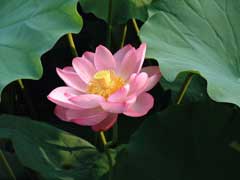
 |
|
http://commons.wikimedia.org/wiki/File:Nelumbo_nucifera_Blanco1.158.png |
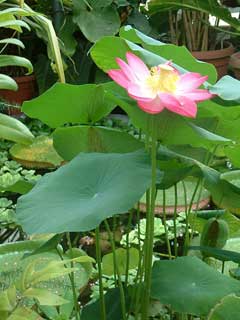 |
|
Translate this page:
Summary
Physical Characteristics

 Nelumbo nucifera is a PERENNIAL growing to 1 m (3ft 3in) by 1 m (3ft 3in).
See above for USDA hardiness. It is hardy to UK zone 5. It is in flower from July to August. The species is hermaphrodite (has both male and female organs) and is pollinated by Insects, beetles.
Suitable for: light (sandy), medium (loamy) and heavy (clay) soils. Suitable pH: mildly acid, neutral and basic (mildly alkaline) soils. It cannot grow in the shade. It can grow in water.
UK Hardiness Map
US Hardiness Map
Synonyms
Nelumbium speciosum
Plant Habitats
Pond;
Edible Uses
Edible Parts: Flowers Leaves Root Seed Stem
Edible Uses: Coffee
Root - cooked as a vegetable[1, 46, 61, 272]. It is also a source of starch or arrowroot[2, 61]. Much used and relished in Chinese cooking, the root has a mild flavour[178] and a crisp texture[206]. It can be cooked with other vegetables, soaked in syrup or pickled in vinegar[264]. The root contains about 1.7% protein, 0.1% fat, 9.7% carbohydrate, 1.1% ash[179]. Young leaves - cooked or raw[46, 61, 117, 183]. Used as a vegetable[272]. The leaves can also be used to wrap small parcels of food before cooking them[264]. Stems - cooked. A taste somewhat like beet[2, 105]. They are usually peeled before use[193]. Seed - raw or cooked[1, 46, 51, 183, 272]. A delicate flavour[2]. The seed can be popped like popcorn, ground into a powder and used in making bread or eaten dry[183]. The bitter tasting embryo is often removed[116, 117]. The seed contains about 15.9% protein, 2.8% fat, 70% carbohydrate, 3.9% ash[179]. The roasted seed is a coffee substitute[183]. Petals can be floated in soups or used as a garnish[183]. The stamens are used to flavour tea[183].
References More on Edible Uses
Medicinal Uses
Plants For A Future can not take any responsibility for any adverse effects from the use of plants. Always seek advice from a professional before using a plant medicinally.
Antidiarrhoeal Astringent Cancer Cardiotonic Dysentery Febrifuge Hypotensive Miscellany
Miscellany Resolvent Stomachic Styptic Tonic Urinary Vasodilator
The Sacred water lotus has been used in the Orient as a medicinal herb for well over 1,500 years[238]. All parts of the plant are used, they are astringent, cardiotonic, febrifuge, hypotensive, resolvent, stomachic, styptic, tonic and vasodilator[116, 147, 152, 176, 238, 240]. The leaf juice is used in the treatment of diarrhoea and is decocted with liquorice (Glycyrrhiza spp) for the treatment of sunstroke[218]. A decoction of the flowers is used in the treatment of premature ejaculation[218]. The flowers are recommended as a cardiac tonic[240]. A decoction of the floral receptacle is used in the treatment of abdominal cramps, bloody discharges etc[218]. The flower stalk is haemostatic[176]. It is used in treating bleeding gastric ulcers, excessive menstruation, post-partum haemorrhage[238]. The stamens are used in treating urinary frequency, premature ejaculation, haemolysis, epistasis and uterine bleeding[176, 238]. A decoction of the fruit is used in the treatment of agitation, fever, heart complaints etc[218]. The seed contains several medically active constituents, including alkaloids and flavonoids[279]. It is hypotensive, sedative and vasodilator[176, 279]. The seed has been shown to lower cholesterol levels and to relax the smooth muscle of the uterus[279]. It is used in the treatment of poor digestion, enteritis, chronic diarrhoea, spermatorrhoea, leukorrhoea, insomnia, palpitations etc[176, 218, 238, 279]. The plumule and radicle are used to treat thirst in high febrile disease, hypertension, insomnia and restlessness[176, 238]. The root is tonic[218]. The root starch is used in the treatment of diarrhoea, dysentery etc, a paste is applied to ringworm and other skin ailments[218]. It is also taken internally in the treatment of haemorrhages, excessive menstruation and nosebleeds[238]. The roots are harvested in autumn or winter and dried for later use[238]. The root nodes are used in the treatment of nasal bleeding, haemoptysis, haematuria and functional bleeding of the uterus[176]. The plant has a folk history in the treatment of cancer, modern research has isolated certain compounds from the plant that show anticancer activity[218].
References More on Medicinal Uses
The Bookshop: Edible Plant Books
Our Latest books on Perennial Plants For Food Forests and Permaculture Gardens in paperback or digital formats.

Edible Tropical Plants
Food Forest Plants for Hotter Conditions: 250+ Plants For Tropical Food Forests & Permaculture Gardens.
More

Edible Temperate Plants
Plants for Your Food Forest: 500 Plants for Temperate Food Forests & Permaculture Gardens.
More

More Books
PFAF have eight books available in paperback and digital formats. Browse the shop for more information.
Shop Now
Other Uses
References More on Other Uses
Cultivation details
Minor Global Crop Staple Crop: Balanced carb
Requires a rich loam[1]. Succeeds in water up to 2.5 metres deep[200]. In cooler climates, however, it should be grown in shallower water, though no less than 30 cm deep, which will warm up more quickly and encourage better growth and flowering[200]. The plant is happiest with water temperatures of 23 - 27°c in the growing season[260] and requires a five month growing season[264]. This species is not tremendously hardy when grown outdoors in Britain and it is best, once the leaves have died down in the autumn, to store the roots in a frost-free place, either in a tub of water or in moist sand[264].. Plants are resentful of root disturbance and should be planted into their permanent positions as soon as possible[200]. Once established, they can become invasive when growing in suitable conditions[238]. A very ornamental plant[1], there are many named varieties some of which have been developed for their edible uses[183]. It is said that pink-flowered forms are preferred for their edible seeds whilst the white-flowered forms are preferred for their edible roots[264]. Most forms are not cold-hardy outdoors in Britain but some, especially those from far eastern provenances are much hardier and will possibly succeed outdoors in favoured areas of Britain[200]. The flowers have a sweet fruity perfume[245]. This is the sacred Lotus of India and it is much cultivated as a food plant in the Orient[1, 2].
Carbon Farming
-
Minor Global Crop
These crops are already grown or traded around the world, but on a smaller scale than the global perennial staple and industrial crops, The annual value of a minor global crop is under $1 billion US. Examples include shea, carob, Brazil nuts and fibers such as ramie and sisal.
-
Staple Crop: Balanced carb
(0-15 percent protein, 0-15 percent oil, with at least one over 5 percent). The carbohydrates are from either starch or sugar. Annuals include maize, wheat, rice, and potato. Perennials include chestnuts, carob, perennial fruits, nuts, cereals, pseudocereals, woody pods, and acorns.
References Carbon Farming Information and Carbon Sequestration Information
Temperature Converter
Type a value in the Celsius field to convert the value to Fahrenheit:
Fahrenheit:
The PFAF Bookshop
Plants For A Future have a number of books available in paperback and digital form. Book titles include Edible Plants, Edible Perennials, Edible Trees,Edible Shrubs, Woodland Gardening, and Temperate Food Forest Plants. Our new book is Food Forest Plants For Hotter Conditions (Tropical and Sub-Tropical).
Shop Now
Plant Propagation
Seed - file the seed across its centre, being very careful not to damage the flesh of the seed, and soak in warm water, changing the water twice a day until signs of germination are seen, which should be within 3 - 4 weeks at 25°c. Plant in individual pots just covered in water and increase the depth as the plant grows. Division in spring as the plant comes into growth. Be very careful, the plants deeply resent root disturbance[200].
Other Names
If available other names are mentioned here
Native Range
TEMPERATE ASIA: Iran (northwest), Azerbaijan (east), Russian Federation (Primorye, Amur), China (south & east), Korea, Japan, Taiwan TROPICAL ASIA: Bhutan, India, Sri Lanka, Nepal, Papua New Guinea, Myanmar, Thailand, Vietnam, Indonesia, Malaysia, Philippines AUSTRALASIA: Australia (Queensland, Northern Territory (north)) EUROPE: Russian Federation-European part (European part (southeast))
Weed Potential
Right plant wrong place. We are currently updating this section.
Please note that a plant may be invasive in one area but may not in your area so it's worth checking.
Conservation Status
IUCN Red List of Threatened Plants Status :

Growth: S = slow M = medium F = fast. Soil: L = light (sandy) M = medium H = heavy (clay). pH: A = acid N = neutral B = basic (alkaline). Shade: F = full shade S = semi-shade N = no shade. Moisture: D = dry M = Moist We = wet Wa = water.
Now available:
Food Forest Plants for Mediterranean Conditions
350+ Perennial Plants For Mediterranean and Drier Food Forests and Permaculture Gardens.
[Paperback and eBook]
This is the third in Plants For A Future's series of plant guides for food forests tailored to
specific climate zones. Following volumes on temperate and tropical ecosystems, this book focuses
on species suited to Mediterranean conditions—regions with hot, dry summers and cool, wet winters,
often facing the added challenge of climate change.
Read More
Expert comment
Author
Gaertn.
Botanical References
51200
Links / References
For a list of references used on this page please go here
Readers comment