Translate this page:
Summary
Form: Irregular or sprawling.
Physical Characteristics

 Matteuccia struthiopteris is a FERN growing to 1 m (3ft 3in) by 0.5 m (1ft 8in) at a medium rate.
See above for USDA hardiness. It is hardy to UK zone 2.
Suitable for: light (sandy), medium (loamy) and heavy (clay) soils and can grow in heavy clay soil. Suitable pH: mildly acid and neutral soils and can grow in very acid soils.
It can grow in semi-shade (light woodland). It prefers moist soil.
UK Hardiness Map
US Hardiness Map
Synonyms
Onoclea germanica. Pterinodes struthiopteris. Struthiopteris germanica.
Plant Habitats
Woodland Garden Dappled Shade; Shady Edge; Ground Cover;
Edible Uses
Edible Parts: Leaves Root
Edible Uses:
Young fronds - raw or cooked[62, 102, 116, 172]. Used before they fully unroll, they are thick and succulent[183]. Sometimes sold in speciality markets, the flavour can be compared to asparagus[200]. Another report says that they are a famine food that is only used in times of need in China[177]. Rootstock - peeled and roasted[106, 172, 183].
References More on Edible Uses
Medicinal Uses
Plants For A Future can not take any responsibility for any adverse effects from the use of plants. Always seek advice from a professional before using a plant medicinally.
Birthing aid Miscellany
A decoction of the leaf stalk base from sterile fronds has been taken in the treatment of back pain and also to help speed up the expulsion of the afterbirth[257].
References More on Medicinal Uses
The Bookshop: Edible Plant Books
Our Latest books on Perennial Plants For Food Forests and Permaculture Gardens in paperback or digital formats.
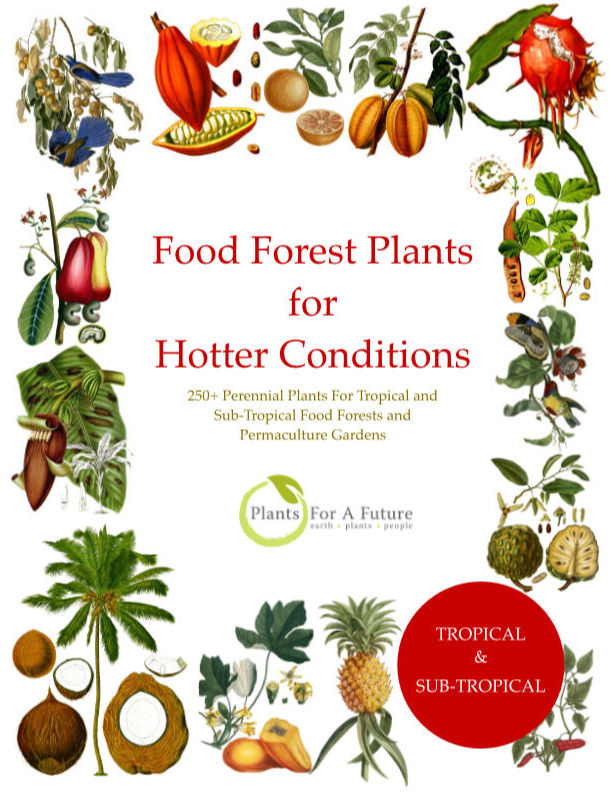
Edible Tropical Plants
Food Forest Plants for Hotter Conditions: 250+ Plants For Tropical Food Forests & Permaculture Gardens.
More
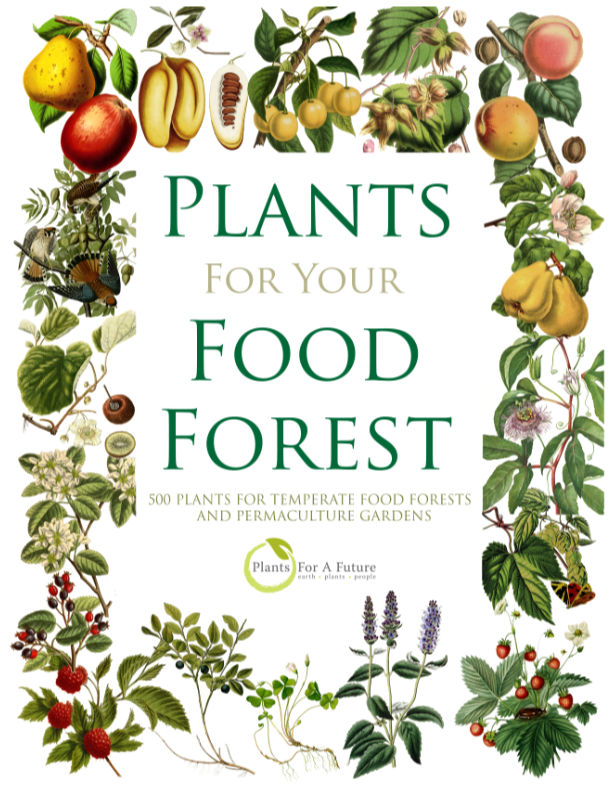
Edible Temperate Plants
Plants for Your Food Forest: 500 Plants for Temperate Food Forests & Permaculture Gardens.
More
More Books
PFAF have eight books available in paperback and digital formats. Browse the shop for more information.
Shop Now
Other Uses
Miscellany
Plants make a good ground cover[200] when spaced about 60cm apart each way[208]. They spread slowly and the fronds tend to die off earlier in the autumn than most ferns[208].
Special Uses
Food Forest Ground cover
References More on Other Uses
Cultivation details
Landscape Uses:Border, Container, Specimen, Woodland garden. Requires a moist but well-drained position and light shade[1, 187]. Grows well in heavy clay soils. Dislikes full sun, the leaves turning yellow and burning in such a situation[200]. Prefers a pH between 5 and 6.5[200]. Dormant plants are hardy to at least -20°c[200]. Members of this genus are rarely if ever troubled by browsing deer[233]. A very ornamental plant[1], it establishes rapidly[187]. It has a short rhizome but produces long stolons, by which it spreads rapidly once established[187], and it can be invasive[200]. Fertile fronds are produced after the first flush of vegetative fronds and persist throughout the following winter. The spores are shed in mid-winter[200]. Grown commercially for its decorative fronds[106]. These fronds are also available as a food from speciality markets[183, 200]. Plants can be forced in the winter to provide an early supply of the young shoots[183]. Special Features:Attractive foliage, North American native, Invasive, There are no flowers or blooms. The plant is heat tolerant in zones 8 through 1. (Plant Hardiness Zones show how well plants withstand cold winter temperatures.
Plant Heat Zones show when plants would start suffering from the heat.
The Plant Heat Zone map is based on the number of "heat days" experienced in a given area where the temperature climbs to over 86 degrees F (30°C).
At this temperature, many plants begin to suffer physiological damage. Heat Zones range from 1 (no heat days) to 12 (210 or more heat days).
For example Heat Zone. 11-1 indicates that the plant is heat tolerant in zones 11 through 1.) For polyculture design as well as the above-ground architecture (form - tree, shrub etc. and size shown above) information on the habit and root pattern is also useful and given here if available. The plant growth habit is a runner spreading indefinitely by rhizomes or stolons [1-2]. The root pattern is rhizomatous with underground stems sending roots and shoots along their length [1-2].
References Carbon Farming Information and Carbon Sequestration Information
Temperature Converter
Type a value in the Celsius field to convert the value to Fahrenheit:
Fahrenheit:
The PFAF Bookshop
Plants For A Future have a number of books available in paperback and digital form. Book titles include Edible Plants, Edible Perennials, Edible Trees,Edible Shrubs, Woodland Gardening, and Temperate Food Forest Plants. Our new book is Food Forest Plants For Hotter Conditions (Tropical and Sub-Tropical).
Shop Now
Plant Propagation
Spores - surface sow as soon as they are ripe in mid-winter and keep the soil moist. It is best to keep the pot in a sealed plastic bag to hold in the moisture. Pot up small clumps of the young plants as soon as they are large enough to handle and grow on in light shade until large enough to plant out. Division during the dormant season between October and March[1]. Larger clumps can be replanted direct into their permanent positions, though it is best to pot up smaller clumps and grow them on in a cold frame until they are rooting well. Plant them out in the spring.
Other Names
If available other names are mentioned here
Native Range
TEMPERATE ASIA: Aga Buryat, Amur, Armenia, Azerbaijan, Buryatia, China, Chita, Ciscaucasia, Dagestan, Gansu Sheng, Georgia, Gorno-Altay, Hebei Sheng, Heilongjiang Sheng, Henan Sheng, Hokkaidô, Honshu, Irkutsk, Japan, Jilin Sheng, Kamcatskij kraj, Korea, Krasnoyarsk, Kyushu, Liaoning Sheng, Primorye, Respublika, Russian Federation, Russian Federation, Russian Federation, Russian Federation-Ciscaucasia, Sakhalin, Shanxi Sheng, Shikoku, Sichuan Sheng, Tyumen, Tyva, Xinjiang Uygur Zizhiqu, Xizang Zizhiqu,Turkey. NORTHERN AMERICA: Canada, Northwest Territories (southwest), Yukon (southeast), Québec, Nova Scotia, Ontario, Prince Edward Island, New Brunswick, Newfoundland and Labrador, Saskatchewan, Alberta, Manitoba, British Columbia, United States, Alaska (s.-c.), Connecticut, Indiana, Maine, Massachusetts, Michigan, New Hampshire, New Jersey, New York, Ohio, Pennsylvania, Rhode Island, Vermont, West Virginia, Illinois, Iowa, Minnesota, Missouri, North Dakota, South Dakota, Wisconsin, Delaware, Maryland, Virginia, EUROPE: Denmark, Finland, Norway, Sweden, Austria, Belgium, Switzerland, Czech Republic, Germany, Hungary, Poland, Slovakia, Russian Federation-European part, European part, Belarus, Estonia, Lithuania, Latvia, Russian Federation, Karelia, Murmansk, Saratov, Volgogradskaja oblast, Ukraine, Bosnia and Herzegovina, Croatia, Italy, Romania, Serbia, Slovenia,
Weed Potential
Right plant wrong place. We are currently updating this section.
Please note that a plant may be invasive in one area but may not
in your area so it's worth checking.
Conservation Status
IUCN Red List of Threatened Plants Status :
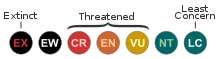
IUCN Red List
Growth: S = slow M = medium F = fast. Soil: L = light (sandy) M = medium H = heavy (clay). pH: A = acid N = neutral B = basic (alkaline). Shade: F = full shade S = semi-shade N = no shade. Moisture: D = dry M = Moist We = wet Wa = water.
Now available:
Food Forest Plants for Mediterranean Conditions
350+ Perennial Plants For Mediterranean and Drier Food Forests and Permaculture Gardens.
[Paperback and eBook]
This is the third in Plants For A Future's series of plant guides for food forests tailored to
specific climate zones. Following volumes on temperate and tropical ecosystems, this book focuses
on species suited to Mediterranean conditions—regions with hot, dry summers and cool, wet winters,
often facing the added challenge of climate change.
Read More
Expert comment
Author
(L.)Tod.
Botanical References
93200
Links / References
For a list of references used on this page please go here
Readers comment