Translate this page:
Summary
Physical Characteristics

 Lycopodium clavatum is an evergreen Fern growing to 0.1 m (0ft 4in) by 1 m (3ft 3in). It is in leaf all year.
Suitable for: light (sandy) and medium (loamy) soils and prefers well-drained soil. Suitable pH: mildly acid, neutral and basic (mildly alkaline) soils. It can grow in full shade (deep woodland) or semi-shade (light woodland). It prefers moist soil.
UK Hardiness Map
US Hardiness Map
Synonyms
Lycopodium eriostachys. Lycopodium mayoris. Lycopodium piliferum. Lycopodium trichophyllum.
Plant Habitats
Woodland Garden Dappled Shade; Shady Edge; not Deep Shade;
Edible Uses
References More on Edible Uses
Medicinal Uses
Plants For A Future can not take any responsibility for any adverse effects from the use of plants. Always seek advice from a professional before using a plant medicinally.
Analgesic Antipruritic Antirheumatic Carminative Decongestant Diuretic Dysentery Haemostatic
Homeopathy Malaria Miscellany Skin Tonic Urinary
With its wide native range, the plant has found a wide range of medicinal uses around the world. There has been considerable research into the active constituents of the plant.
The aerial parts contain dihydrocaffeic acid, which has a blood pressure-lowering effect, as well as alkaloids such as lycopodine, chinoline, clavatine, clavatoxine and annotinine, which all cause an increase in blood pressure[299
].
Lycopodine also stimulates the peristaltic movements of the intestine and contraction of the uterus[299
].
The aerial parts also contain derivatives of cinnamonic acid and flavonoids[299
].
A methanol extract of the plant showed strong prolyl-endopeptidase-inhibiting activity and is expected to have activity against loss of memory[299
].
The spores contain about 50% greenish-yellow acidic oil, 3% sugar, 1 - 4% ash and a trace of a volatile alkaloid[299
].
A decoction of the plant is analgesic, antirheumatic, carminative, mildly diuretic, stomachic and tonic[4
, 9
, 13
, 21
, 46
, 154
, 172
, 176
, 218
, 238
]. It is used internally in the treatment of urinary and kidney disorders, rheumatic arthritis, catarrhal cystitis, gastritis, dysentery, malaria etc[176
, 238
, 299
]. The whole plant is chewed to induce vomiting after food poisoning or acute stomach pain[299
]. The sun-dried, pulverized leaves are mixed with plantain and milk, and the mixture is given in small doses to children to cure diarrhoea and dysentery[299
].
It is applied externally to skin diseases, wounds, ulcers and irritations[238
, 299
]. The whole plant is grilled with sugarcane and banana skins and applied to cracked lips to promote healing[299
].
The plant can be harvested all year round and is used fresh or dried[238
].
The spores of this plant are antipruritic, decongestant, diuretic, stomachic and styptic[4
].
They are applied externally as a dusting powder to various skin diseases, to wounds or inhaled to stop bleeding noses[4
, 7
]. They can also be used to absorb fluids from injured tissues[213
, 218
]. The spores are harvested when ripe in late summer[9
].
The spores can also be used as a dusting powder to prevent pills from sticking together[4
, 213
].
A homoeopathic remedy is made from the spores[232
]. It has a wide range of applications including dry coughs, mumps and rheumatic pains[232
, 238
].
The plant is one of the ingredients of a remedy to alleviate jet lag[299
].
References More on Medicinal Uses
The Bookshop: Edible Plant Books
Our Latest books on Perennial Plants For Food Forests and Permaculture Gardens in paperback or digital formats.
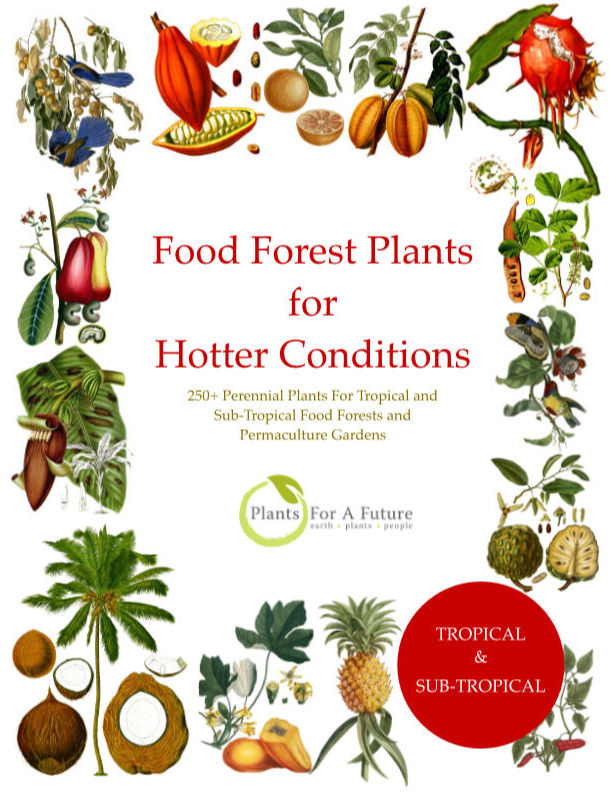
Edible Tropical Plants
Food Forest Plants for Hotter Conditions: 250+ Plants For Tropical Food Forests & Permaculture Gardens.
More
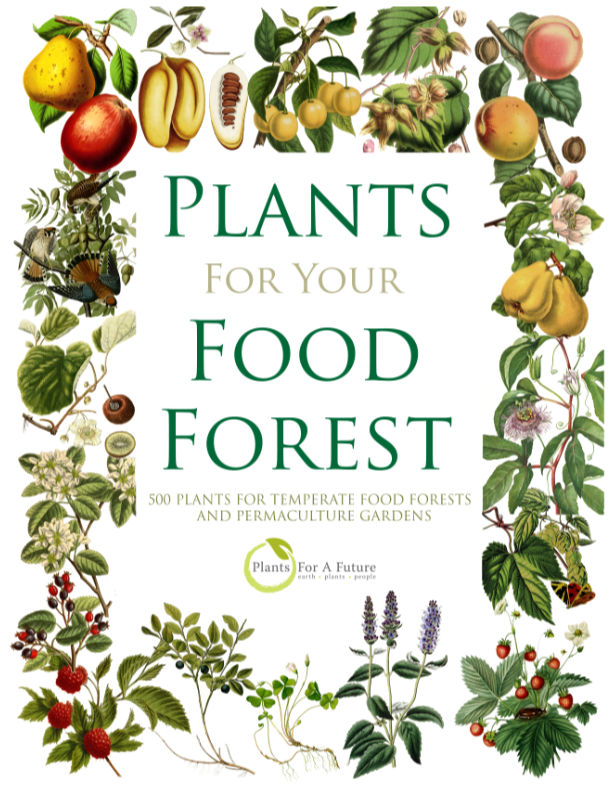
Edible Temperate Plants
Plants for Your Food Forest: 500 Plants for Temperate Food Forests & Permaculture Gardens.
More
More Books
PFAF have eight books available in paperback and digital formats. Browse the shop for more information.
Shop Now
Other Uses
Cosmetic Miscellany Mordant Weaving
The spores are water repellent and can be used as a dusting powder to stop things sticking together[106, 171]. They are also used as a talcum powder and for dressing moulds in iron foundries[74]. They can also be used as explosives in fireworks and for artificial lightning[7, 46, 57, 102, 171, 213]. The plant can be used as a mordant in dyeing[172]. The stems are made into matting[46].
Special Uses
Food Forest
References More on Other Uses
Cultivation details
A plant with a very wide range, found at sea level in the Arctic circle to highland areas above 1,300 metres in the tropics. It is hardy to at least -15°c[238
].
Thrives in a rough spongy peat in a shady position[1
]. Requires a humid atmosphere[200
].
Lycopodium clavatum is very variable, and there is a nearly continuous series of forms from compact plants with parallel branches and firm, imbricate leaves to amply branched plants with diverging branches and soft, spreading leaves. The former is typical for cold and exposed habitats, the latter for warm and sheltered locations[299
].
Terrestrial members of this genus are hard to establish. The roots are delicate and liable to rot, most water is absorbed through the foliage[200
].
The subterranean prothallus develops slowly and reaches sexual maturity after 6 - 15 years and may live for 20 years[299
]. It is top-shaped, differentiated into various tissues and lives in close symbiosis with a fungus, possibly a species of Pythium. Without the fungus, the development of the gametophyte stops at an early, few-celled stage. Once the sporophyte has established, it can spread rapidly by the long creeping stems[299
]. If competition with higher growing plants is not strong, it is long-lived and slowly forms large colonies[299
].
The spores are used as a reference in pollen traps used to monitor pollen in the air to establish hay-fever risks[299
].
Members of this genus are rarely if ever troubled by browsing deer[233
].
Although looking more like a moss, this genus is closely related to the ferns[200
].
References Carbon Farming Information and Carbon Sequestration Information
Temperature Converter
Type a value in the Celsius field to convert the value to Fahrenheit:
Fahrenheit:
The PFAF Bookshop
Plants For A Future have a number of books available in paperback and digital form. Book titles include Edible Plants, Edible Perennials, Edible Trees,Edible Shrubs, Woodland Gardening, and Temperate Food Forest Plants. Our new book is Food Forest Plants For Hotter Conditions (Tropical and Sub-Tropical).
Shop Now
Plant Propagation
Spores - best sown as soon as they are ripe on the surface of a humus-rich sterilized soil. Keep the compost moist, preferably by putting a plastic bag over the pot. Pot on small clumps of plantlets as soon as they are large enough to handle and keep humid until they are well established. Do not plant outside until the ferns are at least 2 years old and then only in a very well sheltered position. The spores are generally produced in abundance but are difficult to grow successfully[200]. Layering of growing tips[200].
Other Names
If available other names are mentioned here
Common Club Moss
Native Range
TEMPERATE ASIA: Amur, Buryatia, China, Chita, Cukotskij avtonomnyj okrug, Gorno-Altay, Habarovskij kraj, Hokkaidô, Honshu, Irkutsk, Japan, Jilin Sheng, Kamcatskij kraj, Krasnoyarsk, Kyushu, Magadanskaja oblast, Primorye, Respublika, Russian Federation, Russian Federation, Sakhalin, Shikoku, Taiwan, Tyumen, Tyva, Yakutia-Sakha, Yunnan Sheng,Georgia. TROPICAL ASIA: Thailand, Vietnam, NORTHERN AMERICA: Canada, Northwest Territories, Yukon, Québec, Nova Scotia, Ontario, Prince Edward Island, New Brunswick, Newfoundland and Labrador, Saskatchewan, Alberta, Manitoba, British Columbia, Greenland (south), United States, Alaska, Connecticut, Indiana, Maine, Massachusetts, Michigan, New Hampshire, New Jersey, New York, Ohio, Pennsylvania, Rhode Island, Vermont, West Virginia, Illinois, Iowa, Minnesota, Wisconsin, Idaho, Montana, Oregon, Washington, Delaware, Georgia, Kentucky, Maryland, North Carolina, South Carolina, Tennessee, California (north), Mexico, Chiapas, Hidalgo, Michoacán de Ocampo, Oaxaca, Veracruz de Ignacio de la Llave, SOUTHERN AMERICA: Hispaniola, Cuba, Guadeloupe, Jamaica, St. Kitts and Nevis, Martinique, Costa Rica, Honduras, Nicaragua, Panama, El Salvador, Guyana, Venezuela, Brazil, Bolivia, Colombia, Ecuador, Peru, Paraguay, EUROPE: Denmark, Finland, United Kingdom (U.K.), Iceland, Norway, Sweden, Austria, Belgium, Switzerland, Czech Republic, Germany, Hungary, Netherlands, Poland, Slovakia, Belarus, Estonia, Russian Federation, Karelia, Neneckij avtonomnyj okrug, Murmansk, Saratov, Volgogradskaja oblast, Ukraine, Bulgaria, Bosnia and Herzegovina, Croatia, Italy, Montenegro, Romania, Serbia, Slovenia, Spain, France, Portugal, AFRICA: Tanzania, Uganda, Burundi, Democratic Republic of the Congo, Rwanda, Malawi, Madagascar.
Weed Potential
Right plant wrong place. We are currently updating this section.
Please note that a plant may be invasive in one area but may not in your area so it's worth checking.
Conservation Status
IUCN Red List of Threatened Plants Status : This taxon has not yet been assessed
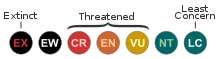
Growth: S = slow M = medium F = fast. Soil: L = light (sandy) M = medium H = heavy (clay). pH: A = acid N = neutral B = basic (alkaline). Shade: F = full shade S = semi-shade N = no shade. Moisture: D = dry M = Moist We = wet Wa = water.
Now available:
Food Forest Plants for Mediterranean Conditions
350+ Perennial Plants For Mediterranean and Drier Food Forests and Permaculture Gardens.
[Paperback and eBook]
This is the third in Plants For A Future's series of plant guides for food forests tailored to
specific climate zones. Following volumes on temperate and tropical ecosystems, this book focuses
on species suited to Mediterranean conditions—regions with hot, dry summers and cool, wet winters,
often facing the added challenge of climate change.
Read More
Expert comment
Author
L.
Botanical References
17200
Links / References
For a list of references used on this page please go here
A special thanks to Ken Fern for some of the information used on this page.
Readers comment