 |
|
http://commons.wikimedia.org/wiki/File:Laserpitium_latifolium_Sturm32.jpg |
 |
| biolib.de |
Translate this page:
Summary
Physical Characteristics

 Laserpitium latifolium is a PERENNIAL growing to 1.5 m (5ft).
It is not frost tender. It is in flower from June to August, and the seeds ripen from July to September. The species is hermaphrodite (has both male and female organs) and is pollinated by Insects. The plant is self-fertile.
Suitable for: light (sandy), medium (loamy) and heavy (clay) soils. Suitable pH: mildly acid, neutral and basic (mildly alkaline) soils. It can grow in semi-shade (light woodland) or no shade. It prefers moist soil.
UK Hardiness Map
US Hardiness Map
Synonyms
Plant Habitats
Woodland Garden Sunny Edge; Dappled Shade;
Edible Uses
Edible Parts:
Edible Uses: Condiment
Root - used as a flavouring[2, 105, 177]. It was used by the Romans with cumin in order to season preserved artichokes[183]. A decoction of the seeds is used in beer[183].
References More on Edible Uses
Medicinal Uses
Plants For A Future can not take any responsibility for any adverse effects from the use of plants. Always seek advice from a professional before using a plant medicinally.
Stomachic Tonic
Stomachic, tonic[46, 61].
References More on Medicinal Uses
Other Uses
References More on Other Uses
Cultivation details
An easily satisfied plant, it succeeds in ordinary garden soil[1].
References Carbon Farming Information and Carbon Sequestration Information
Temperature Converter
Type a value in the Celsius field to convert the value to Fahrenheit:
Fahrenheit:
Plant Propagation
Seed - sow spring in a cold frame. When they are large enough to handle, prick the seedlings out into individual pots and grow them on in the greenhouse for their first winter. Plant them out into their permanent positions in late spring or early summer, after the last expected frosts. Division.
Other Names
If available other names are mentioned here
Native Range
EUROPE: Denmark, Finland, Norway, Sweden, Austria, Switzerland, Czech Republic, Germany, Hungary, Poland, Slovakia, Belarus, Estonia, Lithuania, Latvia, Moldova, Ukraine, Bulgaria, Bosnia and Herzegovina, Croatia, Italy, Montenegro, Romania, Serbia, Slovenia, Spain, France (incl. Corsica)
Weed Potential
Right plant wrong place. We are currently updating this section.
Please note that a plant may be invasive in one area but may not
in your area so it's worth checking.
Conservation Status
IUCN Red List of Threatened Plants Status :
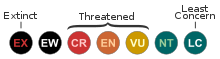
IUCN Red List
Growth: S = slow M = medium F = fast. Soil: L = light (sandy) M = medium H = heavy (clay). pH: A = acid N = neutral B = basic (alkaline). Shade: F = full shade S = semi-shade N = no shade. Moisture: D = dry M = Moist We = wet Wa = water.
Support Plants For A Future
Plants For A Future relies on regular donations to keep our free database and search facilities going, to pay for ongoing research, improvements and enhancements, and to develop and publish new books.
Read more
Choose Currency
Donate in £ GBP
Donate in $ USD
Donate in € EUR
Securely pay via PayPal or Credit/Debit Card without an account.
Expert comment
Author
L.
Botanical References
50
Links / References
For a list of references used on this page please go here
Readers comment
© 2010, Plants For A Future. Plants For A Future is a charitable company limited by guarantee, registered in England and Wales. Charity No. 1057719, Company No. 3204567.