Translate this page:
Summary
Utah juniper is one of the characteristic trees of the interior American West. Vast woodlands of Utah juniper and pinyon pine define much of the Great Basin and Colorado Plateau, where the species survives on rocky soils, exposed ridges, and arid landscapes that few other trees can tolerate. Like all junipers, its so-called berries are actually fleshy seed cones. Native Americans throughout its range harvested these cones as food, eating them fresh, drying them or grinding them into meal. Historical records frequently describe Utah juniper as an important seasonal resource because the fruits mature during autumn and often remain on the trees throughout winter. Our field observations, however, paint a more cautious picture of their culinary value. Fruits collected from hundreds of trees across Colorado, Utah, Nevada, and California consistently proved intensely resinous and unpleasant. Unlike one-seeded juniper, whose sweetness often balances the resins, Utah juniper retained a harsh, acrid flavor regardless of where the fruits were gathered. Processing also failed to produce significant improvement. This contrast between ethnobotanical history and modern field experience is important. Utah juniper undoubtedly served Indigenous communities, but its value may have depended upon traditional preparation techniques, exceptional individual trees, or simply the fact that reliable winter foods were scarce. Modern foragers should therefore approach the fruits with modest expectations. Taxonomic Note: This genus was formerly classified in the family Taxodiaceae. Modern classifications include it within the Cupressaceae. Juniperus species: Junipers are evergreen coniferous trees or shrubs ranging from tall 40m (130ft) trees to low-spreading prostrate shrubs. The needle-like leaves are aromatic, and the fruit is edible in some species. Many ornamental species are available, and some are used for ground cover, hedging, erosion control and in a shelterbelt. Some forms tolerate maritime exposure. Eat fruit in small quantities. Many Juniperus species (junipers) are known for their hardiness, drought tolerance, and adaptability to dry, poor soils.
Physical Characteristics

 Juniperus osteosperma is an evergreen Tree growing to 8 m (26ft) by 7 m (23ft) at a slow rate.
See above for USDA hardiness. It is hardy to UK zone 4. It is in leaf all year, and the seeds ripen in October. The species is dioecious (individual flowers are either male or female, but only one sex is to be found on any one plant so both male and female plants must be grown if seed is required). and is pollinated by Wind. The plant is not self-fertile.
It is noted for attracting wildlife.
Suitable for: light (sandy), medium (loamy) and heavy (clay) soils, prefers well-drained soil and can grow in nutritionally poor soil. Suitable pH: mildly acid, neutral and basic (mildly alkaline) soils and can grow in very alkaline soils.
It cannot grow in the shade. It prefers dry or moist soil and can tolerate drought.
UK Hardiness Map
US Hardiness Map
Synonyms
J. californica utahensis. J. utahensis.
Plant Habitats
Woodland Garden Canopy; Sunny Edge;
Edible Uses
Edible Parts: Fruit
Edible Uses:
Only the mature fleshy seed cones are edible, and even these should be consumed only sparingly [2-3]. The fleshy cone scales contain sugars together with aromatic essential oils and resins characteristic of the genus. Most cones contain a single seed, although two seeds occasionally occur. Numerous ethnobotanical sources describe the fruits being eaten fresh or dried and ground into meal. Despite these reports, our field observations consistently found the fruits dominated by powerful resinous compounds [2-3]. Unlike several better-flavored junipers, Utah juniper appears to offer little culinary reward beyond its historical significance and dependable availability [2-3]. The fruits should therefore be regarded as an emergency or supplementary food rather than a desirable wild fruit [2-3]. Edibility Rating: 1.5/5. Utah juniper receives an overall edibility rating of 1.5 out of 5. The rating recognizes its long history of Indigenous use and the presence of edible carbohydrates, while also reflecting consistently poor flavor, high resin content, and limited modern culinary appeal. Although individual trees may occasionally produce sweeter fruits, the species as a whole deserves a conservative assessment. Taste, Processing & Culinary Use: Field observations provide one of the most useful practical assessments of Utah juniper available. Fruits gathered from hundreds of trees across several western states consistently tasted intensely acrid, with abundant resin overwhelming any underlying sweetness. None of the sampled trees produced fruits that could reasonably be described as pleasant. The fleshy outer scales are soft and somewhat fibrous when ripe, surrounding one, occasionally two, hard seeds. Boiling produced little improvement. The resinous flavor remained dominant, and no preparation substantially reduced the harshness. Drying likewise failed to improve palatability. Although the fruits could theoretically be incorporated into flour mixtures or used sparingly as flavoring, there appears to be little culinary advantage in doing so when better juniper species are available. Compared with one-seeded juniper or alligator juniper, Utah juniper occupies the lower end of the genus in food quality [2-3]. Seasonality (Phenology): Utah juniper is evergreen year-round. Pollen is released during spring. The fleshy seed cones generally mature during late summer and autumn, developing a bluish color with a pale waxy bloom. Ripe fruits commonly remain attached through winter and sometimes into the following year. This extended persistence helps explain why the species became an important traditional food despite its modest flavor. The tree remains easily recognizable year-round because of its dense evergreen foliage and rounded crown [2-3]. Safety & Cautions: Consume Utah juniper fruits only in small quantities. Like other members of the genus, they contain volatile oils and resinous compounds that may irritate the kidneys when eaten regularly or in large amounts. Individuals with kidney disease should avoid consuming juniper fruits. Medicinal or concentrated use during pregnancy is also not recommended. Only fully mature blue fruits should be gathered. Immature green cones contain even higher concentrations of resins and should not be eaten. Leaves, bark and wood are not edible. Harvest & Processing: Harvest mature blue cones during autumn after they have fully ripened. Taste fruits from several trees before gathering a large quantity. Although your observations suggest consistently poor flavor, some local populations may differ. Remove leaves, twigs, and damaged fruits before processing. Remove the seeds manually before culinary use. Drying extends storage life but does not substantially improve flavor. Grinding dried fruits into meal allows them to be mixed with other flours, reducing resin intensity. Because culinary quality is generally poor, gathering large quantities is seldom worthwhile for modern foragers [2-3]. Traditional Indigenous Uses: Utah juniper played a significant role in the traditional lifeways of many Indigenous peoples throughout the Great Basin and Colorado Plateau. The ripe fruits were gathered during autumn, dried for storage and often ground into meal for cakes or other preparations. The dependable annual crop provided carbohydrates during seasons when relatively few fruits remained available. Beyond food, nearly every part of the tree was utilized. The durable wood served as fuel, fence posts, tools and construction material, while bark and foliage had medicinal, ceremonial and practical applications. Its importance therefore extended well beyond its modest culinary qualities [2-3]. Nutritional Value: The fleshy cones contain natural sugars, dietary fiber, and aromatic essential oils. Most of the nutritional value comes from the carbohydrates in the fused cone scales. Because the edible portion is relatively small and the resin content discourages large servings, Utah juniper is best regarded as a supplementary food rather than a significant calorie source. Fruit - raw or cooked[46, 82, 95]. A thin flesh, it is sweet but strongly flavoured of resin and has a mealy texture[82, 85, 229]. Used as a flavouring in stews[216, 257]. The fruit can be eaten fresh or it can be dried and ground into a powder then baked into cakes[61, 82, 183]. The cones are about 6 - 18mm in diameter, they take 2 years to mature[200].
References More on Edible Uses
Medicinal Uses
Plants For A Future can not take any responsibility for any adverse effects from the use of plants. Always seek advice from a professional before using a plant medicinally.
Analgesic Antiseptic Blood tonic Diuretic Kidney Laxative Odontalgic Poultice
Salve
Desert juniper was widely employed medicinally by a number of native North American Indian tribes who used it to treat a variety of complaints, especially those connected to the bladder and kidneys and to the skin[257]. It is little, if at all, used in modern herbalism. The leaves are antiseptic, blood tonic and laxative[216, 257]. A decoction is used in the treatment of constipation[216]. A poultice of the leaves has been applied to the jaw to treat toothaches and sore and swollen gums[257]. A decoction of the young twigs has been used in the treatment of stomach aches, kidney complaints, haemorrhages, coughs and colds[257]. Fumes from the burning twigs have been inhaled in the treatment of headaches and colds[257]. The branches have been used in a sweat bath to treat rheumatism[257]. A strong decoction has been used as an antiseptic wash on sores[257]. A poultice of the mashed twigs has been used as a dressing on burns and swellings[257]. The seeds are analgesic[257]. They have been eaten in the treatment of headaches[257]. The fruits are analgesic, blood tonic and diuretic[257]. A decoction has been used to relieve the pain of menstrual cramps, to induce urination and to treat kidney complaints, fevers, coughs and colds[257]. Externally, a decoction has been used as a poultice on rheumatic joints[257].
References More on Medicinal Uses
The Bookshop: Edible Plant Books
Our Latest books on Perennial Plants For Food Forests and Permaculture Gardens in paperback or digital formats.

Edible Tropical Plants
Food Forest Plants for Hotter Conditions: 250+ Plants For Tropical Food Forests & Permaculture Gardens.
More

Edible Temperate Plants
Plants for Your Food Forest: 500 Plants for Temperate Food Forests & Permaculture Gardens.
More

More Books
PFAF have eight books available in paperback and digital formats. Browse the shop for more information.
Shop Now
Other Uses
Beads Fuel Hair Incense Thatching Tinder Wax Wood
Utah juniper is an outstanding landscape tree for arid climates.
Its exceptional drought tolerance makes it valuable for xeriscaping and habitat restoration. Agroforestry uses: Junipers can be used as windbreaks or hedges, and due to their extensive root systems, they are often employed in erosion control. They also provide habitat and shelter for wildlife. A wax on the fruit is obtained by simmering the fruit in hot water and skimming off the wax as it rises to the surface. The wax can be used to make aromatic candles[85]. The bark is employed as a tinder and is also made into a slow match[216, 257]. The crushed bark was twisted into a rope, tied at intervals with yucca (Yucca species), and wrapped into a coil. The free end was set on fire and kept smoldering by blowing on it at intervals. Fire could be carried in this fashion for several hours[257]. The bark has been used as a thatching on the roofs of buildings[257]. The dried seeds have been used as beads or as the 'rattle' in rattles[216]. An infusion of the plant has been used as a hair wash[257]. The plant has been burnt as an incense and fumigant in the home[257]. Wood - soft, close-grained, slightly fragrant[82]. It is used occasionally for fuel, fencing, etc[82, 229]. Wildlife & Ecology. Utah juniper is one of the most important wildlife trees of the interior West. Its fleshy cones provide food for numerous birds and mammals, including robins, waxwings, bluebirds, coyotes, foxes, rabbits and many rodents. Birds are particularly important for seed dispersal. Dense evergreen branches provide nesting habitat, shelter and protection throughout the year. The trees stabilize fragile soils, reduce erosion and create habitat for a wide diversity of plants and animals across otherwise harsh landscapes. 1. Nectary - Flowers rich in nectar and pollen:
No – Juniper species produce small, inconspicuous flowers that do not produce significant nectar. However, they do release pollen, which can be a food source for some insects, though not in large quantities.
2. Wildlife - Food (Fruit, Seeds, Leaf litter, Shelter, Nesting, Roosting):
Yes – Juniper berries (technically cones) are a food source for many birds and mammals. The dense foliage provides good shelter, and some birds may nest or roost in the branches. Juniper is also used for cover by small wildlife.
3. Invertebrate Shelter (Overwintering sites, Leaf litter, Groundcover):
Yes – Juniper’s rough bark and dense foliage can provide overwintering sites for various invertebrates. The leaf litter from junipers can also serve as habitat for insects and other small creatures.
4. Pest Confuser (Smell):
Yes – The strong aroma of juniper, especially from its berries and leaves, can help deter certain pests. The volatile oils in juniper have natural insect-repellent properties.
Special Uses
Food Forest
References More on Other Uses
Cultivation details
Utah juniper thrives in full sun and extremely well-drained soils. It tolerates limestone, sandstone, volcanic soils, gravel, and shallow rocky ground. The species is exceptionally drought-tolerant and often survives where annual precipitation is less than 300 mm. Growth is generally slow. Poor drainage and prolonged irrigation reduce vigor and increase disease susceptibility. Once established, the tree requires virtually no supplemental watering. Habitat & Distribution: Utah juniper is widespread throughout the Great Basin, Colorado Plateau and adjoining regions, including Utah, Nevada, western Colorado, northern Arizona, eastern California, southern Idaho and western Wyoming. It commonly dominates pinyon-juniper woodland between approximately 900 and 2,300 meters elevation. Typical habitats include rocky mesas, dry foothills, canyon rims, gravelly slopes and open desert woodland. The species often forms extensive pure stands or grows with singleleaf and Colorado pinyons. Cultivation. Utah juniper is an outstanding landscape tree for arid climates. Its exceptional drought tolerance makes it valuable for xeriscaping and habitat restoration. Young trees benefit from occasional watering during establishment but become highly self-sufficient thereafter. The species requires little fertilizer and almost no pruning beyond removal of damaged branches. Provide adequate spacing to accommodate its broad mature crown. Because of its adaptability, it performs well on difficult sites where many ornamental trees fail. Pollinators: Utah juniper is wind-pollinated. Male trees release pollen during spring, while female trees produce the fleshy seed cones. The species provides little direct value to insect pollinators because it lacks nectar-producing flowers. Successful fruit production depends upon airborne pollen rather than insect activity. Identification: Utah juniper is a small to medium-sized evergreen tree with grey to reddish-brown fibrous bark that becomes shredded into narrow strips with age. The foliage consists of tiny overlapping scale-like leaves closely pressed against the twigs. The bluish fleshy seed cones measure approximately 8–13 mm across and usually contain one seed, occasionally two. The rounded crown, grey-green foliage, and abundance across Great Basin woodlands make mature trees readily recognizable. It differs from common juniper by its scale-like rather than needle-like foliage, and from alligator juniper by lacking the distinctive square, checkered bark. Succeeds in most soils if they are well-drained, preferring a neutral or slightly alkaline soil[1, 11]. Thrives in calcareous soils[1]. A drought tolerant plant once established, succeeding in hot dry positions[200]. A slow-growing but long-lived tree, specimens several centuries old have been recorded[229]. It grows better in dry areas with hot summers; western Britain is generally too cool and wet for this species to thrive[200]. Good crops of fruit are produced in alternate years in the wild[229]. Closely related to J. californica[1, 82]. This species is resistant to honey fungus[88]. The seed takes 2 years to mature[200]. Plants are usually dioecious, though occasional trees with both male and female flowers are sometimes found[229]. Male and female plants must usually be grown if seed is required. In garden design, as well as the above-ground architecture of a plant, root structure considerations help in choosing plants that work together for their optimal soil requirements, including nutrients and water. The root pattern is flat with shallow roots spreading near the soil surface [2-1]. Juniper berries (the fleshy cones) are typically harvested in late summer to early autumn depending on the species. Junipers produce male cones in spring, while the female cones develop into berries over the summer. Growth rates vary by species, but many Junipers are considered slow to moderate growers, typically reaching maturity in 5 to 15 years, depending on environmental conditions and species. Utah juniper, Juniperus osteosperma (Torr.) Little (syn. Juniperus utahensis (Engelm.) Lemmon), belongs to the cypress family (Cupressaceae) and the genus Juniperus. Common names include Utah juniper, desert juniper, and Utah cedar. It is one of the dominant trees of the Great Basin and Colorado Plateau, occurring throughout Utah, Nevada, western Colorado, northern Arizona, eastern California and adjoining regions. Utah juniper is generally hardy in USDA Hardiness Zones 4–8. Mature trees typically grow 3–8 meters tall, occasionally reaching 10 meters, with a crown spread of 3–7 meters. The species is exceptionally drought-tolerant and frequently dominates dry foothills, mesas and rocky slopes where annual rainfall is low.
References Carbon Farming Information and Carbon Sequestration Information
Temperature Converter
Type a value in the Celsius field to convert the value to Fahrenheit:
Fahrenheit:
The PFAF Bookshop
Plants For A Future have a number of books available in paperback and digital form. Book titles include Edible Plants, Edible Perennials, Edible Trees,Edible Shrubs, Woodland Gardening, and Temperate Food Forest Plants. Our new book is Food Forest Plants For Hotter Conditions (Tropical and Sub-Tropical).
Shop Now
Plant Propagation
The seed requires a period of cold stratification. The seed has a hard seedcoat and can be very slow to germinate, requiring a cold period followed by a warm period and then another cold spell, each of 2 - 3 months duration[78, 81]. Soaking the seed for 3 - 6 seconds in boiling water may speed up the germination process[11]. The seed is best sown as soon as it is ripe in a cold frame. Some might germinate in the following spring, though most will take another year. Another possibility is to harvest the seed 'green' (when the embryo has fully formed but before the seedcoat has hardened). The seedlings can be potted up into individual pots when they are large enough to handle. Grow on in pots until large enough, then plant out in early summer. When stored dry, the seed can remain viable for several years[1]. Cuttings of mature wood, 5 - 10cm with a heel, September/October in a cold frame. Plant out in the following autumn[1, 78]. Layering in September/October. Takes 12 months[78].
Other Names
If available other names are mentioned here
Utah juniper, desert juniper and Utah cedar. (syn. Juniperus utahensis (Engelm.) Lemmon)
Native Range
NORTHERN AMERICA: United States (Colorado (west), Idaho (south), Montana (s.-c.), Wyoming, New Mexico (northwest), Arizona (north), California, Nevada, Utah)
Weed Potential
Right plant wrong place. We are currently updating this section.
Please note that a plant may be invasive in one area but may not
in your area so it's worth checking.
Utah juniper has low weed potential in cultivation. It spreads naturally by bird-dispersed seed but establishes slowly. Within parts of its native range, reduced wildfire frequency has allowed Utah juniper woodlands to expand into former grasslands and shrublands. This ecological expansion has important land management implications but does not make the species invasive outside its native distribution. For PFAF purposes, its weed potential is best rated 2/5 (low).
Conservation Status
IUCN Red List of Threatened Plants Status : Juniperus osteosperma is listed as Least Concern.
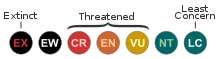
IUCN Red List
| Related Plants
|
| Latin Name | Common Name | Habit | Height | Hardiness | Growth | Soil | Shade | Moisture | Edible | Medicinal | Other |
| Juniperus ashei | Ashe Juniper, Mountain Cedar | Tree | 6.0 |
7-9
| S | LMH | N | DM | 1 | 0 | 2 |
| Juniperus californica | Californian Juniper, Chuperosa | Tree | 4.5 |
7-10
| S | LMH | N | DM | 2 | 1 | 3 |
| Juniperus chinensis | Chinese Juniper, Sargent juniper | Tree | 15.0 |
4-10
| S | LMH | N | DM | 0 | 2 | 3 |
| Juniperus communis | Juniper, Common juniper | Shrub | 9.0 |
2-7
| S | LMH | SN | DM | 2 | 3 | 4 |
| Juniperus communis nana | Juniper | Shrub | 0.5 |
4-10
| S | LMH | SN | DM | 3 | 3 | 4 |
| Juniperus conferta | Shore Juniper | Shrub | 0.2 |
6-10
| S | LMH | SN | DM | 2 | 0 | 3 |
| Juniperus deppeana | Alligator Juniper | Tree | 18.0 |
6-9
| S | LMH | N | DM | 3 | 0 | 3 |
| Juniperus drupacea | Syrian Juniper | Tree | 15.0 |
6-9
| M | LMH | N | DM | 3 | 0 | |
| Juniperus excelsa | Grecian Juniper | Tree | 20.0 |
5-9
| | LMH | N | DM | 2 | 1 | 3 |
| Juniperus horizontalis | Creeping Juniper, Horizontal Juniper | Shrub | 1.0 |
4-9
| M | LMH | N | DM | 2 | 1 | 3 |
| Juniperus monosperma | One-Seed Juniper | Tree | 8.0 |
5-9
| M | LMH | N | DM | 3 | 2 | 3 |
| Juniperus occidentalis | Western Juniper | Tree | 15.0 |
5-8
| S | LMH | N | DM | 2 | 2 | 3 |
| Juniperus oxycedrus | Prickly Juniper, Cade juniper | Tree | 15.0 |
8-10
| M | LMH | N | DM | 0 | 1 | 3 |
| Juniperus phoenicea | Phoenician Juniper | Tree | 7.0 |
7-11
| S | LMH | SN | DM | 2 | 2 | 3 |
| Juniperus recurva | Himalayan Juniper | Tree | 12.0 |
6-9
| S | LMH | N | M | 1 | 1 | 1 |
| Juniperus rigida | Temple Juniper, Needle Juniper | Tree | 8.0 |
6-7
| S | LMH | N | DM | 2 | 1 | 3 |
| Juniperus sabina | Savine, Tam Juniper | Shrub | 4.0 |
4-7
| S | LMH | N | DM | 0 | 2 | 4 |
| Juniperus scopulorum | Rocky Mountain Juniper | Tree | 8.0 |
3-8
| S | LMH | N | DM | 2 | 2 | 4 |
| Juniperus silicicola | Southern Redcedar, Juniper, Southern Red Cedar | Tree | 20.0 |
7-10
| S | LMH | N | DM | 2 | 2 | 3 |
| Juniperus squamata | Flaky Juniper | Shrub | 4.0 |
4-7
| S | LMH | N | DM | 0 | 1 | 3 |
| Juniperus tetragona | | Tree | 0.0 |
7-10
| | LMH | N | DM | 2 | 0 | 2 |
| Juniperus virginiana | Pencil Cedar, Eastern redcedar, Southern redcedar, Silver Cedar, Burk Eastern Red Cedar, Silver East | Tree | 20.0 |
3-9
| S | LMH | N | DM | 2 | 2 | 4 |
|
Growth: S = slow M = medium F = fast. Soil: L = light (sandy) M = medium H = heavy (clay). pH: A = acid N = neutral B = basic (alkaline). Shade: F = full shade S = semi-shade N = no shade. Moisture: D = dry M = Moist We = wet Wa = water.
Now available:
Food Forest Plants for Mediterranean Conditions
350+ Perennial Plants For Mediterranean and Drier Food Forests and Permaculture Gardens.
[Paperback and eBook]
This is the third in Plants For A Future's series of plant guides for food forests tailored to
specific climate zones. Following volumes on temperate and tropical ecosystems, this book focuses
on species suited to Mediterranean conditions—regions with hot, dry summers and cool, wet winters,
often facing the added challenge of climate change.
Read More
Expert comment
Author
(Torr.)Little.
Botanical References
1182200
Links / References
For a list of references used on this page please go here
Readers comment
| Add a comment |
|
If you have important information about this plant that may help other users please add a comment or link below. Only comments or links that are felt to be directly relevant to a plant will be included. If you think a comment/link or information contained on this page is inaccurate or misleading we would welcome your feedback at [email protected]. If you have questions about a plant please use the Forum on this website as we do not have the resources to answer questions ourselves.
* Please note: the comments by website users are not necessarily those held by PFAF and may give misleading or inaccurate information.
|
Subject : Juniperus osteosperma
|
|
|
|