Translate this page:
Summary
Taxonomic Note: This genus was formerly classified in the family Taxodiaceae. Modern classifications include it within the Cupressaceae. Alligator juniper is among the best food-producing members of the southwestern junipers. Like all junipers, its so-called berries are actually fleshy seed cones, but they are often noticeably sweeter and less resinous than those of many related species. Native Americans throughout its range collected the ripe fruits as a seasonal food, eating them fresh or drying and grinding them into meal. Fruit quality varies greatly between individual trees. Some produce exceptionally sweet cones with only a slight resinous aftertaste, while others remain unpleasantly bitter. This variation makes tasting a few fruits before harvesting an essential step. Our field observations found this to be one of the better junipers for food. Although the resin characteristic of the genus never disappeared entirely, some trees produced surprisingly pleasant fruits. Dry-roasted fruits also yielded an excellent tea, especially after the seeds had been removed. Despite these advantages, alligator juniper remains a food that should be eaten in moderation. The same aromatic compounds that give the fruits their distinctive flavor also limit how much you should consume. Alligator juniper (J. deppeana) fruits vary in quality. Even the best fruits are rarely free of acrid resins; some have a dry, mealy texture but a sweet, palatable taste. Cooking won’t eliminate the resins or significantly improve the flavour. Dry-roasted fruits make excellent tea. Remove seeds before steeping. Juniperus species,
Junipers are evergreen coniferous trees or shrubs ranging from tall 40m (130ft) trees to low-spreading prostrate shrubs. The needle-like leaves are aromatic, and the fruit is edible in some species. Many ornamental species are available, and some are used for ground cover, hedging, erosion control and in a shelterbelt. Some forms tolerate maritime exposure. Eat fruit in small quantities. Many Juniperus species (junipers) are known for their hardiness, drought tolerance, and adaptability to dry, poor soils.
Form: Oval, Weeping.
Physical Characteristics

 Juniperus deppeana is an evergreen Tree growing to 18 m (59ft) by 12 m (39ft) at a slow rate.
See above for USDA hardiness. It is hardy to UK zone 7. It is in leaf all year, in flower from February to March, and the seeds ripen from October to November. The species is dioecious (individual flowers are either male or female, but only one sex is to be found on any one plant so both male and female plants must be grown if seed is required). and is pollinated by Wind. The plant is not self-fertile.
It is noted for attracting wildlife.
Suitable for: light (sandy), medium (loamy) and heavy (clay) soils and prefers well-drained soil. Suitable pH: mildly acid, neutral and basic (mildly alkaline) soils and can grow in very alkaline soils.
It cannot grow in the shade. It prefers dry or moist soil and can tolerate drought.
UK Hardiness Map
US Hardiness Map
Synonyms
J. pachyphlaea. J. deppeana pachyphlaea. (Torr.)Martinez.
Plant Habitats
Woodland Garden Canopy;
Edible Uses
Edible Parts: Fruit
Edible Uses:
Only the mature fleshy seed cones are edible. Leaves, bark, wood, and roots are not considered food [2-3]. Ripe fruits may be eaten fresh in small quantities after removing the seeds. Indigenous peoples have also dried and ground them into meal, incorporated into cakes, or mixed with other flours. Compared with many western junipers, the flesh contains relatively high concentrations of natural sugars. The flavor begins sweet before developing the characteristic juniper resin [2-3]. The seeds themselves contribute little to food value and are usually discarded. The fruits can also be dried and prepared as tea or used as an aromatic flavoring. Although among the better species, alligator juniper should still be regarded as an occasional wild food rather than a staple [2-3]. Edibility Rating: 2.5/5. Alligator juniper receives an overall edibility rating of 2.5 out of 5. The relatively sweet fruits, important Indigenous food history, and usefulness for tea justify a higher rating than most junipers. However, the persistent resin content, variability between trees, and the recommendation to avoid eating large quantities prevent a higher score. Taste, Processing & Culinary Use: The flavor varies remarkably from tree to tree. The best fruits begin with a rich sweetness followed by pleasant evergreen notes and only a mild resinous finish. Poorer trees produce fruits that are bitter almost from the outset. Our field observations emphasize the importance of tasting before gathering. Some trees yielded fruits sweet enough to encourage collecting, while neighboring trees produced cones that were scarcely worth eating. The flesh is soft, moist and slightly fibrous, resembling densely packed cotton fibers. This unusual texture makes the fruits more satisfying than many other juniper species. Cooking has surprisingly little effect on the resins. Boiling does not remove the acrid compounds and may even concentrate their flavor. One particularly successful preparation involved removing the seeds, chopping the fleshy cones, lightly roasting them until aromatic, and steeping them in hot water. This produced a pleasantly sweet woodland tea with subtle evergreen notes. Drying the fruits before storage concentrates both sweetness and aroma. The fruits can also be ground into meal and mixed with cereal flours to dilute the resinous flavor while adding sweetness [2-3]. Seasonality (Phenology): Alligator juniper is evergreen and recognizable year-round. Flowering generally occurs during spring. The fleshy cones mature in autumn and commonly remain attached well into winter. Unlike some junipers requiring two years for cone development, alligator juniper typically ripens its fruits within a single growing season. Because ripe fruits persist on the branches, the harvest season may extend for several months after maturity. This long availability made the species a dependable seasonal food for Indigenous communities. Safety & Cautions: Although among the better-tasting junipers, alligator juniper should still be eaten only in moderation. The fruits contain aromatic resins and volatile oils characteristic of the genus. These compounds may irritate the kidneys if consumed regularly or in large quantities. Cooking does not reliably eliminate these substances. Individuals with kidney disease should avoid consuming juniper fruits. Medicinal quantities should also be avoided during pregnancy because of the biological activity of juniper essential oils. Only ripe fruits should be gathered. Immature green cones contain even higher concentrations of resins and are unsuitable for consumption. Leaves and other vegetative parts should not be eaten [2-3]. Harvest & Processing: Harvest ripe blue-brown seed cones during autumn after they have softened and developed their full color. Taste several fruits before committing time to gathering a large supply. Remove leaves, twigs and damaged fruits. Remove the seeds before further processing. For tea, finely chop the fleshy portions, lightly roast them until aromatic, then steep in hot water. For meal, dry the fruits thoroughly before grinding them and combining them with other flours. Stored in a cool, dry place, dried fruits remain usable for many months [2-3]. Traditional Indigenous Uses: Alligator juniper fruits were an important seasonal food among several Indigenous peoples of the American Southwest and northern Mexico. People ate the ripe cones fresh, dried them for later use, or ground them into meal and formed them into cakes or mixed them with other foods. The dependable autumn harvest coincided with winter preparations, making the fruits particularly valuable. Beyond food, the durable wood was widely used for fence posts, fuel, construction, and traditional tools. The aromatic foliage and wood also found occasional ceremonial and medicinal uses. Nutritional Value: Although detailed nutritional analyses specific to Juniperus deppeana are unavailable, the fruits contain appreciable natural sugars together with aromatic oils, fiber and small quantities of minerals. Most of the edible value comes from carbohydrates in the fleshy cone scales. The seeds contribute relatively little food value. Because of their resin content, the fruits should be regarded as a flavor-rich supplementary food rather than a major calorie source. Fruit - raw or cooked[85, 161, 183]. A dry and mealy texture[82, 181] but with a sweet and palatable taste[2, 181]. The fruit can also be dried, ground into a meal and prepared as a mush or cakes[95, 105, 183]. The fruit has a sweetish palatable pulp and is about 15mm in diameter[183]. The cones take 2 years to mature[200].
References More on Edible Uses
Medicinal Uses
Plants For A Future can not take any responsibility for any adverse effects from the use of plants. Always seek advice from a professional before using a plant medicinally.
None known
References More on Medicinal Uses
The Bookshop: Edible Plant Books
Our Latest books on Perennial Plants For Food Forests and Permaculture Gardens in paperback or digital formats.
Edible Tropical Plants
Food Forest Plants for Hotter Conditions: 250+ Plants For Tropical Food Forests & Permaculture Gardens.
More
Edible Temperate Plants
Plants for Your Food Forest: 500 Plants for Temperate Food Forests & Permaculture Gardens.
More
More Books
PFAF have eight books available in paperback and digital formats. Browse the shop for more information.
Shop Now
Other Uses
Wood
Landscape Uses:Screen, Specimen. Agroforestry uses: Junipers can be used as windbreaks or hedges and are often employed in erosion control due to their extensive root systems. They also provide habitat and shelter for wildlife. Wood - light, soft, not strong, brittle, close grained[82]. Although easily worked, it is of limited value as lumber and is used mainly for fence posts and fuel[229]. Wildlife & Ecology: The fleshy cones provide food for numerous birds and mammals, including jays, robins, quail, foxes, coyotes, and small rodents. These animals also disperse the seeds. The dense evergreen canopy offers valuable nesting habitat and year-round shelter. Older trees frequently develop cavities used by birds and mammals. The species plays a major ecological role within southwestern woodland communities by stabilizing soils, reducing erosion, and providing habitat in otherwise dry landscapes. 1. Nectary - Flowers rich in nectar and pollen:
No – Juniper species produce small, inconspicuous flowers that do not produce significant nectar. However, they do release pollen, which can be a food source for some insects, though not in large quantities.
2. Wildlife - Food (Fruit, Seeds, Leaf litter, Shelter, Nesting, Roosting):
Yes – Juniper berries (technically cones) are a food source for many birds and mammals. The dense foliage provides good shelter, and some birds may nest or roost in the branches. Juniper is also used for cover by small wildlife.
3. Invertebrate Shelter (Overwintering sites, Leaf litter, Groundcover):
Yes – Juniper’s rough bark and dense foliage can provide overwintering sites for various invertebrates. The leaf litter from junipers can also serve as habitat for insects and other small creatures.
4. Pest Confuser (Smell):
Yes – The strong aroma of juniper, especially from its berries and leaves, can help deter certain pests. The volatile oils in juniper have natural insect-repellent properties.
Special Uses
References More on Other Uses
Cultivation details
Succeeds in most soils if they are well-drained, preferring a neutral or slightly alkaline soil[11]. Requires a hot dry position in full sun[200]. Does well on lime[200]. A slow-growing but long-lived tree[229], it grows better in dry areas with hot summers[200]. Western Britain is generally to cool and wet for this species to thrive[200]. Trees often produce vigorous shoots from the base of the trunk, or from the stumps of felled trees[82]. The seed takes two summers to ripen[229]. Dioecious. Male and female plants must be grown if seed is required. Special Features:
North American native, Fragrant foliage, Inconspicuous flowers or blooms. Juniper berries (the fleshy cones) are typically harvested in late summer to early autumn depending on the species. Junipers produce male cones in spring, while the female cones develop into berries over the summer. Growth rates vary by species, but many Junipers are considered slow to moderate growers, typically reaching maturity in 5 to 15 years, depending on environmental conditions and species. Pollinators: Like other junipers, alligator juniper is wind-pollinated. Male trees release pollen during spring, which is carried by air currents to female cones. The species produces no nectar and provides little direct benefit to insect pollinators. Its reproductive success depends primarily on wind movement rather than animal visitation.
References Carbon Farming Information and Carbon Sequestration Information
Temperature Converter
Type a value in the Celsius field to convert the value to Fahrenheit:
Fahrenheit:
The PFAF Bookshop
Plants For A Future have a number of books available in paperback and digital form. Book titles include Edible Plants, Edible Perennials, Edible Trees,Edible Shrubs, Woodland Gardening, and Temperate Food Forest Plants. Our new book is Food Forest Plants For Hotter Conditions (Tropical and Sub-Tropical).
Shop Now
Plant Propagation
The seed requires a period of cold stratification. The seed has a hard seedcoat and can be very slow to germinate, requiring a cold period followed by a warm period and then another cold spell, each of 2 - 3 months duration[78, 81]. Soaking the seed for 3 - 6 seconds in boiling water may speed up the germination process[11]. The seed is best sown as soon as it is ripe in a cold frame. Some might germinate in the following spring, though most will take another year. Another possibility is to harvest the seed 'green' (when the embryo has fully formed but before the seedcoat has hardened). The seedlings can be potted up into individual pots when they are large enough to handle. Grow on in pots until large enough, then plant out in early summer. When stored dry, the seed can remain viable for several years[1]. Cuttings of mature wood, 5 - 10cm with a heel, September/October in a cold frame. Plant out in the following autumn[1, 78]. Layering in September/October. Takes 12 months[78].
Other Names
If available other names are mentioned here
Alligator juniper, checkerbark juniper and oak-bark juniper, names derived from its distinctive square, checkered bark that resembles the hide of an alligator.
Native Range
NORTHERN AMERICA: United States (New Mexico (south & central), Texas (west), Arizona (s.e. & c.)), Mexico (Chihuahua, Durango, Sonora, Zacatecas, Guanajuato, Hidalgo, Jalisco, México, Michoacán de Ocampo, Puebla, Querétaro)
Weed Potential
Right plant wrong place. We are currently updating this section.
Please note that a plant may be invasive in one area but may not
in your area so it's worth checking.
Alligator juniper has very low weed potential. It grows slowly and spreads only by seed. Volunteer seedlings occasionally establish beneath perches used by birds, but young plants are easily removed. Outside its native range it rarely behaves aggressively. For PFAF purposes its weed potential is best rated 1/5 (very low).
Conservation Status
IUCN Red List of Threatened Plants Status : Juniperus deppeana is listed as Least Concern.
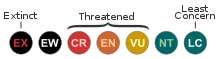
IUCN Red List
| Related Plants
|
| Latin Name | Common Name | Habit | Height | Hardiness | Growth | Soil | Shade | Moisture | Edible | Medicinal | Other |
| Juniperus ashei | Ashe Juniper, Mountain Cedar | Tree | 6.0 |
7-9
| S | LMH | N | DM | 1 | 0 | 2 |
| Juniperus californica | Californian Juniper, Chuperosa | Tree | 4.5 |
7-10
| S | LMH | N | DM | 2 | 1 | 3 |
| Juniperus chinensis | Chinese Juniper, Sargent juniper | Tree | 15.0 |
4-10
| S | LMH | N | DM | 0 | 2 | 3 |
| Juniperus communis | Juniper, Common juniper | Shrub | 9.0 |
2-7
| S | LMH | SN | DM | 2 | 3 | 4 |
| Juniperus communis nana | Juniper | Shrub | 0.5 |
4-10
| S | LMH | SN | DM | 3 | 3 | 4 |
| Juniperus conferta | Shore Juniper | Shrub | 0.2 |
6-10
| S | LMH | SN | DM | 2 | 0 | 3 |
| Juniperus drupacea | Syrian Juniper | Tree | 15.0 |
6-9
| M | LMH | N | DM | 3 | 0 | |
| Juniperus excelsa | Grecian Juniper | Tree | 20.0 |
5-9
| | LMH | N | DM | 2 | 1 | 3 |
| Juniperus horizontalis | Creeping Juniper, Horizontal Juniper | Shrub | 1.0 |
4-9
| M | LMH | N | DM | 2 | 1 | 3 |
| Juniperus monosperma | One-Seed Juniper | Tree | 8.0 |
5-9
| M | LMH | N | DM | 3 | 2 | 3 |
| Juniperus occidentalis | Western Juniper | Tree | 15.0 |
5-8
| S | LMH | N | DM | 2 | 2 | 3 |
| Juniperus osteosperma | Utah juniper, Desert Juniper | Tree | 8.0 |
3-7
| S | LMH | N | DM | 2 | 2 | 3 |
| Juniperus oxycedrus | Prickly Juniper, Cade juniper | Tree | 15.0 |
8-10
| M | LMH | N | DM | 0 | 1 | 3 |
| Juniperus phoenicea | Phoenician Juniper | Tree | 7.0 |
7-11
| S | LMH | SN | DM | 2 | 2 | 3 |
| Juniperus recurva | Himalayan Juniper | Tree | 12.0 |
6-9
| S | LMH | N | M | 1 | 1 | 1 |
| Juniperus rigida | Temple Juniper, Needle Juniper | Tree | 8.0 |
6-7
| S | LMH | N | DM | 2 | 1 | 3 |
| Juniperus sabina | Savine, Tam Juniper | Shrub | 4.0 |
4-7
| S | LMH | N | DM | 0 | 2 | 4 |
| Juniperus scopulorum | Rocky Mountain Juniper | Tree | 8.0 |
3-8
| S | LMH | N | DM | 2 | 2 | 4 |
| Juniperus silicicola | Southern Redcedar, Juniper, Southern Red Cedar | Tree | 20.0 |
7-10
| S | LMH | N | DM | 2 | 2 | 3 |
| Juniperus squamata | Flaky Juniper | Shrub | 4.0 |
4-7
| S | LMH | N | DM | 0 | 1 | 3 |
| Juniperus tetragona | | Tree | 0.0 |
7-10
| | LMH | N | DM | 2 | 0 | 2 |
| Juniperus virginiana | Pencil Cedar, Eastern redcedar, Southern redcedar, Silver Cedar, Burk Eastern Red Cedar, Silver East | Tree | 20.0 |
3-9
| S | LMH | N | DM | 2 | 2 | 4 |
|
Growth: S = slow M = medium F = fast. Soil: L = light (sandy) M = medium H = heavy (clay). pH: A = acid N = neutral B = basic (alkaline). Shade: F = full shade S = semi-shade N = no shade. Moisture: D = dry M = Moist We = wet Wa = water.
Now available:
Food Forest Plants for Mediterranean Conditions
350+ Perennial Plants For Mediterranean and Drier Food Forests and Permaculture Gardens.
[Paperback and eBook]
This is the third in Plants For A Future's series of plant guides for food forests tailored to
specific climate zones. Following volumes on temperate and tropical ecosystems, this book focuses
on species suited to Mediterranean conditions—regions with hot, dry summers and cool, wet winters,
often facing the added challenge of climate change.
Read More
Expert comment
Author
Steudel.
Botanical References
1182200
Links / References
For a list of references used on this page please go here
Readers comment