Translate this page:
Summary
Baltic rush is a familiar sight around marshes, mountain meadows, lakeshores, springs and stream margins throughout much of western North America. Unlike grasses, which dominate many similar habitats, Baltic rush belongs to the rush family, a group more closely related to lilies than grasses. Its smooth cylindrical stems, bladeless leaf sheaths and apparently side-mounted flower clusters make it relatively easy to recognize once these characteristics are understood. Although rushes have long been valued primarily for weaving baskets, mats, cordage and other practical items, Baltic rush also possesses a modest history as a food plant. The tiny seeds were collected and eaten by the Owens Valley Paiute, while sweet honeydew secretions produced by sap-feeding insects on the stems were occasionally gathered as a natural sweetener. As a direct food source, Baltic rush is relatively minor compared with seed-producing grasses or sedges. Nevertheless, it demonstrates how Indigenous peoples made use of virtually every available resource within wetland environments. Today, the species is probably of greater interest for habitat restoration, erosion control, and wildlife value than for human food, although its historical use deserves recognition.
Physical Characteristics

 Juncus balticus is a PERENNIAL growing to 1 m (3ft 3in) by 1 m (3ft 3in) at a fast rate.
See above for USDA hardiness. It is hardy to UK zone 3. It is in flower from June to August. The species is hermaphrodite (has both male and female organs) and is pollinated by Wind.
It is noted for attracting wildlife.
Suitable for: medium (loamy) and heavy (clay) soils. Suitable pH: mildly acid, neutral and basic (mildly alkaline) soils and can grow in very alkaline and saline soils.
It can grow in semi-shade (light woodland) or no shade. It prefers moist or wet soil and can grow in water.
UK Hardiness Map
US Hardiness Map
Synonyms
Plant Habitats
Pond; Bog Garden;
Edible Uses
Edible Parts: Seed
Edible Uses: Drink Sweetener
The edible portion is the mature seed. Historical records indicate that the Owens Valley Paiute collected the seeds for food. Honeydew deposited on the upper stems by insects was also gathered and eaten [2-3]. The seeds are extremely small and enclosed within dry capsules that split open when mature. Collecting enough seed for a substantial meal requires considerable effort because each capsule contains numerous minute seeds. Other parts of the plant are not regarded as edible. Unlike some wetland species, Baltic rush does not produce fleshy rhizomes or tender shoots of significant food value[2-3]. Edibility Rating: 2/5: Baltic rush receives an edibility rating of 2 out of 5. The seeds are edible and historically utilized, but they are exceptionally small and labor-intensive to collect. The species is therefore of ethnobotanical interest rather than practical importance as a modern wild food. Its principal value lies in traditional craft uses and ecological importance rather than as a dependable calorie source[2-3]. Taste, Processing & Culinary Use. Very little has been recorded regarding the flavor of Baltic rush seed. Given its minute size and historical use, the seeds were probably gathered in quantity, cleaned and consumed in much the same manner as other small wetland seeds. The mature capsules dry during late summer and autumn before splitting naturally to release their contents. Harvesting shortly before the capsules open would minimize losses to wind. The honeydew collected from the upper stems represents a very different food resource. Honeydew is a sugary secretion produced by aphids and other sap-feeding insects. Indigenous peoples in several parts of western North America occasionally gathered these natural sugar deposits directly from vegetation where they accumulated in sufficient quantities. Although the quantity available from any one plant is small, this natural sweetness would have been a welcome supplement in landscapes where concentrated sugars were scarce[2-3]. Seasonality (Phenology): Baltic rush flowers from May to July, depending upon elevation and latitude. The numerous tiny flowers develop into three-chambered capsules containing many dark amber seeds. These capsules mature from approximately July through October. The evergreen rhizomes persist from year to year, producing new stems each spring as temperatures rise and wetland soils warm. Because the stems remain upright after flowering, mature seed heads are often visible well into autumn[2-3]. Safety & Cautions: No significant hazards are associated with the edible seeds of Baltic rush, and the species has a history of traditional food use. As with all wetland plants, however, gathering should be undertaken only from clean water sources. Marshes and drainage channels may accumulate agricultural chemicals, heavy metals or other contaminants. Plants growing beside roads or polluted waterways should be avoided. The seeds themselves present no known toxicity issues, but they should be cleaned before use to remove dust, insects and capsule fragments. Harvest & Processing: Seed collection is best undertaken shortly before the capsules split naturally. Entire flowering stems can be cut and dried on clean cloths or tarps until the capsules open completely. The tiny seeds can then be separated from capsule fragments through careful shaking, rubbing and winnowing. Because the seeds are extremely small, patience is required. Gentle airflow removes the lighter chaff while leaving the heavier seeds behind. Honeydew, when present, can simply be collected from the stems or surrounding vegetation during periods of heavy insect activity. Large quantities are rarely available, making it more of an occasional seasonal treat than a dependable food source. Traditional Indigenous Uses: The Owens Valley Paiute are recorded as using Baltic rush seeds as food. The Northern Paiute ate the seeds and made the stems into a fermented drink (New England Wild Flower Society 2011-2015). The plant was also valued for the sweet honeydew produced by insects feeding upon its stems. Far more important than its food value was its role as a weaving material. Like many rushes, Baltic rush produces long, flexible stems suitable for making baskets, mats, cordage and numerous household items. Throughout western North America, rushes often formed an essential component of Indigenous material culture, providing durable fibers for daily life. The combination of modest food value and exceptional utility illustrates how thoroughly wetland plants were integrated into traditional subsistence systems. Nutritional Value.Published nutritional analyses for Juncus balticus seeds are lacking. Like the seeds of most rushes, they are expected to consist primarily of carbohydrates stored within the endosperm, together with smaller amounts of protein, oils and minerals. Because each seed is extremely small, obtaining meaningful nutritional benefit requires collecting very large quantities. The honeydew gathered from the stems consists largely of simple sugars and would have provided a rapidly available source of energy rather than balanced nutrition. A sugar forms along the top of the plant. This can be gathered and eaten as candy[257]. Seed[257]. No more details are given but the seed is very small[K]. The stems are used to make a fermented drink[257].
References More on Edible Uses
Medicinal Uses
Plants For A Future can not take any responsibility for any adverse effects from the use of plants. Always seek advice from a professional before using a plant medicinally.
No widely known or documented medicinal uses. Standard herbal and botanical databases list no therapeutic or medicinal applications for this specific species.
References More on Medicinal Uses
The Bookshop: Edible Plant Books
Our Latest books on Perennial Plants For Food Forests and Permaculture Gardens in paperback or digital formats.
Edible Tropical Plants
Food Forest Plants for Hotter Conditions: 250+ Plants For Tropical Food Forests & Permaculture Gardens.
More
Edible Temperate Plants
Plants for Your Food Forest: 500 Plants for Temperate Food Forests & Permaculture Gardens.
More
More Books
PFAF have eight books available in paperback and digital formats. Browse the shop for more information.
Shop Now
Other Uses
Weaving
Far more important than its food value was its role as a weaving material. Like many rushes, Baltic rush produces long, flexible stems suitable for making baskets, mats, cordage, and numerous household items. Throughout western North America, rushes often formed an essential component of Indigenous material culture, providing durable fibers for daily life. The stems are used in making woven baskets, thatching, weaving mats, etc[212, 257]. The basal portions of the stems have been used as a light yellow-brown decoration on baskets[257]. Baltic rush is widely cultivated for ecological restoration and naturalistic water gardens. Because of its tolerance for difficult soils, flooding, and moderate salinity, it is frequently planted to stabilize streambanks, constructed wetlands, and detention basins. The plant also contributes to water filtration by slowing water movement and trapping sediment within wetlands. The extensive rhizome network stabilizes saturated soils and reduces erosion along shorelines and streambanks. Many restoration projects utilize Baltic rush specifically because of these valuable ecological functions.
Special Uses
References More on Other Uses
Cultivation details
Baltic rush is an excellent example of a plant whose cultural importance extends far beyond its food value. Although its tiny seeds were historically eaten and honeydew occasionally collected as a natural sweetener, its greatest significance lay in the strong, flexible stems used for weaving and the ecological services provided by its dense wetland colonies. Baltic rush thrives in consistently moist to wet soils and tolerates periodic flooding extremely well. It grows best in full sun but also succeeds in light shade, particularly in cooler climates. The species adapts to a wide variety of soil textures, including clay, loam, sand and organic wetland soils, provided moisture remains available. It tolerates saline conditions better than many wetland plants, allowing it to occupy coastal marshes, alkaline flats and inland salt meadows. Its extensive rhizome system enables it to survive drought periods by accessing deeper moisture and rapidly recolonizing disturbed wetlands when favorable conditions return. Habitat & Distribution: Baltic rush is distributed throughout much of western and northern North America, extending into Europe, Asia and parts of South America. Within the Southwest it occurs primarily in cool mountain wetlands, marshes, springs, wet meadows, stream margins and lakeshores. Unlike many rushes confined to specific habitats, Baltic rush tolerates a remarkably broad elevational range wherever reliable moisture exists. Its extensive rhizome network often produces large colonies that stabilize wet soils and resist erosion. Cultivation: Baltic rush is widely cultivated for ecological restoration and naturalistic water gardens. It performs best in permanently moist soils or shallow standing water and spreads gradually through underground rhizomes. Once established, it requires very little maintenance beyond occasional thinning where colonies become overly dense. Because of its tolerance for difficult soils, flooding and moderate salinity, it is frequently planted to stabilise streambanks, constructed wetlands and detention basins. Removing old stems during winter encourages vigorous new growth the following spring. Pollinators: Like most rushes, Baltic rush is wind-pollinated. Its inconspicuous flowers produce pollen that is carried by air currents rather than insects. Consequently, the flowers provide little nectar or pollen reward for bees or butterflies. Nevertheless, dense rush stands support numerous insects, spiders, and other invertebrates that use the vegetation for shelter and breeding habitat. Identification: Baltic rush is a perennial, grass-like plant arising from dark creeping rhizomes. The smooth, cylindrical stems are 20–95 cm tall, 1–3 mm in diameter, leafless along the upper portions and produced individually along the rhizomes rather than in dense clumps. The leaves are reduced to bladeless basal sheaths 3–12 cm long, an important feature distinguishing the species from many grasses and sedges. Flower clusters appear to emerge from the side of each stem because the principal bract continues upward like an extension of the stem. Each cluster contains 6–50 or more small brownish flowers. Each flower has six scale-like perianth segments, six stamens with yellow anthers and a single pistil bearing three pinkish-purple stigmas. The fruits are egg-shaped, three-chambered capsules 3–5 mm long, each containing numerous dark amber seeds. Unlike grasses, which produce grains, or sedges, which produce achenes, Baltic rush produces true capsules filled with many small seeds. Baltic rush, Juncus balticus Willd., belongs to the rush family (Juncaceae) and the genus Juncus. Common names include Baltic rush, mountain rush and wire-grass. It is a widespread perennial rush native to much of North America, Europe, Asia and parts of South America, making it one of the most broadly distributed members of its genus. Four subspecies are currently recognized. Baltic rush is generally hardy in USDA Hardiness Zones 3–9. Mature plants typically grow 20–95 cm tall with a spread of 30–100 cm or more, gradually expanding by dark underground rhizomes to form extensive colonies where growing conditions remain moist. Easily grown in a moist soil, bog garden or shallow water[1, 200]. Prefers a heavy soil in sun or light shade[200]. Plants can form large clumps and spread aggressively at the roots[200, 212].
References Carbon Farming Information and Carbon Sequestration Information
Temperature Converter
Type a value in the Celsius field to convert the value to Fahrenheit:
Fahrenheit:
The PFAF Bookshop
Plants For A Future have a number of books available in paperback and digital form. Book titles include Edible Plants, Edible Perennials, Edible Trees,Edible Shrubs, Woodland Gardening, and Temperate Food Forest Plants. Our new book is Food Forest Plants For Hotter Conditions (Tropical and Sub-Tropical).
Shop Now
Plant Propagation
Seed - surface sow in pots in a cold frame in early spring and keep the compost moist. When they are large enough to handle, prick the seedlings out into individual pots and plant them out in the summer if they have grown sufficiently, otherwise in late spring of the following year. Division in spring. Very easy, larger clumps can be replanted direct into their permanent positions, though it is best to pot up smaller clumps and grow them on in a cold frame until they are rooting well. Plant them out in the spring.
Other Names
If available other names are mentioned here
Baltic rush, mountain rush and wire-grass.
Native Range
NORTHERN AMERICA: Canada (Northwest Territories, Yukon, Québec, Nova Scotia, Ontario, Prince Edward Island, New Brunswick, Newfoundland and Labrador, Saskatchewan, Alberta, Manitoba, British Columbia), Greenland (south), United States (Alaska, Indiana, Maine, Massachusetts, Michigan, New Hampshire, New York, Ohio, Pennsylvania, Vermont, West Virginia, Illinois, Iowa, Kansas, Minnesota, Missouri, Nebraska, North Dakota, Oklahoma, South Dakota, Wisconsin, Colorado, Idaho, Montana, Oregon, Washington, Wyoming, Arkansas, Virginia, New Mexico, Texas, Arizona, California, Nevada, Utah) EUROPE: Denmark, Finland, United Kingdom, Iceland, Norway, Sweden, Germany, Netherlands, Poland, Estonia, Lithuania, Latvia, Russian Federation (Karelia, Arkhangelsk)
Weed Potential
Right plant wrong place. We are currently updating this section.
Please note that a plant may be invasive in one area but may not
in your area so it's worth checking.
Baltic rush has low to moderate weed potential depending upon location. Within wetlands it spreads steadily through rhizomes and may eventually dominate disturbed areas if unmanaged. However, it rarely invades dry upland habitats and is generally considered beneficial because it improves wetland stability and biodiversity. Outside suitable moist environments it spreads very little.
Conservation Status
IUCN Red List of Threatened Plants Status : Juncus balticus is listed as Least Concern. The species is classed as globally 'Secure' by NatureServe (2014), however the populations in some states in the USA and Provinces in Canada are classed as 'Critically Imperiled' or 'Imperiled'.
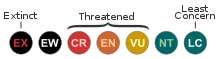
IUCN Red List
Growth: S = slow M = medium F = fast. Soil: L = light (sandy) M = medium H = heavy (clay). pH: A = acid N = neutral B = basic (alkaline). Shade: F = full shade S = semi-shade N = no shade. Moisture: D = dry M = Moist We = wet Wa = water.
Now available:
Food Forest Plants for Mediterranean Conditions
350+ Perennial Plants For Mediterranean and Drier Food Forests and Permaculture Gardens.
[Paperback and eBook]
This is the third in Plants For A Future's series of plant guides for food forests tailored to
specific climate zones. Following volumes on temperate and tropical ecosystems, this book focuses
on species suited to Mediterranean conditions—regions with hot, dry summers and cool, wet winters,
often facing the added challenge of climate change.
Read More
Expert comment
Author
Willd.
Botanical References
1750200
Links / References
For a list of references used on this page please go here
Readers comment
| Add a comment |
|
If you have important information about this plant that may help other users please add a comment or link below. Only comments or links that are felt to be directly relevant to a plant will be included. If you think a comment/link or information contained on this page is inaccurate or misleading we would welcome your feedback at [email protected]. If you have questions about a plant please use the Forum on this website as we do not have the resources to answer questions ourselves.
* Please note: the comments by website users are not necessarily those held by PFAF and may give misleading or inaccurate information.
|
Subject : Juncus balticus
|
|
|
|