Translate this page:
Summary
Texas walnut is a tough, drought-adapted native walnut of the southern Great Plains, New Mexico, Texas, and northeastern Mexico. It commonly follows creeks, ravines, canyon bottoms and intermittent waterways, where its deep root system can reach moisture beneath landscapes that become extremely dry at the surface. The tree is smaller than Arizona walnut and frequently branches close to the ground, producing a rounded shrub-like crown rather than a tall forest-tree form. Its narrow leaflets give the foliage a finer texture than most other North American walnuts. The nuts are fully edible but very small. UC Davis describes them as the smallest nuts of any walnut species, while Forest Service sources specifically note that the species has sometimes been cultivated for its sweet edible nuts. As with Arizona walnut, the greatest challenge is processing. A thick, fleshy husk surrounds a very hard shell, and the shell's internal walls penetrate deeply between the kernel lobes. The resulting quantity of nutmeat from each fruit is small, but it is highly nutritious and rich in fat. Dense stands can still provide worthwhile harvests when enough nuts are available. Texas walnut is also an important wildlife tree and has horticultural potential because it combines heat tolerance, drought resistance and cold hardiness with relatively modest mature size.
Physical Characteristics

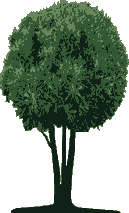 Juglans microcarpa is a deciduous Tree growing to 9 m (29ft) by 6 m (19ft) at a fast rate.
See above for USDA hardiness. It is hardy to UK zone 5. It is in flower from May to June, and the seeds ripen from October to December. The species is monoecious (individual flowers are either male or female, but both sexes can be found on the same plant) and is pollinated by Wind. The plant is self-fertile.
It is noted for attracting wildlife.
Suitable for: light (sandy), medium (loamy) and heavy (clay) soils and prefers well-drained soil. Suitable pH: mildly acid, neutral and basic (mildly alkaline) soils and can grow in very alkaline soils.
It can grow in semi-shade (light woodland) or no shade. It prefers moist soil and can tolerate drought.
UK Hardiness Map
US Hardiness Map
Synonyms
J. nana. J. rupestris.
Plant Habitats
Woodland Garden Canopy;
Edible Uses
Edible Parts: Oil Seed
Edible Uses: Oil
Texas or Little Walnut is an excellent but labor-intensive native food tree. The individual nuts are tiny, yet their kernels possess the rich flavor and high fat content expected from walnuts. Where trees are productive, gathering a large quantity can provide a concentrated and storable source of nutrition. The mature nutmeat is edible and has a sweet, rich walnut flavor [2-3]. The outer husk is not eaten and should be removed before storage. Nuts are substantially smaller than those of Arizona walnut and much smaller than commercial Persian walnuts, so the amount of edible kernel per fruit is limited. Processing is otherwise similar to that of other black walnuts: remove the husk, cure the nut, crack the shell and pick out the kernel. The kernels can be eaten raw, toasted, ground or used for oil [2-3].. Edibility Rating: 4/5. Texas walnut receives an edibility rating of 4 out of 5. The flavor and nutritional quality are excellent, but the small nut size and hard shell make processing unusually labor-intensive. Where a productive stand occurs, the nuts remain worthwhile because of their concentrated fat and protein. The rating is slightly lower than Arizona walnut principally because substantially more individual nuts must be collected and cracked for the same quantity of edible kernel [2-3].. Taste, Processing & Culinary Use: The kernels have a rich, sweet, and characteristically walnut-like flavor. Forest Service references specifically describe the nuts as sweet and edible. Fresh kernels may have a slightly tannic or earthy note, particularly around the thin skin. Light roasting develops a deeper nutty aroma and makes the kernels especially suitable for breads, cakes, biscuits or trail foods. The kernels can be ground into a coarse meal or paste and mixed with grain or seed foods. Like Arizona walnut, Texas walnut can be processed for oil by crushing husked nuts thoroughly, shells included, and simmering the fragments in water. After prolonged simmering and cooling, oil rises to the surface and can be skimmed. This approach may be particularly practical with Texas walnut because the tiny kernels are frustrating to remove individually from the intricately reinforced shells [2-3].. Seasonality (Phenology): Texas walnut is deciduous. Male catkins and female flowers appear during spring as new foliage develops. Fruits enlarge through summer and generally mature during August and September, although northern populations may ripen somewhat later. The husks change from green toward yellow-green or brown as maturity approaches. Nuts often fall naturally beneath productive trees, where they are quickly discovered by rodents and other wildlife. Collection soon after falling is therefore preferable. Safety & Cautions: Healthy walnut kernels are safe and highly nutritious. As with all walnuts, mould represents an important storage hazard. Fresh nuts should be dried carefully before storage. Sealing moist nuts in airtight containers encourages spoilage. Discard nuts with mould, musty smells, unusual internal discoloration or rancid flavours. Walnuts are important food allergens and should not be consumed by individuals with known tree-nut allergies. The husks stain skin strongly, so gloves are advisable. Juglone and related compounds occur in the tree's roots, foliage and husks and can suppress some neighboring plants, but normal healthy kernels remain safe for human consumption. Harvest & Processing: Collect fruits as the husks soften and mature nuts begin falling. Gloves are useful because damaged husks rapidly release dark staining compounds. Remove the fleshy husks by hand, crushing, rolling or pounding. Historically, walnut husks could also be loosened and washed away in water. Rinse the nuts and spread them to cure in a single layer with ample airflow. Allow them to dry thoroughly before storage. Crack the shells with a hammer, heavy-duty nutcracker or vise. Because Texas walnut shells are especially small and intricate, care is necessary to avoid crushing the kernel into tiny fragments. A nut pick or narrow knife can help remove edible pieces from shell cavities. For bulk processing, crushing and oil recovery may be more efficient than attempting to produce intact kernels. Traditional Indigenous Uses: Texas/Little walnut was an important local source of high-fat plant food for Indigenous peoples within its range. Texas Beyond History notes that the small nuts are edible and high in fat, illustrating why even tiny walnuts were nutritionally valuable in dry regions. The nuts could be cracked individually, ground into mixtures with other seed foods, or processed for their oil. Walnuts were especially important because wild diets based heavily on roots, greens, and lean game could be relatively low in concentrated fats. The species' tendency to grow along streams and ravines also made productive trees predictable landscape resources [2-3]. Nutritional Value: Species-specific nutritional data for Juglans microcarpa are limited. However, the nut is characteristically high in fat, consistent with other members of Juglans. Texas Beyond History specifically notes the high fat content of the small kernels. The black-walnut values supplied in our source provide a reasonable indication of the type of nutritional resource involved: more than 600 kilocalories per 100 grams of dried kernel, with substantial protein, unsaturated fat, magnesium, phosphorus, potassium, and trace minerals. Exact values should not be transferred directly to Texas walnut without analysis, but its role as a concentrated energy food is clear [2-3]. Seed - raw. The seed is sweet and oily but it is rather small and has a thick shell[2, 62, 105, 183, 227]. The seed is the smallest of this genus[82]. An edible oil is obtained from the seed, it tends to go rancid quickly.
References More on Edible Uses
Medicinal Uses
Plants For A Future can not take any responsibility for any adverse effects from the use of plants. Always seek advice from a professional before using a plant medicinally.
Juglans microcarpa has no direct, documented traditional or modern medical uses specific to the species. Chemical Properties and Context: Related Species: Other plants in the walnut family, such as the English walnut (Juglans regia) and the black walnut (Juglans nigra), are well-known in herbal medicine. Their hulls, leaves, and bark contain juglone, a natural organic compound with antibacterial, antifungal, and anti-inflammatory properties. Shared Compounds: Because Juglans microcarpa belongs to the same genus (Juglans), its tissues likely contain trace or similar bioactive juglones and tannins. However, botanists and medicinal plant databases do not record formal ethnomedicinal or pharmaceutical applications for this particular regional species
References More on Medicinal Uses
The Bookshop: Edible Plant Books
Our Latest books on Perennial Plants For Food Forests and Permaculture Gardens in paperback or digital formats.
Edible Tropical Plants
Food Forest Plants for Hotter Conditions: 250+ Plants For Tropical Food Forests & Permaculture Gardens.
More
Edible Temperate Plants
Plants for Your Food Forest: 500 Plants for Temperate Food Forests & Permaculture Gardens.
More
More Books
PFAF have eight books available in paperback and digital formats. Browse the shop for more information.
Shop Now
Other Uses
Herbicide Oil Rootstock Wood
Texas walnut is an underused small native tree for dry gardens. Its smaller stature makes it more practical than many walnuts for residential landscapes. Plant it in full sun where maximum nut production is desired, although some partial shade is tolerated. The species also deserves considerably more attention as a horticultural tree. It is smaller than many walnuts, drought-tolerant, heat-adapted, and capable of growing in climates where commercial walnuts may struggle. Sometimes used as a rootstock[183]. Plants produce chemicals that can inhibit the growth of other plants. These chemicals are dissolved out of the leaves when it rains and are washed down to the ground below, reducing the growth of plants under the tree[18, 20, 159]. The roots of many members of this genus produce substances that are toxic to many plant species, especially apples (Malus species), members of the Ericaceae, Potentilla spp and the white pines (certain Pinus spp.)[200]. Wood - heavy, hard, not strong. It makes a beautiful veneer and has been very over-exploited in the wild for this purpose[82]. It is also used in cabinet making, furniture, etc[82, 149]. Wildlife & Ecology: The nuts are eaten by squirrels, rodents, and other wildlife. UC Davis notes that although the nuts are edible to people, their small size means they are particularly important as wildlife food. The foliage supports caterpillars and other insects associated with native walnut species. The crown provides shade and nesting structure in otherwise hot, dry riparian corridors. Roots help stabilize stream banks and ravine soils. The species' ability to persist along intermittent waterways makes it an important woody component of dryland riparian systems.
Special Uses
References More on Other Uses
Cultivation details
Growing Conditions: Texas walnut is adapted to dry, hot regions but usually grows where groundwater or periodic stream flow provides deeper moisture. UC Davis describes it as suited to both sun and part shade in dry, hot climates. It tolerates alkaline and limestone-derived soils particularly well. Deep, freely drained soil encourages the best growth, although wild plants commonly occupy rocky ravines and gravelly stream beds. Established trees are considerably more drought-tolerant than many commercial walnuts. Regular deep watering during establishment improves growth, but mature trees can survive substantial periods of dryness. Habitat & Distribution: Texas walnut is native from New Mexico through Texas, Oklahoma, and southern Kansas and into northeastern Mexico [2-5]. Typical habitats include streams, ravines, creek banks, canyon bottoms, floodplain terraces and rocky hillsides. The Lady Bird Johnson Wildflower Center describes it as a shrub or small tree commonly associated with creeks and rivers. It can tolerate considerably hotter and drier landscapes than many eastern walnut species as long as its roots can reach periodic moisture. Cultivation: Texas walnut is an underused small native tree for dry gardens. Its smaller stature makes it more practical than many walnuts for residential landscapes. Plant it in full sun where maximum nut production is desired, although some partial shade is tolerated. Deep irrigation during the establishment phase encourages a strong root system. Once mature, watering can be reduced substantially. Because the tree develops a broad root system and produces juglone, plant sensitive ornamental species at some distance. The tree can be useful as a small shade tree, wildlife tree, native nut tree, or rootstock. Forest Service sources note that Texas/Little Walnut has been used as rootstock in Texas trials of non-native walnuts, reflecting its climatic adaptability. Pollinators: Texas walnut is wind-pollinated. Male catkins release pollen that is carried through the air to small female flowers on the same or neighbouring trees. A single tree is capable of producing nuts because male and female flowers occur on the same individual, although flowering times may not overlap perfectly in every tree. Having several genetically distinct trees nearby can therefore improve pollination and fruit set. The flowers offer little nectar to insects, but the tree has substantial value as insect habitat. Identification. Texas walnut is usually a large shrub or small rounded deciduous tree reaching about 4–9 metres tall. The Lady Bird Johnson Wildflower Center describes it as typically around 6 meters but potentially reaching about 9 meters. The bark is grey to dark brown and becomes increasingly fissured with age. Leaves are alternate and pinnately compound, with numerous narrow lanceolate leaflets. The leaflets are much smaller and narrower than those of Arizona walnut and have finely serrated margins. Male flowers occur in hanging catkins. Female flowers are inconspicuous and develop into small round fruits. The green fleshy husks enclose extremely hard shells. The fruits are the smallest of the North American walnuts, a feature reflected in the scientific name microcarpa. Compared with Juglans major, Texas walnut has a smaller overall stature, finer foliage, and smaller nuts. Texas walnut, Juglans microcarpa Berland., belongs to the walnut family (Juglandaceae) and the genus Juglans. Common names include Texas walnut, little walnut, little black walnut, Texas black walnut and Mexican walnut. The scientific name microcarpa means “small-fruited,” an appropriate description because this species produces some of the smallest nuts in the walnut genus. Juglans microcarpa is currently accepted as a distinct species [2-5]. It is usually a large shrub or small deciduous tree, commonly 4–9 meters tall and approximately 4.5–6 meters wide in cultivation. UC Davis records mature trees around 6–9 metres tall and 4.5–6 metres wide, with a relatively fast growth rate. It is broadly hardy, approximately USDA Zones 4–9, depending on provenance. Requires a deep well-drained loam and a sunny position sheltered from strong winds[1, 11]. Prefers a slightly alkaline soil[200]. This species often experiences drought in its native range[229]. Plants produce a deep taproot and they are intolerant of root disturbance[1, 11]. Seedlings should be planted out into their permanent positions as soon as possible and given some protection for their first winter or two since they are somewhat tender when young[1, 11]. Flower initiation depends upon suitable conditions in the previous summer[200]. The flowers and young growths can be destroyed by even short periods down to -2°c, but fortunately plants are usually late coming into leaf[200]. Any pruning should only be carried out in late summer to early autumn or when the plant is fully dormant otherwise wounds will bleed profusely and this will severely weaken the tree[200]. Trees have a dense canopy which tends to reduce plant growth below them. We have no specific information for this species, but the roots of several members of this genus produce substances that are toxic to many plant species, especially apples (Malus species), members of the Ericaceae, Potentilla spp and the white pines (certain Pinus spp.)[200]. The leaves of many species also secrete substances that have an inhibitory affect on plants growing underneath them. All in all this is not a very good companion plant[K]. Closely related to J. major, and hybridizes with that species where their ranges overlap[229].
References Carbon Farming Information and Carbon Sequestration Information
Temperature Converter
Type a value in the Celsius field to convert the value to Fahrenheit:
Fahrenheit:
The PFAF Bookshop
Plants For A Future have a number of books available in paperback and digital form. Book titles include Edible Plants, Edible Perennials, Edible Trees,Edible Shrubs, Woodland Gardening, and Temperate Food Forest Plants. Our new book is Food Forest Plants For Hotter Conditions (Tropical and Sub-Tropical).
Shop Now
Plant Propagation
The seed is best sown as soon as it is ripe in individual deep pots in a cold frame[80]. You need to protect it from mice, birds, squirrels etc. The seed usually germinates in late winter or the spring. Plant out the seedlings into their permanent positions in early summer and give some protection from the cold for their first winter or two. The seed can also be stored in cool moist conditions (such s the salad compartment of a fridge) over the winter and sown in early spring but it may then require a period of cold stratification before it will germinate[78, 80, 113].
Other Names
If available other names are mentioned here
Texas walnut, little walnut, little black walnut, Texas black walnut and Mexican walnut.
Native Range
NORTHERN AMERICA: United States (Kansas (southwest), Oklahoma, New Mexico, Texas), Mexico (Chihuahua (east), Coahuila de Zaragoza, Nuevo León)
Weed Potential
Right plant wrong place. We are currently updating this section.
Please note that a plant may be invasive in one area but may not in your area so it's worth checking.
Texas walnut has very low weed potential. It does not spread aggressively through suckers or rhizomes and requires time to mature. Seedlings may establish downstream or where squirrels bury nuts, but natural regeneration is usually scattered. Within its native range this recruitment contributes positively to riparian woodland rather than creating a weed problem. Its relatively specialized requirement for creek, ravine or deep-soil habitats also limits uncontrolled spread.
Conservation Status
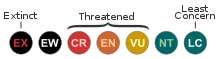
IUCN Red List of Threatened Plants Status : Juglans microcarpa is listed as Least Concern. In the US, the population is considered stable and large.
| Related Plants
|
| Latin Name | Common Name | Habit | Height | Hardiness | Growth | Soil | Shade | Moisture | Edible | Medicinal | Other |
| Juglans ailanthifolia | Japanese Walnut | Tree | 20.0 |
4-8
| | LMH | N | M | 3 | 1 | 5 |
| Juglans ailanthifolia cordiformis | Heartseed Walnut | Tree | 20.0 |
4-8
| M | LMH | N | M | 4 | 1 | 4 |
| Juglans californica | California Walnut, Southern California walnut | Tree | 6.0 |
7-10
| M | LMH | N | M | 2 | 1 | 3 |
| Juglans cathayensis | Chinese Walnut | Tree | 20.0 |
4-8
| | LMH | N | M | 3 | 0 | 1 |
| Juglans cinerea | Butternut - White Walnut, Butternut | Tree | 25.0 |
3-7
| M | LMH | N | M | 3 | 3 | 3 |
| Juglans hindsii | Hind's Black Walnut, Northern California walnut, Paradox hybrid walnut | Tree | 15.0 |
8-9
| M | LMH | N | M | 3 | 0 | 3 |
| Juglans intermedia | Hind's Black Walnut, Northern California walnut, Paradox hybrid walnuH | Tree | 30.0 |
4-8
| | LMH | N | M | 3 | 0 | 1 |
| Juglans major | Arizona Walnut or New Mexico Black Walnut | Tree | 15.0 |
7-9
| F | LMH | N | M | 5 | 1 | 3 |
| Juglans mandschurica | Manchurian Walnut | Tree | 20.0 |
4-8
| | LMH | N | M | 3 | 1 | 4 |
| Juglans neotropica | Andean Walnut | Tree | 25.0 |
10-12
| S | LMH | N | M | 3 | 2 | 4 |
| Juglans nigra | Black Walnut | Tree | 30.0 |
4-9
| F | LMH | N | M | 3 | 3 | 4 |
| Juglans olanchana | Olancho walnut, Central American walnut | Tree | 45.0 |
10-12
| M | LMH | SN | MWe | 2 | 0 | 3 |
| Juglans regia | Walnut, English walnut, Persian Walnut, | Tree | 20.0 |
7-9
| M | LMH | N | M | 4 | 3 | 4 |
| Juglans regia fallax | Walnut | Tree | 30.0 |
4-8
| | LMH | N | M | 3 | 0 | 1 |
| Juglans regia kamaonia | Walnut | Tree | 30.0 |
4-8
| | LMH | N | M | 3 | 3 | 3 |
| Juglans sinensis | | Tree | 20.0 |
-
| | LMH | N | M | 3 | 1 | 1 |
| Juglans x bisbyi | Buartnut | Tree | 20.0 |
4-8
| | LMH | N | M | 3 | 0 | 2 |
|
Growth: S = slow M = medium F = fast. Soil: L = light (sandy) M = medium H = heavy (clay). pH: A = acid N = neutral B = basic (alkaline). Shade: F = full shade S = semi-shade N = no shade. Moisture: D = dry M = Moist We = wet Wa = water.
Now available:
Food Forest Plants for Mediterranean Conditions
350+ Perennial Plants For Mediterranean and Drier Food Forests and Permaculture Gardens.
[Paperback and eBook]
This is the third in Plants For A Future's series of plant guides for food forests tailored to
specific climate zones. Following volumes on temperate and tropical ecosystems, this book focuses
on species suited to Mediterranean conditions—regions with hot, dry summers and cool, wet winters,
often facing the added challenge of climate change.
Read More
Expert comment
Author
Berl.
Botanical References
1182200
Links / References
For a list of references used on this page please go here
Readers comment
| Add a comment |
|
If you have important information about this plant that may help other users please add a comment or link below. Only comments or links that are felt to be directly relevant to a plant will be included. If you think a comment/link or information contained on this page is inaccurate or misleading we would welcome your feedback at [email protected]. If you have questions about a plant please use the Forum on this website as we do not have the resources to answer questions ourselves.
* Please note: the comments by website users are not necessarily those held by PFAF and may give misleading or inaccurate information.
|
Subject : Juglans microcarpa
|
|
|
|