 |
|
|
 |
| http://commons.wikimedia.org/wiki/User:Yug |
Translate this page:
Summary
Bloom Color: Blue. Main Bloom Time: Early summer, Early fall, Late summer, Mid summer. Form: Upright or erect.
Physical Characteristics

 Ipomoea tricolor is a PERENNIAL CLIMBER growing to 5 m (16ft 5in) at a fast rate.
See above for USDA hardiness. It is hardy to UK zone 9 and is frost tender. It is in flower from July to October. The species is hermaphrodite (has both male and female organs).
Suitable for: light (sandy), medium (loamy) and heavy (clay) soils and prefers well-drained soil. Suitable pH: mildly acid, neutral and basic (mildly alkaline) soils. It cannot grow in the shade. It prefers moist soil.
UK Hardiness Map
US Hardiness Map
Synonyms
I. rubrocaerulea. Pharbitis rubrocaerulea. P. tricolor.
Plant Habitats
Cultivated Beds; South Wall. By. West Wall. By.
Edible Uses
References More on Edible Uses
Medicinal Uses
Plants For A Future can not take any responsibility for any adverse effects from the use of plants. Always seek advice from a professional before using a plant medicinally.
Hallucinogenic
The seed contains small quantities of the hallucinogen LSD[200, 219]. This has been used medicinally in the treatment of various mental disorders.
References More on Medicinal Uses
Other Uses
References More on Other Uses
Cultivation details
Landscape Uses:Container, Specimen. Requires a rich well-drained soil in a warm sunny position[1]. A tender and short-lived perennial plant, it can survive the winter when grown against a sunny but sheltered south-facing wall though it is best treated as an annual[219]. A climbing plant, supporting itself by twining around the branches of other plants[219]. There are many named forms selected for their ornamental value[219]. Special Features:
Attractive foliage, North American native.
References Carbon Farming Information and Carbon Sequestration Information
Temperature Converter
Type a value in the Celsius field to convert the value to Fahrenheit:
Fahrenheit:
Plant Propagation
Pre-soak the seed for 12 hours in warm water, or scarify the seed, and sow in individual pots in a greenhouse in early spring. The seed usually germinates in 1 - 3 weeks at 22°c. Plants are extremely resentful of root disturbance, even when they are quite small, and should be potted up almost as soon as they germinate[219]. Grow them on in the greenhouse for at least their first winter then plant them out into their permanent positions in late spring or early summer, after the last expected frosts. Cuttings of side shoots in a peaty soil. Layering.
Other Names
If available other names are mentioned here
Native Range
Coming Soon
Weed Potential
Right plant wrong place. We are currently updating this section.
Please note that a plant may be invasive in one area but may not
in your area so it's worth checking.
Conservation Status
IUCN Red List of Threatened Plants Status :
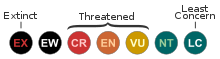
IUCN Red List
Growth: S = slow M = medium F = fast. Soil: L = light (sandy) M = medium H = heavy (clay). pH: A = acid N = neutral B = basic (alkaline). Shade: F = full shade S = semi-shade N = no shade. Moisture: D = dry M = Moist We = wet Wa = water.
Support Plants For A Future
Plants For A Future relies on regular donations to keep our free database and search facilities going, to pay for ongoing research, improvements and enhancements, and to develop and publish new books.
Read more
Choose Currency
Donate in £ GBP
Donate in $ USD
Donate in € EUR
Securely pay via PayPal or Credit/Debit Card without an account.
Expert comment
Author
Cav.
Botanical References
Links / References
For a list of references used on this page please go here
Readers comment