Translate this page:
Summary
Foxtail barley is one of the most visually distinctive wild barleys in North America. Its nodding seed heads carry numerous slender awns that change from pale green to silver, pink, purple, or bronze before fading to straw color. When moved by wind, a colony can appear soft and luminous, making the species attractive in naturalistic landscapes. Its appearance, however, conceals an important hazard. Once the seed heads mature and dry, they break into sharp-pointed segments armed with backward-facing barbs. These segments readily lodge in fur, clothing, skin, eyes, ears, nostrils and mouths. In livestock and wildlife, they can penetrate tissue and cause painful wounds and secondary infection. The grain itself is edible in the narrow botanical sense. As with the other barley species supplied in the source notes, the seeds contain starch and can be parched, boiled or ground after thorough cleaning. However, Foxtail Barley is a poor practical food because the grains are small and are surrounded by exceptionally troublesome awns and chaff. The central spikelet in each group of three is usually fertile, while the two lateral spikelets are generally reduced and sterile or male. A mature seed head therefore produces substantially less grain than its apparent size suggests. Foxtail barley is primarily a plant of moist, saline or alkaline ground. It commonly occupies grasslands, wet meadows, marsh edges, lake margins, roadsides, railway land, vacant lots and disturbed pastures. It is particularly successful where poor drainage, soil compaction or salt accumulation suppress competing vegetation. Its greatest values are ornamental interest, early-season ground cover, soil stabilization and limited forage before the awns develop. Its greatest liabilities are aggressive self-seeding in disturbed ground and the physical danger posed by mature seed heads.
Physical Characteristics

 Hordeum jubatum is a PERENNIAL growing to 0.6 m (2ft) by 0.4 m (1ft 4in) at a fast rate.
See above for USDA hardiness. It is hardy to UK zone 4. It is in flower in June. The species is hermaphrodite (has both male and female organs) and is pollinated by Wind.
Suitable for: light (sandy), medium (loamy) and heavy (clay) soils and can grow in nutritionally poor soil. Suitable pH: mildly acid, neutral and basic (mildly alkaline) soils and can grow in very alkaline and saline soils.
It can grow in semi-shade (light woodland) or no shade. It prefers dry moist or wet soil and can tolerate drought.
UK Hardiness Map
US Hardiness Map
Synonyms
Critesion jubatum (L.) Nevski. Elymus jubatus (L.) Link
Plant Habitats
Cultivated Beds;
Edible Uses
Edible Parts: Seed
Edible Uses: Coffee
The grains of Foxtail Barley are edible after complete removal of the awns and husks, but the plant should not be treated as an easy wild cereal [2-3]. Each seed is enclosed within floral bracts and accompanied by several long awns. These awns possess small backward-pointing barbs that allow the seed segment to travel in one direction through fur or tissue. A single overlooked fragment can make otherwise edible grain unsafe and unpleasant. The grain is also small. As in Meadow Barley, only the central spikelet in each cluster is normally fertile, while the two lateral spikelets do not usually produce fully developed grains. Foragers would therefore need to collect a large number of seed heads, dry them, break them apart, remove the long bristles, thresh out the grains, and repeatedly winnow and inspect the result [2-3]. Immature grains may be softer, but harvesting them too early reduces both yield and storage quality. Mature grains are hard and should be cooked, parched or ground. No practical human food use is associated with the foliage. Young leaves can provide forage for grazing animals before the seed heads emerge, but they are fibrous and unsuitable as an ordinary human vegetable. Foxtail barley is best regarded as an emergency or experimental grain rather than a desirable staple [2-3]. Edible Uses & Rating: Foxtail barley merits an edibility rating of 1/5. The grain is chemically edible and can supply carbohydrate, but its physical structure makes it one of the least practical barley grains for human use. The long, sharply barbed awns create a genuine injury risk during collection, processing and eating. The small fertile grain, brittle seed head and persistent chaff further reduce its value. A dense colony may look abundant, but most of the visible bulk consists of awns and floral material rather than food. The grain could be parched and ground after extremely careful processing. Nevertheless, the effort and risk are difficult to justify where safer wild grains or cultivated cereals are available. The rating of 1/5 does not mean the grain is poisonous. It means that the usable food yield is low and the processing hazard is unusually high [2-3]. Taste, Processing & Kitchen Notes: Properly cleaned Foxtail Barley grain has a mild cereal flavor. It is likely to taste slightly grassy, nutty and earthy when parched. Toasting can improve the flavor and make the small hard grains easier to chew or grind. This reflects the broader preparation method supplied for Hordeum: dry heat changes hard raw grain into a crisper and more aromatic food. Foxtail barley should not, however, be prepared with the casual methods suitable for cultivated barley. The seed segments must be completely stripped of their bristles before entering the kitchen. Awn fragments are difficult to see once mixed with cracked grain or flour. Processing should therefore begin with repeated visual inspection under good light. Boiling whole grains is possible after cleaning, but the attached hulls may remain tough. Cracking the grains before cooking can shorten the cooking time and produce a coarse porridge. Parched grain could theoretically be added to a trail mix, but only after all awns and sharp chaff have been removed. Because of the risk of hidden fragments, this use is less advisable than it is for cultivated barley. The grains can also be ground into meal. The meal would be better suited to porridge, soup thickening or flatbread mixtures than to raised bread. Unlike cultivated barley, Foxtail Barley is not a sensible grain for malting. The seed is too small, processing is difficult, and the yield from wild stands is low. Seasonality (Phenology): Foxtail barley is a cool-season grass. New shoots commonly emerge in autumn where winters are mild or in early spring in colder regions. The plant grows rapidly while moisture is available and can form conspicuous green patches before many warm-season grasses become active. Flowering and seed-head development generally occur from June through August, as stated in the supplied notes. Some southern or low-elevation populations may begin flowering in May, while northern plants may retain seed heads into late summer. Regional floras record fruiting or flowering broadly from May or June through August [2-3]. The seed heads are least hazardous while young, green and soft. They become increasingly dangerous as the awns dry, stiffen and develop fully functional barbs. The attractive pink, purple or silvery stage usually occurs as the inflorescence approaches maturity. Shortly afterwards, the central axis becomes brittle and the head breaks into segments. The harvest window for edible grain is therefore narrow. Seed collected too early is poorly developed; seed collected too late is easily lost and more hazardous to handle. Plants growing in moist sites may remain green into summer. Those in dry or saline ground often become dormant after seed production. Safety & Cautions (Food Use): The mature awns are the principal hazard. Dry seed segments can penetrate skin and soft tissue. Livestock records describe injuries to the nose, eyes and mouth, and severe cases may progress to infected sores, abscesses and deeper tissue damage. The same physical mechanism can injure people. Gloves, long sleeves and eye protection are sensible when handling large quantities of mature seed heads. Foxtail Barley is especially dangerous around dogs. Barbed awns can lodge between toes or enter the ears, eyes, nostrils and mouth. Plants should not be allowed to mature beside kennels, walking paths or areas frequently used by pets. Grain should never be eaten unless every visible awn and sharp husk fragment has been removed. Even then, the batch should be examined repeatedly. Do not harvest seed heads affected by mould, smut, rust or ergot. Dark elongated fungal bodies replacing normal grains may indicate ergot contamination and require disposal of the entire batch. Plants growing beside salted roads may also be exposed to fuel residues, herbicides, heavy metals, tyre particles and other contaminants. Salt tolerance does not make roadside plants safe to eat. People with coeliac disease or gluten-related disorders should avoid Foxtail Barley grain. As a Hordeum species, it should not be assumed to be gluten-free. Young green plants are safer around grazing animals than mature plants, but hay containing developed seed heads may be greatly reduced in value and can injure livestock. Harvest & Processing Workflow: Begin by locating a clean stand away from roads, sprayed pasture, industrial land and animal-waste accumulation. Confirm the identification and inspect the seed heads for mould, smut, rust and abnormal grains. Harvest just before the heads become completely brittle. The grains should be firm and nearly mature, while the awns remain flexible enough to handle without immediately breaking into skin or clothing. Wear gloves, long sleeves and protective glasses. Place a paper bag or deep container directly beneath each seed head and cut it with scissors or secateurs. Avoid stripping mature heads by hand. Carry the material in a closed container so loose awned segments cannot spread through clothing, vehicles or working areas. Spread the heads on a tray or sheet in a secure, dry, well-ventilated place inaccessible to pets and children. Once thoroughly dry, place the heads in a heavy cloth bag and gently crush or beat them. The purpose is to release the grains without scattering barbed segments throughout the room. Open the bag outdoors or in a controlled processing space. Screen out the longest awns and coarse stems. Rub or lightly pound the remaining spikelets to loosen the hulls. Winnow repeatedly to remove lightweight chaff. Because awns have backward-facing barbs, some fragments may cling rather than blow away. Hand sorting is therefore essential. Pass the grain through progressively finer screens, then spread it in a single layer and inspect it under bright light. Only after the batch is entirely free of sharp material should it be parched, boiled or ground. The amount of labor needed is likely to be disproportionate to the small final yield. Cultivar/Selection Notes: Foxtail Barley is generally encountered as a wild plant rather than a food crop. No recognized cultivars have been developed for large, easily processed human grain. Its shattering heads, small seeds and injurious awns are characteristics that domesticated barley breeding has largely eliminated or reduced. The plant is occasionally sold as an ornamental grass because of its shimmering pink, purple and silver seed heads. Ornamental material may be listed simply as Hordeum jubatum, without a cultivar name. Garden selections could theoretically emphasize stronger stems, brighter coloring, reduced height or delayed seed shedding. They should not be assumed to have less dangerous awns unless this has been specifically demonstrated. Foxtail Barley includes considerable natural variation. Some populations are low and compact, while others form taller, more open clumps. Flower color and flowering time also vary with genetics and environment. Seed sold for restoration should ideally come from a regionally suitable population. Local material is more likely to match seasonal rainfall, winter temperatures, soil salinity and flowering time. The species should not be planted solely for ornament where pets, children or grazing animals regularly pass once the seed heads mature. Look-Alikes & Confusion Risks: Foxtail Barley is often confused with other bristly grasses collectively called foxtails. True foxtails in the genus Setaria have dense cylindrical heads surrounded by bristles, but their internal spikelet arrangement differs from that of barley. The seed heads also tend to remain more cohesive rather than breaking into the distinctive awned units of Hordeum jubatum. Squirreltail grasses in the genus Elymus, especially Elymus elymoides, can be very similar. They also possess long spreading awns and occupy dry western habitats. Spikelet arrangement, glume structure and the way the head breaks apart distinguish them. Meadow Barley, Hordeum brachyantherum, generally has a narrower and less luxuriantly feathery head. Its awns are usually shorter, and it is strongly associated with moist meadows and wet ground. Mouse Barley, Hordeum murinum, is an introduced annual with stiffer, more compact heads. Its plants are commonly found in urban and agricultural disturbance and often have well-developed clasping auricles at the leaf base. Cultivated Barley, Hordeum vulgare, has larger, heavier and more regular grain heads. Its central axis does not shatter as readily under domesticated cultivation, and several forms produce three fertile spikelets at each node. Foxtail Barley can be recognised by its nodding, soft-looking inflorescence, numerous very long awns and tendency to turn pinkish or purplish before drying. Within each spikelet group, the central spikelet is normally fertile and the two lateral spikelets are generally sterile or male. Traditional/Indigenous Use Summary: Wild grass seeds formed part of the seed-gathering traditions of many Indigenous peoples across North America. The grains of wild barleys could be parched, ground or incorporated into mixed seed meals. However, published records do not always identify the barley species involved, and it is unsafe to assume that every general reference applies specifically to Foxtail Barley. The severe awns make this species less attractive than many other wild grasses. Any traditional use would have depended on careful timing, specialist processing and thorough separation of seed from bristles and chaff. Indigenous seed processing often involved beating baskets, collecting trays, drying, parching, winnowing, grinding stones and considerable practical knowledge of the correct harvest stage. Foxtail Barley also occurred in landscapes managed through burning, grazing, gathering and movement. Its expansion into disturbed land after European settlement should not be confused with its earlier ecological distribution. No strong evidence indicates that it was an important staple grain. It is more reasonable to regard it as a possible local or supplementary seed food. Seed - raw or cooked[2, 105, 161, 257]. The seed can be ground into a flour and used as a cereal in making bread, porridge etc[177, 183]. Native North Americans would eat the dry flour raw[257]. The seed is exceedingly small and fiddly to use[K]. The roasted seed is used as a coffee substitute[183].
References More on Edible Uses
Medicinal Uses
Plants For A Future can not take any responsibility for any adverse effects from the use of plants. Always seek advice from a professional before using a plant medicinally.
Foxtail barley has minor recorded medical and ethnobotanical uses, primarily rooted in Native American traditional medicine. However, it is generally not used in modern herbalism due to its significant dangers. Historically, some Indigenous North American groups—such as the Chippewa and Potawatomi—utilized parts of the plant for specific remedies: Eye Compresses: The dried root was wrapped, moistened, and used as a topical compress to soothe styes and swollen eyelids. Known Hazards: Modern botanical and veterinary sources emphasize that the plant poses serious health risks: Physical Injury: The seeds feature stiff, barbed awns (bristle-like structures). If ingested by animals, these can work their way into the gums, digestive tract, eyes, and ears, leading to severe inflammation, ulcers, blindness, or even death. Toxicity: Some Native American groups (like the Ramah Navajo) considered the plant to be poisonous and avoided it entirely. The dry root can be wrapped, then moistened and used as a compress for styes in the eyes or on swollen eyelids[257].
References More on Medicinal Uses
The Bookshop: Edible Plant Books
Our Latest books on Perennial Plants For Food Forests and Permaculture Gardens in paperback or digital formats.

Edible Tropical Plants
Food Forest Plants for Hotter Conditions: 250+ Plants For Tropical Food Forests & Permaculture Gardens.
More

Edible Temperate Plants
Plants for Your Food Forest: 500 Plants for Temperate Food Forests & Permaculture Gardens.
More

More Books
PFAF have eight books available in paperback and digital formats. Browse the shop for more information.
Shop Now
Other Uses
Its greatest values are ornamental interest, early-season ground cover, soil stabilization, and limited forage before the awns develop. Its greatest liabilities are aggressive self-seeding in disturbed ground and the physical danger posed by mature seed heads. In gardens, the plant can be used for short-term ornamental effect if the flower heads are removed before they dry and shatter. In restoration, it may be useful on saline or disturbed ground, although its tendency to dominate degraded sites needs consideration. Garden selections could theoretically emphasize stronger stems, brighter coloring, reduced height, or delayed seed shedding. They should not be assumed to have less dangerous awns unless this has been specifically demonstrated. It is poorly suited to narrow paths, pet areas, children’s gardens, lawns, or frequently handled flower borders. Ecology & Wildlife: Foxtail Barley occupies an important but sometimes contradictory ecological position. It is a native North American grass adapted to saline flats, wet meadows, marsh edges, and disturbed ground. Its fibrous roots help cover bare soil and reduce surface erosion. Young foliage provides fair to good spring forage for some grazing animals before the seed heads develop. The plant also supports grass-feeding insects and supplies low cover for invertebrates and small animals. Once the seed heads mature, its wildlife value declines sharply. Dry awns can injure deer, elk, pronghorn, and other grazing animals by penetrating the mouth and nose. Birds and rodents may consume some seeds, but the barbed dispersal units are primarily adapted to movement on animals rather than comfortable consumption. The species often colonizes disturbed ground after grazing, flooding, road construction, soil compaction, or salinization. It can therefore function as both a pioneer native grass and an indicator of degraded land. In some restoration settings, its rapid cover and salt tolerance may be useful. In others, dense stands may interfere with more desirable vegetation and create animal-health problems. For foragers and gardeners, Foxtail Barley is best approached as an attractive but hazardous wild grain: edible only after demanding processing, ecologically resilient, and safest when its mature awns are kept away from people and animals.
Special Uses
References More on Other Uses
Cultivation details
Foxtail Barley is beautiful, ecologically adaptable and potentially hazardous. Its luminous seed heads make it one of the most ornamental native grasses of roadside verges, saline meadows and wetland margins. The plant tolerates salt, compaction, poor drainage and disturbance better than many competing species. The grain is technically edible, consistent with the broader Hordeum notes supplied, but its food value is low. Small seeds, sterile lateral spikelets, persistent chaff and extremely barbed awns make harvesting and processing inefficient. An edibility rating of 1/5 is appropriate. The species is not recommended as a routine wild grain where safer alternatives exist. Young foliage can provide early grazing before the seed heads emerge, but mature stands are dangerous to livestock, wildlife, and pets. In gardens, the plant can be used for short-term ornamental effect if the flower heads are removed before they dry and shatter. In restoration, it may be useful on saline or disturbed ground, although its tendency to dominate degraded sites needs consideration. Foxtail Barley should ultimately be appreciated with caution: attractive from a distance, useful in certain ecosystems, but poorly suited to close contact once mature. Growing Conditions: Foxtail Barley grows best in full sun. It tolerates a wide range of soils, including clay, loam, sandy alluvium and compacted disturbed ground. Moisture conditions range from seasonally wet to moderately dry, although it is particularly common where spring moisture is reliable. The species is strongly tolerant of salinity. It frequently grows along salt-marsh margins, alkaline flats, saline pastures, coastal beaches and roadsides treated with de-icing salt. It also tolerates poor drainage and can become abundant around sloughs, irrigation ditches, marsh edges and low-lying pasture. The plant does not require fertile soil. In fact, disturbance and reduced competition often favor its establishment more than added nutrients. It can survive in partial shade at woodland margins, but flowering is generally most abundant in open ground. Established clumps tolerate periods of drought after spring growth, although prolonged dryness reduces seed production and may shorten the plant’s lifespan. In gardens, irrigation should be moderate. Constant rich watering can produce lush growth and heavy self-seeding. Habitat & Range: Foxtail Barley is native to North America and is widespread across western, northern, and central parts of the continent. Its current distribution extends through most Canadian provinces and much of the United States. Some eastern populations may represent range expansion or introduction rather than the plant’s original distribution. Habitats include grasslands, open woodlands, mountain meadows, marsh margins, lake shores, saline flats, coastal beaches, pastures, cultivated-field margins, roadsides, railways and waste ground. This matches the supplied description of a weedy species of grasslands, woodlands, mountain meadows and roadsides. The species often increases where soil has been compacted, overgrazed, salted, flooded or otherwise disturbed. It may form extensive nearly pure stands in degraded pasture or saline lowlands. Although native over a large area, Foxtail Barley can behave as an undesirable weed in agricultural settings because mature seed heads reduce hay quality and threaten animal health. Its ecological status therefore depends on location. It can be a legitimate native component of wet or saline communities while simultaneously becoming troublesome in heavily disturbed land. Size & Landscape Performance: Foxtail Barley generally forms small to medium clumps. Leafy growth is commonly 10–35 centimeters tall, while flowering stems reach around 20–60 centimeters, occasionally more in moist fertile sites. The inflorescences are usually 5–10 centimeters long, including the spreading awns, and may appear considerably wider because of the bristles. The seed heads are the main ornamental feature. They begin pale green, then often develop silver, rose, mauve or violet tones before turning tan. Backlighting emphasizes the fine awns and creates a soft halo around each head. The effect is strongest when plants are massed and allowed to move in the wind. However, the ornamental period is brief. Once dry, the heads become brittle, untidy and hazardous. In managed gardens, the plant is best used where seed heads can be removed after color peaks but before they fragment. It is poorly suited to narrow paths, pet areas, children’s gardens, lawns or frequently handled flower borders. Cultivation (Horticulture): Foxtail Barley is easy to grow from seed. Sow during autumn or early spring onto open, lightly disturbed soil. Press the seed into the surface and cover it shallowly. Moisture during germination improves establishment, but mature plants tolerate considerable seasonal drying. The species reproduces by both seed and basal tillering. Seedlings establish readily in gaps where competition is weak. Dense perennial vegetation may reduce recruitment. Little fertilizer is required. Excess nitrogen can encourage weak stems and unnecessary seed production. For ornamental use, remove the flowering stems before they become fully dry. This reduces self-sowing and protects people and animals from loose awns. Plants can be cut back after flowering to encourage clean basal growth, although repeated mowing alone may not eliminate established clumps. Division is possible during cool weather. Lift the plant, separate rooted tillers and replant them promptly. Where the species is already abundant and unwanted, improving drainage, reducing soil salinity where feasible and establishing competitive perennial vegetation can be more effective than repeatedly treating individual plants. It should not be intentionally planted in horse paddocks, dog exercise areas or hay fields. Pests & Problems: Foxtail Barley is more often considered a problem than a plant suffering from problems. Its most serious issue is the production of sharply barbed awns. These awns can injure livestock, wildlife, and pets by entering the mouth, eyes, nose, ears, skin, or digestive tract. Mature seed heads can greatly reduce the feeding value of contaminated hay. Young plants may be grazed before seed formation, but animals should be removed or the grass controlled before the awns harden. Fungal diseases may include rusts, smuts and ergot. Diseased grain is unsuitable for food. Aphids, grasshoppers and caterpillars may feed on the foliage but rarely threaten the species at population level. The plant can become abundant in compacted, saline or poorly drained soil. Its presence may indicate underlying land-management problems rather than merely a failure to kill weeds. It may also displace more desirable pasture or native vegetation in degraded sites. In gardens, the plant self-sows readily and may appear in gravel, pavement cracks, drainage lines and bare soil. Identification & Habit: Foxtail Barley is an annual, biennial or more commonly short-lived perennial bunchgrass without spreading rhizomes. Its stems are erect or slightly spreading from the base. Leaves are narrow, flat or loosely folded and usually green to blue-green. The basal sheaths may be smooth or slightly hairy. Small auricles can clasp the stem at the point where the leaf blade meets the sheath, as is common in the barley genus. The flowering head is dense, nodding and strongly bristled. Spikelets are arranged in groups of three at each joint of the central rachis. The central spikelet is fertile and normally sessile, while the two lateral spikelets are usually stalked and sterile. Each joint carries several slender awns. Awn length varies substantially, with botanical descriptions recording approximately 13–76 millimeters. The heads may be pale green, silver, purple or pink during development. At maturity, they become tawny and very brittle. Each grain-bearing segment has several awns and sharp backward-pointing barbs that aid attachment to animals. This combination of a nodding feathery head, very long awns and brittle mature segments makes the plant distinctive. Pollinators: Foxtail Barley is wind-pollinated. Its flowers do not produce showy petals or nectar. Pollen is released from exposed anthers and carried between plants by moving air. It therefore provides little direct forage for bees, butterflies or other nectar-feeding insects. Nevertheless, the plant contributes indirectly to invertebrate habitat. Its leaves and stems may be eaten by grasshoppers, leafhoppers, caterpillars and other herbivorous insects. Dense clumps provide shelter for spiders, ground beetles and small invertebrates, especially in meadow and marsh-edge habitats. These insects form part of the food web supporting birds, amphibians and small mammals. Because the mature awns can also injure wildlife, its ecological role is mixed rather than wholly beneficial. In pollinator plantings, Foxtail Barley should be accompanied by native flowering plants that provide pollen and nectar. Prefers a rather dry soil[1] and a sunny position[200]. Succeeds in most soils and in climates ranging from sub-arctic to sub-tropical[171]. Easily grown in light soils[162]. Established plants are drought-resistant [190]. A very short-lived plant, it is often only an annual[162], though it often self-sows a little[190]. Foxtail barley, Hordeum jubatum L., belongs to the grass family (Poaceae) and the barley genus, Hordeum. Common names include foxtail barley, foxtail barleygrass, squirrel-tail barley, squirrel-tail grass, and bobtail barley. The names refer to the conspicuous seed head, whose numerous long, fine awns spread outward like a soft animal tail. Foxtail barley is native to North America. Its original range was centered largely in western and northern parts of the continent, but it has spread widely through disturbed ground and is now found across most of Canada and the United States apart from parts of the humid Southeast. It is also naturalized beyond North America. It is generally a short-lived perennial bunchgrass, although some plants may behave as annuals or biennials under stressful conditions. It is suited approximately to USDA Hardiness Zones 3–9 and commonly grows 20–60 centimeters tall, occasionally approaching 80 centimeters in favorable moist soil. Individual clumps usually spread around 15–40 centimeters, gradually enlarging by tillering rather than long rhizomes. Regional descriptions commonly record plants between about 20 and 60 centimeters tall.
References Carbon Farming Information and Carbon Sequestration Information
Temperature Converter
Type a value in the Celsius field to convert the value to Fahrenheit:
Fahrenheit:
The PFAF Bookshop
Plants For A Future have a number of books available in paperback and digital form. Book titles include Edible Plants, Edible Perennials, Edible Trees,Edible Shrubs, Woodland Gardening, and Temperate Food Forest Plants. Our new book is Food Forest Plants For Hotter Conditions (Tropical and Sub-Tropical).
Shop Now
Plant Propagation
Seed - sow in situ in March or October and only just cover the seed. Make sure the soil surface does not dry out if the weather is dry. Germination takes place within 2 weeks. Division in spring. Very easy, larger clumps can be replanted direct into their permanent positions, though it is best to pot up smaller clumps and grow them on in a cold frame until they are rooting well. Plant them out in the spring.
Other Names
If available other names are mentioned here
Intermediate barley, Oxtail barleygrass, squirrel-tail barley, squirrel-tail grass and bobtail barley. The names refer to the conspicuous seed head, whose numerous long, fine awns spread outward like a soft animal tail.
Native Range
TEMPERATE ASIA: Russian Federation (Buryatia, Yakutia-Sakha, Krasnoyarsk (south), Irkutsk (south), Kemerovskaja oblast, Kurganskaja oblast, Omsk), Russian Federation (Habarovskij kraj, Primorye, Kamcatskij kraj, Magadanskaja oblast), China (Heilongjiang Sheng, Liaoning Sheng) NORTHERN AMERICA: Canada (Northwest Territories, Yukon, Québec, Nova Scotia, Prince Edward Island, New Brunswick, Newfoundland and Labrador, Saskatchewan, Alberta, Manitoba, British Columbia), United States (Alaska, Indiana, Maine, Massachusetts, Michigan, New Hampshire, New Jersey, New York, Ohio, Pennsylvania, Rhode Island, West Virginia, Illinois, Iowa, Kansas, Minnesota, Missouri, Nebraska, North Dakota, Oklahoma, South Dakota, Wisconsin, Colorado, Idaho, Montana, Oregon, Washington, Wyoming, Maryland, New Mexico, Texas, Arizona, California, Nevada, Utah), Mexico (Baja California (Norte)) EUROPE: Russian Federation (Astrakhan, Saratov)
Weed Potential
Right plant wrong place. We are currently updating this section.
Please note that a plant may be invasive in one area but may not
in your area so it's worth checking.
Foxtail Barley has moderate to high weed potential, particularly in disturbed, saline, or poorly drained ground. Although native to North America, it can spread beyond its original distribution and become dominant in agricultural and urban landscapes. It reproduces prolifically from seed, and the barbed segments are readily transported by animals, people, vehicles and equipment. The plant commonly invades degraded pasture, roadsides, railways, field margins, vacant land and compacted drainage areas. Its tendency to colonize salt-affected soil makes it especially persistent where road salt, irrigation or evaporation has increased surface salinity. It does not normally spread by long underground rhizomes, so individual clumps can be removed mechanically. However, repeated seedling emergence may continue where a seed source remains nearby. Mowing must be timed before seed heads harden and shatter. Late mowing may spread hazardous seed segments. Long-term management requires reducing bare ground and establishing competitive perennial vegetation. Where it is a valued native component of a natural saline meadow, control may be unnecessary. Context is essential.
Conservation Status
IUCN Red List of Threatened Plants Status : Stable. Least concern.
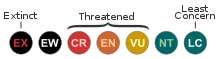
IUCN Red List
Growth: S = slow M = medium F = fast. Soil: L = light (sandy) M = medium H = heavy (clay). pH: A = acid N = neutral B = basic (alkaline). Shade: F = full shade S = semi-shade N = no shade. Moisture: D = dry M = Moist We = wet Wa = water.
Now available:
Food Forest Plants for Mediterranean Conditions
350+ Perennial Plants For Mediterranean and Drier Food Forests and Permaculture Gardens.
[Paperback and eBook]
This is the third in Plants For A Future's series of plant guides for food forests tailored to
specific climate zones. Following volumes on temperate and tropical ecosystems, this book focuses
on species suited to Mediterranean conditions—regions with hot, dry summers and cool, wet winters,
often facing the added challenge of climate change.
Read More
Expert comment
Author
L.
Botanical References
200
Links / References
For a list of references used on this page please go here
Readers comment
© 2010, Plants For A Future. Plants For A Future is a charitable company limited by guarantee, registered in England and Wales. Charity No. 1057719, Company No. 3204567.