Translate this page:
Summary
Prairie sunflower is an adaptable annual of sandy plains, dunes, roadsides, grasslands, and disturbed soils. It can form spectacular mass displays and produce large combined quantities of small edible seeds. Individual cypselae are much smaller than those of common sunflower and tend to fall quickly once mature. This makes gathering and processing labor-intensive. Large colonies can nevertheless provide useful harvests in dry landscapes where more productive seed plants may be absent. The species is also an important pioneer plant, rapidly covering bare sand and disturbed ground while supporting insects and seed-eating wildlife. Prairie sunflower, Helianthus petiolaris, belongs to the sunflower family (Asteraceae) and the genus Helianthus. Common names include prairie sunflower, plains sunflower, and lesser sunflower. It is an annual that can complete its life cycle in approximately USDA Zones 3–10. Plants commonly grow 30–150 cm tall and 30–90 cm wide. The species is accepted as native from Canada to northern Mexico.
Physical Characteristics

 Helianthus petiolaris is a ANNUAL growing to 1.5 m (5ft) by 0.9 m (3ft in) at a medium rate.
See above for USDA hardiness. It is hardy to UK zone 4. It is in flower from July to September. The species is hermaphrodite (has both male and female organs) and is pollinated by Bees, flies.
It is noted for attracting wildlife.
Suitable for: light (sandy) and medium (loamy) soils, prefers well-drained soil and can grow in nutritionally poor soil. Suitable pH: mildly acid, neutral and basic (mildly alkaline) soils. It cannot grow in the shade. It prefers dry or moist soil and can tolerate drought.
UK Hardiness Map
US Hardiness Map
Synonyms
Helianthus annuus subsp. petiolaris (Nutt.) Anashch.
Plant Habitats
Cultivated Beds;
Edible Uses
Edible Parts: Seed
Edible Uses:
The mature seeds are edible and are the only well-documented food part. They can be eaten roasted, ground into meal or combined with other wild seeds. Leaves and flower heads are rough, resinous, and usually too small to justify experimentation. Their edibility should not be inferred from the common sunflower [2-3]. Edible Uses & Rating: Prairie sunflower merits an edibility rating of 3/5. The kernels are nutritious and pleasant, and colony-wide yields can be impressive. Small seed size, rapid shattering, and difficult shell removal prevent a higher rating. In isolated plants, the harvest is rarely worth the effort. In extensive stands, the plant becomes a far more useful seasonal resource [2-3]. Taste, Processing & Kitchen Notes: The kernels taste like smaller cultivated sunflower seeds, with a mild, nutty, and oily flavor. Strong resins found in the foliage are largely absent from the seeds. The shells are comparatively weak and can be coarsely crushed before flotation or winnowing. Light roasting improves flavor, but the tiny kernels burn quickly and require careful heat control. Ground seed can be incorporated into porridge, mixed into flour, or used to make seed cakes. Swallowing large amounts of hairy shell material is not recommended because it may irritate the throat [2-3]. Seasonality (Phenology): Germination follows spring moisture or summer rainfall. Plants may flower from early summer through autumn, especially where rainfall is irregular. Seeds mature from late summer into autumn. They readily drop during strong winds, so harvesting must begin as soon as heads dry and kernels fill. Few seeds remain on the plants far into winter. Safety & Cautions (Food Use): Clean mature seeds are generally safe, except for people with sunflower allergies. Remove hairs, awns and shell fragments before consuming a large quantity. Prairie sunflower often grows along roads and on disturbed sites. Avoid colonies exposed to herbicides, polluted runoff, mine waste or heavy vehicle emissions [2-3]. Harvest & Processing Workflow: Monitor seed heads closely. Bend ripe heads over a basket or sheet and rub or tap the cypselae free. Because the chaff is weaker than that of the common sunflower, gloves may not be necessary, although plants vary. Dry the material promptly, then winnow and sift. Coarse crushing followed by flotation may help separate kernels from shells. Store only after the seed is thoroughly dry [2-3]. Cultivar/Selection Notes: Prairie sunflower has not been developed into a major crop, but it is valuable in sunflower breeding because of its adaptation to drought, sand, and marginal ground. It hybridizes naturally with common sunflower. Future food selections could emphasize larger kernels, reduced seed shattering and more uniform maturation. Look-Alikes & Confusion Risks: Prairie sunflower may be confused with common sunflower, especially where hybrids occur. It is usually smaller and more slender, with narrower leaves, smaller heads, and a stronger association with sandy ground. Hybridization can blur these distinctions. Mature cypselae, leaf form, and overall habit may all be needed for confident identification [2-3]. Traditional/Indigenous Use Summary: Indigenous peoples gathered prairie sunflower seed along with seed from other wild Helianthus species. It was less important than domesticated common sunflower, but could provide meaningful food where dense natural populations occurred. Its seasonal value would have been greatest in sandy prairie and dryland regions where favorable rainfall produced enormous stands [2-3]. Seed - raw or cooked. An oily texture[161, 177]. The seed can be ground into a powder and kneaded into seed butter[257].
References More on Edible Uses
Medicinal Uses
Plants For A Future can not take any responsibility for any adverse effects from the use of plants. Always seek advice from a professional before using a plant medicinally.
Salve
Helianthus petiolaris (the prairie sunflower) has traditional medical properties. Native American tribes historically used the powdered leaves as a dressing for sores and swellings. The plant is also traditionally valued in herbal practices for its anti-inflammatory and antimicrobial effects. The powdered leaves, either on their own or in an ointment, have been used as a dressing for sores and swellings[257].
References More on Medicinal Uses
The Bookshop: Edible Plant Books
Our Latest books on Perennial Plants For Food Forests and Permaculture Gardens in paperback or digital formats.
Edible Tropical Plants
Food Forest Plants for Hotter Conditions: 250+ Plants For Tropical Food Forests & Permaculture Gardens.
More
Edible Temperate Plants
Plants for Your Food Forest: 500 Plants for Temperate Food Forests & Permaculture Gardens.
More
More Books
PFAF have eight books available in paperback and digital formats. Browse the shop for more information.
Shop Now
Other Uses
Its pollinator, wildlife, and restoration uses are at least as important as its food potential. It should be managed carefully where prolific self-seeding is undesirable. Its ability to flower after summer rainfall makes it especially useful to insects in drought-prone landscapes. Ecology & Wildlife: Prairie sunflower stabilizes loose sand, covers disturbed ground, and contributes organic matter after its annual stems die. Its flowers support diverse insects, while the seeds feed birds and small mammals. Dense stands provide temporary shelter and can help prepare bare ground for longer-lived vegetation, although they may compete with crops or young restoration plants when overly abundant.
Special Uses
References More on Other Uses
Cultivation details
Prairie sunflower is a nutritious but labor-intensive wild seed plant. It cannot match the common sunflower in kernel size or ease of processing, but its abundance and tolerance of poor sandy soil give it genuine value. Its pollinator, wildlife, and restoration uses are at least as important as its food potential. It should be managed carefully where prolific self-seeding is undesirable. Growing Conditions: Prairie sunflower prefers full sun and loose, sandy, gravelly, or well-drained soil. It tolerates heat, drought, and low fertility and often performs poorly in rich, wet ground. Bare or lightly vegetated soil promotes germination and establishment. Dense perennial vegetation usually suppresses seedlings. Habitat & Range: The species occurs from Canada through the Great Plains, Intermountain West and Southwest to northern Mexico. It inhabits sandy prairies, dunes, plains, roadsides, fields and disturbed open ground. (?Plants of the World Online) Size & Landscape Performance: Plants commonly reach 30–150 cm tall and 30–90 cm wide, with considerable variation caused by rainfall and soil fertility. They branch freely and can create broad yellow displays. After seed maturity, the annual stems turn brown and die. Large stands may appear untidy unless left intentionally for wildlife. Cultivation (Horticulture): Sow directly into open sandy soil after severe frost risk declines. Cover seed lightly. Avoid excessive irrigation and fertiliser. Allow some seed to fall for natural renewal. Remove heads before maturity where self-seeding is not wanted. Pests & Problems: Seedlings may be browsed by wildlife or livestock. Birds and insects consume mature seeds. Fungal diseases may occur in humid conditions but are less severe in open, dry habitats. Hybridization with common sunflower can complicate seed saving and exact identification. Identification & Habit: Prairie sunflower is a branching annual with rough stems and leaves. Leaves are usually lance-shaped to ovate and have distinct stalks. Yellow-rayed flower heads occur singly at the ends of branches. The cypselae are small, angular, and easily shed when mature. Pollinators: The flowers attract native bees, bumblebees, honeybees, butterflies, flies, and beetles. Large colonies offer abundant nectar and pollen across broad areas. Its ability to flower after summer rainfall makes it especially useful to insects in drought-prone landscapes. Prairie sunflower, Helianthus petiolaris, belongs to the sunflower family (Asteraceae) and the genus Helianthus. Common names include prairie sunflower, plains sunflower and lesser sunflower. It is an annual that can complete its life cycle in approximately USDA Zones 3–10. Plants commonly grow 30–150 cm tall and 30–90 cm wide. The species is accepted as native from Canada to northern Mexico. Succeeds in most soils in a sunny position[1]. Requires a rich soil[1]. Dislikes shade[1]. Grows well on dry soils[200]. The young growth is extremely attractive to slugs, plants can be totally destroyed by them[K]. This species hybridizes in the wild with H. annuus[274]. Members of this genus are rarely if ever troubled by browsing deer or rabbits[233].
References Carbon Farming Information and Carbon Sequestration Information
Temperature Converter
Type a value in the Celsius field to convert the value to Fahrenheit:
Fahrenheit:
The PFAF Bookshop
Plants For A Future have a number of books available in paperback and digital form. Book titles include Edible Plants, Edible Perennials, Edible Trees,Edible Shrubs, Woodland Gardening, and Temperate Food Forest Plants. Our new book is Food Forest Plants For Hotter Conditions (Tropical and Sub-Tropical).
Shop Now
Plant Propagation
Seed - sow in mid spring in situ. An earlier start can be made by sowing 2 - 3 seeds per pot in a greenhouse in early spring. Use a fairly rich compost. Thin to the strongest seedling, give them an occasional liquid feed to make sure they do not become nutrient deficient and plant them out in late spring or early summer.
Other Names
If available other names are mentioned here
Prairie sunflower, plains sunflower and lesser sunflower.
Native Range
NORTHERN AMERICA: Canada (Saskatchewan (south), Alberta (south), Manitoba (south)), United States (Kansas, Minnesota, Missouri, Nebraska, North Dakota, Oklahoma, South Dakota, Wisconsin, Colorado, Montana (south), Wyoming, Arkansas, Louisiana (Caddo & Jackson Parishes), New Mexico, Texas, Arizona, Utah)
Weed Potential
Right plant wrong place. We are currently updating this section.
Please note that a plant may be invasive in one area but may not
in your area so it's worth checking.
Weed potential is high on disturbed sandy ground. Prairie sunflower produces abundant seed, spreads rapidly and can colonise fields, roadsides and restoration sites. Mowing or removing heads before the cypselae mature reduces unwanted spread.
Conservation Status
IUCN Red List of Threatened Plants Status : Stable. Least Concern.
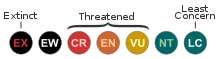
IUCN Red List
Growth: S = slow M = medium F = fast. Soil: L = light (sandy) M = medium H = heavy (clay). pH: A = acid N = neutral B = basic (alkaline). Shade: F = full shade S = semi-shade N = no shade. Moisture: D = dry M = Moist We = wet Wa = water.
Now available:
Food Forest Plants for Mediterranean Conditions
350+ Perennial Plants For Mediterranean and Drier Food Forests and Permaculture Gardens.
[Paperback and eBook]
This is the third in Plants For A Future's series of plant guides for food forests tailored to
specific climate zones. Following volumes on temperate and tropical ecosystems, this book focuses
on species suited to Mediterranean conditions—regions with hot, dry summers and cool, wet winters,
often facing the added challenge of climate change.
Read More
Expert comment
Author
Nutt.
Botanical References
43200235
Links / References
For a list of references used on this page please go here
Readers comment
| Add a comment |
|
If you have important information about this plant that may help other users please add a comment or link below. Only comments or links that are felt to be directly relevant to a plant will be included. If you think a comment/link or information contained on this page is inaccurate or misleading we would welcome your feedback at [email protected]. If you have questions about a plant please use the Forum on this website as we do not have the resources to answer questions ourselves.
* Please note: the comments by website users are not necessarily those held by PFAF and may give misleading or inaccurate information.
|
Subject : Helianthus petiolaris
|
|
|
|