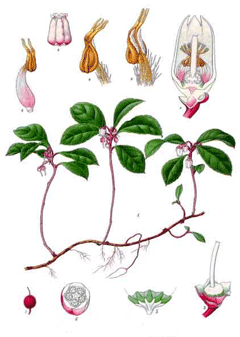
 |
|
http://commons.wikimedia.org/wiki/File:Koeh-064.jpg |
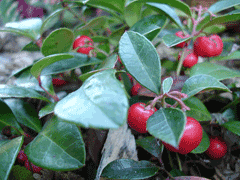 |
| http://commons.wikimedia.org/wiki/Hammond,_Indiana |
Translate this page:
Summary
Bloom Color: White. Main Bloom Time: Early summer, Late summer, Mid summer. Form: Prostrate, Spreading or horizontal.
Physical Characteristics

 Gaultheria procumbens is an evergreen Shrub growing to 0.2 m (0ft 8in) by 1 m (3ft 3in) at a medium rate.
See above for USDA hardiness. It is hardy to UK zone 4. It is in leaf all year, in flower from July to August, and the seeds ripen from October to December. The species is hermaphrodite (has both male and female organs) and is pollinated by Insects. The plant is self-fertile.
Suitable for: light (sandy) and medium (loamy) soils and can grow in nutritionally poor soil. Suitable pH: mildly acid and neutral soils and can grow in very acid soils.
It can grow in full shade (deep woodland) or semi-shade (light woodland). It prefers dry or moist soil and can tolerate drought.
UK Hardiness Map
US Hardiness Map
Synonyms
Gaultheria repens Raf. [Illegitimate]. Brossaea procumbens (L.) Kuntze. Gaultheria humilis Salisb.
Plant Habitats
Woodland Garden Dappled Shade; Shady Edge; not Deep Shade; Ground Cover;
Edible Uses
Edible Parts: Fruit Leaves
Edible Uses: Condiment Tea
Fruit - raw or cooked[2, 3, 14, 95, 101]. Pleasant but insipid[11]. The fruit is not at all insipid, it has a very strong spicy taste of germolene, just like being in a hospital waiting room[K]. Best after a frost, the fruit hangs onto the plant until spring if it is not eaten by birds etc[62, K]. The fruits can also be used in pies, or made into jams etc[183]. The fruit is up to 15mm in diameter[200]. Young leaves - raw[62, 102, 106]. A pleasant wayside nibble if used when very young[183]. Dry and powdery according to our taste buds[K]. A very agreeable tea is made from the fresh leaves[3, 95, 183]. A stronger tea can be made by first fermenting the bright red leaves[183]. 'Oil of wintergreen' can be distilled from this plant. It is used to flavour beer, sweets, chewing gum etc[183].
References More on Edible Uses
Medicinal Uses
Plants For A Future can not take any responsibility for any adverse effects from the use of plants. Always seek advice from a professional before using a plant medicinally.
Analgesic Antiinflammatory Antirheumatic Aromatic Astringent Carminative Diuretic Emmenagogue
Stimulant Tonic
Checkerberry leaves were widely used by the native North American Indians in the treatment of aches and pains and to help breathing whilst hunting or carrying heavy loads[238]. An essential oil (known as 'oil of wintergreen') obtained from the leaves contains methyl salicylate, which is closely related to aspirin and is an effective anti-inflammatory[213]. This species was at one time a major source of methyl salicylate, though this is now mainly synthesized[238]. The leaves, and the oil, are analgesic, anti-inflammatory, aromatic, astringent, carminative, diuretic, emmenagogue, stimulant and tonic[4, 21, 165]. An infusion of the leaves is used to relieve flatulence and colic[254]. The plant, especially in the form of the essential oil, is most useful when applied externally in the treatment of acute cases of rheumatism, sciatica, myalgia, sprains, neuralgia and catarrh[4, 238]. The oil is sometimes used in the treatment of cellulitis, a bacterial infection that causes the skin to become inflamed[254]. Some caution is advised, especially if the oil is used internally, since essential oil is toxic in excess, causing liver and kidney damage[4, 238]. It should not be prescribed for patients who are hypersensitive to salicylates (aspirin)[238]. The leaves can be gathered at any time from spring to early autumn, they are dried for use in infusions or distilled to produce the oil[238].
References More on Medicinal Uses
The Bookshop: Edible Plant Books
Our Latest books on Perennial Plants For Food Forests and Permaculture Gardens in paperback or digital formats.
Edible Tropical Plants
Food Forest Plants for Hotter Conditions: 250+ Plants For Tropical Food Forests & Permaculture Gardens.
More
Edible Temperate Plants
Plants for Your Food Forest: 500 Plants for Temperate Food Forests & Permaculture Gardens.
More
More Books
PFAF have eight books available in paperback and digital formats. Browse the shop for more information.
Shop Now
Other Uses
Essential
An essential oil is obtained from the leaves by steam distillation[2, 14, 57, 213]. In order to obtain the oil, the leaves need to be steeped for 12 - 24 hours in water[4]. The essential oil is used as a food flavouring, medicinally (the original source of Wintergreen oil used as a liniment for aching muscles) and in perfumery and toothpastes. In large doses it can be toxic[165, 244]. A good ground-cover plant for shady positions though it requires weeding for the first year or so[28, 31, 197]. Forming a dense tuft-like carpet, it roots as it spreads and should be spaced about 45cm apart each way[208]. A dynamic accumulator gathering minerals or nutrients from the soil and storing them in a more bioavailable form - used as fertilizer or to improve mulch.
Special Uses
Dynamic accumulator Food Forest Ground cover Scented Plants
References More on Other Uses
Cultivation details
Landscape Uses:Ground cover, Massing, Rock garden, Woodland garden. Prefers a moist but not boggy humus rich soil in shade or semi-shade[11, 182]. A peat and moisture loving species, it requires a lime-free soil[11, 182]. Succeeds in dry soils once it is well established and tolerates considerable drought[208]. Grows well under the thin shade of deciduous shrubs or evergreens[4, 11]. A very cold-hardy plant, tolerating temperatures down to about -35°c[160]. Plants can become invasive when growing in good conditions[182]. Some named forms have been developed for their ornamental value, 'Dart's Red Giant' has specially large berries[182]. All parts of the plant are aromatic, the bruised leaves having the scent of wintergreen[245]. Plants in this genus are notably resistant to honey fungus[200]. Special Features:
North American native, Fragrant foliage, Inconspicuous flowers or blooms. The plant is heat tolerant in zones 8 through 1. (Plant Hardiness Zones show how well plants withstand cold winter temperatures.
Plant Heat Zones show when plants would start suffering from the heat.
The Plant Heat Zone map is based on the number of "heat days" experienced in a given area where the temperature climbs to over 86 degrees F (30°C).
At this temperature, many plants begin to suffer physiological damage. Heat Zones range from 1 (no heat days) to 12 (210 or more heat days).
For example Heat Zone. 11-1 indicates that the plant is heat tolerant in zones 11 through 1.) For polyculture design as well as the above-ground architecture (form - tree, shrub etc. and size shown above) information on the habit and root pattern is also useful and given here if available. An evergreen. A clumping mat former. Forming a dense prostrate carpet spreading indefinitely [1-2]. The root pattern is flat with shallow roots forming a plate near the soil surface [1-2]. The root pattern is stoloniferous rooting from creeping stems above the ground [1-2].
References Carbon Farming Information and Carbon Sequestration Information
Temperature Converter
Type a value in the Celsius field to convert the value to Fahrenheit:
Fahrenheit:
The PFAF Bookshop
Plants For A Future have a number of books available in paperback and digital form. Book titles include Edible Plants, Edible Perennials, Edible Trees,Edible Shrubs, Woodland Gardening, and Temperate Food Forest Plants. Our new book is Food Forest Plants For Hotter Conditions (Tropical and Sub-Tropical).
Shop Now
Plant Propagation
The seed requires a period of cold stratification. Pre-chill for 4 - 10 weeks and then surface sow in a lime-free compost in a shady part of the greenhouse and keep the compost moist[78]. The seed usually germinates well, usually within 1 - 2 months at 20°c, but the seedlings are liable to damp off. It is important to water them with care and to ensure that they get plenty of ventilation. Watering them with a garlic infusion can also help to prevent damping of[K]. Prick out the seedlings into individual pots when they are about 25mm tall and grow them on in light shade in the greenhouse for at least their first winter[K]. Plant them out in late spring or early summer. The seedlings are susceptible to spring frosts so might need some protection for their first few years outdoors. The leaves remain very small for the first few years[11]. Cuttings of half-ripe wood 3 - 6cm long, July/August in a frame in a shady position. They form roots in late summer or spring[78]. A good percentage usually take. Division can be carried out at almost any time of the year, but works best in the spring just before new growth begins[K]. Very easy, larger clumps can be replanted direct into their permanent positions, though it is best to pot up smaller clumps and grow them on in a cold frame until they are rooting well. Plant them out in the spring.
Other Names
If available other names are mentioned here
Alpine wintergreen, Creeping wintergreen, Mountain tea,
Native Range
NORTHERN AMERICA: Canada, Québec (south), Nova Scotia, Ontario, Prince Edward Island, New Brunswick, Newfoundland and Labrador, Manitoba (southeast), United States, Connecticut, Indiana, Maine, Massachusetts, Michigan, New Hampshire, New Jersey, New York, Ohio, Pennsylvania, Rhode Island, Vermont, West Virginia, Illinois (north), Minnesota, Wisconsin, Alabama, Delaware, Georgia, Kentucky, Maryland, North Carolina, South Carolina, Tennessee, Virginia,
Weed Potential
Right plant wrong place. We are currently updating this section.
Please note that a plant may be invasive in one area but may not
in your area so it's worth checking.
Conservation Status
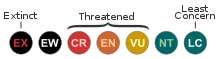
IUCN Red List of Threatened Plants Status :
IUCN Red List
Growth: S = slow M = medium F = fast. Soil: L = light (sandy) M = medium H = heavy (clay). pH: A = acid N = neutral B = basic (alkaline). Shade: F = full shade S = semi-shade N = no shade. Moisture: D = dry M = Moist We = wet Wa = water.
Now available:
Food Forest Plants for Mediterranean Conditions
350+ Perennial Plants For Mediterranean and Drier Food Forests and Permaculture Gardens.
[Paperback and eBook]
This is the third in Plants For A Future's series of plant guides for food forests tailored to
specific climate zones. Following volumes on temperate and tropical ecosystems, this book focuses
on species suited to Mediterranean conditions—regions with hot, dry summers and cool, wet winters,
often facing the added challenge of climate change.
Read More
Expert comment
Author
L.
Botanical References
1143200
Links / References
For a list of references used on this page please go here
Readers comment
| Add a comment |
|
If you have important information about this plant that may help other users please add a comment or link below. Only comments or links that are felt to be directly relevant to a plant will be included. If you think a comment/link or information contained on this page is inaccurate or misleading we would welcome your feedback at [email protected]. If you have questions about a plant please use the Forum on this website as we do not have the resources to answer questions ourselves.
* Please note: the comments by website users are not necessarily those held by PFAF and may give misleading or inaccurate information.
|
Subject : Gaultheria procumbens
|
|
|
|