Translate this page:
Summary
Cleavers is one of the most recognizable wild plants of the northern hemisphere, famous for its ability to cling to clothing, animal fur, and nearby plants using tiny hooked hairs. Although often considered a troublesome weed, it has a long history of traditional use as a spring green, medicinal herb, and coffee substitute. The young shoots can be eaten when tender, but the roasted seeds are generally the most interesting edible product because they produce a surprisingly coffee-like beverage. Cleavers is closely related to true coffee (Coffea species), which also belongs to the madder family. Cleavers (Galium aparine) belongs to the madder family (Rubiaceae) and the genus Galium. Common names include cleavers, catchweed bedstraw, goose grass, sticky willy, stickyweed, and grip grass. It is a widespread annual plant generally suited to USDA Zones 3–10. Plants typically grow 10–80 cm tall, although the weak stems often sprawl, climb, or scramble through surrounding vegetation rather than standing upright.
Physical Characteristics

 Galium aparine is a ANNUAL growing to 1 m (3ft 3in) by 3 m (9ft) at a fast rate.
See above for USDA hardiness. It is hardy to UK zone 3 and is not frost tender. It is in flower from June to August, and the seeds ripen from August to September. The species is hermaphrodite (has both male and female organs) and is pollinated by Flies, beetles. The plant is self-fertile.
It is noted for attracting wildlife.
Suitable for: light (sandy), medium (loamy) and heavy (clay) soils. Suitable pH: mildly acid, neutral and basic (mildly alkaline) soils. It can grow in full shade (deep woodland) semi-shade (light woodland) or no shade. It prefers dry or moist soil.
UK Hardiness Map
US Hardiness Map
Synonyms
Aparine hispida, Aparine vulgaris, Asterophyllum aparine, Galium charoides
Plant Habitats
Woodland Garden Dappled Shade; Shady Edge; not Deep Shade; Hedgerow;
Edible Uses
Edible Parts: Leaves Shoots
Edible Uses: Coffee Tea
The young shoots and leaves of cleavers are edible, but only when gathered very early before the plant develops its characteristic rough texture. Mature stems and leaves become covered with stiff hooked hairs that make them unpleasant and potentially irritating to eat [2-3]. The seeds are the most valuable edible part. When roasted, they can be brewed into a dark, aromatic drink resembling coffee. While they do not match the strength or caffeine content of true coffee, they are among the better wild coffee substitutes [2-3]. Edible Uses & Rating: Young shoots may be cooked as a green vegetable, although quality declines quickly as plants mature. Seeds can be dried, roasted, ground, and brewed [2-3]. Edibility Rating: 3/5. Cleavers receives a moderate rating because the roasted seeds are excellent as a beverage ingredient, but the leafy portions are limited by texture and require careful harvesting. Taste, Processing & Kitchen Notes: Young cleavers shoots have a green, slightly bitter, cabbage-like flavor with mild herbal notes. The flavor is not unpleasant, but the texture is the limiting factor. Even when the taste is acceptable, older leaves and stems become rough due to the hooked hairs and internal fibers. Cooking softens the plant material somewhat but does not reliably eliminate the irritating texture. The youngest spring tips are the best choice for greens. The seeds are far more useful. Raw seeds are small, firm, and coffee bean-like. Dry roasting develops a rich aroma and a darker flavor. A slightly deeper roast improves the resemblance to coffee, although excessive roasting can create burnt flavors. After roasting, the seeds should be ground and steeped in hot water. Filtering the drink is recommended to remove any remaining hairs or fine particles. Nutritional Value: Cleavers greens contain minerals, chlorophyll, and plant compounds typical of wild leafy vegetables. Historically, they were valued more as a cleansing spring herb than as a major calorie source. The seeds provide a more concentrated food source, though their small size limits their practical importance [2-3].. Seasonality (Phenology): Young shoots appear during cool, moist periods, often in spring. In mild climates, plants may germinate during autumn and grow through winter. Flowering can occur from spring into autumn depending on climate. Seeds develop after flowering and should be harvested once mature but before they are dispersed. Safety & Cautions (Food Use): Mature cleavers should be approached cautiously as a food because the hooked hairs can irritate the mouth and throat. Only young, tender growth should be eaten. The seeds should be roasted and the beverage filtered before drinking to remove irritating hairs and debris. Avoid harvesting from roadsides or polluted areas, as the sticky surfaces readily collect dust and contaminants [2-3]. Harvest & Processing Workflow: For greens, gather only the newest tender growing tips before the plant becomes coarse. Wash thoroughly because the sticky hairs easily trap dirt. For the coffee substitute, collect mature seed clusters, dry them, roast them carefully until dark and aromatic, grind them, and brew. Filtering produces the smoothest drink. Cultivar/Selection Notes: Cleavers is not normally cultivated as a food crop. Selection has generally focused on avoiding it as a weed rather than improving it as an edible plant. However, its abundance and adaptability make it an easily available wild resource. Look-Alikes & Confusion Risks: Other Galium species resemble cleavers, and many have similar whorled leaves and square stems. Several related bedstraw species also have edible histories [2-3]. Cleavers is distinguished by its strongly clinging habit, hooked hairs, square stems, and whorls of usually 6–8 narrow leaves. Traditional/Indigenous Use Summary: Cleavers have been used traditionally across Europe, Asia, and North America. The young shoots have been eaten as greens, while the roasted seeds have long been recognized as one of the closest wild substitutes for coffee. It has also been widely used in traditional herbal medicine, particularly as a spring tonic [2-3]. The tender young shoot tips - raw or cooked as a pot-herb[5, 7, 53, 55, 62, 172, 183]. A rather bitter flavour that some people find unpalatable[244], they are best used in the spring[178]. They make a useful addition to vegetable soups[7, 244]. It is said that using this plant as a vegetable has a slimming effect on the body[238]. The roasted seed is a coffee substitute[2, 53, 62]. One of the best substitutes, it merely needs to be dried and lightly roasted and has much the flavour of coffee[4, 115, 183]. A decoction of the whole dried plant gives a drink equal to tea[2, 4].
References More on Edible Uses
Medicinal Uses
Plants For A Future can not take any responsibility for any adverse effects from the use of plants. Always seek advice from a professional before using a plant medicinally.
Alterative Antiphlogistic Aperient Astringent Cancer Depurative Diaphoretic Diuretic
Eczema Febrifuge Homeopathy Skin Tonic Vulnerary
Goosegrass has a long history of domestic medicinal use and is also used widely by modern herbalists. A valuable diuretic, it is often taken to treat skin problems such as seborrhoea, eczema and psoriasis, and as a general detoxifying agent in serious illnesses such as cancer[254]. The whole plant, excluding the root, is alterative, antiphlogistic, aperient, astringent, depurative, diaphoretic, diuretic, febrifuge, tonic and vulnerary[4, 7, 9, 21, 165, 218, 222]. It is harvested in May and June as it comes into flower and can be used fresh or dried for later use[4, 238]. It is used both internally and externally in the treatment of a wide range of ailments, including as a poultice for wounds, ulcers and many other skin problems[4, 7, 244], and as a decoction for insomnia and cases where a strong diuretic is beneficial[4]. It has been shown of benefit in the treatment of glandular fever, ME, tonsillitis, hepatitis, cystitis etc[238]. The plant is often used as part of a spring tonic drink with other herbs[4]. A tea made from the plant has traditionally been used internally and externally in the treatment of cancer[4, 218, 222]. One report says that it is better to use a juice of the plant rather than a tea[254]. The effectiveness of this treatment has never been proved or disproved[7]. Both Asperuloside (a terpenoid) and Coumarin (a benzopyrone) occur in some species of Galium. Asperuloside can be converted into prostaglandins (hormone-like compounds that stimulate the uterus and affect blood vessels), making the genus of great interest to the pharmaceutical industry[238]. A homeopathic remedy has been made from the plant[7].
References More on Medicinal Uses
The Bookshop: Edible Plant Books
Our Latest books on Perennial Plants For Food Forests and Permaculture Gardens in paperback or digital formats.
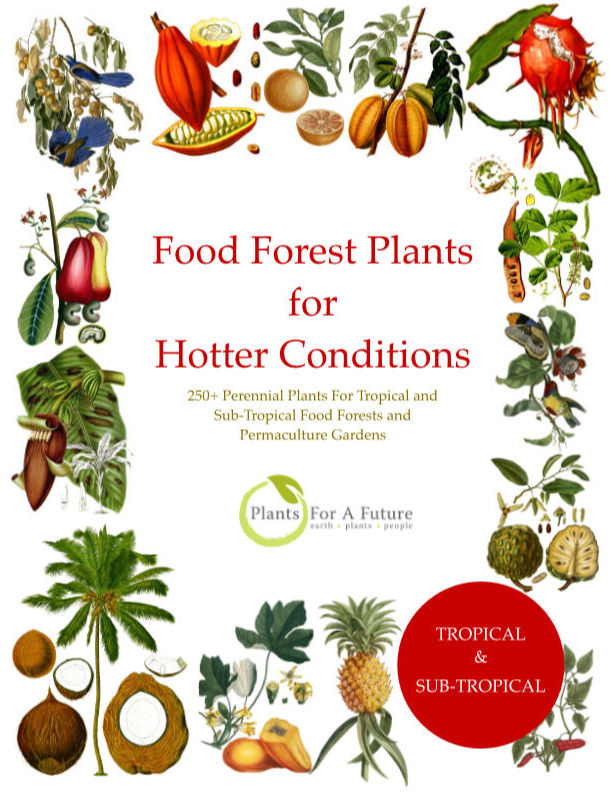
Edible Tropical Plants
Food Forest Plants for Hotter Conditions: 250+ Plants For Tropical Food Forests & Permaculture Gardens.
More
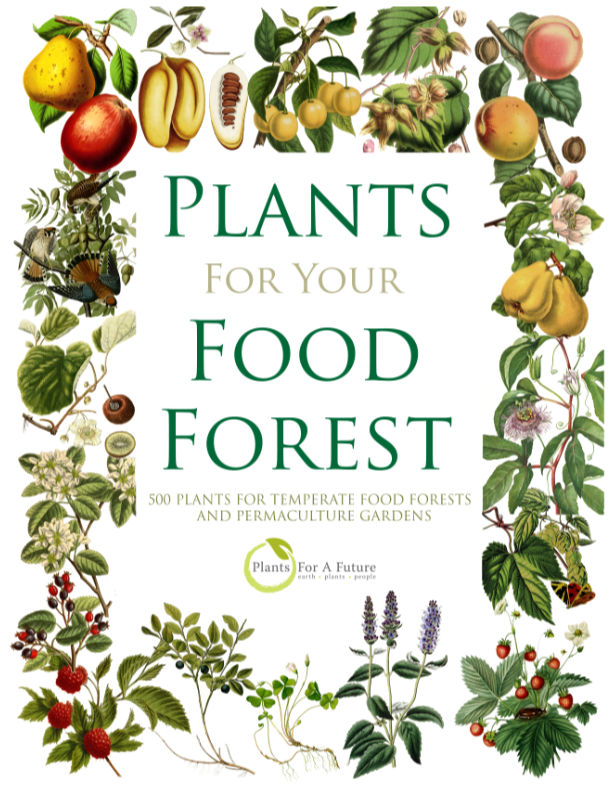
Edible Temperate Plants
Plants for Your Food Forest: 500 Plants for Temperate Food Forests & Permaculture Gardens.
More
More Books
PFAF have eight books available in paperback and digital formats. Browse the shop for more information.
Shop Now
Other Uses
Cleanser Dye Filter Tinder
A red dye is obtained from a decoction of the root[4, 7, 168]. When ingested, it can dye the bones red[4]. The dried plant is used as a tinder[99]. The plant can be rubbed on the hands to remove pitch (tar)[99]. The stems are placed in a layer 8cm or more thick and then used as a sieve for filtering liquids[4, 115, 172]. Ecology & Wildlife: Cleavers provides cover for small insects and contributes to early-season vegetation growth. Its seeds are eaten by some birds and wildlife, while its clinging fruits are an effective adaptation for spreading through the landscape. Although often unwanted in gardens, it plays a useful ecological role in natural plant communities.
Special Uses
Attracts Wildlife Dynamic accumulator
References More on Other Uses
Cultivation details
Cleavers is a plant of contrasts. Its clinging stems and rough hairs make it frustrating to walk through and difficult to prepare as a vegetable, yet its roasted seeds produce one of the most convincing wild coffee alternatives. While not a major food plant, it remains a useful and fascinating wild edible. Growing Conditions: Cleavers prefers moist, fertile soils and partial shade but tolerates a wide range of conditions. It grows especially well in disturbed habitats where competition is reduced. It often appears after seasonal rains and can form dense, tangled patches. Habitat & Range: Cleavers is widespread throughout North America, Europe, Asia, and many other regions. It grows in woodlands, gardens, hedgerows, riparian areas, fields, canyons, and disturbed ground. It occurs from low-elevation to mountainous environments where moisture is available. Size & Landscape Performance: Plants grow as weak-stemmed annuals that lean on surrounding vegetation for support. Instead of climbing with tendrils, they attach themselves using hooked hairs on their stems and leaves. Dense growth can cover nearby plants and create tangled mats. Cultivation (Horticulture): Cleavers requires little assistance to grow and is rarely cultivated intentionally. Seeds germinate readily, and plants quickly establish in favorable habitats. Because of its spreading nature, cultivation is usually unnecessary. Pests & Problems: Few pests seriously affect cleavers. The main issue is its tendency to become a nuisance in gardens and agricultural settings. The sticky stems and seed structures allow it to spread easily by attaching to animals, clothing, and equipment. Identification & Habit: An annual plant with square, weak, bristly stems that often sprawl over nearby vegetation. Leaves are simple, narrow, and arranged in distinctive whorls, usually with 6–8 leaves around each stem node. Flowers are small, pale greenish-white, and four-lobed. Fruits occur as paired nutlets covered with hooked bristles that cling easily to passing animals. Pollinators: Cleavers' flowers attract small insects, including tiny bees and flies. The flowers are not large or showy, but they provide nectar and pollen during the growing season. Prefers a loose, moist, leafy soil in some shade[200]. Plants tolerate dry soils, but they quickly become scorched when exposed to full sun [200]. They do not thrive in a hot climate[200]. Another report says that plants succeed in most soils in full sun or heavy shade. A scrambling plant, the stems and leaves are covered with little hooked bristles by which it can adhere to other plants and climb into them[4]. A good species to grow in the wild garden, it provides food for the larvae of many butterfly species[30]. Cleavers (Galium aparine) belongs to the madder family (Rubiaceae) and the genus Galium. Common names include cleavers, catchweed bedstraw, goose grass, sticky willy, stickyweed, and grip grass. It is a widespread annual plant generally suited to USDA Zones 3–10. Plants typically grow 10–80 cm tall, although the weak stems often sprawl, climb, or scramble through surrounding vegetation rather than standing upright.
References Carbon Farming Information and Carbon Sequestration Information
Temperature Converter
Type a value in the Celsius field to convert the value to Fahrenheit:
Fahrenheit:
The PFAF Bookshop
Plants For A Future have a number of books available in paperback and digital form. Book titles include Edible Plants, Edible Perennials, Edible Trees,Edible Shrubs, Woodland Gardening, and Temperate Food Forest Plants. Our new book is Food Forest Plants For Hotter Conditions (Tropical and Sub-Tropical).
Shop Now
Plant Propagation
Seed - best sown in situ as soon as the seed is ripe in late summer[200]. The seed can also be sown in spring though it may be very slow to germinate[200]. Once established, this plant does not really need any help to reproduce itself.
Other Names
If available other names are mentioned here
Cleavers, catchweed bedstraw, goose grass, sticky willy, stickyweed, and grip grass, Goosegrass, Coachweed, Stickywilly.
Native Range
NORTHERN AMERICA: United States (Alabama)
Weed Potential
Right plant wrong place. We are currently updating this section.
Please note that a plant may be invasive in one area but may not in your area so it's worth checking.
High. Cleavers is considered a weed in many agricultural and garden settings because it grows rapidly, competes with crops, and spreads easily. Its success as a weed stems from rapid growth, adaptability to diverse habitats, and highly effective seed dispersal.
Conservation Status
IUCN Red List of Threatened Plants Status : Not listed.
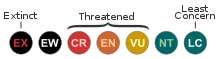
Growth: S = slow M = medium F = fast. Soil: L = light (sandy) M = medium H = heavy (clay). pH: A = acid N = neutral B = basic (alkaline). Shade: F = full shade S = semi-shade N = no shade. Moisture: D = dry M = Moist We = wet Wa = water.
Now available:
Food Forest Plants for Mediterranean Conditions
350+ Perennial Plants For Mediterranean and Drier Food Forests and Permaculture Gardens.
[Paperback and eBook]
This is the third in Plants For A Future's series of plant guides for food forests tailored to
specific climate zones. Following volumes on temperate and tropical ecosystems, this book focuses
on species suited to Mediterranean conditions—regions with hot, dry summers and cool, wet winters,
often facing the added challenge of climate change.
Read More
Expert comment
Author
L.
Botanical References
17
Links / References
For a list of references used on this page please go here
Readers comment
© 2010, Plants For A Future. Plants For A Future is a charitable company limited by guarantee, registered in England and Wales. Charity No. 1057719, Company No. 3204567.