Translate this page:
Summary
Eriobotrya japonica,
Loquat is a medium-sized evergreen tree with edible fruit and fragrant, yellowish flowers. The fruit is pear-shaped and light orange. It has an attractive architectural form and makes a good shelter for wildlife. Loquat can take eight years to bear fruit; ripen fully on the tree before you harvest. With a slightly acidic, sweet, aromatic flavour, the fruit can be eaten raw, cooked in pies, sauces and jellies or preserved. Loquat pie, if made from fruit that is not fully ripe, is said to taste like cherry pie. In Bermuda, the fruit is used in a liqueur. The loquat is the ingredient of many patent medicines. There are two fruiting seasons: spring and autumn. Dwarf varieties are available.
Native to Temperate Asia (China and Japan). The geographical range includes Asia, Europe, the Americas, Oceania, and Africa. In Europe, it is found in Mediterranean countries such as Italy, Spain, Portugal, France, Sardegna, Sicilia, and the Baleares, as well as in regions like the Azores and Corse. In Asia, it spans across India, Nepal, Thailand, Vietnam, Japan, Korea, and parts of China and the Himalayas. In the Americas, it is present in California, Florida, and several Latin American countries like Brazil, Mexico, and Colombia. In Oceania, it grows in New South Wales, Queensland, and New Zealand North.
Harvesting: Late spring to early summer. Autumn. Bloom Color: White. Main Bloom Time: Early fall, Early winter, Late fall, Late winter, Mid fall, Mid winter. Form: Rounded.
Physical Characteristics

 Eriobotrya japonica is an evergreen Tree growing to 9 m (29ft) by 5 m (16ft) at a fast rate.
See above for USDA hardiness. It is hardy to UK zone 7. It is in leaf all year, in flower from November to March, and the seeds ripen from April to June. The species is hermaphrodite (has both male and female organs) and is pollinated by Insects. The plant is self-fertile.
It is noted for attracting wildlife.
Suitable for: light (sandy), medium (loamy) and heavy (clay) soils and prefers well-drained soil. Suitable pH: mildly acid, neutral and basic (mildly alkaline) soils. It can grow in semi-shade (light woodland) or no shade. It prefers dry or moist soil. The plant can tolerate maritime exposure.
UK Hardiness Map
US Hardiness Map
Synonyms
Mespilus japonica. Photinia japonica.
Plant Habitats
Woodland Garden Secondary; Sunny Edge; Dappled Shade; South Wall. By. West Wall. By.
Edible Uses
Edible Parts: Fruit Seed
Edible Uses: Coffee
Fruit - raw, cooked or preserved[46]. A slightly acid, sweet aromatic flavour[200], they can be eaten out of hand or cooked in pies, sauces, jellies etc[3]. Loquat pie, if made from fruit that is not fully ripe, is said to taste like cherry pie[183]. The fruit is produced in winter and early spring[132], it is up to 4cm in diameter[200]. A nutritional analysis is available[218]. Seed - cooked. A pleasant flavour[142]. Caution is advised if the seed is bitter, see notes at top of the page. The roasted seed is a coffee substitute[105, 177, 183].
References More on Edible Uses
| Composition
|
| Figures in grams (g) or miligrams (mg) per 100g of food.
|
|
|
Fruit (Dry weight)
|
|
- 360 Calories per 100g
- Water : 0%
- Protein: 3.6g; Fat: 3.2g; Carbohydrate: 90g; Fibre: 5.8g; Ash: 4g;
- Minerals - Calcium: 290mg; Phosphorus: 190mg; Iron: 4.3mg; Magnesium: 0mg; Sodium: 35mg; Potassium: 2650mg; Zinc: 0mg;
- Vitamins - A: 5000mg; Thiamine (B1): 0.18mg; Riboflavin (B2): 4.9mg; Niacin: 2.3mg; B6: 0mg; C: 7.84mg;
- Reference: [ 218]
- Notes: The figures given are the median of a range quoted in the report.
|
|
Medicinal Uses
Plants For A Future can not take any responsibility for any adverse effects from the use of plants. Always seek advice from a professional before using a plant medicinally.
Analgesic Antibacterial Antiemetic Antitussive Antiviral Astringent Diuretic Expectorant
Sedative
The loquat is one of the most popular cough remedies in the Far East, it is the ingredient of many patent medicines[238]. The leaves are analgesic, antibacterial, antiemetic, antitussive, antiviral, astringent, diuretic and expectorant[7, 116, 147, 176, 218, 279]. A decoction of the leaves or young shoots is used as an intestinal astringent and as a mouthwash in cases of thrush and also in the treatment of bronchitis, coughs, feverish colds etc[7, 238]. The leaves are harvested as required and can be used fresh or dried[238]. The hairs should be removed from the leaves in order to prevent irritation of the throat[238]. The flowers are expectorant[218, 240]. The fruit is slightly astringent, expectorant and sedative[7, 240]. It is used in allaying vomiting and thirst[240].
References More on Medicinal Uses
The Bookshop: Edible Plant Books
Our Latest books on Perennial Plants For Food Forests and Permaculture Gardens in paperback or digital formats.

Edible Tropical Plants
Food Forest Plants for Hotter Conditions: 250+ Plants For Tropical Food Forests & Permaculture Gardens.
More

Edible Temperate Plants
Plants for Your Food Forest: 500 Plants for Temperate Food Forests & Permaculture Gardens.
More

More Books
PFAF have eight books available in paperback and digital formats. Browse the shop for more information.
Shop Now
Other Uses
Wood
Agroforestry uses:
Eriobotrya japonica can be used as a shade tree and is sometimes grown for erosion control. Its dense foliage provides cover for wildlife. Wood - hard, close-grained. Used for rulers, etc[146]. 1. Nectary - Flowers rich in nectar and pollen:
Yes – Loquat flowers are fragrant and produce nectar and pollen that attract bees and other pollinators, making them a good source for nectar.
2. Wildlife - Food (Fruit, Seeds, Leaf litter, Shelter, Nesting, Roosting):
Yes – Loquat fruits are consumed by birds and small mammals, and its dense foliage can provide shelter for nesting and roosting.
3. Invertebrate Shelter (Overwintering sites, Leaf litter, Groundcover):
Yes – The rough bark and dense canopy can offer shelter for overwintering invertebrates, though its contribution to leaf litter or groundcover is moderate.
4. Pest Confuser (Smell):
No – Loquat does not produce a strong scent known to confuse or repel pests.
Special Uses
Espalier Food Forest Scented Plants
References More on Other Uses
Cultivation details
Landscape Uses:Container, Espalier, Screen, Standard, Seashore, Specimen, Street tree. Prefers a fertile well-drained soil in full sun or light shade[200]. Succeeds in any well-drained soil but dislikes too much lime[3]. Prefers to be near the coast, tolerating maritime exposure but dislikes cold winds[200]. Tolerates dry soils[200]. Succeeds in an open position in the milder areas of Britain but usually requires wall protection in most of this country[11, 59]. Plants are hardy to at least -5°c, and can survive to between -12 and -17°c but with some damage[200]. Plants from different provenances differ widely in their hardiness, it is best to obtain stock as cuttings from plants that are established in this country[219]. Trees usually only flower and produce fruit in Britain after a long hot summer[11, 202], but a tree at Maidwell Hall in Northants fruits regularly[11]. The main difficulty with producing a crop of fruit from this tree is that the plant flower in the winter and will not ripen fruit of a satisfactory standard if the winter is cold. Indeed, the fruit is rendered inedible by hard frosts in cold areas[200]. Often cultivated for its edible fruit in warm temperate regions, there are more than 800 cultivars in Japan[200]. 'Advance' is a dwarf tree with very juicy fruits[200]. The flowers emit a most potent oriental perfume[245]. Special Features:Attractive foliage, Edible, Not North American native, Naturalizing, All or parts of this plant are poisonous, Fragrant flowers, Attractive flowers or blooms. In garden design, as well as the above-ground architecture of a plant, root structure considerations help in choosing plants that work together for their optimal soil requirements including nutrients and water. The root pattern is branching: a heart root, dividing from the crown into several primary roots going down and out [2-1]. Fruits are typically harvested in late Spring to early Summer.
It flowers in Autumn to early Winter.
Loquat is a relatively fast-growing tree, often reaching maturity in 3-4 years under suitable conditions.
References Carbon Farming Information and Carbon Sequestration Information
Temperature Converter
Type a value in the Celsius field to convert the value to Fahrenheit:
Fahrenheit:
The PFAF Bookshop
Plants For A Future have a number of books available in paperback and digital form. Book titles include Edible Plants, Edible Perennials, Edible Trees,Edible Shrubs, Woodland Gardening, and Temperate Food Forest Plants. Our new book is Food Forest Plants For Hotter Conditions (Tropical and Sub-Tropical).
Shop Now
Plant Propagation
Seed - best sown as soon as it is ripe in a cold fame in the spring[200]. Pre-soak stored seed for 24 hours and sow late winter in a warm greenhouse[78, 113]. Germination usually takes place within 1 - 4 months at 20°c. When they are large enough to handle, prick the seedlings out into individual pots and grow them on in the greenhouse for at least their first winter. Plant them out into their permanent positions in late spring or early summer, after the last expected frosts. Cuttings of half-ripe wood with a heel, July/August in a frame[200]. Cuttings of softwood, spring in a frame[78]. Air layering[200].
Other Names
If available other names are mentioned here
Native Range
TEMPERATE ASIA: Honshu, Hubei Sheng, Japan, Kyushu, Shikoku, Sichuan Sheng,China.
Weed Potential
Right plant wrong place. We are currently updating this section.
Please note that a plant may be invasive in one area but may not in your area so it's worth checking.
Conservation Status
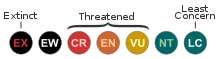
IUCN Red List of Threatened Plants Status :
Growth: S = slow M = medium F = fast. Soil: L = light (sandy) M = medium H = heavy (clay). pH: A = acid N = neutral B = basic (alkaline). Shade: F = full shade S = semi-shade N = no shade. Moisture: D = dry M = Moist We = wet Wa = water.
Now available:
Food Forest Plants for Mediterranean Conditions
350+ Perennial Plants For Mediterranean and Drier Food Forests and Permaculture Gardens.
[Paperback and eBook]
This is the third in Plants For A Future's series of plant guides for food forests tailored to
specific climate zones. Following volumes on temperate and tropical ecosystems, this book focuses
on species suited to Mediterranean conditions—regions with hot, dry summers and cool, wet winters,
often facing the added challenge of climate change.
Read More
Expert comment
Author
(Thunb.)Lindl.
Botanical References
1174200
Links / References
For a list of references used on this page please go here
Readers comment