 |
|
http://commons.wikimedia.org/wiki/User:Andrew_massyn |
 |
| http://commons.wikimedia.org/wiki/User:Andrew_massyn |
Translate this page:
Summary
Physical Characteristics

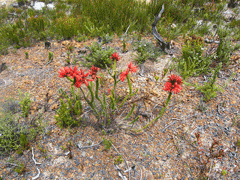
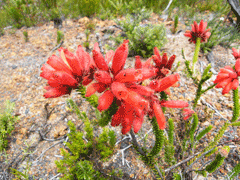
 Erica cerinthoides is an evergreen Shrub growing to 1.5 m (5ft).
See above for USDA hardiness. It is hardy to UK zone 10. It is in leaf all year, in flower from May to October. The species is hermaphrodite (has both male and female organs) and is pollinated by Insects.
Suitable for: light (sandy) and medium (loamy) soils, prefers well-drained soil and can grow in nutritionally poor soil. Suitable pH: mildly acid and neutral soils and can grow in very acid soils.
It cannot grow in the shade. It prefers moist soil.
UK Hardiness Map
US Hardiness Map
Synonyms
Plant Habitats
Woodland Garden Sunny Edge; Dappled Shade; East Wall. By. South Wall. By. West Wall. By.
Edible Uses
Edible Parts: Nectar
Edible Uses:
The flowers are sucked for their abundant sweet nectar[177, 183].
References More on Edible Uses
Medicinal Uses
Plants For A Future can not take any responsibility for any adverse effects from the use of plants. Always seek advice from a professional before using a plant medicinally.
None known
References More on Medicinal Uses
The Bookshop: Edible Plant Books
Our Latest books on Perennial Plants For Food Forests and Permaculture Gardens in paperback or digital formats.

Edible Tropical Plants
Food Forest Plants for Hotter Conditions: 250+ Plants For Tropical Food Forests & Permaculture Gardens.
More

Edible Temperate Plants
Plants for Your Food Forest: 500 Plants for Temperate Food Forests & Permaculture Gardens.
More

More Books
PFAF have eight books available in paperback and digital formats. Browse the shop for more information.
Shop Now
Other Uses
References More on Other Uses
Cultivation details
Requires a light lime-free loam[1]. A calcifuge plant, requiring a pH below 6[186]. Grows best in a poor soil[11]. Prefers an open situation[1]. This species is unlikely to be hardy in Britain. One report suggests that it can be grown in the milder areas[1], but another says that it is not frost-tolerant[200]. In the wild the plant is often burnt down in fires, resprouting from the base[260]. Indeed, this regular burning keeps the plant healthy and, in cultivation, it is advisable to prune the plant back hard each year and to dress it with a light dressing of bonfire soil[260]. A good bee plant[108]. Plants in this genus are notably resistant to honey fungus[200].
References Carbon Farming Information and Carbon Sequestration Information
Temperature Converter
Type a value in the Celsius field to convert the value to Fahrenheit:
Fahrenheit:
The PFAF Bookshop
Plants For A Future have a number of books available in paperback and digital form. Book titles include Edible Plants, Edible Perennials, Edible Trees,Edible Shrubs, Woodland Gardening, and Temperate Food Forest Plants. Our new book is Food Forest Plants For Hotter Conditions (Tropical and Sub-Tropical).
Shop Now
Plant Propagation
Seed - surface sow in a sandy compost in a cold frame in spring. Keep moist. Prick out the plants as soon as they are large enough to handle and plant them in their permanent positions when they are 5 - 8cm tall[11]. Cuttings of half-ripe wood, 3cm long taken from twiggy lateral growths near the base of the plant, July/August in a frame. Remove the leaves from the bottom part of the stem without causing any damage to the bark. The cuttings root in a few weeks if they are given some bottom heat. Plant out in spring[11]. Layering in spring or autumn. Plants can be 'dropped' and then dug up and divided about 6 - 12 months later. Dropping involves digging up the plant and then replanting it about 15 - 20cm deeper in the soil to encourage roots to form along the stems[78].
Other Names
If available other names are mentioned here
Native Range
AFRICA: Lesotho, Eswatini, South Africa (Cape Province, Free State, KwaZulu-Natal, Transvaal)
Weed Potential
Right plant wrong place. We are currently updating this section.
Please note that a plant may be invasive in one area but may not in your area so it's worth checking.
Conservation Status
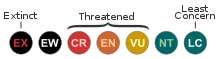
IUCN Red List of Threatened Plants Status :
| Related Plants
|
| Latin Name | Common Name | Habit | Height | Hardiness | Growth | Soil | Shade | Moisture | Edible | Medicinal | Other |
| Adiantum pedatum | Northern Maidenhair,American Maidenhair Fern | Fern | 0.5 |
4-9
| S | LMH | S | M | 0 | 2 | 2 |
| Agave americana | Agave, American century plant | Perennial | 7.5 |
8-11
| S | LM | N | DM | 3 | 3 | 3 |
| Alisma plantago-aquatica | Great Water Plantain, ZE-XIE, European water plantain, American water plantain, Northern water plan | Perennial | 0.9 |
5-9
| | LMH | N | WeWa | 1 | 3 | |
| Alnus viridis crispa | American Green Alder | Shrub | 3.0 |
4-8
| | MH | SN | MWe | 1 | 2 | 3 |
| Ammophila breviligulata | Beach Grass, American beachgrass | Perennial | 1.3 |
4-8
| | LM | N | DM | 0 | 0 | |
| Amphicarpaea bracteata | Hog Peanut, American hogpeanut | Perennial Climber | 1.5 |
4-9
| | LMH | FS | M | 5 | 1 | 3 |
| Andromeda glaucophylla | Bog Rosemary | Shrub | 0.6 |
-
| | LM | S | MWe | 2 | 0 | |
| Andromeda polifolia | Marsh Andromeda, Bog rosemary | Shrub | 0.3 |
2-6
| S | LM | S | MWe | 2 | 1 | 1 |
| Apios americana | Ground Nut | Perennial | 1.2 |
3-9
| | LM | SN | M | 5 | 1 | 3 |
| Aralia racemosa | American Spikenard | Perennial | 1.8 |
4-8
| | LMH | FS | M | 3 | 3 | 2 |
| Aralia spinosa | Hercule's Club, Aralia spinosa, American Angelica Tree, Hercules' Club, Devil's Walking Stick | Tree | 9.0 |
5-9
| S | LMH | FS | M | 2 | 2 | 2 |
| Arbutus andrachne | Grecian StrawberryTree | Tree | 6.0 |
7-10
| S | LM | N | DM | 3 | 0 | 3 |
| Arbutus arizonica | Arizona Maderone | Tree | 15.0 |
5-9
| S | LM | SN | DM | 3 | 1 | 2 |
| Arbutus canariensis | Canary Madrona | Tree | 10.0 |
7-10
| | LM | SN | M | 2 | 0 | |
| Arbutus menziesii | Madrona, Pacific madrone, Pacific Madrone | Tree | 15.0 |
8-9
| M | LM | SN | DM | 3 | 2 | 2 |
| Arbutus texana | Texas Madrone | Tree | 8.0 |
7-10
| S | LM | SN | DM | 2 | 1 | 2 |
| Arbutus unedo | Strawberry Tree | Tree | 9.0 |
7-11
| M | LM | SN | DM | 4 | 2 | 2 |
| Arbutus x andrachnoides | | Tree | 10.0 |
7-10
| M | LMH | SN | M | 4 | 0 | 0 |
| Arbutus xalapensis | Madrono, Texas madrone | Tree | 12.0 |
7-10
| S | LM | SN | DM | 3 | 0 | 2 |
| Arctostaphylos alpina | Alpine Bearberry | Shrub | 0.1 |
-
| | LM | SN | M | 2 | 1 | |
| Arctostaphylos columbiana | Hairy Manzanita | Shrub | 1.5 |
6-9
| | LM | SN | M | 2 | 1 | 2 |
| Arctostaphylos glauca | Bigberry Manzanita | Shrub | 4.0 |
7-10
| | LM | SN | DM | 2 | 2 | 3 |
| Arctostaphylos manzanita | Manzanita, Whiteleaf manzanita, Konocti manzanita, Contra Costa manzanita, Roof's manzanita, Wieslan | Shrub | 2.0 |
7-10
| M | LM | SN | DM | 3 | 1 | 3 |
| Arctostaphylos nevadensis | Pine-Mat Manzanita | Shrub | 0.1 |
5-9
| M | LM | SN | M | 2 | 1 | 3 |
| Arctostaphylos parryana | Parry Manzanita | Shrub | 1.8 |
-
| | LM | SN | DM | 1 | 0 | 1 |
| Arctostaphylos patula | Greenleaf Manzanita | Shrub | 2.0 |
5-9
| | LM | SN | M | 3 | 1 | 1 |
| Arctostaphylos pringlei | Stickleaf Manzanita | Shrub | 2.0 |
7-9
| M | LM | N | DM | 3 | 0 | 1 |
| Arctostaphylos pungens | Grayleaf manzanita, Pointleaf Manzanita | Shrub | 2.0 |
7-10
| | LM | SN | DM | 3 | 1 | 2 |
| Arctostaphylos stanfordiana | Stanford's manzanita, Rincon manzanita | Shrub | 1.5 |
5-9
| | LM | SN | DM | 3 | 0 | 1 |
| Arctostaphylos tomentosa | Downy Manzanita, Woollyleaf manzanita, Brittleleaf manzanita, Dacite manzanita, Rosy manzanita, San | Shrub | 1.5 |
7-10
| | LM | SN | M | 3 | 3 | 3 |
|
|
Growth: S = slow M = medium F = fast. Soil: L = light (sandy) M = medium H = heavy (clay). pH: A = acid N = neutral B = basic (alkaline). Shade: F = full shade S = semi-shade N = no shade. Moisture: D = dry M = Moist We = wet Wa = water.
Now available:
Food Forest Plants for Mediterranean Conditions
350+ Perennial Plants For Mediterranean and Drier Food Forests and Permaculture Gardens.
[Paperback and eBook]
This is the third in Plants For A Future's series of plant guides for food forests tailored to
specific climate zones. Following volumes on temperate and tropical ecosystems, this book focuses
on species suited to Mediterranean conditions—regions with hot, dry summers and cool, wet winters,
often facing the added challenge of climate change.
Read More
Expert comment
Author
L.
Botanical References
Links / References
For a list of references used on this page please go here
Readers comment
© 2010, Plants For A Future. Plants For A Future is a charitable company limited by guarantee, registered in England and Wales. Charity No. 1057719, Company No. 3204567.