Translate this page:
Summary
Equisetum species - horsetail family are Creeping, perenial, Branching rootstocks, rooted at the nodes. The Arial stems may be annual or Perennial, are cylindrical, fluted, simple or with whorled branches at the jointed nodes. The internodes are usually hollow. The Surfaces of the stems are covered with Silica. The Cones are terminal. Field horsetail is one of the most recognizable primitive plants, producing both fertile spring shoots and later sterile green stems. It is a potentially useful early-season wild food when harvested at the correct stage, but it requires careful preparation due to naturally occurring toxins. Its value lies in its seasonal abundance and ease of collection rather than in bulk nutrition. Equisetum avense is a Perennial from creeping rhizomes, often forming large colonies; to 2 1/2 ft. Stems hollow, riged, jointed. Sterile stems green, with whorled branches ar nodes; leaves reduced to brownish, papery, toothed sheath around node; sheath with fewer then 14 teeth. Fertile stems brownish to whitish, with large "cone" at tip, formed by spore-producing scales; cone produced in early spring.
Physical Characteristics

 Equisetum arvense is a PERENNIAL growing to 0.6 m (2ft).
See above for USDA hardiness. It is hardy to UK zone 3. The seeds ripen in April.
Suitable for: light (sandy), medium (loamy) and heavy (clay) soils and can grow in nutritionally poor soil. Suitable pH: mildly acid, neutral and basic (mildly alkaline) soils. It can grow in semi-shade (light woodland) or no shade. It prefers dry or moist soil.
UK Hardiness Map
US Hardiness Map
Synonyms
Equisetum calderi. Equisetum saxicola.
Plant Habitats
Meadow; Hedgerow;
Edible Uses
Edible Parts: Root Shoots Stem
Edible Uses:
Young, fertile shoots and rhizomes are edible when properly prepared. Raw consumption is unsafe, and intake should remain moderate due to antinutritional compounds [2-3]. Edible Uses & Rating: This species ranks as a moderate emergency or seasonal food. It is valuable in early spring when few other greens are available, but it is not suitable as a staple [2-3]. Taste, Processing & Kitchen Notes: Fresh fertile shoots have a strong, musty, barn-like aroma, but this disappears during cooking. Once boiled, the flavor becomes mild, starchy, and surprisingly pleasant. The texture softens into something reminiscent of tender pasta. The broth is also usable, with a light, vegetal character. Mature stems are fibrous and hollow, with no culinary value [2-3]. Seasonality (Phenology): Fertile shoots emerge very early in spring, often as snow melts. Sterile stems follow shortly after and persist through summer. The edible window is brief and limited to very young shoots [2-3]. Safety & Cautions (Food Use): Raw horsetail should not be consumed. It contains thiaminase, which destroys vitamin B1, along with other compounds such as alkaloids and saponins. Cooking neutralizes thiaminase but may not eliminate all compounds. Consumption should be occasional rather than frequent. Harvest & Processing Workflow: Harvest young, tender, fertile shoots when only a few centimeters tall. Remove spore-bearing cones if desired. Boil thoroughly before eating. Rhizomes can be dug, cleaned, and cooked, though they are less commonly used [2-3]. Cultivar/Selection Notes: There are no cultivated varieties for food use. Wild populations vary little in culinary quality. Look-Alikes & Confusion Risks: Horsetails are distinctive and unlikely to be confused with other plants. All species in the genus share similar properties, though edibility and quality vary [2-3]. Traditional/Indigenous Use Summary: Various Indigenous groups used horsetails seasonally, particularly as an early spring food and for medicinal purposes. Their abundance and timing made them valuable despite limitations [2-3]. Strobil (the fertile shoots in spring) - cooked and used as an asparagus substitute[7, 46, 61, 94]. They should be used when young[116] but even so it is probably best to change the water, perhaps 3 - 4 times[85, 102]. One report says that they can be eaten raw[172], they are peeled and the shoot tip is discarded[213]. It is said to be a very tedious operation and they should not be eaten raw in any quantity, see the notes above on toxicity[K]. Some native tribes liked to eat the young vegetative shoots, picked before they had branched out, and would often collect them in great quantity then hold a feast to eat them[257]. The leaf sheaths were peeled off and the stems eaten raw - they were said to be 'nothing but juice'[257]. Roots - raw[61]. The tuberous growths on the rhizomes are used in the spring[172]. The black nodules attached to the roots are edible[257]. It takes considerable effort to collect these nodules so it is normally only done in times of desperation. However, native peoples would sometimes raid the underground caches of roots collected by lemmings and other rodents in order to obtain these nodules[257]. A further report says that the peeled stems, base of the plant, root and tubers were eaten raw by the N. American Indians, the report went on to say that this may be inadvisable[85].
References More on Edible Uses
Medicinal Uses
Plants For A Future can not take any responsibility for any adverse effects from the use of plants. Always seek advice from a professional before using a plant medicinally.
Anodyne Antirheumatic Antiseptic Astringent Cardiac Carminative Diaphoretic Diuretic
Eczema Galactogogue Haemostatic Homeopathy Nervine TB Urinary
Vulnerary
Horsetails have an unusual chemistry compared to most other plants[238]. They are rich in silica, contain several alkaloids (including nicotine) and various minerals[238]. Horsetail is very astringent and makes an excellent clotting agent, staunching wounds, stopping nosebleeds and reducing the coughing up of blood[254]. It helps speed the repair of damaged connective tissue, improving its strength and elasticity[254]. The plant is anodyne, antihaemorrhagic, antiseptic, astringent, carminative, diaphoretic, diuretic, galactogogue, haemostatic and vulnerary[4, 7, 9, 20, 21, 46, 61, 165, 172, 218, 240]. The green infertile stems are used, they are most active when fresh but can also be harvested in late summer and dried for later use[4, 9]. Sometimes the ashes of the plant are used[4]. The plant is a useful diuretic when taken internally and is used in the treatment of kidney and bladder problems, cystitis, urethritis, prostate disease and internal bleeding, proving especially useful when there is bleeding in the urinary tract[4, 238, 254]. A decoction applied externally will stop the bleeding of wounds and promote healing[4]. It is especially effective on nose bleeds[7]. A decoction of the herb added to a bath benefits slow-healing sprains and fractures, as well as certain irritable skin conditions such as eczema[254]. The plant contains equisetic acid, which is thought to be identical to aconitic acid. This substance is a potent heart and nerve sedative that is a dangerous poison when taken in high doses[213]. This plant contains irritant substances and should only be used for short periods of time[238]. It is also best only used under the supervision of a qualified practitioner. A homeopathic remedy is made from the fresh plant[7]. It is used in the treatment of cystitis and other complaints of the urinary system[7]. The German Commission E Monographs, a therapeutic guide to herbal medicine, approve Equisetum arvense for urinary tract infections, kidney & bladder stones, wounds & burns (see [302] for critics of commission E).
References More on Medicinal Uses
The Bookshop: Edible Plant Books
Our Latest books on Perennial Plants For Food Forests and Permaculture Gardens in paperback or digital formats.

Edible Tropical Plants
Food Forest Plants for Hotter Conditions: 250+ Plants For Tropical Food Forests & Permaculture Gardens.
More

Edible Temperate Plants
Plants for Your Food Forest: 500 Plants for Temperate Food Forests & Permaculture Gardens.
More

More Books
PFAF have eight books available in paperback and digital formats. Browse the shop for more information.
Shop Now
Other Uses
Dye Fungicide Liquid feed Musical Paper Polish Sandpaper Scourer
The stems contain 10% silica and are used for scouring metal [4, 7, 20, 94, 102] and as fine sandpaper [7, 54, 99, 257]. They can also be used as a polish for brass, hardwood, and similar materials [94]. The infused stem is an effective fungicide against mildew, mint rust, and black spot on roses [14, 18, 20, 54]. It also makes a good liquid feed[54]. A light pink dye is obtained from the stem[99, 257]. It is yellow-gray, according to another report [102]. The plant has been used to make whistles [257]. Ecology & Wildlife: Provides habitat for microorganisms and helps stabilize soil in wet environments.
Special Uses
Dynamic accumulator Food Forest
References More on Other Uses
Cultivation details
Field horsetail is a useful but limited wild food. It is best regarded as an early-season supplement rather than a dependable food source. Growing Conditions: Prefers moist, sandy, or silty soils and full sun to partial shade. Thrives in disturbed or wet environments. Habitat & Range: Found nearly worldwide, especially along riverbanks, wetlands, and damp soils. Size & Landscape Performance: Spreads aggressively via rhizomes, forming dense colonies. Often considered invasive in gardens. Cultivation (Horticulture): Rarely cultivated intentionally. Difficult to control once established. Pests & Problems: Generally pest-free. Its persistence is often the main issue. Identification & Habit: Produces two stem types: early brown fertile shoots with cones, and later green, branched sterile stems resembling a horse’s tail. Pollinators: Not pollinated by insects; reproduction occurs via spores. Field horsetail, Equisetum arvense, belongs to the horsetail family (Equisetaceae) and the genus Equisetum. Common names include common horsetail, scouring rush, and penny shiners. It is a widespread perennial suited to USDA Zones 3–11. Plants typically reach 10–70 cm in height and spread extensively via underground rhizomes. Prefers poor dusty ground[53, 54]. This rather contradicts another report, which says that the presence of this plant indicates underground water[4]. Prefers moist, well-drained, fertile soil with a pH between 6.5 and 7.5 [200, 238]. A very cold-hardy species tolerating temperatures down to about -30°c[200]. Plants have deep, penetrating root systems and can be invasive. If grown in the garden, they are best kept in bounds by planting them in a large container that can be sunk into the ground [200]. In garden design, as well as in the above-ground architecture of a plant, root-structure considerations help choose plants that work together to meet their optimal soil requirements, including nutrients and water. The root pattern is fleshy. Thick or swollen - fibrous or tap root [2-1].
References Carbon Farming Information and Carbon Sequestration Information
Temperature Converter
Type a value in the Celsius field to convert the value to Fahrenheit:
Fahrenheit:
The PFAF Bookshop
Plants For A Future have a number of books available in paperback and digital form. Book titles include Edible Plants, Edible Perennials, Edible Trees,Edible Shrubs, Woodland Gardening, and Temperate Food Forest Plants. Our new book is Food Forest Plants For Hotter Conditions (Tropical and Sub-Tropical).
Shop Now
Plant Propagation
Spores - best collected as soon as they are ripe in the spring and surface-sown immediately on a sterile compost. Keep moist and pot up as soon as the plants are large enough to handle. Very difficult[200]. Division. The plants usually spread very freely when well sited and should not really need any assistance.
Other Names
If available other names are mentioned here
Bottlebrush; horsetail; mare's tail; pewterwort; scouring rush; shavegrass; snake grass.Ccommon horsetail; horse pipes. Spanish: cola de caballo del campo; cola de rata (Colombia); equiseto menor; herba estanyera (Colombia). French: prèle des champs. Portuguese: cavalinha-dos-campos. Canada: horse pipes. Chile: helecho. Finland: peltokorte. Germany: Acker-Schachtelhalm; Scharfhalm. Italy: coda cavallina dei campi; coda di cavallo; equiseto comune. Japan: sugina. Netherlands: heermoes; paardestaart akker-. Sweden: Åkerfràken. Yugoslavia (Serbia and Montenegro): rastavic.
Native Range
TEMPERATE ASIA: Cyprus, Iran (north), Iraq, Lebanon, Turkey, Russian Federation-Ciscaucasia (Ciscaucasia), Armenia, Azerbaijan, Georgia, Russian Federation (Dagestan), Russian Federation-Western Siberia (Western Siberia), Russian Federation-Eastern Siberia (Eastern Siberia), Kazakhstan, Kyrgyzstan, Tajikistan, Turkmenistan, Uzbekistan, Mongolia, Russian Federation-Far East (Far East), China (Gansu Sheng, Guizhou Sheng, Hebei Sheng, Heilongjiang Sheng, Henan Sheng, Jilin Sheng, Liaoning Sheng, Ningxia Huizi Zizhiqu, Qinghai Sheng, Shanxi Sheng, Sichuan Sheng, Xinjiang Uygur Zizhiqu, Xizang Zizhiqu), Korea, Japan TROPICAL ASIA: Bhutan, India (north), Nepal NORTHERN AMERICA: Canada (Northwest Territories, Yukon, Québec, Nova Scotia, Ontario, Prince Edward Island, New Brunswick, Newfoundland and Labrador, Saskatchewan, Alberta, Manitoba, British Columbia), Greenland, St. Pierre and Miquelon, United States (Alaska, Connecticut, Indiana, Maine, Massachusetts, Michigan, New Hampshire, New Jersey, New York, Ohio, Pennsylvania, West Virginia, Illinois, Iowa, Kansas, Minnesota, Missouri, Nebraska, North Dakota, Oklahoma, South Dakota, Wisconsin, Colorado, Idaho, Montana, Oregon, Washington, Wyoming, Alabama (north), Arkansas, Delaware, Georgia (north), Kentucky, Maryland, North Carolina, South Carolina, Tennessee, Virginia, New Mexico, Texas, Arizona, California, Nevada, Utah) EUROPE: Denmark, Finland, United Kingdom, Ireland, Iceland, Norway, Svalbard and Jan Mayen, Sweden, Austria, Belgium, Switzerland, Czech Republic, Germany, Hungary, Netherlands, Poland, Slovakia, Russian Federation (European part), Belarus, Estonia, Lithuania, Latvia, Moldova, Russian Federation (Astrakhan, Saratov, Volgogradskaja oblast), Ukraine (incl. Krym), Albania, Bulgaria, Bosnia and Herzegovina, Greece (incl. Crete), Croatia, Italy (incl. Sardinia, Sicily), Montenegro, Romania, Serbia, Slovenia, Spain, France (incl. Corsica), Portugal
Weed Potential
Right plant wrong place. We are currently updating this section.
Please note that a plant may be invasive in one area but may not
in your area so it's worth checking.
High. It is persistent and difficult to eradicate. Although E. arvense is found in many crops, it is not competitive with vigorous crops and therefore has little impact on crop yield. However, it can cause difficulties during grain harvesting by clogging harvesting and threshing equipment due to its bulk [1-8].
Conservation Status
IUCN Red List of Threatened Plants Status : Least Concern.
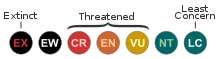
IUCN Red List
Growth: S = slow M = medium F = fast. Soil: L = light (sandy) M = medium H = heavy (clay). pH: A = acid N = neutral B = basic (alkaline). Shade: F = full shade S = semi-shade N = no shade. Moisture: D = dry M = Moist We = wet Wa = water.
Now available:
Food Forest Plants for Mediterranean Conditions
350+ Perennial Plants For Mediterranean and Drier Food Forests and Permaculture Gardens.
[Paperback and eBook]
This is the third in Plants For A Future's series of plant guides for food forests tailored to
specific climate zones. Following volumes on temperate and tropical ecosystems, this book focuses
on species suited to Mediterranean conditions—regions with hot, dry summers and cool, wet winters,
often facing the added challenge of climate change.
Read More
Expert comment
Author
L.
Botanical References
17
Links / References
For a list of references used on this page please go here
Readers comment