Translate this page:
Summary
Canadian wildrye is one of the more robust and visually distinctive native wildryes, with nodding, bristly seed heads that make it stand out in meadows, prairies, and open riparian settings. As a food plant it belongs to the long tradition of useful wild grass grains: small-seeded, somewhat laborious to process, but meaningful when gathered in quantity from large stands. It is most valuable where it grows abundantly, because the grain itself is edible and the plant often occurs in enough density to make harvest worthwhile. In practical terms, it is better viewed as a grain plant than a shoot or forage vegetable.
Physical Characteristics

 Elymus canadensis is a PERENNIAL growing to 1 m (3ft 3in) by 0.6 m (2ft).
See above for USDA hardiness. It is hardy to UK zone 3 and is not frost tender. It is in flower from July to August, and the seeds ripen from September to October. The species is hermaphrodite (has both male and female organs) and is pollinated by Wind.
Suitable for: light (sandy), medium (loamy) and heavy (clay) soils, prefers well-drained soil and can grow in nutritionally poor soil. Suitable pH: mildly acid, neutral and basic (mildly alkaline) soils. It cannot grow in the shade. It prefers moist soil and can tolerate drought. The plant can tolerate maritime exposure.
UK Hardiness Map
US Hardiness Map
Synonyms
Plant Habitats
Cultivated Beds;
Edible Uses
Edible Parts: Seed
Edible Uses:
The edible part is the grain. Like other wildryes and wild grass cereals, the seeds can be harvested, dried, threshed, cleaned, and then either cooked whole, toasted, or ground into meal. The grain is the only significant food use in this context [2-3]. Edible Uses & Rating: Canadian wildrye ranks as a moderate wild grain. It does not offer the ease or yield of a domesticated cereal, but it can provide a useful small-seeded grain from naturally occurring stands. It is best considered a supplementary cereal rather than a primary staple, though in regions where it is abundant, it can make a real contribution [2-3]. Taste, Processing & Kitchen Notes: The grains are best treated as a starchy wild cereal. Once cleaned, they can be simmered into porridge, lightly toasted for a more rounded grain flavor, or milled into a coarse flour. As with many small wild grasses, the key to good kitchen use is cleaning rather than elaborate culinary technique. Toasting generally improves the flavor and helps reduce any raw grassy note. Whole-grain use is possible, though cracked or ground grain cooks faster and more evenly [2-3]. Seasonality (Phenology): Canadian wildrye flowers and sets seed through the warm season, with mature grain generally available in late summer into autumn. The exact timing varies with latitude and moisture, but seed harvest typically falls within the late-season wild-grain window [2-3]. Safety & Cautions (Food Use): The main caution is practical rather than toxicological. The awns and bristles of the seed heads can be irritating to handle, and the grain must be gathered cleanly and well dried before storage. As with all roadside or ditch-edge grasses, avoid harvesting from contaminated sites such as roadsides, industrial margins, or sprayed field edges [2-3]. Harvest & Processing Workflow. Gather mature seed heads when they are fully formed and beginning to dry. Cut the heads into a bag, dry further if needed, then thresh by rubbing or beating. Winnow away the chaff and awns. The cleaned grain can then be stored dry, toasted, cooked whole, or ground into meal. Cultivar/Selection Notes. Canadian wildrye is sometimes used in restoration and native planting work, but not usually as a food crop. If selecting a stand for harvest, the best targets are large, healthy patches with heavy seed set and relatively uniform maturity. Look-Alikes & Confusion Risks. It can resemble other wildryes and Elymus-type grasses, especially when not fully mature. For a grain gatherer, this is usually not a major safety problem because the closely related grasses in this context are also edible as grains. Exact species identification is more useful for understanding habitat, timing, and likely harvest yield than for avoiding poisoning [2-3]. Traditional/Indigenous Use Summary. Canadian wildrye belongs to the wider North American tradition of gathering wild grass grains. Its inclusion among edible grains used by Indigenous peoples in the Great Basin and surrounding areas fits the broader pattern of small grass seeds contributing seasonal carbohydrates where they occurred in quantity [2-3]. Seed - cooked[105, 161, 177]. It can be ground into a flour and used to make bread. Quite fiddly to use, the seed is small and difficult to separate[K]. The seed was an important item of food for the Paiute Indians of south-western N. America[183].
References More on Edible Uses
Medicinal Uses
Plants For A Future can not take any responsibility for any adverse effects from the use of plants. Always seek advice from a professional before using a plant medicinally.
Elymus canadensis (Canadian Wild Rye) is primarily known for its role in ecological restoration and as a native grass, rather than having recognized, well-documented medicinal uses. While some closely related species like Elymus repens (Couch Grass) have well-known, diuretic medicinal properties, E. canadensis is mainly valued for soil erosion control, forage, and historically, its edible seeds.
References More on Medicinal Uses
The Bookshop: Edible Plant Books
Our Latest books on Perennial Plants For Food Forests and Permaculture Gardens in paperback or digital formats.
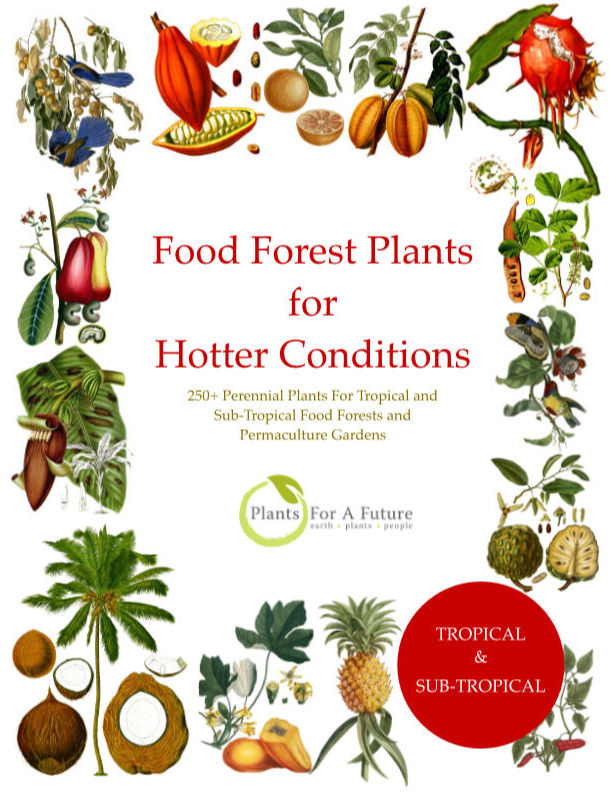
Edible Tropical Plants
Food Forest Plants for Hotter Conditions: 250+ Plants For Tropical Food Forests & Permaculture Gardens.
More
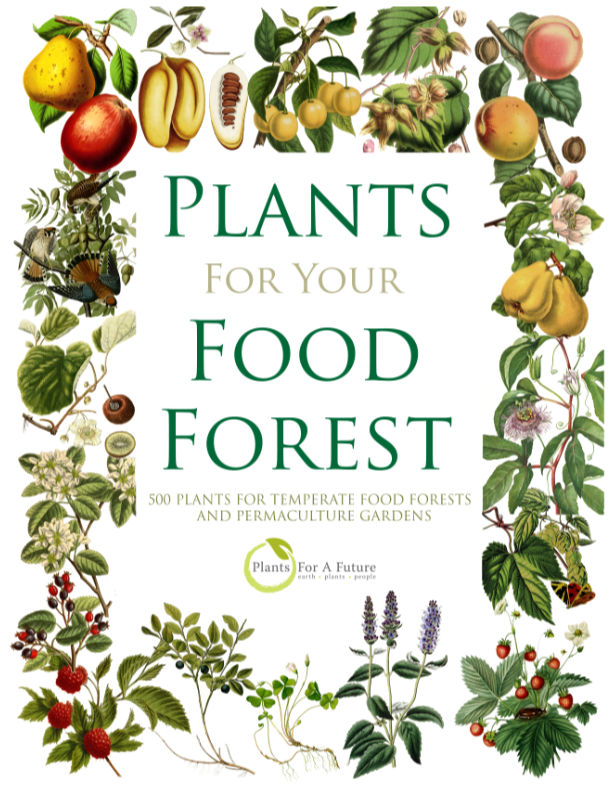
Edible Temperate Plants
Plants for Your Food Forest: 500 Plants for Temperate Food Forests & Permaculture Gardens.
More
More Books
PFAF have eight books available in paperback and digital formats. Browse the shop for more information.
Shop Now
Other Uses
Soil stabilization
The plant has an extensive root system and can be used for binding sand dunes[61]. Canadian wildrye provides cover, nesting structure, and seed for wildlife. It is also a useful stabilizer in meadows and streamside habitats and contributes strongly to the structure of native grasslands. It is widely used in native restoration, pollinator-supporting grasslands, and ornamental prairie-style plantings. It establishes fairly well from seed and usually performs best where not crowded by aggressive exotic grasses.
Special Uses
References More on Other Uses
Cultivation details
Canadian wildrye is a dependable, regionally useful grain grass with modest but real food value. Its main strengths are abundance in suitable habitats and its standing as a practical native wild cereal. Growing Conditions: This species grows well in full sun to light shade and favors open ground with at least moderate soil moisture during the growing season. It commonly performs best in meadows, prairie edges, open woodland margins, and riparian corridors. Habitat & Range: Canadian wildrye is native across much of North America and is especially common in central and eastern prairies, open meadows, stream edges, and disturbed but not overly dry ground. In the West it also occurs in suitable meadow and riparian situations. Size & Landscape Performance: It is a tall, graceful bunchgrass with attractive, arching seed heads that give movement and texture to naturalistic landscapes. In native plantings, it can be visually striking in the late season. Cultivation (Horticulture): It is widely used in native restoration, pollinator-supporting grasslands, and ornamental prairie-style plantings. It establishes fairly well from seed and usually performs best where not crowded by aggressive exotic grasses. Pests & Problems: The main issues are not usually pests but competition, lodging in rich soils, or seed loss if harvest is delayed too long. In cultivation it can be short-lived in some heavily disturbed settings. Identification & Habit: Canadian wildrye is a perennial bunchgrass with upright stems, relatively broad leaves for a native wildrye, and elongated, nodding heads with obvious awns. It has a fuller, more robust look than many smaller squirreltails. Pollinators.: Like nearly all grasses, it is wind-pollinated and does not depend on insect pollinators. Canadian wildrye, now best referred to as Elymus canadensis, belongs to the grass family (Poaceae) and the genus Elymus. Common names include Canadian wildrye and Canada wildrye. It is a hardy perennial bunchgrass that generally performs across USDA Zones 3–9. Mature plants often reach about 60–150 cm in height, with clumps usually spreading 30–60 cm across, sometimes more in favorable soils. An easily grown plant, it succeeds in most soils, preferring a sandy soil and a sunny position[1, 162]. Plants can flower too late to ripen their seed in Britain, especially in the western half of the country[K]. A polymorphic species[1].
References Carbon Farming Information and Carbon Sequestration Information
Temperature Converter
Type a value in the Celsius field to convert the value to Fahrenheit:
Fahrenheit:
The PFAF Bookshop
Plants For A Future have a number of books available in paperback and digital form. Book titles include Edible Plants, Edible Perennials, Edible Trees,Edible Shrubs, Woodland Gardening, and Temperate Food Forest Plants. Our new book is Food Forest Plants For Hotter Conditions (Tropical and Sub-Tropical).
Shop Now
Plant Propagation
Seed - sow mid spring in situ and only just cover the seed[162]. Germination should take place within 2 weeks. If the supply of seed is limited, it can also be sown in mid spring in a cold frame. Only just cover the seed. When large enough to handle, prick the seedlings out into individual pots and plant them out in summer[K] Division in spring or summer[162]. Very easy, larger clumps can be replanted direct into their permanent positions, though it is best to pot up smaller clumps and grow them on in a cold frame until they are rooting well. Plant them out in the spring.
Other Names
If available other names are mentioned here
Canadian wildrye and Canada wildrye.
Native Range
NORTHERN AMERICA: Canada (Northwest Territories (southwest), Québec (south), Nova Scotia, Ontario, New Brunswick, Saskatchewan (south), Alberta, Manitoba (south), British Columbia (south)), United States (Alaska, Connecticut, Indiana, Maine, Massachusetts, Michigan, New Hampshire, New Jersey, New York, Ohio, Pennsylvania, Rhode Island, Vermont, West Virginia, Iowa, Kansas, Minnesota, Missouri, Nebraska, North Dakota, South Dakota, Illinois, Oklahoma, Wisconsin, Colorado, Idaho, Montana, Oregon, Washington, Wyoming, Arkansas, Delaware, Kentucky, Maryland, North Carolina (west), Tennessee, Virginia, New Mexico, Texas, Arizona, California (north), Nevada, Utah), Mexico (Chihuahua, Coahuila de Zaragoza, Nuevo León)
Weed Potential
Right plant wrong place. We are currently updating this section.
Please note that a plant may be invasive in one area but may not in your area so it's worth checking.
Low. It is a native perennial grass and generally behaves as a cooperative member of plant communities rather than an invasive problem.
Conservation Status
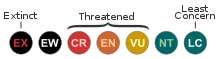
IUCN Red List of Threatened Plants Status : Not listed.
Growth: S = slow M = medium F = fast. Soil: L = light (sandy) M = medium H = heavy (clay). pH: A = acid N = neutral B = basic (alkaline). Shade: F = full shade S = semi-shade N = no shade. Moisture: D = dry M = Moist We = wet Wa = water.
Now available:
Food Forest Plants for Mediterranean Conditions
350+ Perennial Plants For Mediterranean and Drier Food Forests and Permaculture Gardens.
[Paperback and eBook]
This is the third in Plants For A Future's series of plant guides for food forests tailored to
specific climate zones. Following volumes on temperate and tropical ecosystems, this book focuses
on species suited to Mediterranean conditions—regions with hot, dry summers and cool, wet winters,
often facing the added challenge of climate change.
Read More
Expert comment
Author
L.
Botanical References
43200236
Links / References
For a list of references used on this page please go here
Readers comment
| Add a comment |
|
If you have important information about this plant that may help other users please add a comment or link below. Only comments or links that are felt to be directly relevant to a plant will be included. If you think a comment/link or information contained on this page is inaccurate or misleading we would welcome your feedback at [email protected]. If you have questions about a plant please use the Forum on this website as we do not have the resources to answer questions ourselves.
* Please note: the comments by website users are not necessarily those held by PFAF and may give misleading or inaccurate information.
|
Subject : Elymus canadensis
|
|
|
|