 |
|
http://commons.wikimedia.org/wiki/User:Stan_Shebs |
 |
| http://commons.wikimedia.org/wiki/User:Stan_Shebs |
Translate this page:
Summary
Taxonomic Note: This genus was formerly classified in the family Agavaceae. Modern classifications include it within the Asparagaceae.
Common sotol is one of the most important and useful perennial food plants of the desert Southwest. It was an important resource for Native Americans and remains one of the few substantial year-round food reserves in dry landscapes where winter scarcity can be severe. Unlike agaves, sotols can flower multiple times in a lifetime, making the flowering stalk a renewable, edible resource rather than a terminal event. The plant also offers an edible crown, sap, flowers, and seeds, making it the richest food source among U.S. sotols. Its flowers, in particular, stand out as a highly desirable and distinctive desert food. Bloom Color: White.
Main Bloom Time: Early summer, Late summer, Mid summer. Form: Rounded.
Physical Characteristics

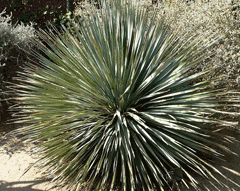
 Dasylirion wheeleri is an evergreen Tree growing to 1.5 m (5ft) by 2 m (6ft) at a slow rate.
See above for USDA hardiness. It is hardy to UK zone 8. It is in leaf all year, in flower from August to September. The species is dioecious (individual flowers are either male or female, but only one sex is to be found on any one plant so both male and female plants must be grown if seed is required). and is pollinated by Insects. The plant is not self-fertile.
Suitable for: light (sandy) and medium (loamy) soils, prefers well-drained soil and can grow in nutritionally poor soil. Suitable pH: mildly acid, neutral and basic (mildly alkaline) soils. It cannot grow in the shade. It prefers dry or moist soil and can tolerate drought.
UK Hardiness Map
US Hardiness Map
Synonyms
D. wheeleri var. wislizeni Trel.
Plant Habitats
Woodland Garden Secondary; Sunny Edge; South Wall. By.
Edible Uses
Edible Parts: Stem
Edible Uses: Drink
The edible parts are the sap, crown, flowering stalk, flowers, and seeds. Of these, the flowering stalks and flowers are the most desirable practical food parts because they can be harvested without killing the plant and because they are often both abundant and flavorful [2-3]. Edible Uses & Rating. Common sotol ranks as a high-value traditional desert food. The flowering stalk is one of the better renewable wild vegetables of arid lands, and the flowers are highly desirable. The crown is substantial but destructive to harvest. Seeds are edible, though less central flowers and stalks [2-3]. Taste, Processing & Kitchen Notes. The young flowering stalk tastes somewhat sweet, like asparagus with a mild soapy accent. This soapiness varies but is usually tolerable and often improves with cooking. Texture is always somewhat stringy, though young inner tissues and upper sections are better than lower woody sections. The flowers are even better than the stalks: sweet, complex, and free of the harsh saponins that plague many other desert monocot flowers. They reportedly pair especially well with corn and are useful both fresh and cooked. Cooking also helps manage the heavy insect load commonly found among the flowers. Seeds were not sampled, but the genus is documented as seed-bearing and edible in this species [2-3]. Seasonality (Phenology). Flower stalks usually emerge from April to June, though later flowering can occur with sufficient rainfall. Flowering follows a few weeks after stalk emergence. Flowers are available for a relatively brief period during late spring and sometimes again after summer rains. Seeds follow flowering. The crown is available year-round. Safety & Cautions (Food Use). Common sotol is physically hazardous to harvest because of its stiff, toothed leaves and sharp terminal spine. Eye and hand protection are strongly advised. Bending stalks to access upper flowers can cause them to snap and should be avoided. Crowns are destructive to harvest and should be taken only where legally and ecologically appropriate. Flowers are often full of insects and should be inspected and usually cooked before use. Harvest & Processing Workflow. Young flowering stalks should be cut before they become woody. Outer tissues can be trimmed if fibrous, and the softer green core cooked by boiling, steaming, or roasting. Woody stalks are better tapped for sap than eaten. Flowers can be stripped from the stalk, shaken or rinsed clean, then toasted, steamed, or added to cooked dishes. Crowns must be excavated and slow-cooked or pit-roasted. Seeds, when gathered, should be cleaned and dried [2-3]. Cultivar/Selection Notes. No food cultivars are in common use. Landscape selections sometimes emphasize leaf color, symmetry, and compactness, but the species is generally grown from seed rather than improved lines. Look-Alikes & Confusion Risks. Common sotol resembles Texas sotol and green sotol, but its leaves are usually more dull, dusty, or bluish-green than the bright green Texas species, and unlike green sotol, its leaf teeth point forward rather than backward. It differs from agaves by its superior ovary and from yuccas by its unisexual flowers. Traditional/Indigenous Use Summary. Common sotol is an important Native American food resource in southern Arizona and New Mexico. The flowering stalks, flowers, crown, and other tissues fit clearly into longstanding desert food traditions, especially where reliable perennial food reserves were highly valued [2-3]. The central part of the plant can be cooked and eaten[183]. The crown of the plant was baked by the native North American Indians then dried, pounded into a powder and made into cakes[257]. They would also peel the baked crown, crush it, mix it with water then ferment it and use it as a beverage[257]. The flowering stems can be roasted, boiled or eaten raw[257]. The trunk is rich in sugar, the pith can be used to make the alcoholic beverage 'sotol'[183].
References More on Edible Uses
Medicinal Uses
Plants For A Future can not take any responsibility for any adverse effects from the use of plants. Always seek advice from a professional before using a plant medicinally.
Dasylirion wheeleri (Common Sotol/Desert Spoon) has historical, mainly traditional, uses rather than documented, modern pharmacological ones. Its primary application is for food and, significantly, as a fermented, alcohol-based beverage made from its roasted heart, which was consumed by indigenous peoples.
References More on Medicinal Uses
The Bookshop: Edible Plant Books
Our Latest books on Perennial Plants For Food Forests and Permaculture Gardens in paperback or digital formats.

Edible Tropical Plants
Food Forest Plants for Hotter Conditions: 250+ Plants For Tropical Food Forests & Permaculture Gardens.
More

Edible Temperate Plants
Plants for Your Food Forest: 500 Plants for Temperate Food Forests & Permaculture Gardens.
More

More Books
PFAF have eight books available in paperback and digital formats. Browse the shop for more information.
Shop Now
Other Uses
Basketry Thatching Weaving
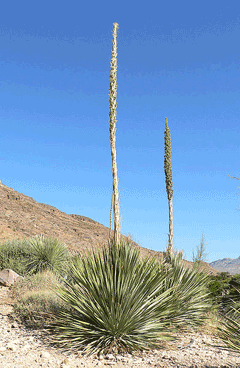
This species is highly architectural, forming dramatic spherical rosettes and tall flowering stalks. It is one of the better desert accent plants for large xeriscapes and naturalistic dryland gardens. Common sotol provides structural cover in desert ecosystems and supports pollinator communities during bloom. Its dense leaf rosettes can shelter reptiles, small mammals, and invertebrates, while the flowers add significant seasonal resources in otherwise sparse habitats. The leaves are used in thatching, basket making, weaving into hats, mats etc[257].
Special Uses
References More on Other Uses
Cultivation details
Common sotol is one of the most useful perennial desert food plants in the U.S. flora. It offers a rare combination of renewability, abundance, and multiple edible parts. For both ethnobotanical and practical reasons, it deserves recognition as a major traditional food plant of the arid Southwest. Growing Conditions. This species thrives in full sun, rocky or mineral soils, and excellent drainage. It tolerates heat, drought, wind, and poor fertility very well. It is especially successful in arid climates with low humidity and relatively dry winters. Habitat & Range. Common sotol occurs primarily in southern Arizona and New Mexico, with extensions into adjacent regions of northern Mexico. It grows in deserts, mesas, rocky slopes, and lower mountain habitats. Size & Landscape Performance. This species is highly architectural, forming dramatic spherical rosettes and tall flowering stalks. It is one of the better desert accent plants for large xeriscapes and naturalistic dryland gardens. Cultivation (Horticulture). Common sotol is a strong candidate for desert landscaping and water-wise design. It should be planted in full sun and lean, sharply drained soil. Once established, it needs very little care. It is slow to moderate in growth and highly durable under heat and drought. Pests & Problems. Generally pest resistant. The main problem is rot under poor drainage or heavy irrigation. Physical injury during maintenance is also common because of the leaf armature. Identification & Habit. Common sotol is a dioecious, polycarpic, basal-rosette perennial with a large woody caudex mostly below ground. Leaves are long, narrow, and ribbon-like, armed with stout marginal teeth and a spiny tip. Flower stalks are tall and bear dense clusters of small unisexual flowers. Fruits are dry, 3-winged capsules. Pollinators. The numerous flowers are likely visited by a broad range of insects, especially bees, flies, beetles, and other generalist desert pollinators. The abundant flowering display makes the plant an important seasonal nectar and pollen source. Requires a very well-drained soil in a sheltered sunny position[200]. This species is not very cold-hardy, and is said to require a minimum winter temperature of 10°c[200]. However, plants can survive outdoors in the very mildest areas of Britain if given some protection, such as a south-facing wall and a suitable soil[K]. Plants are sometimes used in sub-tropical bedding schemes in Britain. Common sotol (Dasylirion wheeleri) belongs to the asparagus family (Asparagaceae) and the genus Dasylirion. Common names include common sotol and Wheeler’s sotol. It is a perennial desert monocot native to the southwestern United States and northern Mexico. In cultivation, it typically performs best in USDA Hardiness Zones 7–10. Mature foliage rosettes are usually about 1–1.5 m tall and 1–2 m wide, while flower stalks can rise several meters above the plant. Special Features: Attractive foliage, North American native, Attractive flowers or blooms.
References Carbon Farming Information and Carbon Sequestration Information
Temperature Converter
Type a value in the Celsius field to convert the value to Fahrenheit:
Fahrenheit:
The PFAF Bookshop
Plants For A Future have a number of books available in paperback and digital form. Book titles include Edible Plants, Edible Perennials, Edible Trees,Edible Shrubs, Woodland Gardening, and Temperate Food Forest Plants. Our new book is Food Forest Plants For Hotter Conditions (Tropical and Sub-Tropical).
Shop Now
Plant Propagation
Seed - sow spring in a greenhouse. When they are large enough to handle, prick the seedlings out into individual pots and grow them on in the greenhouse for at least their first winter. Plant them out into their permanent positions in late spring or early summer, after the last expected frosts.
Other Names
If available other names are mentioned here
Common sotol, Bear Grass, Common Sotol, Desert Spoon.
Native Range
NORTHERN AMERICA: United States (New Mexico (south), Texas (west), Arizona (south)), Mexico (Chihuahua, Sonora (north))
Weed Potential
Right plant wrong place. We are currently updating this section.
Please note that a plant may be invasive in one area but may not
in your area so it's worth checking.
Very low. Common sotol is slow-growing, habitat-specific, and not invasive.
Conservation Status
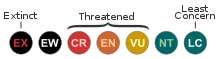
IUCN Red List of Threatened Plants Status : Least Concern.
IUCN Red List
Growth: S = slow M = medium F = fast. Soil: L = light (sandy) M = medium H = heavy (clay). pH: A = acid N = neutral B = basic (alkaline). Shade: F = full shade S = semi-shade N = no shade. Moisture: D = dry M = Moist We = wet Wa = water.
Now available:
Food Forest Plants for Mediterranean Conditions
350+ Perennial Plants For Mediterranean and Drier Food Forests and Permaculture Gardens.
[Paperback and eBook]
This is the third in Plants For A Future's series of plant guides for food forests tailored to
specific climate zones. Following volumes on temperate and tropical ecosystems, this book focuses
on species suited to Mediterranean conditions—regions with hot, dry summers and cool, wet winters,
often facing the added challenge of climate change.
Read More
Expert comment
Author
S.Watson.
Botanical References
200270
Links / References
For a list of references used on this page please go here
Readers comment
| Add a comment |
|
If you have important information about this plant that may help other users please add a comment or link below. Only comments or links that are felt to be directly relevant to a plant will be included. If you think a comment/link or information contained on this page is inaccurate or misleading we would welcome your feedback at [email protected]. If you have questions about a plant please use the Forum on this website as we do not have the resources to answer questions ourselves.
* Please note: the comments by website users are not necessarily those held by PFAF and may give misleading or inaccurate information.
|
Subject : Dasylirion wheeleri
|
|
|
|