Translate this page:
Summary
Several species of Cytisus (commonly known as Brooms) grow in poor soils, are drought tolerant, and thrive in full sun. These plants are typically found in rocky, well-drained soils and withstand long dry periods. They have limited edible uses but contribute to the forest system, making them valuable contributors to healthy, functioning ecosystems. Many brooms fix nitrogen, are suitable for erosion control, act as shelter, forage habitats for wildlife, and contribute to biodiversity. Brooms produce many flowers rich in nectar and pollen, making them valuable for supporting pollinators such as bees, butterflies, and other beneficial insects.
Scotch Broom (C. scoparius), once established, is highly drought-tolerant and can thrive in sandy or rocky soils. It is used for erosion control. Other Brooms with similar features include White Broom (Chamaecytisus albus), White Spanish Broom (C. multiflorus), native to the Iberian Peninsula, thrives in dry, nutrient-poor soils, Portuguese Broom (C. striatus), native to Portugal, Warminster Broom (C. x praecox) with profuse yellow or cream-coloured flowers, and Hairy Broom (Chamaecytisus hirsutus) used as an ornamental and in soil restoration projects. Bloom Color: Yellow.
Main Bloom Time: Early summer, Early spring, Late summer, Late spring, Mid summer, Mid spring. Form: Upright or erect.
Physical Characteristics

 Cytisus scoparius is a deciduous Shrub growing to 2.4 m (7ft) by 1 m (3ft 3in) at a fast rate.
See above for USDA hardiness. It is hardy to UK zone 5 and is not frost tender. It is in flower from May to June, and the seeds ripen from August to November. The species is hermaphrodite (has both male and female organs) and is pollinated by Bees. The plant is not self-fertile.
It can fix Nitrogen.
It is noted for attracting wildlife.
Suitable for: light (sandy), medium (loamy) and heavy (clay) soils, prefers well-drained soil and can grow in nutritionally poor soil. Suitable pH: mildly acid, neutral and basic (mildly alkaline) soils and can grow in very acid soils.
It can grow in semi-shade (light woodland) or no shade. It prefers dry or moist soil and can tolerate drought. The plant can tolerate maritime exposure.
It can tolerate atmospheric pollution.
UK Hardiness Map
US Hardiness Map
Synonyms
Sarothamnus scoparius. Spartium scoparium. Sarothamnus bourgaei. Sarothamnus vulgaris.
Plant Habitats
Woodland Garden Sunny Edge; Dappled Shade; Ground Cover;
Edible Uses
Edible Parts: Flowers
Edible Uses: Coffee Condiment
The flower buds are pickled and used as a substitute for capers[4, 46, 183, 244]. They can also be added to salads[183]. Some caution is advised, see the notes above on toxicity. The tender green tops of the plant have been used like hops to give a bitter flavour to beer and to render it more intoxicating[4, 183]. The roasted seed is a coffee substitute[2, 4, 115, 183].
References More on Edible Uses
Medicinal Uses
Plants For A Future can not take any responsibility for any adverse effects from the use of plants. Always seek advice from a professional before using a plant medicinally.
Antiarrhythmic Antirheumatic Cardiotonic Cathartic Diuretic Emetic Vasoconstrictor
Broom is a bitter narcotic herb that depresses the respiration and regulates heart action[238]. It acts upon the electrical conductivity of the heart, slowing and regulating the transmission of the impulses[254]. The young herbaceous tips of flowering shoots are cardiotonic, cathartic, diuretic, emetic and vasoconstrictor[4, 13, 21, 46, 165]. The seeds can also be used[4]. The plant is used internally in the treatment of heart complaints, and is especially used in conjunction with Convallaria majalis[238]. The plant is also strongly diuretic, stimulating urine production and thus countering fluid retention[254]. Since broom causes the muscles of the uterus to contract, it has been used to prevent blood loss after childbirth[254]. Use this herb with caution since large doses are likely to upset the stomach[4, 21]. The composition of active ingredients in the plant is very changeable, this makes it rather unreliable medicinally and it is therefore rarely used[9]. This herb should not be prescribed to pregnant women or patients with high blood pressure[238]. Any treatment with this plant should only be carried out under expert supervision[9]. See also the notes above on toxicity. The young herbaceous tips of flowering shoots are harvested in spring, generally in May[4]. They can be used fresh or dried[4, 238]. They should not be stored for more than 12 months since the medicinally active ingredients break down[238].
References More on Medicinal Uses
The Bookshop: Edible Plant Books
Our Latest books on Perennial Plants For Food Forests and Permaculture Gardens in paperback or digital formats.

Edible Tropical Plants
Food Forest Plants for Hotter Conditions: 250+ Plants For Tropical Food Forests & Permaculture Gardens.
More

Edible Temperate Plants
Plants for Your Food Forest: 500 Plants for Temperate Food Forests & Permaculture Gardens.
More

More Books
PFAF have eight books available in paperback and digital formats. Browse the shop for more information.
Shop Now
Other Uses
Basketry Broom Dye Essential Fibre Paper Repellent Soil stabilization Tannin Wood
An excellent fibre is obtained from the bark, it is used in the manufacture of paper, cloth and nets[4, 100, 115]. It is not as strong as the fibre from the Spanish broom (Spartium junceum)[4]. The fibre is obtained from the root according to other reports[13, 46]. The bark fibre is used to make paper, it is 2 - 9mm long[189]. The branches are harvested in late summer or autumn, the leaves removed and the stems steamed until the fibres can be stripped. The fibres are cooked for 3 hours in lye then put in a ball mill for 3 hours. The paper is pale tan in colour[189]. The bark is a good source of tannin[4]. A yellow and a brown dye are obtained from the bark[46]. A yellow dye is obtained from the flowering stem[169]. A green dye is obtained from the leaves and young tops[4]. The branches are used to make baskets, brushes, brooms and besoms[4, 6, 13, 46, 55, 115]. They are also sometimes used for thatching roofs and as substitutes for reeds in making fences or screens[4]. An essential oil from the flowers is used in perfumery[57]. Growing well on dry banks and on steep slopes, it is an effective sand binder and soil stabiliser[4, 11, 46]. Broom is one of the first plant to colonize sand dunes by the coast[4]. The plant attracts insects away from nearby plants[14]. The var. prostratus (= C. scoparius maritimus?[208]) makes a good fast growing ground cover plant to 30cm tall, though it needs weeding in its first year[197]. The cultivar 'Andreanus Prostratus' can also be used[208]. Wood - very hard, beautifully veined[4]. The plant seldom reaches sufficient size for its wood to be of much value, but larger specimens are valued by cabinet makers and for veneer[4]. 1. Nectary - Flowers rich in nectar and pollen:
Yes – Broom species produce flowers with nectar and pollen that attract bees, butterflies, and other pollinators.
2. Wildlife - Food (Fruit, Seeds, Leaf litter, Shelter, Nesting, Roosting):
Yes – Broom shrubs provide shelter for wildlife, and birds may use the dense foliage for nesting and roosting. However, the seeds are generally not a significant food source for many animals, and the plant does not produce abundant leaf litter.
3. Invertebrate Shelter (Overwintering sites, Leaf litter, Groundcover):
Yes – The dense growth of broom can provide shelter for invertebrates, though it is not typically known for its leaf litter or groundcover characteristics.
4. Pest Confuser (Smell):
No – Broom plants do not have a strong scent that confuses pests.
Special Uses
Attracts Wildlife Carbon Farming Food Forest Ground cover Nitrogen Fixer Scented Plants
References More on Other Uses
Cultivation details
Agroforestry Services: Nitrogen Management: Coppice Minor Global Crop
Landscape Uses:Border, Container, Foundation, Massing, Specimen. Succeeds in most soils, preferring a fairly good but not rich soil[11]. Prefers a poor well-drained soil[14]. Succeeds in slightly acid, neutral and limy soils but dislikes shallow soils over chalk[200]. Plants are strongly calcifuge according to other reports and intolerant of a pH much above 6.5[17, 186]. Prefers a sunny position but tolerates some shade[11, 14, 17]. Plants succeed in exposed conditions, and are very tolerant of maritime exposure[4, K]. Plants have a deep root system, they are very drought tolerant once established and grow well on dry banks[4, 11]. Tolerates a smoky atmosphere, growing well in polluted areas[186]. Plants are hardy to about -20°c[184]. A number of named forms have been developed for their ornamental value[182]. New leaves are formed in April but these soon drop off the plant, photosynthesis being carried out by means of the green stems[186]. Very tolerant of cutting, it regenerates quickly from the base[186]. Plants are usually killed by fire but the seeds quickly germinate after the fire and rapidly become established[186]. A good bee plant and food plant for many caterpillars[24, 30, 46], it provides the food for the larvae of the green hairstreak butterfly[186]. Ants are attracted to the seeds, feeding on the juicy attachment that holds them to the pods and thus distributing the seed[186]. Dislikes root disturbance, especially when more than 20cm tall[11]. It is best to plant out into their permanent positions as early as possible. This species has a symbiotic relationship with certain soil bacteria, these bacteria form nodules on the roots and fix atmospheric nitrogen. Some of this nitrogen is utilized by the growing plant but some can also be used by other plants growing nearby[200]. Special Features:Not North American native, Naturalizing, Fragrant flowers, Attractive flowers or blooms. Seeds are typically harvested in late summer to early autumn when the seed pods are dry.
Broom generally flowers in spring, with peak blooming depending on the species and local climate.
Carbon Farming
-
Agroforestry Services: Nitrogen
Plants that contribute to nitrogen fixation include the legume family – Fabaceae.
-
Management: Coppice
Cut to the ground repeatedly - resprouting vigorously. Non-destructive management systems maintaining the soil organic carbon.
-
Minor Global Crop
These crops are already grown or traded around the world, but on a smaller scale than the global perennial staple and industrial crops, The annual value of a minor global crop is under $1 billion US. Examples include shea, carob, Brazil nuts and fibers such as ramie and sisal.
References Carbon Farming Information and Carbon Sequestration Information
Temperature Converter
Type a value in the Celsius field to convert the value to Fahrenheit:
Fahrenheit:
The PFAF Bookshop
Plants For A Future have a number of books available in paperback and digital form. Book titles include Edible Plants, Edible Perennials, Edible Trees,Edible Shrubs, Woodland Gardening, and Temperate Food Forest Plants. Our new book is Food Forest Plants For Hotter Conditions (Tropical and Sub-Tropical).
Shop Now
Plant Propagation
Seed - best sown as soon as it is ripe in the autumn in a cold frame[80]. Pre-soak stored seed for 24 hours in warm water then cold stratify for 1 month and sow in a cold frame[80]. The seed usually germinates in 4 weeks at 20°c[98, 113]. Seedlings should be potted up as soon as possible since plants quickly become intolerant of root disturbance[186]. Plant them out into their permanent positions in late summer if they have made sufficient growth, otherwise in late spring of the following year[K]. The seed has a long viability[186]. Seed can also be sown in situ as soon as it is ripe in the late summer and autumn[4]. Cuttings of half-ripe wood, 4 - 7 cm with a heel, August in a frame[11]. Produces roots in the spring[11]. Pot up as soon as possible[11]. Cuttings of mature wood, October/November in a frame. Layering.
Other Names
If available other names are mentioned here
Common broom; scotch broom; Scots broom. Spanish: escoba negra; retama de escobas; retama negra. French: genêt à balai. Portuguese: giesteira das vassouras. Australia: English broom; Scottish broom. Denmark: gyvel. Finland: Jänönvihma. Germany: Besenginster. Italy: ginestra dei carbonai. Netherlands: bezemstruik; brem. Norway: gyvel. Sweden: gyvel.
Native Range
EUROPE: Denmark, United Kingdom, Ireland, Norway, Sweden, Austria, Belgium, Switzerland, Czech Republic, Germany, Hungary, Netherlands, Poland, Slovakia, Belarus, Lithuania, Latvia, Moldova (north), Ukraine (west), Greece, Italy (incl. Sardinia, Sicily), Romania, Slovenia, Spain, France (incl. Corsica), Portugal AFRICA: Spain (Canarias)
Weed Potential
Right plant wrong place. We are currently updating this section.
Please note that a plant may be invasive in one area but may not in your area so it's worth checking.
Introduced into several other continents outside its native range and is classified as a noxious invasive species in California, Oregon, Washington, British Columbia and parts of the east coast of North America, as well as Australia, New Zealand and India. Broom is a significant weed of forestry, particularly in pine and eucalypt plantations around the world. It either smothers planted saplings or reduces their growth [1d].
Conservation Status
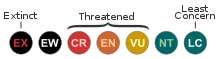
IUCN Red List of Threatened Plants Status : This taxon has not yet been assessed.
Growth: S = slow M = medium F = fast. Soil: L = light (sandy) M = medium H = heavy (clay). pH: A = acid N = neutral B = basic (alkaline). Shade: F = full shade S = semi-shade N = no shade. Moisture: D = dry M = Moist We = wet Wa = water.
Now available:
Food Forest Plants for Mediterranean Conditions
350+ Perennial Plants For Mediterranean and Drier Food Forests and Permaculture Gardens.
[Paperback and eBook]
This is the third in Plants For A Future's series of plant guides for food forests tailored to
specific climate zones. Following volumes on temperate and tropical ecosystems, this book focuses
on species suited to Mediterranean conditions—regions with hot, dry summers and cool, wet winters,
often facing the added challenge of climate change.
Read More
Expert comment
Author
(L.)Link.
Botanical References
1117200
Links / References
For a list of references used on this page please go here
Readers comment