Translate this page:
Summary
Often called the world’s worst weed, purple nutsedge combines extreme persistence with edible tubers. Its agricultural impact is enormous.
Physical Characteristics

 Cyperus rotundus is a PERENNIAL growing to 0.6 m (2ft) by 1 m (3ft 3in).
See above for USDA hardiness. It is hardy to UK zone 8. It is in flower from March to July. The species is hermaphrodite (has both male and female organs).
Suitable for: light (sandy) and medium (loamy) soils. Suitable pH: mildly acid, neutral and basic (mildly alkaline) soils. It cannot grow in the shade. It prefers moist or wet soil.
UK Hardiness Map
US Hardiness Map
Synonyms
C. hexastachyos. Pycreus rotundus. (L.)Hayek.
Plant Habitats
Bog Garden;
Edible Uses
Edible Parts: Root Seed
Edible Uses:
Roots are edible but small and labor-intensive to gather. Edible Uses & Rating: Moderate; nutritionally useful but rarely worth harvesting in quantity [2-3]. Taste, Processing & Kitchen Notes: Tubers are starchy with mild sweetness. Roasting improves flavor [2-3]. Seasonality (Phenology): Tubers are available year-round in frost-free climates [2-3]. Safety & Cautions (Food Use): Wash thoroughly; avoid contaminated sites. Harvest & Processing Workflow: Excavate carefully to retrieve tuber chains [2-3]. Cultivar/Selection Notes: None; primarily a pest species. Look-Alikes & Confusion Risks: Often confused with yellow nutsedge, though typically darker [2-3]. Traditional/Indigenous Use Summary: Roots were historically eaten in several regions [2-3]. Tuber - raw or cooked[2, 85, 105, 183, 272]. A very strong flavour when freshly harvested, said to resemble 'Vick's VapoRub', the tubers become milder if they are allowed to dry[183]. A pleasant nutty flavour according to another report[95] whilst another says that the roots are very unpalatable raw and a little better but still not very palatable when cooked[144]. The dried roots can be ground into a powder and used as a cereal[257]. Seed. A famine food, used when all else fails[177]. It is very small and would be fiddly to use[K].
References More on Edible Uses
Medicinal Uses
Plants For A Future can not take any responsibility for any adverse effects from the use of plants. Always seek advice from a professional before using a plant medicinally.
Analgesic Antibacterial Antibiotic Antispasmodic Antitussive Aromatic Astringent Carminative
Contraceptive Diaphoretic Diuretic Emmenagogue Lithontripic Sedative Skin
Stimulant Stomachic Tonic Vermifuge
Nut grass is a pungent bitter-sweet herb that relieves spasms and pain, acting mainly on the digestive system and uterus[238]. The roots and tubers are analgesic, antibacterial, antispasmodic, antitussive, aromatic, astringent, carminative, diaphoretic, diuretic, emmenagogue, litholytic, sedative, skin, stimulant, stomachic, tonic and vermifuge[116, 145, 147, 152, 176, 218, 238, 240, 279]. They are used internally in the treatment of digestive problems and menstrual complaints[238]. They are commonly combined with black pepper (Piper nigrum) in the treatment of stomachaches[272]. The roots are harvested in the summer or winter and are dried for later use[238]. An essential oil in the tubers has antibiotic activity and has been shown to arrest the growth of Micrococcus pyrogenes[240]. The plant is rated 8th amongst 250 potential antifertility plants in China[218]. The plant is used in the treatment of cervical cancer[218].
References More on Medicinal Uses
The Bookshop: Edible Plant Books
Our Latest books on Perennial Plants For Food Forests and Permaculture Gardens in paperback or digital formats.

Edible Tropical Plants
Food Forest Plants for Hotter Conditions: 250+ Plants For Tropical Food Forests & Permaculture Gardens.
More

Edible Temperate Plants
Plants for Your Food Forest: 500 Plants for Temperate Food Forests & Permaculture Gardens.
More

More Books
PFAF have eight books available in paperback and digital formats. Browse the shop for more information.
Shop Now
Other Uses
Essential Weaving
The leaves are used in basketry and for weaving hats, matting etc[178]. The aromatic root is used for perfumery in India[4, 61, 145]. When dried and ground into a fine powder it is used like talcum powder[245]. Tubers feed small mammals but reduce plant diversity.
Special Uses
Scented Plants
References More on Other Uses
Cultivation details
An edible weed whose invasiveness overshadows its culinary value. Growing Conditions: Thrives in warm, moist soils but tolerates drought. Habitat & Range: Pantropical and widely naturalized. Size & Landscape Performance: Forms dense mats that outcompete crops. Cultivation (Horticulture): Not recommended. Pests & Problems: Persistence is its defining trait. Identification & Habit: Dark green leaves and purplish seed heads. Pollinators: Wind-pollinated. Propagation: Extensive rhizome networks and tubers. Plant Name: Purple Nutsedge. Family: Cyperaceae. Genus: Cyperus. Common Names: Purple nutgrass. USDA Hardiness Zones: Approximately 7–11. Height/Spread: 20–80 cm tall; spreads aggressively. Prefers a moist sandy loam[95, 117] and a sunny position[238]. We do not know how hardy this plant will be in Britain, one report says that it is frost-tender[238], but it is found growing wild in areas of N. America that do experience frost[43]. This plant is sometimes cultivated for its edible tubers in Tropical regions[1], however it is a serious weed of agricultural land in the tropics where it spreads rapidly at the roots[61] and is considered to be one of the world's most damaging weeds[200, 238]. It is subject to statutory control in several countries[238].
References Carbon Farming Information and Carbon Sequestration Information
Temperature Converter
Type a value in the Celsius field to convert the value to Fahrenheit:
Fahrenheit:
The PFAF Bookshop
Plants For A Future have a number of books available in paperback and digital form. Book titles include Edible Plants, Edible Perennials, Edible Trees,Edible Shrubs, Woodland Gardening, and Temperate Food Forest Plants. Our new book is Food Forest Plants For Hotter Conditions (Tropical and Sub-Tropical).
Shop Now
Plant Propagation
Notrecommended! Seed - surface sow in the spring and keep the compost moist[164]. The seed usually germinates in 2 - 6 weeks at 18°c[164]. Prick out the seedlings into individual pots as soon as they are large enough to handle. Grow on for their first winter in a greenhouse and plant them out in late spring after the last expected frosts. Division in spring or autumn. Very easy, larger clumps can be replanted direct into their permanent positions, though it is best to pot up smaller clumps and grow them on in a cold frame until they are rooting well. Plant them out in the spring.
Other Names
If available other names are mentioned here
Purple nutsedge, coco grass; java grass; nut sedge; nutgrass; purple nut-grass; purple nut-sedge; red grass; red nut sedge; water grass. Spanish: castanuela; cebolleta; chufa; chufila; cipero; contra yerba; corocilla; cortadera; jonquillo; juncea; lengua de gallina; negrillo; paraquita; pasto bolita; totorilla. French: souchet an forme d'olive. Chinese: xiang fu zi. Portuguese: alho-bravo; capim-alho; capim-dandá; junca de conta; tiririca; tiririca-vermelha. Bangladesh: motha. Brazil: alho; alho-bravo; capim-alho; capim-dandá; junca; junca-aromática; tiririca; tiririca-comum; tiririca-vermelha; tres-quinas. Cambodia: smao kravanh chrouk. Chile: almendra de tierra; chufa; coquillo. Colombia: cortadera. Cuba: ajo cimarron; basarillo; caramana; cebolleta; cebolleta de la provincia; cebollin; coquito; corojillo; corojito; juncia redonda; macaguita; yerba del rinon. Dominican Republic: afio; caramaná; coquillo; junquillo de sabana; ronquillo; saqui-saco. Egypt: seid. Fiji: soronakabani; vucesa. Germany: Apotheker-Cypergras; Asiatisches-Cypergras; Runde-Cypergras; Runde-Zyperwurzel. Greece: kupere. India: deela; gantola; korai; nagar motha. Indonesia: teki. Iraq: oyarslan. Italy: cipero orientale; cipero rotondo; stancia rotonda. Jamaica: nut-grass. Japan: hamasuge. Kenya: moikut. Malaysia: rumput haliya hitan. Mexico: cebollin; pimientillo. Myanmar: monhnyin-bin. Pakistan: notha. Peru: coco; coquillo; coquito. Philippines: balisanga; boto-botonis; mala-apulid; mutha; sur-sur Puerto Rico: coqui; coquillo. Samoa: mumuta. South Africa: rooiuintjie; uintjie. Sri Lanka: kalanthi. Suriname: adroe. Taiwan: hsiang-fu-tzu. Thailand: haew moo; ya-haeo-mu. Tonga: pakopako. Turkey: topalak.
Native Range
TEMPERATE ASIA: Saudi Arabia, Yemen, Afghanistan, Cyprus, Egypt (Sinai), Iran, Iraq, Israel, Lebanon, Syria, Turkey, Russian Federation-Ciscaucasia (Ciscaucasia), Armenia, Azerbaijan, Kazakhstan, Kyrgyzstan, Turkmenistan, Uzbekistan, China (Anhui Sheng, Gansu Sheng, Guangdong Sheng, Guangxi Zhuangzu Zizhiqu, Guizhou Sheng, Hebei Sheng, Henan Sheng, Jiangsu Sheng, Jiangxi Sheng, Shaanxi Sheng, Shandong Sheng, Shanxi Sheng, Sichuan Sheng, Xinjiang Uygur Zizhiqu, Yunnan Sheng, Zhejiang Sheng), Korea, Japan (Honshu, Kyushu, Shikoku), Taiwan TROPICAL ASIA: Bhutan, India, Sri Lanka, Nepal, Pakistan, India (Andaman and Nicobar Islands), Myanmar, Thailand, Vietnam, Indonesia, Malaysia, Philippines PACIFIC: Micronesia, Marshall Islands, United States (Northern Mariana Islands, United States Minor Outlying Islands) EUROPE: Austria, Switzerland, Albania, Bulgaria, Greece (incl. Crete), Croatia, Italy (incl. Sardinia, Sicily), Romania, Serbia, Slovenia, Spain (incl. Baleares), France (incl. Corsica), Portugal AFRICA: Cabo Verde, Spain (Canarias), Portugal (Azores, Madeira Islands), St. Helena, Algeria, Egypt, Western Sahara, Libya, Morocco, Tunisia, Djibouti, Eritrea, Ethiopia, Sudan, Somalia, Chad, Yemen (Arkhabil Suqutrá), Kenya, Tanzania, Uganda, Burundi, Democratic Republic of the Congo, Gabon, Equatorial Guinea, Rwanda, Benin, Burkina Faso, Côte D‘Ivoire, Ghana, Guinea, Mali, Mauritania, Niger, Nigeria, Senegal, Sierra Leone, Togo, Angola, Mozambique, Malawi, Zambia, Zimbabwe, Botswana, Namibia, Eswatini, South Africa, Comoros, Madagascar, Mauritius, Reunion, Seychelles
Weed Potential
Right plant wrong place. We are currently updating this section.
Please note that a plant may be invasive in one area but may not in your area so it's worth checking.
Extremely high. Considered as one of the world’s worst weeds. Reported in more than 90 countries where it grows as a weed infesting at least 52 different crops worldwide. The risk of introduction of C. rotundus is very high. This species is highly mobile and highly adaptable to different environments. It also benefits from human-related activities. Consequently it is considered one of the “world’s worst weeds” with the potential to negatively impact agriculture and natural ecosystems by displacing native plants or by changing the availability of food or shelter for native animals [1d].
Conservation Status
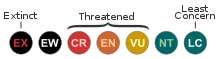
IUCN Red List of Threatened Plants Status : Cyperus rotundus (Nut-grass):
Status: Least Concern
| Related Plants
|
| Latin Name | Common Name | Habit | Height | Hardiness | Growth | Soil | Shade | Moisture | Edible | Medicinal | Other |
| Cyperus aristatus | Bearded nutsedge | Perennial | 0.5 |
6-10
| | LM | N | MWe | 2 | 0 | 2 |
| Cyperus articulatus | Jointed flatsedge, Priprioca, Piripiri | Perennial | 1.8 |
10-12
| F | LMH | N | MWeWa | 1 | 4 | 2 |
| Cyperus cephalotes | Bhada, Flat Sedges, Nut Sedges or Umbrella Sedge. | Perennial | 0.3 |
10-12
| F | LMH | N | WeWa | 0 | 1 | 2 |
| Cyperus distans | Slender Cyperus, Piedmont flatsedge | Perennial | 0.5 |
0-0
| | LM | N | MWe | 1 | 1 | 2 |
| Cyperus erythrorhizos | Redroot Flatsedge | Annual | 0.8 |
4-10
| F | LMH | SN | MWe | 2 | 0 | 2 |
| Cyperus esculentus | Tiger Nut, Yellow nutsedge, Nut Grass | Perennial | 0.9 |
5-10
| F | LMH | N | MWe | 4 | 2 | 3 |
| Cyperus fendlerianus | Fendler's Flatsedge | Perennial | 0.7 |
5-9
| F | LM | N | MWe | 2 | 0 | 2 |
| Cyperus giganteus | Piripiri, Mexican Papyrus | Perennial | 1.5 |
9-11
| F | LMH | N | WeWa | 0 | 2 | 3 |
| Cyperus longus | Galingale | Perennial | 1.2 |
6-9
| F | LMH | N | MWeWa | 2 | 1 | 3 |
| Cyperus odoratus | Fragrant or rusty flatsedge | Annual/Perennial | 0.8 |
6-10
| F | LMH | N | MWe | 3 | 3 | 2 |
| Cyperus papyrus | Papyrus. Papyrus sedge | Perennial | 5.0 |
9-12
| F | LMH | N | WeWa | 2 | 2 | 2 |
| Cyperus schweinitzii | Flatsedge, Schweinitz's flatsedge | Perennial | 0.8 |
0-0
| | LM | N | MWe | 2 | 0 | 2 |
| Cyperus setigerus | Lean flatsedge | Perennial | 1.0 |
0-0
| | LM | N | MWe | 2 | 0 | 2 |
| Cyperus tegetiformis | | Perennial | 0.0 |
-
| | LM | N | MWe | 0 | 0 | 2 |
| Cyperus textilis | Flat sedge, Basket grass, | Perennial | 1.5 |
9-12
| F | LMH | FSN | MWeWa | 0 | 0 | 4 |
| Cyperus ustulatus | | Perennial | 1.2 |
-
| | LM | N | MWe | 0 | 0 | 2 |
|
Growth: S = slow M = medium F = fast. Soil: L = light (sandy) M = medium H = heavy (clay). pH: A = acid N = neutral B = basic (alkaline). Shade: F = full shade S = semi-shade N = no shade. Moisture: D = dry M = Moist We = wet Wa = water.
Now available:
Food Forest Plants for Mediterranean Conditions
350+ Perennial Plants For Mediterranean and Drier Food Forests and Permaculture Gardens.
[Paperback and eBook]
This is the third in Plants For A Future's series of plant guides for food forests tailored to
specific climate zones. Following volumes on temperate and tropical ecosystems, this book focuses
on species suited to Mediterranean conditions—regions with hot, dry summers and cool, wet winters,
often facing the added challenge of climate change.
Read More
Expert comment
Author
L.
Botanical References
4350200
Links / References
For a list of references used on this page please go here
Readers comment