Translate this page:
Summary
Physical Characteristics

 Cudrania tricuspidata is a deciduous Tree growing to 6 m (19ft) by 6 m (19ft) at a slow rate.
See above for USDA hardiness. It is hardy to UK zone 7. It is in flower in July. The species is dioecious (individual flowers are either male or female, but only one sex is to be found on any one plant so both male and female plants must be grown if seed is required). . The plant is not self-fertile.
Suitable for: light (sandy) and medium (loamy) soils and prefers well-drained soil. Suitable pH: mildly acid, neutral and basic (mildly alkaline) soils. It cannot grow in the shade. It prefers moist soil.
UK Hardiness Map
US Hardiness Map
Synonyms
C. triloba. Maclura tricuspidata.
Plant Habitats
Woodland Garden Secondary; Sunny Edge;
Edible Uses
Edible Parts: Fruit Leaves
Edible Uses:
Fruit - fresh or preserved[1, 22, 61]. Somewhat like a mulberry[183]. The firm fruit is relatively tasteless, when soft-ripe it is sub-acid to sweet and some forms can be quite delicious[46, 105, 109, 151, 183]. It contains lots of large seeds[151]. The fruit is about 25mm in diameter[200]. Leaves - a famine food[179].
References More on Edible Uses
Medicinal Uses
Plants For A Future can not take any responsibility for any adverse effects from the use of plants. Always seek advice from a professional before using a plant medicinally.
Antiperiodic Galactogogue Malaria Ophthalmic Women's complaints
An infusion of the wood is used to treat sore or weak eyes[178, 218]. The inner bark and the wood are used in the treatment of malaria, debility and menorrhagia[178, 218]. The root is galactogogue and is also used in the treatment of amenorrhoea[218]. The plant is used to eliminate blood stasis and stimulate the circulation in cancer of the alimentary system, blood and lungs[218].
References More on Medicinal Uses
The Bookshop: Edible Plant Books
Our Latest books on Perennial Plants For Food Forests and Permaculture Gardens in paperback or digital formats.

Edible Tropical Plants
Food Forest Plants for Hotter Conditions: 250+ Plants For Tropical Food Forests & Permaculture Gardens.
More

Edible Temperate Plants
Plants for Your Food Forest: 500 Plants for Temperate Food Forests & Permaculture Gardens.
More

More Books
PFAF have eight books available in paperback and digital formats. Browse the shop for more information.
Shop Now
Other Uses
Dye Fibre Wood
A yellow dye is obtained from the wood[178]. The bark fibers are used for making paper[266]. Wood - finely grained. Used for utensils[178].
Special Uses
Food Forest
References More on Other Uses
Cultivation details
Prefers a warm well-drained fertile loam[1, 188]. Requires a sunny position[188]. A very hardy plant[1]. The leaves are a food source for silk-worms[1, 11]. Probably only the male tree is in cultivation in Britain, though at least one selected female form is being grown in N. America[183]. Both male and female plants normally need to be grown if fruit or seed is required but male trees occasionally produce a few small fruits[183]. The plant is heat tolerant in zones 9 through 5. (Plant Hardiness Zones show how well plants withstand cold winter temperatures.
Plant Heat Zones show when plants would start suffering from the heat.
The Plant Heat Zone map is based on the number of "heat days" experienced in a given area where the temperature climbs to over 86 degrees F (30°C).
At this temperature, many plants begin to suffer physiological damage. Heat Zones range from 1 (no heat days) to 12 (210 or more heat days).
For example Heat Zone. 11-1 indicates that the plant is heat tolerant in zones 11 through 1.) For polyculture design as well as the above-ground architecture (form - tree, shrub etc. and size shown above) information on the habit and root pattern is also useful and given here if available. A sprouting standard sending up shoots from the base [1-2].
References Carbon Farming Information and Carbon Sequestration Information
Temperature Converter
Type a value in the Celsius field to convert the value to Fahrenheit:
Fahrenheit:
The PFAF Bookshop
Plants For A Future have a number of books available in paperback and digital form. Book titles include Edible Plants, Edible Perennials, Edible Trees,Edible Shrubs, Woodland Gardening, and Temperate Food Forest Plants. Our new book is Food Forest Plants For Hotter Conditions (Tropical and Sub-Tropical).
Shop Now
Plant Propagation
Seed - best sown as soon as it is ripe in a cold frame[188]. Sow stored seed in early spring in a cold frame. When they are large enough to handle, prick the seedlings out into individual pots and grow them on in the greenhouse for at least their first winter. Plant them out into their permanent positions in late spring or early summer, after the last expected frosts. Cuttings of half-ripe wood, July/August in a frame[188, K]. Cuttings of mature wood, November in a sandy soil in a frame[1].
Other Names
If available other names are mentioned here
Native Range
TEMPERATE ASIA: Anhui Sheng, Fujian Sheng, Gansu Sheng (southeast), Guangdong Sheng, Guangxi Zhuangzu Zizhiqu, Guizhou Sheng, Hebei Sheng, Henan Sheng, Hubei Sheng, Hunan Sheng, Jiangsu Sheng, Jiangxi Sheng, Korea, Shaanxi Sheng, Shandong Sheng, Shanxi Sheng (south), Sichuan Sheng, Yunnan Sheng, Zhejiang Sheng,China.
Weed Potential
Right plant wrong place. We are currently updating this section.
Please note that a plant may be invasive in one area but may not
in your area so it's worth checking.
Conservation Status
IUCN Red List of Threatened Plants Status :
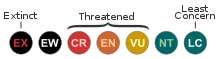
IUCN Red List
Growth: S = slow M = medium F = fast. Soil: L = light (sandy) M = medium H = heavy (clay). pH: A = acid N = neutral B = basic (alkaline). Shade: F = full shade S = semi-shade N = no shade. Moisture: D = dry M = Moist We = wet Wa = water.
Now available:
Food Forest Plants for Mediterranean Conditions
350+ Perennial Plants For Mediterranean and Drier Food Forests and Permaculture Gardens.
[Paperback and eBook]
This is the third in Plants For A Future's series of plant guides for food forests tailored to
specific climate zones. Following volumes on temperate and tropical ecosystems, this book focuses
on species suited to Mediterranean conditions—regions with hot, dry summers and cool, wet winters,
often facing the added challenge of climate change.
Read More
Expert comment
Author
(Carrière.)Bur. ex Lav.
Botanical References
11200266
Links / References
For a list of references used on this page please go here
Readers comment