Translate this page:
Summary
Buffalo Gourd, Missouri gourd,
Cucurbita foetidissima
Buffalo gourd has several edible parts, which require careful preparation due to its bitterness and potential toxicity. The fruit, when young, can be cooked and used as a vegetable, but it becomes increasingly bitter as it matures. It is high in protein for a fruit, up to 23%. The fruit is dried for later use. The nutty-flavoured seeds are more commonly used and are eaten raw or cooked. They are rich in protein (30-35%) and oil (34%). They are small and covered with a fibrous coat, making them difficult to process. The seeds are ground into a powder and used to thicken soups or mixed with flour for baking cakes and biscuits. An edible oil is extracted from the seeds. The root contains starch used as a sweetener, stabiliser, or for making puddings similar to tapioca. Some caution is advised due to potential toxicity.
Buffalo gourd thrives in rich, well-drained, and moisture-retentive soil in a warm, sunny, and sheltered position. Once established, the plant is highly drought-tolerant. This species is native to the Western and Central U.S. and Central Mexico, with a range including Arizona, California, Nevada, New Mexico, Texas, Utah, and Wyoming.
Harvesting: Late summer to early autumn.
Physical Characteristics

 Cucurbita foetidissima is a PERENNIAL CLIMBER growing to 6 m (19ft) by 2 m (6ft) at a fast rate.
See above for USDA hardiness. It is hardy to UK zone 7. It is in flower from July to September, and the seeds ripen from August to October. The species is monoecious (individual flowers are either male or female, but both sexes can be found on the same plant) and is pollinated by Insects. The plant is self-fertile.
It is noted for attracting wildlife.
Suitable for: light (sandy), medium (loamy) and heavy (clay) soils and prefers well-drained soil. Suitable pH: mildly acid, neutral and basic (mildly alkaline) soils. It can grow in semi-shade (light woodland) or no shade. It prefers dry or moist soil and can tolerate drought.
UK Hardiness Map
US Hardiness Map
Synonyms
C. perennis.
Plant Habitats
Cultivated Beds;
Edible Uses
Edible Parts: Flowers Fruit Oil Root Seed
Edible Uses: Oil
The seeds are the primary edible part when fully mature and not bitter, and they are the part most consistently documented as food. The flesh and pulp are the high-risk portion because wild gourds can contain cucurbitacins that are intensely bitter and associated with poisoning, and cooking does not reliably neutralize them. Edible Uses & Rating. The mature seeds rate as good, sometimes excellent, when clean and roasted and when bitterness is absent. Flowers are sometimes reported as edible for this species, but given the genus-wide cucurbitacin risk and the variability of bitterness, a conservative “seeds-first” approach remains the safest general guidance. Taste, Processing & Kitchen Notes. Properly mature buffalo gourd seeds can roast into something very close to pumpkin seeds, with a nutty, oily richness. Under-mature seeds often disappoint: thin flavor, less oil, and occasional harshness. For best eating quality, clean off every trace of pulp, dry well, and roast; salted roasting works well because the seeds have enough oil to carry seasoning. Seasonality (Phenology). Buffalo gourd grows and flowers in summer and sets fruits that mature into autumn. The long harvest season you described for wild gourds comes from the fruit’s “natural storage” rind: once mature, the seeds can remain protected for weeks as fruits dry in place. Safety & Cautions (Food Use). Treat extreme bitterness as a danger signal. Cucurbitacins are the core risk in wild gourds, and they are not reliably removed by heat. Avoid eating flesh and pulp, and avoid seeds that are unusually bitter. Harvest & Processing Workflow. Harvest mature fruits in mid to late autumn when yellowing and drying has begun. Open the rind, remove and thoroughly wash the seed mass, then dry and roast. If you are storing for later roasting, store fully dried seeds in breathable conditions so residual moisture does not cause mold. Cultivar/Selection Notes. Named cultivars are not the norm for wild buffalo gourd as a food plant. If you are “selecting” informally, prioritize plants that reliably fruit and that produce seeds with consistently mild, non-bitter flavor at full maturity. Look-Alikes & Confusion Risks. Confusion is most likely with fingerleaf gourd and coyote gourd. Leaf shape is again the quickest clue, but foragers should treat all wild gourds as “seed plants with bitter-flesh risk,” so correct species identification does not remove the core safety caution. Traditional/Indigenous Use Summary. The best-supported traditional food use for buffalo gourd and related wild gourds is the seed harvest: mature seeds were collected, cleaned, and eaten, while the bitter flesh was generally not treated as a staple food. Fruit - cooked[105]. Used as a vegetable, it can also be dried for later use[161, 183]. The young fruit is used, it is bitter and becomes more bitter as it gets older[183]. One report says that the fruit contains up to 23% protein[213], though this would be very unusual in a fruit[K]. The fruit is up to 7cm in diameter[200]. Seed - raw or cooked[46, 61, 86, 92, 94]. The seeds can be ground into a powder and used as a thickening in soups or can be mixed with cereal flours when making cakes and biscuits[183, 257]. Rich in oil with a very pleasant nutty flavour, but very fiddly to use because the seed is small and covered with a fibrous coat[K]. The seed contains 30 - 35% protein and 34% oil[183]. An edible oil is obtained from the seed[183]. Root - the source of a starch that is used as a sweetener, stabilizer or for making puddings like tapioca[183]. Some caution is advised, see notes on toxicity[207]. The flowers are said to be edible after preparation[183] but no more details are given.
References More on Edible Uses
Medicinal Uses
Plants For A Future can not take any responsibility for any adverse effects from the use of plants. Always seek advice from a professional before using a plant medicinally.
Laxative Poultice Vermifuge
Buffalo gourd was employed medicinally by many native North American tribes who used it particularly in the treatment of skin complaints[257]. It is still employed in modern herbalism as a safe and effective vermicide[238]. The leaves, stems and roots are laxative and poultice[46, 61, 92, 94]. The root is used mainly, but some caution is advised because of a report that it can be poisonous[207]. A poultice of the mashed plant has been used to treat skin sores, ulcers etc[257]. The seeds are vermifuge[7, 88]. The complete seed, together with the husk, is used. This is ground into a fine flour, then made into an emulsion with water and eaten. It is then necessary to take a purgative afterwards in order to expel the tapeworms or other parasites from the body[7]. As a remedy for internal parasites, the seeds are less potent than the root of Dryopteris felix-mas, but they are safer for pregnant women, debilitated patients and children[238].
References More on Medicinal Uses
The Bookshop: Edible Plant Books
Our Latest books on Perennial Plants For Food Forests and Permaculture Gardens in paperback or digital formats.

Edible Tropical Plants
Food Forest Plants for Hotter Conditions: 250+ Plants For Tropical Food Forests & Permaculture Gardens.
More

Edible Temperate Plants
Plants for Your Food Forest: 500 Plants for Temperate Food Forests & Permaculture Gardens.
More

More Books
PFAF have eight books available in paperback and digital formats. Browse the shop for more information.
Shop Now
Other Uses
Darning ball Musical Oil Soap Starch
Agroforestry uses:
Buffalo Gourd is used as a ground cover and can help control soil erosion. It also provides habitat for wildlife and beneficial insects.
The fruit is used as a soap substitute[94, 95, 169]. The fruit is cut up and simmered in water to obtain the soap which can be used for removing stains[92]. The fruit can also be dried and stored for later use[92]. It is often used with the root which is also a soap substitute[92]. The soap is said to be effective in removing stains from clothing[257]. The dried fruits have a tough, thick skin. They can be used whole as rattles or can be carved to make ladles, spoons etc[94, 95, 257]. The root is a rich source of starch[177]. (Industrial uses?) 1. Nectary - Flowers rich in nectar and pollen:
Yes – The flowers of Buffalo Gourd are known to be rich in nectar, attracting pollinators such as bees.
2. Wildlife - Food (Fruit, Seeds, Leaf litter, Shelter, Nesting, Roosting):
Yes – The fruit and seeds of Buffalo Gourd are edible and can serve as a food source for wildlife. The dense foliage can provide shelter for small animals.
3. Invertebrate Shelter (Overwintering sites, Leaf litter, Groundcover):
Yes – The plant’s structure and leaf litter can offer habitat for invertebrates, providing protection during overwintering.
4. Pest Confuser (Smell):
Yes – The strong odor of the plant may help to confuse or deter certain pests, acting as a natural repellent.
Special Uses
Carbon Farming
References More on Other Uses
Cultivation details
Management: Standard New Crop Staple Crop: Protein-oil
Buffalo gourd is a high-visibility desert cucurbit with a big survival strategy—massive rootstock and hard, persistent fruits—making it a potentially dependable seed resource in the right season, but a poor candidate for casual “vegetable” use because bitterness can signal real toxicity. Growing Conditions. It thrives in full sun, heat, and open soils, especially in floodplains, disturbed ground, and desert margins where water arrives in pulses. Once established, the rootstock tolerates drought and resprouts strongly with summer moisture. Habitat & Range. It is widespread across the arid and semi-arid West and Southwest, commonly encountered in deserts, mesas, floodplains, roadsides, and disturbed sites—exactly the places where a sprawling vine can run without competition from dense grasses. Size & Landscape Performance. In a landscape, buffalo gourd is bold, sprawling, and seasonal aboveground, with large leaves, showy yellow flowers, and conspicuous fruits. It is best used where roughness is acceptable and where its spread can be contained. Cultivation (Horticulture). If grown intentionally, plant in warm soil with space, treat as a drought-tolerant warm-season vine, and do not expect tidy behavior. In mild climates, it can act as a persistent perennial from the rootstock; elsewhere, it is often managed like a reseeding or replanted annual. Pests & Problems. Like other cucurbits, it can attract general pests and can suffer foliar disease in wetter microclimates, but in dry regions the bigger “problem” is usually its strong odor, its spread, and the temptation for people to treat the fruit as edible flesh when it should not be. Identification & Habit. It is a low, sprawling vine with alternate leaves, tendrils, rough hairs, and big yellow unisexual flowers, producing hard, round pepos that turn yellow and then dry tan. Pollinators. Buffalo gourd is serviced by Cucurbita-specialist squash bees that are adapted to squash/gourd flowers, along with other visiting bees, depending on local abundance. Specialist squash bees are widely described as specialist pollinators of Cucurbita crops and gourds. Requires a rich, well-drained, moisture-retentive soil and a very warm, sunny, and sheltered position[1, 200]. Established plants are very drought-tolerant [117]. This species is not very hardy in Britain; it is usually grown as an annual in temperate climates[200]. The roots can survive temperatures down to approximately -25 °C [160]. Does not hybridize naturally with other members of this genus, though crosses have been made under controlled conditions[86]. The fruits are typically harvested in late summer to early autumn. Buffalo Gourd usually flowers in late spring to early summer. This plant is a fast grower, typically reaching maturity within 80 to 120 days under favourable conditions. Buffalo gourd (Cucurbita foetidissima) is in the gourd family (Cucurbitaceae), genus Cucurbita, and is commonly called buffalo gourd, stinking gourd, or calabazilla. It is notable for a long-lived, thick rootstock that can behave as a true perennial even where winters are cold, but aboveground vines remain warm-season and frost-killed. Because sources vary on formal “zone ratings,” a practical field estimate is that established rootstocks can persist in colder temperate zones (often treated as hardy into the mid temperate U.S.), while top growth functions seasonally. Vines commonly sprawl 2–6 m across in favorable moisture years, with low canopy height unless climbing.
Carbon Farming
-
Management: Standard
Plants grow to their standard height. Harvest fruit, seeds, or other products. Non-Destructive management systems.
-
New Crop
Most new crops were important wild plants until recently, although some are the result of hybridization. They have been developed in the last few, decades. What they have in common is that they are currently cultivated by farmers. Examples include baobab, argan, and buffalo gourd.
-
Staple Crop: Protein-oil
(16+ percent protein, 16+ percent oil). Annuals include soybeans, peanuts, sunflower seeds. Perennials include seeds, beans, nuts, and fruits such as almond, Brazil nut, pistachio, walnut, hazel, and safou.
References Carbon Farming Information and Carbon Sequestration Information
Temperature Converter
Type a value in the Celsius field to convert the value to Fahrenheit:
Fahrenheit:
The PFAF Bookshop
Plants For A Future have a number of books available in paperback and digital form. Book titles include Edible Plants, Edible Perennials, Edible Trees,Edible Shrubs, Woodland Gardening, and Temperate Food Forest Plants. Our new book is Food Forest Plants For Hotter Conditions (Tropical and Sub-Tropical).
Shop Now
Plant Propagation
Seed - sow early to mid spring in a greenhouse in a rich soil. Germination should take place within 2 weeks. Sow 2 or 3 seeds per pot and thin out to the best plant. Grow them on fast and plant out after the last expected frosts, giving them cloche or frame protection for at least their first few weeks if you are trying them outdoors.
Other Names
If available other names are mentioned here
Missouri gourd, Prairie gourd, Calabazilla, Wild Pumpkin, buffalo gourd, chilicote, coyote gourd, fetid gourd, fetid wild pumpkin, stinking gourd, wild gourd, and wild pumpkin.
Native Range
NORTHERN AMERICA: United States (Kansas, Missouri, Nebraska (south), Oklahoma, Colorado, Arkansas, New Mexico, Texas, Arizona, California (south), Utah (south), Chihuahua, Coahuila de Zaragoza, Nuevo León, San Luis Potosí, Sonora, Tamaulipas, Zacatecas, Aguascalientes, Guanajuato, Guerrero, Hidalgo, Jalisco (north), México, Querétaro)
Weed Potential
Right plant wrong place. We are currently updating this section.
Please note that a plant may be invasive in one area but may not
in your area so it's worth checking.
It can behave “weedy” on disturbed soils because the rootstock is persistent and the vines can spread aggressively in good moisture years, but it is not typically an invasive transformer of intact native vegetation; it is more of an opportunist of open ground.
Conservation Status
IUCN Red List of Threatened Plants Status : This taxon has not yet been assessed.
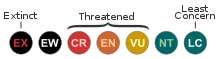
IUCN Red List
| Related Plants
|
| Latin Name | Common Name | Habit | Height | Hardiness | Growth | Soil | Shade | Moisture | Edible | Medicinal | Other |
| Abobra tenuifolia | Cranberry Gourd | Perennial Climber | 3.5 |
8-11
| | LM | N | DM | 1 | 0 | |
| Acanthosicyos horridus | Naras. Butterpips | Perennial | 1.0 |
9-11
| F | LM | N | DM | 3 | 2 | 2 |
| Apodanthera undulata | Loco Melon | Perennial Climber | 2.0 |
8-10
| M | LM | N | DM | 1 | 0 | 2 |
| Benincasa hispida | Wax Gourd | Annual | 6.0 |
9-11
| | LMH | N | M | 3 | 3 | 1 |
| Bryonia alba | White Bryony | Perennial Climber | 4.0 |
5-9
| F | LMH | SN | M | 1 | 2 | 0 |
| Bryonia dioica | Red Bryony, Cretan bryony | Perennial Climber | 3.5 |
5-9
| F | LMH | SN | M | 1 | 2 | |
| Citrullus colocynthis | Perennial egusi, Bitter-apple | Perennial | 3.0 |
10-12
| F | LM | N | DM | 3 | 2 | 3 |
| Citrullus lanatus | Water Melon | Annual | 0.5 |
8-11
| | LM | N | DM | 4 | 3 | 1 |
| Coccinia grandis | Ivy Gourd | Perennial | 3.0 |
8-11
| | LMH | N | M | 2 | 2 | 0 |
| Cucumis anguria | Gherkin, West Indian gherkin | Annual Climber | 2.4 |
9-11
| | LMH | N | M | 3 | 1 | 0 |
| Cucumis melo | Melon, Cantaloupe | Annual Climber | 1.5 |
9-11
| | LMH | N | M | 4 | 2 | 0 |
| Cucumis melo agrestis | Wild Melon | Annual Climber | 1.5 |
9-11
| | LMH | N | M | 3 | 2 | |
| Cucumis melo cantalupensis | Cantaloupe Melon | Annual Climber | 1.5 |
9-11
| | LMH | N | M | 4 | 2 | |
| Cucumis melo chito | Orange Melon | Annual Climber | 1.5 |
9-11
| | LMH | N | M | 3 | 2 | |
| Cucumis melo conomon | Pickling Melon | Annual Climber | 1.5 |
9-11
| | LMH | N | M | 4 | 2 | |
| Cucumis melo flexuosus | Serpent Melon | Annual Climber | 1.5 |
9-11
| | LMH | N | M | 4 | 2 | |
| Cucumis melo inodorus | Honeydew Melon | Annual Climber | 1.5 |
9-11
| | LMH | N | M | 4 | 2 | |
| Cucumis melo momordica | Snap Melon | Annual Climber | 1.5 |
9-11
| | LMH | N | M | 4 | 2 | |
| Cucumis metuliferus | Horned Cucumber, African horned cucumber | Annual Climber | 1.5 |
9-11
| | LMH | N | M | 2 | 2 | 1 |
| Cucumis sativus | Cucumber, Garden cucumber | Annual Climber | 2.0 |
9-11
| | LMH | N | M | 4 | 2 | 2 |
| Cucurbita argyrosperma | Cushaw Pumpkin | Annual Climber | 0.5 |
2-11
| | LMH | SN | M | 4 | 2 | 1 |
| Cucurbita digitata | Fingerleaf Gourd. Coyote Gourd | Perennial | 3.0 |
8-12
| M | LMH | N | DM | 3 | 2 | 3 |
| Cucurbita ficifolia | Malabar Gourd, Figleaf gourd | Perennial Climber | 0.0 |
9-11
| F | LMH | SN | MWe | 3 | 2 | 1 |
| Cucurbita maxima | Winter Squash | Annual Climber | 0.6 |
2-11
| F | LMH | SN | M | 5 | 3 | 2 |
| Cucurbita moschata | Squash, Crookneck squash | Annual Climber | 0.6 |
2-11
| F | LMH | SN | M | 5 | 3 | 1 |
| Cucurbita palmata | Coyote Gourd. | Perennial Climber | 3.0 |
8-11
| M | LM | N | DM | 3 | 2 | 3 |
| Cucurbita pepo | Pumpkin, Field pumpkin, Ozark melon, Texas gourd | Annual Climber | 0.6 |
2-11
| F | LMH | SN | M | 4 | 3 | 2 |
| Cyclanthera brachystachya | Cuchinito | Annual | 3.0 |
9-11
| | LMH | S | M | 1 | 0 | |
| Cyclanthera pedata | Achocha, Caihua, Caygua, Cayua, Korila, Wild Cucumber | Annual | 4.5 |
9-11
| F | LMH | SN | M | 3 | 4 | 1 |
|
|
Growth: S = slow M = medium F = fast. Soil: L = light (sandy) M = medium H = heavy (clay). pH: A = acid N = neutral B = basic (alkaline). Shade: F = full shade S = semi-shade N = no shade. Moisture: D = dry M = Moist We = wet Wa = water.
Now available:
Food Forest Plants for Mediterranean Conditions
350+ Perennial Plants For Mediterranean and Drier Food Forests and Permaculture Gardens.
[Paperback and eBook]
This is the third in Plants For A Future's series of plant guides for food forests tailored to
specific climate zones. Following volumes on temperate and tropical ecosystems, this book focuses
on species suited to Mediterranean conditions—regions with hot, dry summers and cool, wet winters,
often facing the added challenge of climate change.
Read More
Expert comment
Author
Kunth.
Botanical References
43200274
Links / References
For a list of references used on this page please go here
Readers comment
© 2010, Plants For A Future. Plants For A Future is a charitable company limited by guarantee, registered in England and Wales. Charity No. 1057719, Company No. 3204567.