Translate this page:
Summary
Cistus creticus,
Rock Rose leaves make a tea substitute, rich in polyphenols and antioxidants, providing a mild, aromatic flavour. The oleoresin extracted from the leaves and stems is used as a commercial food flavouring in products such as baked goods, ice cream, and chewing gum. This resin, known as ladanum, has been used historically for its fragrant and aromatic properties. Egyptians, Greeks, and Romans have used Ladanum since ancient times in religious ceremonies, perfumery, and mummification.
Rock Rose is an aromatic, expectorant, and stimulant herb known to control bleeding and has antibiotic properties. The resin from the leaves, ladanum, is used medicinally and is valued in soaps, perfumery, and fumigation. Historically, ladanum was collected from the beards of goats and sheep that grazed on the plant, as the resin would stick to their fur.
Rock Rose flowers attract pollinators, particularly bees, providing an important nectar source. After fires, Rock Rose can resprout and help stabilise soils, contributing to the ecological recovery process.
Rock Rose thrives in sunny positions with well-drained, light, sandy soils. Once established, the plant is highly drought-tolerant. It can withstand maritime exposure and is hardy to about -15°C but may require protection in severe winters. Interestingly, it grows better in poorer soils, likely due to its adaptation to rugged environments. Though short-lived, it often self-sows in favourable conditions.
Rock Rose is native to Central and Eastern Mediterranean regions, including Albania, Bulgaria, Cyprus, the East Aegean Islands, Greece, Italy, Kriti (Crete), Lebanon-Syria, Morocco, Palestine, Sardinia, Sicily, Turkey, and parts of the Balkan Peninsula.
Harvesting: Leaves all year.
Physical Characteristics

 Cistus creticus is an evergreen Shrub growing to 1 m (3ft 3in) by 1 m (3ft 3in) at a medium rate.
See above for USDA hardiness. It is hardy to UK zone 8. It is in leaf all year, in flower in June, and the seeds ripen in August. The species is hermaphrodite (has both male and female organs) and is pollinated by Bees. The plant is self-fertile.
It is noted for attracting wildlife.
Suitable for: light (sandy) and medium (loamy) soils, prefers well-drained soil and can grow in nutritionally poor soil. Suitable pH: mildly acid, neutral and basic (mildly alkaline) soils. It cannot grow in the shade. It prefers dry or moist soil and can tolerate drought. The plant can tolerate maritime exposure.
UK Hardiness Map
US Hardiness Map
Synonyms
C. creticus. C. polymorphus. C. villosus creticus.
Plant Habitats
Woodland Garden Sunny Edge; Cultivated Beds;
Edible Uses
Edible Parts:
Edible Uses: Condiment Tea
The leaves are used as a tea substitute[2, 89]. The oleo-resin obtained from the leaves and stems is used as a commercial food flavouring in baked goods, ice cream, chewing gum etc[183, 238].
References More on Edible Uses
Medicinal Uses
Plants For A Future can not take any responsibility for any adverse effects from the use of plants. Always seek advice from a professional before using a plant medicinally.
Emmenagogue Expectorant Stimulant
This plant is an aromatic, expectorant, stimulant herb that controls bleeding and has antibiotic effects[4, 238]. It is used internally in the treatment of catarrh and diarrhoea[4, 238] and as an emmenagogue[4]. The leaves are harvested in late spring and early summer and can be dried for later use, or the resin extracted from them[238].
References More on Medicinal Uses
The Bookshop: Edible Plant Books
Our Latest books on Perennial Plants For Food Forests and Permaculture Gardens in paperback or digital formats.
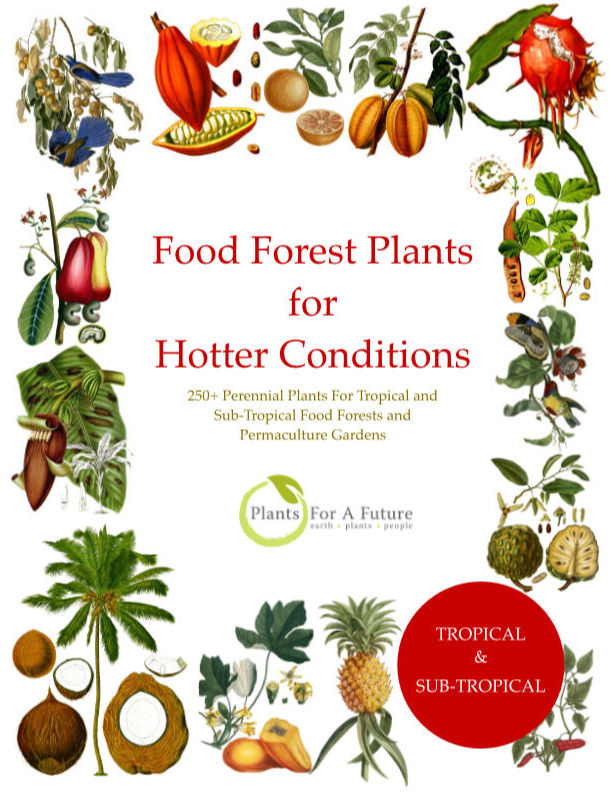
Edible Tropical Plants
Food Forest Plants for Hotter Conditions: 250+ Plants For Tropical Food Forests & Permaculture Gardens.
More
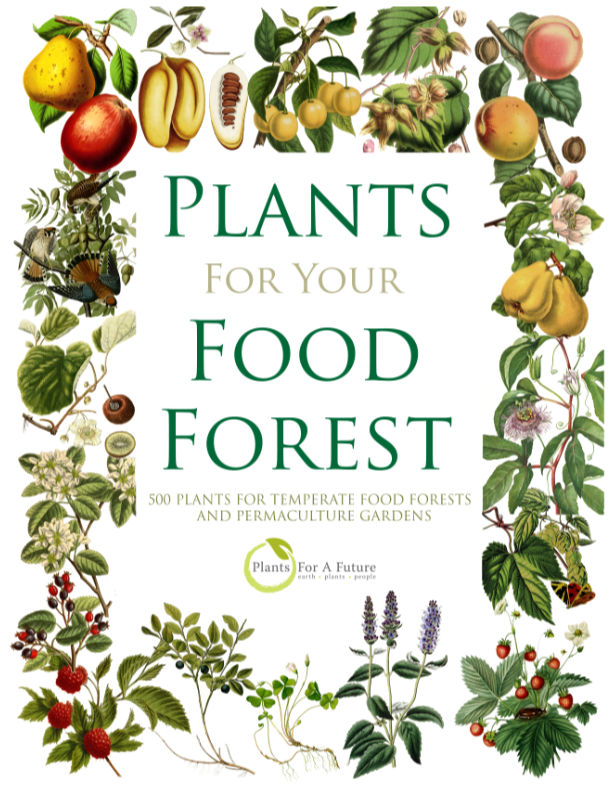
Edible Temperate Plants
Plants for Your Food Forest: 500 Plants for Temperate Food Forests & Permaculture Gardens.
More
More Books
PFAF have eight books available in paperback and digital formats. Browse the shop for more information.
Shop Now
Other Uses
Resin
Agroforestry uses:
Rock Rose is used for erosion control, particularly in poor soils. It also provides ground cover and habitat for wildlife. Additionally, its aromatic leaves are valuable for essential oil production.
The glandular hairs on the leaves yield the oleo-resin 'ladanum', used medicinally and in soaps, perfumery, fumigation etc[4, 11, 46, 61, 64, 89, 100]. This resin is an acceptable substitute for ambergris (which is obtained from the sperm whale), and so is essential in perfume manufacture[238]. The resin is collected by dragging a type of rake through the plant, the resin adhering to the teeth of the rake, or by boiling the twigs and skimming off the resin[64, 89]. Most resin is produced at the hottest time of the year[46]. A mauve-flowered variety of this species is the most prolific producer of the resin[245]. 1. Nectary - Flowers rich in nectar and pollen:
Yes – Cistus creticus produces flowers rich in nectar and attract pollinators, particularly bees and butterflies.
2. Wildlife - Food (Fruit, Seeds, Leaf litter, Shelter, Nesting, Roosting):
Yes – While the seeds may not be a primary food source, the dense growth of Cistus creticus offers good shelter for small animals and birds. The thick foliage can also provide nesting and roosting sites for wildlife.
3. Invertebrate Shelter (Overwintering sites, Leaf litter, Groundcover):
Yes – The leaf litter and ground cover from Cistus creticus can offer shelter for beneficial invertebrates, particularly during overwintering.
4. Pest Confuser (Smell):
Yes – Cistus creticus has a strong, resinous aroma that may help confuse or deter some pests.
Special Uses
Attracts Wildlife Scented Plants
References More on Other Uses
Cultivation details
Requires a sunny position in a dry or moist well-drained light sandy soil[11, 182]. Withstands drought once it is established[11, 184]. Tolerates maritime exposure[188, K]. Plants are hardy to about -15°c[184], but they require protection in severe winters[11]. Plants are somewhat hardier when grown in poor soils[182]. This is usually a short-lived plant in cultivation, it probably exhausts itself by its very free-flowering habit[K]. Plants often self-sow when growing in a suitable position[166]. Dislikes pruning or root disturbance[11, 200]. Plants should be pot-grown and then planted out in their final positions whilst still small. Individual flowers only last one day but there is a long succession of them[11, 200]. A polymorphic species, some forms do not yield much gum[11]. Hybridizes freely with other members of this genus. This species is notably resistant to honey fungus[88, 200]. The flowers are very attractive to bees[108]. The leaves exuding a balsamic resin are especially fragrant on warm sunny days[245]. Cistus creticus is a moderately fast-growing plant, reaching about 3 to 4 feet (0.9 to 1.2 meters) in height within a few years under optimal conditions. Seeds can be harvested in late summer to early autumn, typically from August to September.
Cistus creticus usually flowers from late spring to early summer.
References Carbon Farming Information and Carbon Sequestration Information
Temperature Converter
Type a value in the Celsius field to convert the value to Fahrenheit:
Fahrenheit:
The PFAF Bookshop
Plants For A Future have a number of books available in paperback and digital form. Book titles include Edible Plants, Edible Perennials, Edible Trees,Edible Shrubs, Woodland Gardening, and Temperate Food Forest Plants. Our new book is Food Forest Plants For Hotter Conditions (Tropical and Sub-Tropical).
Shop Now
Plant Propagation
Seed - gather when ripe and store dry[78]. Surface sow in late winter in a greenhouse[164]. The seed usually germinates in 1 - 4 weeks at 20°c[164]. Prick out the seedlings as soon as they are large enough to handle into individual pots. Grow them on in the greenhouse for their first winter and plant them out the in the following spring or early summer, after the last expected frosts[164]. The seed stores for at least 3 years[K]. Cuttings of softish to half-ripe wood, 8cm long with a heel or at a node, June/August in a frame. Roots are formed within 3 weeks[78]. High percentage[78]. Cuttings of almost mature wood, 8 - 12cm with a heel or at a node, September/October in a frame. High percentage[78]. Lift and pot up in the spring, plant out when a good root system has formed[78]. Layering in spring.
Other Names
If available other names are mentioned here
Native Range
TEMPERATE ASIA: Cyprus, Israel, Jordan, Lebanon, Syria, Turkey, Georgia EUROPE: Ukraine (Krym), Former Yugoslavia, Albania, Bulgaria, Greece (incl. Crete), Italy (incl. Sardinia, Sicily), Spain (Baleares), France (Corse), Portugal AFRICA: Algeria (north), Libya (north), Morocco, Tunisia
Weed Potential
Right plant wrong place. We are currently updating this section.
Please note that a plant may be invasive in one area but may not in your area so it's worth checking.
Conservation Status
IUCN Red List of Threatened Plants Status :

Growth: S = slow M = medium F = fast. Soil: L = light (sandy) M = medium H = heavy (clay). pH: A = acid N = neutral B = basic (alkaline). Shade: F = full shade S = semi-shade N = no shade. Moisture: D = dry M = Moist We = wet Wa = water.
Now available:
Food Forest Plants for Mediterranean Conditions
350+ Perennial Plants For Mediterranean and Drier Food Forests and Permaculture Gardens.
[Paperback and eBook]
This is the third in Plants For A Future's series of plant guides for food forests tailored to
specific climate zones. Following volumes on temperate and tropical ecosystems, this book focuses
on species suited to Mediterranean conditions—regions with hot, dry summers and cool, wet winters,
often facing the added challenge of climate change.
Read More
Expert comment
Author
L.
Botanical References
1189200
Links / References
For a list of references used on this page please go here
Readers comment
© 2010, Plants For A Future. Plants For A Future is a charitable company limited by guarantee, registered in England and Wales. Charity No. 1057719, Company No. 3204567.