Translate this page:
Summary
Ceratonia siliqua,
Carob is an evergreen tree native to Africa, temperate Asia, and Europe. The tree produces edible fruit, the carob pod, a dark brown, elongated pod filled with sweet pulp and seeds. The pulp can be ground into a powder often used as a substitute for chocolate, as it has a similar taste and texture but is lower in fat and caffeine-free. The pods contain about 55% sugar, 10% protein, and 6% fat. The seed is rich in protein. Carob powder can be used in baking, as a flavour for desserts and drinks, and as a nutritional supplement. It is a good source of fibre, calcium, and potassium and is often used as a natural sweetener in health food products.
Carob tolerates salt-laden air and does well in calcareous, gravelly, or rocky soils. The tree is very drought-resistant, thriving even under arid conditions, with roots that penetrate deep into the ground to find moisture. Carob is typically dioecious, so male and female plants must be grown if seed is required. Two self-pollinating hermaphrodite varieties are available: 'Clifford', which produces a large crop, and 'Santa Fe'. Both have excellent flavour.
The native range of this species is Medit. to Iran. including Albania, Algeria, Cyprus, East Aegean Islands, France, Greece, Iran, Italy, Kriti, Lebanon-Syria, Libya, Morocco, Palestine, Sardegna, Sicilia, Sinai, Spain, Tunisia, and Turkey. It was introduced into many areas, including Baleares, California, Canary Islands, Cape Verde, Corse, Ethiopia, Kenya, Madeira, Mexico Southwest, Mozambique, Namibia, New South Wales in Australia, Portugal, South Australia, Sudan, Tanzania, Yemen, Zambia, Zimbabwe.
Harvesting: Late summer to early autumn. The pods take a full year to develop and ripen. Pods turn dark brown and can be pulled easily from the tree.
Bloom Color: Green. Form: Rounded, Vase.
Physical Characteristics

 Ceratonia siliqua is an evergreen Tree growing to 15 m (49ft 3in) at a medium rate.
See above for USDA hardiness. It is hardy to UK zone 8 and is frost tender. It is in leaf all year, in flower from August to October. The species is dioecious (individual flowers are either male or female, but only one sex is to be found on any one plant so both male and female plants must be grown if seed is required). and is pollinated by wasps and flies. The plant is self-fertile.
It can fix Nitrogen.
It is noted for attracting wildlife.
Suitable for: light (sandy) and medium (loamy) soils, prefers well-drained soil and can grow in nutritionally poor soil. Suitable pH: mildly acid, neutral and basic (mildly alkaline) soils and can grow in very alkaline soils.
It cannot grow in the shade. It prefers dry or moist soil and can tolerate drought. The plant can tolerates strong winds but not maritime exposure.
UK Hardiness Map
US Hardiness Map
Synonyms
Plant Habitats
Woodland Garden Canopy; Secondary; South Wall. By. West Wall. By.
Edible Uses
Edible Parts: Seed Seedpod
Edible Uses: Chocolate Coffee Egg Gum
Seedpods - raw or ground into a powder[1, 7, 74, 89, 177]. The seedpods are filled with a saccharine pulp and can be eaten both green or dried[2]. They are very sweet but fibrous[183], the pulp can be used as a chocolate substitute in cakes, drinks etc[183]. It is rich in sugars and protein[183]. The pods contain about 55% sugars, 10% protein[100] and 6% fat[74]. Seed - rich in protein. A flour is made from them which is 60% protein, it is free from sugar and starch and is suitable for baking[64, 171]. It can be used as a chocolate substitute[148]. An edible gum is extracted from the seed, a substitute for Gum Tragacanth (see Astragalus species)[64]. A stabilizer and thickening agent[142, 183], it is also used as an egg substitute[61, 64, 142]. The roasted seed is a coffee substitute[61, 105, 183].
References More on Edible Uses
Medicinal Uses
Plants For A Future can not take any responsibility for any adverse effects from the use of plants. Always seek advice from a professional before using a plant medicinally.
Antidiarrhoeal Antiemetic Astringent Demulcent Emollient Purgative
The pulp in the seedpods of carob is very nutritious and, due to its high sugar content, sweet-tasting and mildly laxative[254]. However, the pulp in the pods is also astringent and, used in a decoction, will treat diarrhoea and gently help to cleanse and also relieve irritation within the gut[240, 254]. Whilst these appear to be contradictory effects, carob is an example of how the body responds to herbal medicines in different ways, according to how the herb is prepared and according to the specific medical problem[254]. The seedpods are also used in the treatment of coughs[240]. A flour made from the ripe seedpods is demulcent and emollient[7]. It is used in the treatment of diarrhoea[7]. The seed husks are astringent and purgative[240]. The bark is strongly astringent[254]. A decoction is used in the treatment of diarrhoea[254].
References More on Medicinal Uses
The Bookshop: Edible Plant Books
Our Latest books on Perennial Plants For Food Forests and Permaculture Gardens in paperback or digital formats.
Edible Tropical Plants
Food Forest Plants for Hotter Conditions: 250+ Plants For Tropical Food Forests & Permaculture Gardens.
More
Edible Temperate Plants
Plants for Your Food Forest: 500 Plants for Temperate Food Forests & Permaculture Gardens.
More
More Books
PFAF have eight books available in paperback and digital formats. Browse the shop for more information.
Shop Now
Other Uses
Cosmetic Fodder Gum Tannin Wood
Agroforestry uses:
Carob is used as a shade tree and for erosion control. Its pods can be used as animal feed, and it can also improve soil fertility.
A flour made from the seedpods is used in the cosmetic industry to make face-packs[7]. Tannin is obtained from the bark[7]. Wood - hard, lustrous. Highly valued by turners, it is also used for marquetry and walking sticks[7, 61, 89, 100]. 1. Nectary - Flowers rich in nectar and pollen:
Yes – Carob trees produce nectar-rich flowers that attract pollinators, including bees.
2. Wildlife - Food (Fruit, Seeds, Leaf litter, Shelter, Nesting, Roosting):
Yes – The pods (carobs) provide food for wildlife, particularly mammals and some birds. The tree’s dense foliage offers shelter and nesting opportunities for birds and small animals. Leaf litter can also contribute to habitat for insects and other beneficial organisms.
3. Invertebrate Shelter (Overwintering sites, Leaf litter, Groundcover):
Yes – The rough bark and the accumulation of leaf litter beneath the tree can offer overwintering and shelter sites for invertebrates.
4. Pest Confuser (Smell):
No – Carob trees do not produce strong aromatic compounds that would typically act as pest confusers.
Special Uses
Carbon Farming Nitrogen Fixer
References More on Other Uses
Cultivation details
Agroforestry Services: Windbreak Fodder: Pod Industrial Crop: Gum Management: Standard Minor Global Crop Other Systems: Irreg. Intercrop Staple Crop: Balanced carb Staple Crop: Sugar
Landscape Uses: Aggressive surface roots possible. Requires a very sunny position in any well-drained moderately fertile soil[200]. Does well in calcareous, gravelly or rocky soils[132, 166]. Tolerates salt laden air[132]. Tolerates a pH in the range 6.2 to 8.6. The tree is very drought resistant, thriving even under arid conditions, the roots penetrating deep into the soil to find moisture[4, 64, 132, 200]. This species is not very hardy in Britain but it succeeds outdoors in favoured areas of S. Cornwall[1], tolerating temperatures down to about -5°c when in a suitable position[200]. The young growth in spring, even on mature plants, is frost-tender and so it is best to grow the plants in a position sheltered from the early morning sun[K]. The carob is frequently cultivated in warm temperate zones for its edible seed and seed pods[1]. Mature trees in a suitable environment can yield up to 400 kilos of seedpods annually[64]. There are named varieties with thicker pods[64, 183]. Seeds are unlikely to be produced in Britain since the tree is so near (if not beyond) the limits of its cultivation[K]. The seed is very uniform in size and weight, it was the original 'carat' weight of jewellers[1, 89]. This species has a symbiotic relationship with certain soil bacteria, these bacteria form nodules on the roots and fix atmospheric nitrogen. Some of this nitrogen is utilized by the growing plant but some can also be used by other plants growing nearby[200]. Special Features:Edible, Not North American native, Inconspicuous flowers or blooms. Pods are typically harvested in Autumn.
It flowers in Spring. Carob grows at a moderate pace, reaching maturity in about 5-6 years.
Carbon Farming
-
Agroforestry Services: Windbreak
Linear plantings of trees and shrubs designed to enhance crop production, protect people and livestock and benefit soil and water conservation.
-
Fodder: Pod
Fodder plants with pods.
-
Industrial Crop: Gum
Used as thickeners and gelling agents. Non-destructively harvested gums come from tapped trees and seed.
-
Management: Standard
Plants grow to their standard height. Harvest fruit, seeds, or other products. Non-Destructive management systems.
-
Minor Global Crop
These crops are already grown or traded around the world, but on a smaller scale than the global perennial staple and industrial crops, The annual value of a minor global crop is under $1 billion US. Examples include shea, carob, Brazil nuts and fibers such as ramie and sisal.
-
Other Systems: Irreg. Intercrop
Irregular intercropping systems are trees scattered throughout cropland.
-
Staple Crop: Balanced carb
(0-15 percent protein, 0-15 percent oil, with at least one over 5 percent). The carbohydrates are from either starch or sugar. Annuals include maize, wheat, rice, and potato. Perennials include chestnuts, carob, perennial fruits, nuts, cereals, pseudocereals, woody pods, and acorns.
-
Staple Crop: Sugar
Perennial sugar crops include sugarcane and compare favorably to annuals.
References Carbon Farming Information and Carbon Sequestration Information
Temperature Converter
Type a value in the Celsius field to convert the value to Fahrenheit:
Fahrenheit:
The PFAF Bookshop
Plants For A Future have a number of books available in paperback and digital form. Book titles include Edible Plants, Edible Perennials, Edible Trees,Edible Shrubs, Woodland Gardening, and Temperate Food Forest Plants. Our new book is Food Forest Plants For Hotter Conditions (Tropical and Sub-Tropical).
Shop Now
Plant Propagation
Seed - pre-soak for 24 hours in warm water prior to sowing. If the seed has not swollen then give it another soaking in warm water until it does swell up. Sow in a greenhouse in April[200]. Germination should take place within 2 months. As soon as they are large enough to handle, prick the seedlings out into individual deep pots and grow them on in a greenhouse for at least their first winter. Plant them out into their permanent positions in late spring or early summer, after the last expected frosts. Give them some protection from the cold for their first few winters outdoors.
Other Names
If available other names are mentioned here
Native Range
TEMPERATE ASIA: Israel, Lebanon, Syria (west), Turkey,Cyprus. EUROPE: Former Yugoslavia, Albania, Greece (incl. Crete), Italy (incl. Sardinia, Sicily), Spain (incl. Baleares), France (incl. Corsica), AFRICA: Spain, Canarias, Algeria (north), Libya (northeast), Morocco, Tunisia.
Weed Potential
Right plant wrong place. We are currently updating this section.
Please note that a plant may be invasive in one area but may not in your area so it's worth checking.
Conservation Status
IUCN Red List of Threatened Plants Status :
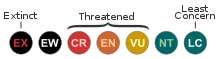
Growth: S = slow M = medium F = fast. Soil: L = light (sandy) M = medium H = heavy (clay). pH: A = acid N = neutral B = basic (alkaline). Shade: F = full shade S = semi-shade N = no shade. Moisture: D = dry M = Moist We = wet Wa = water.
Now available:
Food Forest Plants for Mediterranean Conditions
350+ Perennial Plants For Mediterranean and Drier Food Forests and Permaculture Gardens.
[Paperback and eBook]
This is the third in Plants For A Future's series of plant guides for food forests tailored to
specific climate zones. Following volumes on temperate and tropical ecosystems, this book focuses
on species suited to Mediterranean conditions—regions with hot, dry summers and cool, wet winters,
often facing the added challenge of climate change.
Read More
Expert comment
Author
L.
Botanical References
89200
Links / References
For a list of references used on this page please go here
Readers comment