 |
|
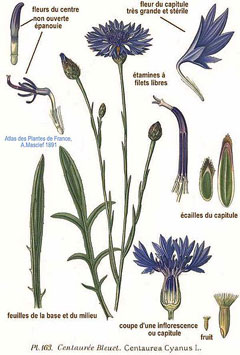
http://commons.wikimedia.org/wiki/File:163_Centaurea_cyanus_L.jpg |
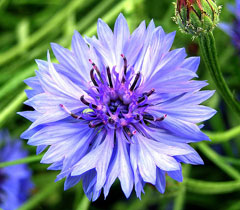 |
| http://commons.wikimedia.org/wiki/File:Centaurea_cyanus_oiekroon.JPG |
Translate this page:
Summary
Bloom Color: Blue, Lavender, Pink, Purple, White.
Main Bloom Time: Early summer, Early fall, Late summer, Mid summer. Form: Upright or erect.
Physical Characteristics

 Centaurea cyanus is a ANNUAL growing to 1 m (3ft 3in) by 0.3 m (1ft) at a fast rate.
It is not frost tender. It is in flower from June to August, and the seeds ripen from August to October. The species is hermaphrodite (has both male and female organs) and is pollinated by Bees, flies, Lepidoptera (Moths & Butterflies). The plant is self-fertile.
It is noted for attracting wildlife.
Suitable for: light (sandy), medium (loamy) and heavy (clay) soils, prefers well-drained soil and can grow in nutritionally poor soil. Suitable pH: mildly acid, neutral and basic (mildly alkaline) soils and can grow in very alkaline soils.
It cannot grow in the shade. It prefers dry or moist soil and can tolerate drought.
UK Hardiness Map
US Hardiness Map
Synonyms
Plant Habitats
Cultivated Beds;
Edible Uses
Edible Parts: Flowers Shoots
Edible Uses: Colouring
The young shoots are edible[7]. Flowers - raw or cooked. The fresh florets can be used in salads[238]. They are used as a vegetable or a garnish[183]. An edible blue dye is obtained from the flowers, used for colouring sugar and confections[183].
References More on Edible Uses
Medicinal Uses
Plants For A Future can not take any responsibility for any adverse effects from the use of plants. Always seek advice from a professional before using a plant medicinally.
Antifungal Antipruritic Antirheumatic Antitussive Astringent Diuretic Emmenagogue Laxative
Ophthalmic Purgative Tonic
Cornflower has a long history of herbal use, though it is seldom employed nowadays. In France it is still used as a remedy for tired eyes, but opinions differ as to its efficacy[254, 268]. Traditionally it is said to work best on blue eyes, whilst Plantago major (great plantain) was used for brown eyes[268]. The dried flowers are antipruritic, antitussive, astringent, weakly diuretic, emmenagogue, ophthalmic, very mildly purgative, and tonic[4, 7, 9, 21, 201, 240]. An infusion can be used in the treatment of dropsy, constipation, or as a mouthwash for ulcers and bleeding gums[9, 238]. This infusion is also taken as a bitter tonic and stimulant, improving the digestion and possibly supporting the liver as well as improving resistance to infections[254]. A water distilled from the petals was formerly in repute as a remedy for weak eyes[4] and a soothing lotion for conjunctivitis[7, 240]. The seeds are used as a mild laxative for children[7, 254]. A decoction of the leaves is antirheumatic[7, 254]. Antifungal [303].
References More on Medicinal Uses
The Bookshop: Edible Plant Books
Our Latest books on Perennial Plants For Food Forests and Permaculture Gardens in paperback or digital formats.
Edible Tropical Plants
Food Forest Plants for Hotter Conditions: 250+ Plants For Tropical Food Forests & Permaculture Gardens.
More
Edible Temperate Plants
Plants for Your Food Forest: 500 Plants for Temperate Food Forests & Permaculture Gardens.
More
More Books
PFAF have eight books available in paperback and digital formats. Browse the shop for more information.
Shop Now
Other Uses
Dye Hair Ink Pot-pourri
A blue ink and a dye is obtained from the petals mixed with alum-water[4, 100, 115, 201]. The dye gives a lovely colour to linen, but it is transient[4]. The dried petals are used in pot-pourri in order to add colour[4, 268]. Extracts of the plant are added to hair shampoos and rinses[238]. Grown as an ornamental plant in gardens and as a cutflower in Canada for florists.
Special Uses
Attracts Wildlife
References More on Other Uses
Cultivation details
Landscape Uses:Border, Container, Foundation, Massing, Seashore, Specimen. Succeeds in ordinary garden soil[1, 200]. Prefers a well-drained fertile soil and a sunny position[200]. Tolerates dry, low fertility and alkaline soils[200]. Established plants are drought tolerant[201]. A very ornamental plant[1], there are many named varieties[188]. The flowers are often used in dried-flower arrangements because they retain their colour well[7]. A good plant for bees, butterflies and moths[20, 30, 108]. The cornflower is considered to be a good companion, in small quantities, for cereal crops[18, 20], though another report says that its greedy roots deprive the cultivated plants of nutrients and its tough stem dulls the reaper's sickle[4]. Members of this genus are rarely if ever troubled by browsing deer[233]. Special Features:
Not North American native, Invasive, Naturalizing, Suitable for cut flowers, Suitable for dried flowers.
References Carbon Farming Information and Carbon Sequestration Information
Temperature Converter
Type a value in the Celsius field to convert the value to Fahrenheit:
Fahrenheit:
The PFAF Bookshop
Plants For A Future have a number of books available in paperback and digital form. Book titles include Edible Plants, Edible Perennials, Edible Trees,Edible Shrubs, Woodland Gardening, and Temperate Food Forest Plants. Our new book is Food Forest Plants For Hotter Conditions (Tropical and Sub-Tropical).
Shop Now
Plant Propagation
Seed - sow March in the greenhouse. When they are large enough to handle, prick the seedlings out into individual pots and plant them out in May. The seed can also be sown in situ during April, whilst in areas where the winters are not too cold a sowing in situ during September will produce larger and earlier-flowering plants
Other Names
If available other names are mentioned here
Bachelor's button,
cornflower,
garden cornflower, boutonniere flower, hurtsickle, Bluebottle, or cyani flower,.
Native Range
TEMPERATE ASIA: Iraq (north), Turkey, Russian Federation-Ciscaucasia (Ciscaucasia), Armenia, Azerbaijan, Georgia EUROPE: Finland, Belgium, Czech Republic, Germany, Hungary, Belarus, Estonia, Lithuania, Latvia, Moldova, Albania, Bulgaria, Bosnia and Herzegovina, Greece, Croatia, Italy (incl. Sardinia, Sicily), North Macedonia, Montenegro, Serbia, Slovenia, Spain (incl. Baleares), France, Portugal
Weed Potential
Right plant wrong place. We are currently updating this section.
Please note that a plant may be invasive in one area but may not in your area so it's worth checking.
This plant can be weedy or invasive.
Conservation Status
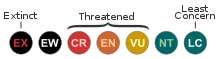
IUCN Red List of Threatened Plants Status : This taxon has not yet been assessed. Possibly endangered in its native habitat by agricultural intensification, particularly over-use of herbicides, destroying its habitat.
Growth: S = slow M = medium F = fast. Soil: L = light (sandy) M = medium H = heavy (clay). pH: A = acid N = neutral B = basic (alkaline). Shade: F = full shade S = semi-shade N = no shade. Moisture: D = dry M = Moist We = wet Wa = water.
Now available:
Food Forest Plants for Mediterranean Conditions
350+ Perennial Plants For Mediterranean and Drier Food Forests and Permaculture Gardens.
[Paperback and eBook]
This is the third in Plants For A Future's series of plant guides for food forests tailored to
specific climate zones. Following volumes on temperate and tropical ecosystems, this book focuses
on species suited to Mediterranean conditions—regions with hot, dry summers and cool, wet winters,
often facing the added challenge of climate change.
Read More
Expert comment
Author
L.
Botanical References
17200
Links / References
For a list of references used on this page please go here
Readers comment
| Add a comment |
|
If you have important information about this plant that may help other users please add a comment or link below. Only comments or links that are felt to be directly relevant to a plant will be included. If you think a comment/link or information contained on this page is inaccurate or misleading we would welcome your feedback at [email protected]. If you have questions about a plant please use the Forum on this website as we do not have the resources to answer questions ourselves.
* Please note: the comments by website users are not necessarily those held by PFAF and may give misleading or inaccurate information.
|
Subject : Centaurea cyanus
|
|
|
|