Translate this page:
Summary
Carya species,
Pecans and hickory trees grow in many climates including Mediterranean ones, particularly in areas with enough chill hours and access to irrigation. Pecans are more likely to succeed in Mediterranean regions, especially in areas with hot summers and adequate water. Hickory trees struggle with the mild winters of the Mediterranean unless grown in higher elevations or cooler parts of the region. In both cases, sufficient irrigation during the dry summer months is crucial for successful cultivation.
Due to their adaptability and hardiness, Carya species are highly recommended for long-term, low-maintenance nut production. Grafted trees can yield a valuable nut crop within 3 – 4 years of planting and grow to a height of 12m (40ft). Several species have excellent edible nuts, rich in oils and B vitamins, and are native to North America. They have a lovely autumn colour. Most species in this genus have a wide distribution range, and seeds from the most appropriate provenances should be sought to find trees more suited to your growing conditions. Pecan (C. illinoinensis) is a fast-growing, large tree with sweet and delicious nuts. Eat the nuts raw or cooked; they make an excellent dessert, are added to ice cream, and are used in cakes and bread. Milk is made from nuts and thickens soups, season corn cakes, and hominy. Harvest in late autumn; eat immediately or store in a cool place in the shell for up to six months. Nut oil is edible and a staple crop. They cast a heavy shade in leaf, but because they are late coming into leaf (usually late spring) and lose their leaves early in the autumn, they are eminently suitable for mixed woodland planting with shrubs and other trees beneath them. Hickories are smaller trees with tinier nuts and prefer more humid conditions. Shellbark Hickory (C. laciniosa) and Shagbark Hickory (C. ovata) both have excellent nuts and grow to about 30m (100ft). Mockernut (C. tomentosa), another US native, is found mainly along ridges, dry hills and hillsides. Use the nuts in a similar way to pecans. Several North American hybrids produce delicious nuts, especially the Hicans, hybrids between C. illinoinensis and other Carya species.
Hicans have large and tasty nuts but are less productive than pecans. Pecan trees are monoecious, having separate male and female flowers on the same tree. Pollen is not released when flowers are receptive. Planting at least three cultivars with one of each pollination type (I or II) is recommended for optimum cross-pollination. Type I cultivars include ‘Cape Fear’ (excellent quality nut), ‘Pawnee’ (popular in coastal areas) and ‘Chevenne’. Type II cultivars include ‘Apache’ (vigorous nut production), ‘Chickasaw’ (high drought tolerance once established), ‘Elliot’, ‘Forkert’, ‘Gloria Grande’, ‘Kiowa’, ‘Stuart’, ‘Shoshoni’, ‘Sumner’, ‘Tejas’ (outstanding all-round early/mid-variety and a good pollinator for all varieties. Ideally suited to smaller gardens).
Bloom Color: Yellow.
Main Bloom Time: Early spring, Late spring, Mid spring. Form: Oval, Rounded. Note. Sometimes misspelt as: Carya illinoiensis
Physical Characteristics

 Carya illinoinensis is a deciduous Tree growing to 50 m (164ft 1in) at a medium rate.
See above for USDA hardiness. It is hardy to UK zone 5. It is in leaf from June to October, in flower from April to May, and the seeds ripen in October. The species is monoecious (individual flowers are either male or female, but both sexes can be found on the same plant) and is pollinated by Wind. The plant is self-fertile.
It is noted for attracting wildlife.
Suitable for: light (sandy), medium (loamy) and heavy (clay) soils. Suitable pH: mildly acid, neutral and basic (mildly alkaline) soils and can grow in very acid and very alkaline soils.
It cannot grow in the shade. It prefers moist soil.
UK Hardiness Map
US Hardiness Map
Synonyms
C. pecan. Juglans illinoensis.
Plant Habitats
Woodland Garden Canopy;
Edible Uses
Edible Parts: Leaves Oil Seed
Edible Uses: Milk Oil Tea
Seed - raw or cooked[46, 82]. Sweet and delicious, they make an excellent dessert and are also often added to ice cream, used in cakes, bread etc[149, 183]. A milk can be made from the seed and is used to thicken soups, season corn cakes, hominy etc[183]. The seed is up to 4cm long and is produced in clusters of 3 -11[82, 229]. The seed ripens in late autumn and, when stored in its shell in a cool place, will keep for at least 6 months[K]. An edible oil is obtained from the seed[177, 183]. The leaves are said to be used as a tea[177, 183]. Carbon farming - Staple Crop: oil.
References More on Edible Uses
Medicinal Uses
Plants For A Future can not take any responsibility for any adverse effects from the use of plants. Always seek advice from a professional before using a plant medicinally.
Astringent Parasiticide TB
The bark and leaves are astringent[227]. A decoction of the bark has been used to treat TB[257]. The pulverized leaves have been rubbed on the skin to treat ringworm[257].
References More on Medicinal Uses
The Bookshop: Edible Plant Books
Our Latest books on Perennial Plants For Food Forests and Permaculture Gardens in paperback or digital formats.
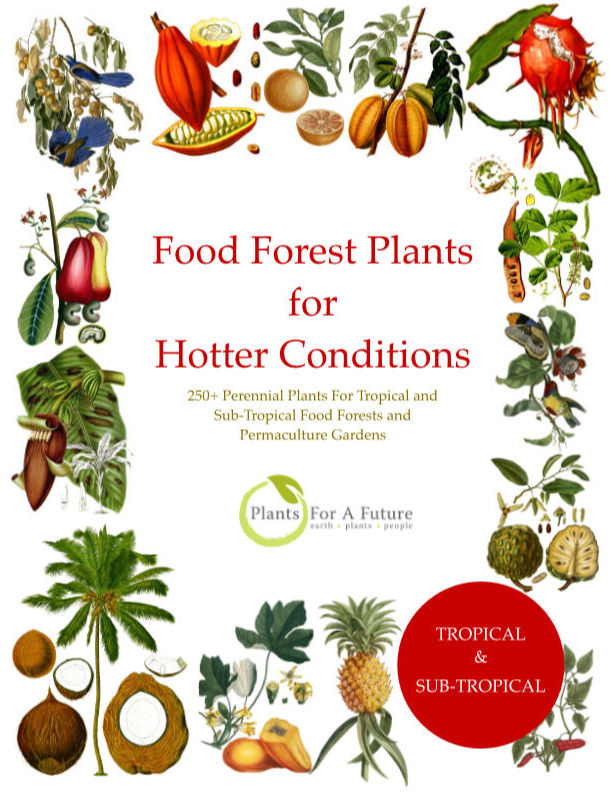
Edible Tropical Plants
Food Forest Plants for Hotter Conditions: 250+ Plants For Tropical Food Forests & Permaculture Gardens.
More
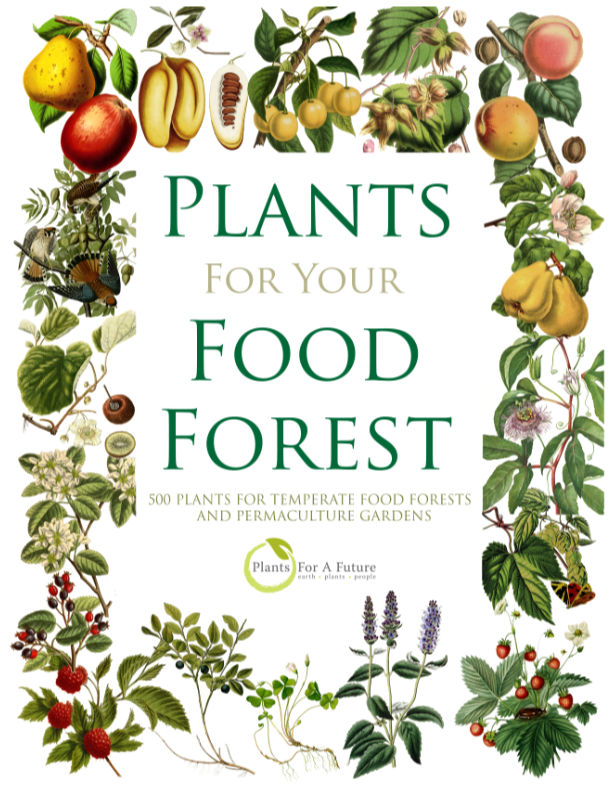
Edible Temperate Plants
Plants for Your Food Forest: 500 Plants for Temperate Food Forests & Permaculture Gardens.
More
More Books
PFAF have eight books available in paperback and digital formats. Browse the shop for more information.
Shop Now
Other Uses
Fuel Oil Parasiticide Wood
Agroforestry uses:
Carya species can be used as shade trees and are valuable in agroforestry systems for their high-quality timber and nut production. They can also enhance biodiversity and provide habitat for wildlife.
Wood - coarse-grained, hard, heavy, brittle, not strong. It weighs 45 lb. per cubic foot. It is not as valuable timber as other members of this genus and is used mainly for fuel and occasionally to make wagons and agricultural implements[46, 82, 227, 235]. A dynamic accumulator gathers minerals or nutrients from the soil and stores them in a more bioavailable form - used as fertilizer or to improve mulch. 1. Nectary - Flowers rich in nectar and pollen:
No – Carya species flowers are wind-pollinated and not known for being rich in nectar or attracting large numbers of pollinators.
2. Wildlife - Food (Fruit, Seeds, Leaf litter, Shelter, Nesting, Roosting):
Yes , thenuts (pecans and hickory nuts) are an important food source for wildlife, including birds, squirrels, and other small mammals. The dense canopy provides good shelter, and tbirds can nest and roost in the trees
3. Invertebrate Shelter (Overwintering sites, Leaf litter, Groundcover):
Yes – The rough bark and fallen leaves provide overwintering sites for invertebrates, and leaf litter offers ground cover for various organisms.
4. Pest Confuser (Smell):
No – Carya species do not emit a smell that repels pests or confuses them.
Special Uses
Carbon Farming Dynamic accumulator Food Forest
References More on Other Uses
Cultivation details
Global Crop Management: Standard Other Systems: Strip intercrop Staple Crop: Oil
Landscape Uses:Aggressive surface roots possible. Prefers a deep moisture-retentive loam in a sunny sheltered position, requiring a good summer for best development[1, 63, 137, 200]. Tolerates a pH in the range 4.5 to 8.3. Trees are fairly fast growing[200]. Trees do not grow very well in Britain, requiring hotter summers than are normally experienced here in order to fruit and fully ripen their wood[200]. However, a tree at Cambridge botanical gardens was 20 metres tall in 1985. Trees are said to be hardy to about -12°c, the same report also says that they are hardy to zone 5[200], which would experience considerably lower temperatures than this. Trees are probably much hardier when grown in areas with hot summers. In the wild, trees grow best in areas where summer temperatures average 24 - 30°c and the humidity is high[229]. Often cultivated for its edible seed, there are some named varieties[183]. Trees come into bearing when about 20 years old, the best period of production being between the ages of 75 to 225 years old[229]. Mature trees regularly give yields of 225 kilos, whilst yields of 450 kilos have been recorded[229]. A number of cultivars have been developed in N. America that succeed quite far north in that country[200]. These cultivars include:- 'Carlson 3'. Early maturing, it is being trialled in Canada[183]. 'Devore'. An early fruiting form with small nuts that have an excellent flavour[183]. 'Gibson'. Precocious, protandrous, the nuts are of medium size with a good flavour[183]. 'Green Island'. Amongst the hardiest of cultivars, it has been selected for nut size, flavour and productivity[183]. 'Mullahy'. Hardy, precocious and very productive, it has ripened in Ontario[183]. Nuts are fairly large with an excellent flavour. 'Voiles 2'. Usually ripens as far north as Ontario and New York[183]. The wind-blown pollen is a significant cause of hay fever in the Unitd States[274]. This species is the State Tree of Texas[274]. Plants are strongly tap-rooted and should be planted in their permanent positions as soon as possible[1, 137]. Sowing in situ would be the best method so long as the seed could be protected from mice[1, 200]. Trees are late coming into leaf (usually late May to June) and lose their leaves early in the autumn (usually in October)[137]. During this time they cast a heavy shade. These factors combine to make the trees eminently suitable for a mixed woodland planting with shrubs and other trees beneath them[137]. Plants in this genus are notably resistant to honey fungus[200]. Most species in this genus have quite a wide range of distribution and, in order to find trees more suited to this country, seed from the most appropriate provenances should be sought[137]. Most trees growing in Britain at present tend to only produce good seed after hot summers[137]. Trees are self-fertile but larger crops of better quality seeds are produced if cross-pollination takes place[229]. Special Features:North American native, Inconspicuous flowers or blooms. Carbon Farming - Climate: cold temperate subtropical, tropical highlands. Humidity: humid. Cultivation: global crop. Management: standard. Other Systems: strip intercrop. The plant is heat tolerant in zones 9 through 1. (Plant Hardiness Zones show how well plants withstand cold winter temperatures.
Plant Heat Zones show when plants would start suffering from the heat.
The Plant Heat Zone map is based on the number of "heat days" experienced in a given area where the temperature climbs to over 86 degrees F (30°C).
At this temperature, many plants begin to suffer physiological damage. Heat Zones range from 1 (no heat days) to 12 (210 or more heat days).
For example Heat Zone. 11-1 indicates that the plant is heat tolerant in zones 11 through 1.) For polyculture design as well as the above-ground architecture (form - tree, shrub etc. and size shown above) information on the habit and root pattern is also useful and given here if available. The plant growth habit is a standard with a non-suckering single trunk [1-2]. The root pattern is a tap root similar to a carrot going directly down [1-2].
Carbon Farming
-
Global Crop
These crops are already grown or traded around the world. The annual value of each is more than $1 billion US Examples include coconuts, almonds, and bananas.
-
Management: Standard
Plants grow to their standard height. Harvest fruit, seeds, or other products. Non-Destructive management systems.
-
Other Systems: Strip intercrop
Tree crops grown in rows with alternating annual crops.
-
Staple Crop: Oil
(0-15 percent protein, 16+ percent oil). Some of these are consumed whole while others are exclusively pressed for oil. Annuals include canola, poppyseed, maize, cottonseed, sunflower, peanut. Perennials include high-oil fruits, seeds, and nuts, such as olive, coconut, avocado, oil palm, shea, pecan, and macadamia. Some perennial oil crops are consumed whole as fruits and nuts, while others are exclusively pressed for oil (and some are used fresh and for oil).
References Carbon Farming Information and Carbon Sequestration Information
Temperature Converter
Type a value in the Celsius field to convert the value to Fahrenheit:
Fahrenheit:
The PFAF Bookshop
Plants For A Future have a number of books available in paperback and digital form. Book titles include Edible Plants, Edible Perennials, Edible Trees,Edible Shrubs, Woodland Gardening, and Temperate Food Forest Plants. Our new book is Food Forest Plants For Hotter Conditions (Tropical and Sub-Tropical).
Shop Now
Plant Propagation
Seed - requires a period of cold stratification. It is best sown in a cold frame as soon as it is ripe[78]. Stored seed should be kept moist (but not wet) prior to sowing and should be sown in a cold frame as soon as possible[78]. Where possible, sow 1 or 2 seeds only in each deep pot and thin to the best seedling. If you need to transplant the seedlings, then do this as soon as they are large enough to handle, once more using deep pots to accommodate the tap root. Put the plants into their permanent positions as soon as possible, preferably in their first summer, and give them some protection from the cold for at least the first winter[78, K]. Seed can also be sown in situ so long as protection is given from mice etc and the seed is given some protection from cold[200] (a plastic bottle with the top and bottom removed and a wire mesh top fitted to keep the mice out is ideal)
Other Names
If available other names are mentioned here
Native Range
NORTHERN AMERICA: United States, Indiana (s. & w.), Illinois, Iowa (southeast), Kansas (southeast), Missouri, Oklahoma, Arkansas, Kentucky (west), Louisiana, Mississippi (west), Tennessee, Texas, Mexico, Chihuahua (southeast), Coahuila de Zaragoza, Nuevo León, San Luis Potosí (southeast), Tamaulipas, Guanajuato, Hidalgo, Jalisco, Oaxaca, Veracruz de Ignacio de la Llave,
Weed Potential
Right plant wrong place. We are currently updating this section.
Please note that a plant may be invasive in one area but may not
in your area so it's worth checking.
No
Conservation Status
IUCN Red List of Threatened Plants Status : This taxon has not yet been assessed
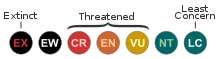
IUCN Red List
Growth: S = slow M = medium F = fast. Soil: L = light (sandy) M = medium H = heavy (clay). pH: A = acid N = neutral B = basic (alkaline). Shade: F = full shade S = semi-shade N = no shade. Moisture: D = dry M = Moist We = wet Wa = water.
Now available:
Food Forest Plants for Mediterranean Conditions
350+ Perennial Plants For Mediterranean and Drier Food Forests and Permaculture Gardens.
[Paperback and eBook]
This is the third in Plants For A Future's series of plant guides for food forests tailored to
specific climate zones. Following volumes on temperate and tropical ecosystems, this book focuses
on species suited to Mediterranean conditions—regions with hot, dry summers and cool, wet winters,
often facing the added challenge of climate change.
Read More
Expert comment
Author
(Wangenh.)K.Koch.
Botanical References
1182200
Links / References
For a list of references used on this page please go here
Readers comment