Translate this page:
Summary
Physical Characteristics

 Carum carvi is a BIENNIAL growing to 0.6 m (2ft) by 0.3 m (1ft in).
It is not frost tender. It is in flower from June to July, and the seeds ripen from July to August. The species is hermaphrodite (has both male and female organs) and is pollinated by Bees. The plant is self-fertile.
Suitable for: light (sandy), medium (loamy) and heavy (clay) soils and prefers well-drained soil. Suitable pH: mildly acid, neutral and basic (mildly alkaline) soils. It can grow in semi-shade (light woodland) or no shade. It prefers moist soil.
UK Hardiness Map
US Hardiness Map
Synonyms
Bunium carvi. Carum aromaticum. Carum decussatum. Foeniculum carvi.
Plant Habitats
Cultivated Beds;
Edible Uses
Edible Parts: Leaves Root Seed
Edible Uses: Condiment Tea
Seed - raw or cooked. A spicy flavour, it is used as a flavouring in confectionery and bread, also as a flavouring in salads, vegetables etc[2, 4, 5, 9, 18, 20, 27, 183]. It is high in protein and fat[14]. The seed is often chewed after a meal in order to sweeten the breath and also to relieve heartburn after a rich meal[244]. Per 100g, the seed contains 333 calories, 10g water, 20g protein, 14.5g fat, 50g carbohydrate, 12.5g fibre, 6g ash, 689mg calcium, 568mg phosphorus, 16.2mg iron, 258mg magnesium, 17mg sodium, 1351mg potassium, 5.5mg zinc, 363 IU vitamin A, 0.383mg thiamine, 0.379mg riboflavin, 3.61mg niacin[218]. An essential oil from the seed is used as a flavouring in ice creams, candy, soft drinks etc[183, 238]. It is an essential ingredient of the liqueur kümmel[244]. Root - cooked[183]. Used as a vegetable like parsnips[2, 4, 9, 14, 55, 115]. Stronger in taste than parsnips, but liked by many[207]. A delicious vegetable[244]. Leaves - raw or as a flavouring in soups etc[2, 14, 27, 55, 115]. The young leaves are much less spicy than the seeds and are a good salad[9], having a mild parsley-dill flavour[238]. They give an aromatic tang to salads[244]. Older leaves can be cooked as a spinach[183]. The crushed seeds are brewed into a tea[183]. It has a soothing effect on the digestion[244].
References More on Edible Uses
| Composition
|
| Figures in grams (g) or miligrams (mg) per 100g of food.
|
|
|
Leaf (Fresh weight)
|
|
- 253 Calories per 100g
- Water : 7.2%
- Protein: 20g; Fat: 4.4g; Carbohydrate: 55.8g; Fibre: 11.9g; Ash: 12.6g;
- Minerals - Calcium: 1784mg; Phosphorus: 543mg; Iron: 48.8mg; Magnesium: 451mg; Sodium: 208mg; Potassium: 3308mg; Zinc: 3.3mg;
- Vitamins - A: 0mg; Thiamine (B1): 0.42mg; Riboflavin (B2): 0.28mg; Niacin: 2.8mg; B6: 1.5mg; C: 0mg;
- Reference: [ ]
- Notes:
|
|
Medicinal Uses
Plants For A Future can not take any responsibility for any adverse effects from the use of plants. Always seek advice from a professional before using a plant medicinally.
Antiseptic Antispasmodic Aromatic Carminative Digestive Emmenagogue Expectorant Galactogogue
Ophthalmic Parasiticide Stimulant
Caraway has a long history of use as a household remedy especially in the treatment of digestive complaints where its antispasmodic action soothes the digestive tract and its carminative action relieves bloating caused by wind and improves the appetite[4, 238, 254]. It is often added to laxative medicines to prevent griping[238]. The seed is antiseptic, antispasmodic, aromatic, carminative, digestive, emmenagogue, expectorant, galactogogue and stimulant[4, 7, 9, 21, 46, 165, 222, 240]. It can be chewed raw for the almost immediate relief of indigestion and can also be made into infusions[238]. The seed is also used in the treatment of bronchitis and are an ingredient of cough remedies, especially useful for children[254]. The seed is also said to increase the production of breast milk in nursing mothers[254]. The seed is harvested when fully ripe, then dried and stored in a cool, dry place out of the sunlight[244]. The essential oil can be extracted from the seed and has similar properties[4]. A tea made from the seeds is a pleasant stomachic and carminative, it has been used to treat flatulent colic[207, 222]. The seed is used in Tibetan medicine where it is considered to have an acrid taste and a heating potency[241]. It is used to treat failing vision and loss of appetite[241]. The German Commission E Monographs, a therapeutic guide to herbal medicine, approve Carum carvi for dyspeptic complaints (see [302] for critics of commission E).
References More on Medicinal Uses
The Bookshop: Edible Plant Books
Our Latest books on Perennial Plants For Food Forests and Permaculture Gardens in paperback or digital formats.

Edible Tropical Plants
Food Forest Plants for Hotter Conditions: 250+ Plants For Tropical Food Forests & Permaculture Gardens.
More

Edible Temperate Plants
Plants for Your Food Forest: 500 Plants for Temperate Food Forests & Permaculture Gardens.
More

More Books
PFAF have eight books available in paperback and digital formats. Browse the shop for more information.
Shop Now
Other Uses
Essential Parasiticide
An essential oil from the seed is used in perfumery, for scenting soap, as a parasiticide etc[7, 46, 74, 171]. Twenty-five kilos of seed yield about 1 kilo of essential oil[4]. The essential oil yield of the seed from plants cultivated in Poland is up to 10.33%[240]. Caraway is also used as a breath freshener.
Special Uses
Dynamic accumulator Scented Plants
References More on Other Uses
Cultivation details
Succeeds in ordinary garden soil as long as it is not too wet in winter[1]. Prefers a moist soil in full sun or partial shade[4, 200]. Tolerates a pH in the range 4.8 to 7.6. Caraway is a well-known herb that has been cultivated for its culinary and medicinal uses since ancient times[244]. It is frequently cultivated in the modern herb garden and sometimes also commercially[4, 46], there are some named varieties[183]. Plants growing in more northerly latitudes and also in full sun are richer in essential oils and therefore more aromatic[4, 245]. Plants strongly resent root disturbance[200]. They often self-sow freely when in a suitable location[244]. This species is deep rooted[201] and is a good plant for breaking up the sub-soil on heavy, wet land[18, 20]. It dislikes growing near fennel or wormwood[14, 20] but is a good companion for most plants, especially those that are shallow-rooted[201]. The flowers attract parasitic wasps to the garden, these prey on aphids and so help to reduce populations of insect pests[238].
References Carbon Farming Information and Carbon Sequestration Information
Temperature Converter
Type a value in the Celsius field to convert the value to Fahrenheit:
Fahrenheit:
The PFAF Bookshop
Plants For A Future have a number of books available in paperback and digital form. Book titles include Edible Plants, Edible Perennials, Edible Trees,Edible Shrubs, Woodland Gardening, and Temperate Food Forest Plants. Our new book is Food Forest Plants For Hotter Conditions (Tropical and Sub-Tropical).
Shop Now
Plant Propagation
Seed - it is best sown in situ as soon as it is ripe in late summer and early autumn[4, 200]. The seed can also be sown March/April in situ[200], though in areas with cool summers the plants might not produce a crop of ripe seeds[238]. Plants are very sensitive to root disturbance and should not be transplanted.
Other Names
If available other names are mentioned here
Caraway, also known as Persian cumin. Other names: Alcaravia, Carvi, Comino, Gunyun, Jangli jira, Jeera, Jenuju, Jintan, Jira, Kaluduru, Karawya, Karuwai, Karwij, Kim, Kmin, Koomen, Koomlid, Kummel, Shia-jira, Shimai-shembu, Shimpaisapu, Sushavi, Tmin, Wilayati-zirah, Yuan-sui, Zira, Zirah-siah.
Native Range
TEMPERATE ASIA: Afghanistan, Iran, Iraq (north), Turkey, Russian Federation-Ciscaucasia (Ciscaucasia), Armenia, Azerbaijan, Georgia, Russian Federation (Dagestan), Russian Federation-Western Siberia (Western Siberia), Russian Federation-Eastern Siberia (Eastern Siberia), Russian Federation (Altay), Kyrgyzstan, Tajikistan, Turkmenistan, Mongolia, Russian Federation (Kamcatskij kraj), China (Gansu Sheng, Hebei Sheng, Qinghai Sheng, Shanxi Sheng, Xinjiang Uygur Zizhiqu, Xizang Zizhiqu) TROPICAL ASIA: Bhutan, India (Kashmir & Jammu), Nepal, Pakistan (north) EUROPE: Denmark, Finland, Norway, Svalbard and Jan Mayen, Austria, Belgium, Switzerland, Czech Republic, Germany, Hungary, Netherlands, Poland, Slovakia, Belarus, Estonia, Lithuania, Latvia, Moldova, Ukraine (incl. Krym), Albania, Bulgaria, Bosnia and Herzegovina, Croatia, Italy, North Macedonia, Montenegro, Romania, Serbia, Slovenia, Spain, France AFRICA: Tunisia
Weed Potential
Right plant wrong place. We are currently updating this section.
Please note that a plant may be invasive in one area but may not in your area so it's worth checking.
This plant can be weedy or invasive. Noxious Weed Information: USA - Colorado
B list (noxious weeds)
Conservation Status
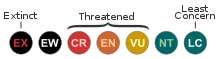
IUCN Red List of Threatened Plants Status : This taxon has not yet been assessed.
Growth: S = slow M = medium F = fast. Soil: L = light (sandy) M = medium H = heavy (clay). pH: A = acid N = neutral B = basic (alkaline). Shade: F = full shade S = semi-shade N = no shade. Moisture: D = dry M = Moist We = wet Wa = water.
Now available:
Food Forest Plants for Mediterranean Conditions
350+ Perennial Plants For Mediterranean and Drier Food Forests and Permaculture Gardens.
[Paperback and eBook]
This is the third in Plants For A Future's series of plant guides for food forests tailored to
specific climate zones. Following volumes on temperate and tropical ecosystems, this book focuses
on species suited to Mediterranean conditions—regions with hot, dry summers and cool, wet winters,
often facing the added challenge of climate change.
Read More
Expert comment
Author
L.
Botanical References
17
Links / References
For a list of references used on this page please go here
Readers comment