 |
|
http://www.hear.org/starr/ |
 |
| http://www.hear.org/starr/ |
Translate this page:
Summary
Bloom Color: Yellow.
Main Bloom Time: Early summer, Late summer, Mid summer. Form: Rounded.
Physical Characteristics

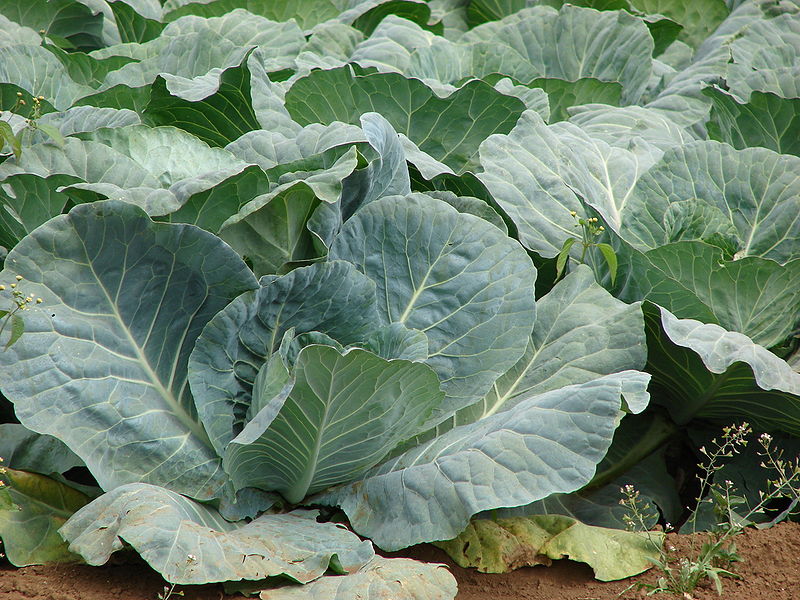
 Brassica oleracea capitata is a BIENNIAL growing to 0.8 m (2ft 7in) at a medium rate.
See above for USDA hardiness. It is hardy to UK zone 8 and is not frost tender. It is in flower from May to August, and the seeds ripen from July to September. The species is hermaphrodite (has both male and female organs) and is pollinated by Bees. The plant is self-fertile.
Suitable for: light (sandy), medium (loamy) and heavy (clay) soils, prefers well-drained soil and can grow in heavy clay soil. Suitable pH: mildly acid, neutral and basic (mildly alkaline) soils and can grow in very acid and very alkaline soils.
It can grow in semi-shade (light woodland) or no shade. It prefers moist soil. The plant can tolerate maritime exposure.
UK Hardiness Map
US Hardiness Map
Synonyms
Plant Habitats
Cultivated Beds;
Edible Uses
Edible Parts: Leaves Seed
Edible Uses:
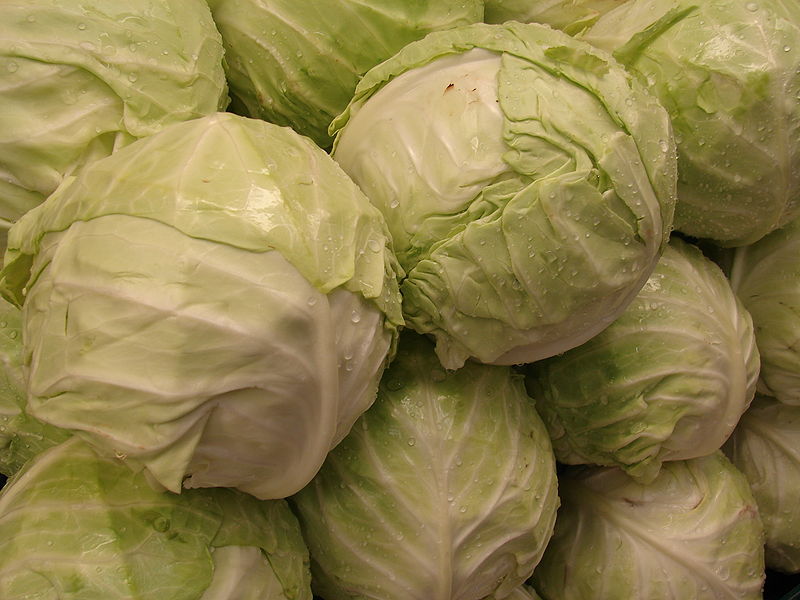
Leaves - raw or cooked[1, 27, 46]. Cabbages are generally used as a cooked vegetable, though the shredded leaves can also be eaten in salads. Dutch cabbages are generally sweeter and milder in flavour making them more suitable for raw eating. Those leaves in the heart of the plants are more tender than outside leaves and so are also more suitable for eating raw. These heart leaves, though, are less nutritious because they have been excluded from the light[K]. Many people find that the raw leaves give them indigestion[K]. The leaves can be fermented and made into sauerkraut, used as a health food and said to be good for the digestive system[K]. By careful selection of cultivars, it is possible to harvest cabbages all year round[K]. Seeds - sprouted and added to salads. Very good eating[183].
References More on Edible Uses
Medicinal Uses
Plants For A Future can not take any responsibility for any adverse effects from the use of plants. Always seek advice from a professional before using a plant medicinally.
None known
References More on Medicinal Uses
The Bookshop: Edible Plant Books
Our Latest books on Perennial Plants For Food Forests and Permaculture Gardens in paperback or digital formats.

Edible Tropical Plants
Food Forest Plants for Hotter Conditions: 250+ Plants For Tropical Food Forests & Permaculture Gardens.
More

Edible Temperate Plants
Plants for Your Food Forest: 500 Plants for Temperate Food Forests & Permaculture Gardens.
More

More Books
PFAF have eight books available in paperback and digital formats. Browse the shop for more information.
Shop Now
Other Uses
References More on Other Uses
Cultivation details
Landscape Uses:Border, Container, Massing. Succeeds in full sun in a well-drained fertile preferably alkaline soil[16, 37, 200]. Prefers a heavy soil and a cool moist climate[16, 27]. Succeeds in any reasonable soil. Succeeds in maritime gardens[200]. Tolerates a pH in the range 4.3 to 8.3. The cabbage is widely cultivated throughout the world for its edible leaves There are three main types of cabbage, the common hearting cabbage has dark green leaves, Dutch cabbages form a much larger heart and the leaves, which have a milder flavour, are a pale green or even white, whilst the third type, red cabbages, has red leaves. There are many named varieties of each type and by careful choice of varieties it is possible to ensure a year round supply of fresh leaves. Several cultivars are hardy enough to stand the rigours of a British winter, there are also some less-hardy varieties that can be harvested in early winter and stored for a few months in a cool place to provide leaves in areas with very severe winters[200]. Some varieties have been selected for the ornamental value of their leaves, these tend to be of poor culinary quality[206]. Cabbages are good companions for dill, camomile, sage, wormwood, mint and other aromatic plants which help to reduce insect predations on the cabbages[18, 201]. Cabbages also grow well with potatoes and beet[201]. They grow badly with strawberries, tomatoes and climbing beans[18, 201]. Special Features:Attractive foliage, Not North American native, Attracts butterflies, Inconspicuous flowers or blooms.
References Carbon Farming Information and Carbon Sequestration Information
Temperature Converter
Type a value in the Celsius field to convert the value to Fahrenheit:
Fahrenheit:
The PFAF Bookshop
Plants For A Future have a number of books available in paperback and digital form. Book titles include Edible Plants, Edible Perennials, Edible Trees,Edible Shrubs, Woodland Gardening, and Temperate Food Forest Plants. Our new book is Food Forest Plants For Hotter Conditions (Tropical and Sub-Tropical).
Shop Now
Plant Propagation
Seed - this can be sown from early spring to late summer in a seedbed outdoors, depending on the cultivar. The plants are moved to their final positions when about 7 - 15cm tall. Do not let the seedlings get overcrowded or they will soon become leggy and will not make such good plants. If your seedlings do get leggy, it is possible to plant them rather deeper into the soil - the buried stems will soon form roots and the plant will be better supported. For a summer crop, the seed is sown in early to late spring, autumn maturing cultivars are sown in mid to late-spring and winter maturing cultivars in late spring. Winter to spring maturing cultivars are sown in mid to late summer, these are often sown in situ and thinned as required. Seed of fast-growing summer cabbages can also be sown in a greenhouse in January/February in order to provide an early crop. This is planted out in early to mid-spring as the weather allows and can be harvested in late spring and early summer.
Other Names
If available other names are mentioned here
Native Range
(Brassica oleracea) EUROPE: United Kingdom (U.K.) (coasts), Germany, Schleswig-Holstein, Spain (n. coast), France (w. & n. coasts).
Weed Potential
Right plant wrong place. We are currently updating this section.
Please note that a plant may be invasive in one area but may not in your area so it's worth checking.
Conservation Status
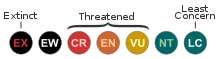
IUCN Red List of Threatened Plants Status :
| Related Plants
|
| Latin Name | Common Name | Habit | Height | Hardiness | Growth | Soil | Shade | Moisture | Edible | Medicinal | Other |
| Alliaria petiolata | Garlic Mustard | Biennial | 1.0 |
5-8
| | LMH | FS | MWe | 3 | 2 | 1 |
| Alyssum alyssoides | Pale Madwort | Annual | 0.2 |
4-8
| F | LM | SN | DM | 2 | 0 | 0 |
| Arabidopsis thaliana | Thale Cress, Mouseear cress | Annual/Biennial | 0.5 |
0-0
| | LMH | SN | DM | 0 | 1 | 1 |
| Arabis alpina | Alpine Rock Cress, Alpine rockcress | Perennial | 0.2 |
4-8
| | LM | SN | M | 2 | 0 | |
| Arabis caucasica | Rock Cress, Wall Rockcress | Perennial | 0.2 |
4-9
| M | LMH | SN | DM | 2 | 0 | 3 |
| Arabis hirsuta | Hairy rockcress, Mountain rockcress, Creamflower rockcress | Biennial/Perennial | 0.6 |
4-8
| | LMH | SN | DM | 1 | 0 | |
| Arabis lyrata | Rock Cress, Kamchatka rockcress, Lyrate rockcress | Biennial/Perennial | 0.3 |
4-8
| | LMH | SN | DM | 1 | 0 | |
| Arabis pendula | | Biennial | 0.9 |
-
| | LMH | FSN | M | 1 | 0 | |
| Arabis sagittata | | Biennial/Perennial | 0.6 |
-
| | LMH | SN | DM | 1 | 0 | |
| Arabis serrata | | Perennial | 0.3 |
6-9
| | LMH | SN | M | 1 | 0 | |
| Armoracia rusticana | Horseradish, Red Cole | Perennial | 0.7 |
4-9
| F | LMH | SN | M | 3 | 3 | 2 |
| Aubrieta deltoidea | Aubretia, Lilacbush, False Rockcress | Perennial | 0.2 |
4-9
| M | LM | SN | DM | 0 | 0 | 3 |
| Aurinia saxatilis | Golden Alyssum, Basket of gold | Perennial | 0.3 |
4-10
| M | LMH | N | DM | 0 | 0 | 3 |
| Barbarea australis | | Biennial/Perennial | 0.5 |
-
| | LMH | SN | M | 2 | 1 | |
| Barbarea orthoceras | American Yellowrocket | Perennial | 0.5 |
3-8
| | LMH | SN | M | 3 | 0 | 1 |
| Barbarea stricta | Small-flowered winter-cress | Biennial | 0.8 |
3-10
| F | LMH | N | MWe | 2 | 0 | 0 |
| Barbarea verna | Land Cress, Early yellowrocket | Biennial | 0.3 |
4-9
| | LMH | SN | M | 3 | 0 | 1 |
| Barbarea vulgaris | Yellow Rocket, Garden yellowrocket | Perennial | 0.4 |
3-9
| | LMH | SN | M | 3 | 1 | 1 |
| Brassica balearica | | Perennial | 0.0 |
-
| | LMH | N | M | 1 | 0 | |
| Brassica carinata | Abyssinian Cabbage | Annual | 1.0 |
9-12
| F | LMH | SN | M | 4 | 2 | 3 |
| Brassica cretica | Mustard | Perennial | 1.0 |
0-0
| | LMH | N | M | 2 | 0 | |
| Brassica elongata | Elongated mustard | Biennial/Perennial | 0.9 |
0-0
| | LMH | SN | M | 2 | 0 | 2 |
| Brassica juncea | Brown Mustard | Annual | 0.8 |
6-9
| | LMH | SN | M | 4 | 2 | 2 |
| Brassica juncea crispifolia | Curled Mustard | Annual | 0.3 |
6-9
| F | LMH | SN | M | 4 | 2 | 2 |
| Brassica juncea foliosa | Leaf Mustard | Annual | 0.3 |
6-9
| F | LMH | SN | M | 4 | 2 | 2 |
| Brassica juncea integrifolia crispifolia | Curled Mustard | Annual | 0.3 |
6-10
| F | LMH | SN | M | 4 | 2 | 2 |
| Brassica juncea integrifolia rugosa | Head Mustard | Annual | 0.6 |
6-10
| F | LMH | SN | M | 4 | 2 | 2 |
| Brassica juncea integrifolia strumata | Large Petiole Mustard | Annual | 0.8 |
6-10
| F | LMH | SN | M | 4 | 2 | 2 |
| Brassica juncea integrifolia subintegrifolia | Leaf Mustard | Annual | 0.3 |
6-10
| F | LMH | SN | M | 4 | 2 | 2 |
| Brassica juncea multiceps | Green In The Snow | Annual | 0.4 |
6-9
| F | LMH | SN | M | 4 | 2 | 2 |
|
|
Growth: S = slow M = medium F = fast. Soil: L = light (sandy) M = medium H = heavy (clay). pH: A = acid N = neutral B = basic (alkaline). Shade: F = full shade S = semi-shade N = no shade. Moisture: D = dry M = Moist We = wet Wa = water.
Now available:
Food Forest Plants for Mediterranean Conditions
350+ Perennial Plants For Mediterranean and Drier Food Forests and Permaculture Gardens.
[Paperback and eBook]
This is the third in Plants For A Future's series of plant guides for food forests tailored to
specific climate zones. Following volumes on temperate and tropical ecosystems, this book focuses
on species suited to Mediterranean conditions—regions with hot, dry summers and cool, wet winters,
often facing the added challenge of climate change.
Read More
Expert comment
Author
DC.
Botanical References
200
Links / References
For a list of references used on this page please go here
Readers comment