 |
|
|
 |
| http://commons.wikimedia.org/wiki/User:Fabelfroh |
Translate this page:
Summary
Physical Characteristics

 Aphanes arvensis is a ANNUAL growing to 0.1 m (0ft 4in) by 0.2 m (0ft 8in).
It is not frost tender. It is in flower from April to October, and the seeds ripen from July to November. The species is hermaphrodite (has both male and female organs). The plant is self-fertile.
Suitable for: light (sandy), medium (loamy) and heavy (clay) soils, prefers well-drained soil and can grow in nutritionally poor soil. Suitable pH: mildly acid, neutral and basic (mildly alkaline) soils and can grow in very acid and very alkaline soils.
It can grow in semi-shade (light woodland) or no shade. It prefers dry or moist soil and can tolerate drought.
UK Hardiness Map
US Hardiness Map
Synonyms
Plant Habitats
Lawn; Cultivated Beds; East Wall. In. South Wall. In. West Wall. In.
Edible Uses
Edible Parts: Leaves
Edible Uses:
Leaves - eaten raw in salads or pickled for winter use[4, 5, 52, 183]. The plant is rarely eaten nowadays[238].
References More on Edible Uses
Medicinal Uses
Plants For A Future can not take any responsibility for any adverse effects from the use of plants. Always seek advice from a professional before using a plant medicinally.
Astringent Demulcent Diuretic Refrigerant Urinary
Parsley piert has a long history of folk use, being commonly employed to rid the body of stones in the kidney or bladder. It has become a highly respected herb in modern herbalism for the treatment of kidney stones[268]. The whole herb is astringent, demulcent, diuretic and refrigerant[4, 53, 165]. It is used mainly as an infusion in the treatment of kidney and bladder complaints (including cystitis and recurrent urinary infections), jaundice etc[4, 238]. A very valuable remedy, acting violently but safely by promoting the flow of urine[4], it is often used in combination with other herbs[238, 254]. The plant is harvested in early summer and can be used fresh or dried[238]. The herb is considered to be most efficacious when it is freshly collected and dried[238].
References More on Medicinal Uses
Other Uses
References More on Other Uses
Cultivation details
Succeeds in most well-drained soils in full sun or partial shade[238]. The plant tolerates stony or gravelly soils as well as both acid and alkaline conditions[238]. It grows well in a short lawn[53]. This is an aggregate species that contains a number of very closely related species[17].
References Carbon Farming Information and Carbon Sequestration Information
Temperature Converter
Type a value in the Celsius field to convert the value to Fahrenheit:
Fahrenheit:
Plant Propagation
Seed - sow autumn in situ. The seed is best sown in dry weather[238].
Other Names
If available other names are mentioned here
Native Range
TEMPERATE ASIA: Iran (north), Turkey, Russian Federation-Ciscaucasia (Ciscaucasia), Azerbaijan, Georgia, Russian Federation (Dagestan) EUROPE: Denmark, United Kingdom, Ireland, Sweden (south), Austria, Belgium, Switzerland, Czech Republic, Germany, Hungary, Netherlands, Poland, Slovakia, Lithuania, Latvia, Ukraine (Krym), Bulgaria, Bosnia and Herzegovina, Greece, Croatia, Italy (incl. Sardinia, Sicily), North Macedonia, Montenegro, Romania, Serbia, Slovenia, Spain (incl. Baleares), France (incl. Corsica), Portugal
Weed Potential
Right plant wrong place. We are currently updating this section.
Please note that a plant may be invasive in one area but may not
in your area so it's worth checking.
Conservation Status
IUCN Red List of Threatened Plants Status :
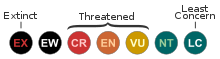
IUCN Red List
Growth: S = slow M = medium F = fast. Soil: L = light (sandy) M = medium H = heavy (clay). pH: A = acid N = neutral B = basic (alkaline). Shade: F = full shade S = semi-shade N = no shade. Moisture: D = dry M = Moist We = wet Wa = water.
Support Plants For A Future
Plants For A Future relies on regular donations to keep our free database and search facilities going, to pay for ongoing research, improvements and enhancements, and to develop and publish new books.
Read more
Choose Currency
Donate in £ GBP
Donate in $ USD
Donate in € EUR
Securely pay via PayPal or Credit/Debit Card without an account.
Expert comment
Author
L.
Botanical References
17
Links / References
For a list of references used on this page please go here
Readers comment
| Add a comment |
|
If you have important information about this plant that may help other users please add a comment or link below. Only comments or links that are felt to be directly relevant to a plant will be included. If you think a comment/link or information contained on this page is inaccurate or misleading we would welcome your feedback at [email protected]. If you have questions about a plant please use the Forum on this website as we do not have the resources to answer questions ourselves.
* Please note: the comments by website users are not necessarily those held by PFAF and may give misleading or inaccurate information.
|
Subject : Aphanes arvensis
|
|
|
|