Translate this page:
Summary
Taxonomic Note: This genus was formerly classified in the family Chenopodiaceae. Modern classifications include it within the Amaranthaceae.
Bloom Color: Red.
Main Bloom Time: Early summer, Late summer, Mid summer. Form: Pyramidal, Upright or erect.
Physical Characteristics

 Amaranthus tricolor is a ANNUAL growing to 1 m (3ft 3in) by 0.5 m (1ft 8in) at a medium rate.
See above for USDA hardiness. It is hardy to UK zone 4 and is not frost tender. It is in leaf from April to October, in flower from June to August, and the seeds ripen from July to September. The species is monoecious (individual flowers are either male or female, but both sexes can be found on the same plant) and is pollinated by Wind. The plant is self-fertile.
Suitable for: light (sandy), medium (loamy) and heavy (clay) soils, prefers well-drained soil and can grow in nutritionally poor soil. Suitable pH: mildly acid, neutral and basic (mildly alkaline) soils and can grow in very acid soils.
It cannot grow in the shade. It prefers moist soil and can tolerate drought.
UK Hardiness Map
US Hardiness Map
Synonyms
A. gangeticus. L. A. melanocholicus.
Plant Habitats
Cultivated Beds;
Edible Uses
Edible Parts: Leaves Seed Stem
Edible Uses:
Leaves - raw or cooked. Often used at the young seedling stage[2, 46, 61], they are also cooked as a spinach and have a very mild flavour[183]. An excellent hot weather substitute for spinach[183]. The leaves contain about 3.5% protein, 0.25% fat, 6.6% carbohydrate, 3.1% ash, 24mg iron per 100g, 464mg calcium per 100g, they are rich in vitamin A and have a fair content of vitamins B1 and C[179]. On a zero moisture basis 100g of the leaves contains up to 2441mg calcium, 1008mg phosphorus, 51mg iron, 34mg sodium, 4475mg potassium, 37,623 micrograms beta-carotene equivalent, 0.68mg thiamine, 2.37mg riboflavin, 11.48mg niacin and 730mg ascorbic acid[218]. The crisp interior of large stems makes a tasty vegetable[183]. It can be eaten raw or cooked as an asparagus substitute[2, 61]. Seed - cooked[22, 177]. Very small, about 1mm in diameter[266], but easy to harvest and very nutritious. The seed can be cooked whole, and becomes very gelatinous like this, but it is rather difficult to crush all of the small seeds in the mouth and thus some of the seed will pass right through the digestive system without being assimilated[K]. The seed contains saponins[218]. If this is the case it is probably best to either soak the seed for at least 12 hours and then rinse thoroughly before cooking or to give the seed a long slow cooking in order to destroy the saponins[K].
References More on Edible Uses
| Composition
|
| Figures in grams (g) or miligrams (mg) per 100g of food.
|
|
|
Leaves (Dry weight)
|
|
- 0 Calories per 100g
- Water : 0%
- Protein: 0g; Fat: 0g; Carbohydrate: 0g; Fibre: 0g; Ash: 0g;
- Minerals - Calcium: 2441mg; Phosphorus: 1008mg; Iron: 51mg; Magnesium: 0mg; Sodium: 34mg; Potassium: 4475mg; Zinc: 0mg;
- Vitamins - A: 37623mg; Thiamine (B1): 0.68mg; Riboflavin (B2): 2.37mg; Niacin: 11.5mg; B6: 0mg; C: 730mg;
- Reference: [ ]
- Notes:
|
|
Medicinal Uses
Plants For A Future can not take any responsibility for any adverse effects from the use of plants. Always seek advice from a professional before using a plant medicinally.
Astringent
The whole plant is astringent[240]. A decoction of the root is used with Cucurbita moschata to control haemorrhage following abortion[218]. A decoction of very old plants is taken internally to improve vision and strengthen the liver.
References More on Medicinal Uses
The Bookshop: Edible Plant Books
Our Latest books on Perennial Plants For Food Forests and Permaculture Gardens in paperback or digital formats.

Edible Tropical Plants
Food Forest Plants for Hotter Conditions: 250+ Plants For Tropical Food Forests & Permaculture Gardens.
More

Edible Temperate Plants
Plants for Your Food Forest: 500 Plants for Temperate Food Forests & Permaculture Gardens.
More

More Books
PFAF have eight books available in paperback and digital formats. Browse the shop for more information.
Shop Now
Other Uses
References More on Other Uses
Cultivation details
Landscape Uses:Border, Container, Foundation, Specimen. Prefers a light well-drained fertile soil in a sunny position[200, 206], though it does succeed in heavier soils[206]. Tolerates fairly acid soils[206]. Tolerates a pH in the range 4.3 to 7.8. This is basically a tropical plant and so requires a hot sheltered position in temperate climates if it is to do well[206, K]. Plants should not be given inorganic fertilizers, see notes above on toxicity. A polymorphic species[1], it is often cultivated for its edible leaves, there are many named varieties[206]. This species is often cultivated in Asia for its edible leaves and seed[46, 58]. It is a very ornamental plant and is often grown in the flower garden[200]. Most if not all members of this genus photosynthesize by a more efficient method than most plants. Called the 'C4 carbon-fixation pathway', this process is particularly efficient at high temperatures, in bright sunlight and under dry conditions[196]. Special Features:Attractive foliage, Edible, Suitable for cut flowers, Suitable for dried flowers. In garden design, as well as the above-ground architecture of a plant, root structure considerations help in choosing plants that work together for their optimal soil requirements including nutrients and water. The root pattern is clumping, giving the plant a clumping habit. The predictable growth behaviour makes it easier to maintain without having to apply containment methods[2-1].
References Carbon Farming Information and Carbon Sequestration Information
Temperature Converter
Type a value in the Celsius field to convert the value to Fahrenheit:
Fahrenheit:
The PFAF Bookshop
Plants For A Future have a number of books available in paperback and digital form. Book titles include Edible Plants, Edible Perennials, Edible Trees,Edible Shrubs, Woodland Gardening, and Temperate Food Forest Plants. Our new book is Food Forest Plants For Hotter Conditions (Tropical and Sub-Tropical).
Shop Now
Plant Propagation
Seed - sow late spring in situ. An earlier sowing can be made in a greenhouse and the plants put out after the last expected frosts. Germination is usually rapid and good if the soil is warm[133]. A minimum soil temperature of 10°c is required for germination, germination is better at temperatures above 20°c[206]. A drop in temperature overnight aids germination[133]. Cuttings of growing plants root easily[206].
Other Names
If available other names are mentioned here
Native Range
Coming Soon
Weed Potential
Right plant wrong place. We are currently updating this section.
Please note that a plant may be invasive in one area but may not
in your area so it's worth checking.
Conservation Status
IUCN Red List of Threatened Plants Status :
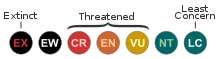
IUCN Red List
Growth: S = slow M = medium F = fast. Soil: L = light (sandy) M = medium H = heavy (clay). pH: A = acid N = neutral B = basic (alkaline). Shade: F = full shade S = semi-shade N = no shade. Moisture: D = dry M = Moist We = wet Wa = water.
Now available:
Food Forest Plants for Mediterranean Conditions
350+ Perennial Plants For Mediterranean and Drier Food Forests and Permaculture Gardens.
[Paperback and eBook]
This is the third in Plants For A Future's series of plant guides for food forests tailored to
specific climate zones. Following volumes on temperate and tropical ecosystems, this book focuses
on species suited to Mediterranean conditions—regions with hot, dry summers and cool, wet winters,
often facing the added challenge of climate change.
Read More
Expert comment
Author
L.
Botanical References
200266
Links / References
For a list of references used on this page please go here
Readers comment