 |
|
http://commons.wikimedia.org/wiki/User:KENPEI |
 |
| http://commons.wikimedia.org/wiki/User:KENPEI |
Translate this page:
Summary
Physical Characteristics

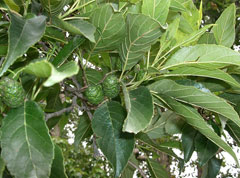
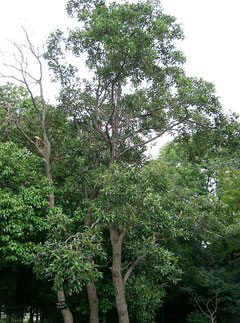
 Alnus japonica is a deciduous Tree growing to 22 m (72ft 2in) at a fast rate.
See above for USDA hardiness. It is hardy to UK zone 4. It is in flower from February to March. The species is monoecious (individual flowers are either male or female, but both sexes can be found on the same plant) and is pollinated by Wind.
It can fix Nitrogen.
Suitable for: medium (loamy) and heavy (clay) soils and can grow in heavy clay and nutritionally poor soils. Suitable pH: mildly acid, neutral and basic (mildly alkaline) soils. It can grow in semi-shade (light woodland) or no shade. It prefers dry moist or wet soil. The plant can tolerates strong winds but not maritime exposure.
UK Hardiness Map
US Hardiness Map
Synonyms
Plant Habitats
Woodland Garden Canopy; Bog Garden;
Edible Uses
References More on Edible Uses
Medicinal Uses
Plants For A Future can not take any responsibility for any adverse effects from the use of plants. Always seek advice from a professional before using a plant medicinally.
Cancer
Various species of alder, including this species, seem to contain antitumour compounds[218].
References More on Medicinal Uses
The Bookshop: Edible Plant Books
Our Latest books on Perennial Plants For Food Forests and Permaculture Gardens in paperback or digital formats.

Edible Tropical Plants
Food Forest Plants for Hotter Conditions: 250+ Plants For Tropical Food Forests & Permaculture Gardens.
More

Edible Temperate Plants
Plants for Your Food Forest: 500 Plants for Temperate Food Forests & Permaculture Gardens.
More

More Books
PFAF have eight books available in paperback and digital formats. Browse the shop for more information.
Shop Now
Other Uses
Charcoal Dye Wood
A dye is obtained from the bark[46, 61]. No more details are given. Wood - close grained. Used for turnery, charcoal[46, 61].
Special Uses
Nitrogen Fixer
References More on Other Uses
Cultivation details
Prefers a heavy soil and a damp situation, but it succeeds in ordinary garden soil[11]. Grows well in heavy clay soils[11]. Thrives in drier soils than many members of this genus[200]. Tolerates very infertile sites[200]. This species has a symbiotic relationship with certain soil micro-organisms, these form nodules on the roots of the plants and fix atmospheric nitrogen. Some of this nitrogen is utilized by the growing plant but some can also be used by other plants growing nearby[200]. In garden design, as well as the above-ground architecture of a plant, root structure considerations help in choosing plants that work together for their optimal soil requirements including nutrients and water. The root pattern is branching: a heart root, dividing from the crown into several primary roots going down and out [2-1].
References Carbon Farming Information and Carbon Sequestration Information
Temperature Converter
Type a value in the Celsius field to convert the value to Fahrenheit:
Fahrenheit:
The PFAF Bookshop
Plants For A Future have a number of books available in paperback and digital form. Book titles include Edible Plants, Edible Perennials, Edible Trees,Edible Shrubs, Woodland Gardening, and Temperate Food Forest Plants. Our new book is Food Forest Plants For Hotter Conditions (Tropical and Sub-Tropical).
Shop Now
Plant Propagation
Seed - best sown in a cold frame as soon as it is ripe and only just covered[200]. Spring sown seed should also germinate successfully so long as it is not covered[200, K]. The seed should germinate in the spring as the weather warms up. When large enough to handle, prick the seedlings out into individual pots. If growth is sufficient, it is possible to plant them out into their permanent positions in the summer, otherwise keep them in pots outdoors and plant them out in the spring. If you have sufficient quantity of seed, it can be sown thinly in an outdoor seed bed in the spring[78]. The seedlings can either be planted out into their permanent positions in the autumn/winter, or they can be allowed to grow on in the seed bed for a further season before planting them. Cuttings of mature wood, taken as soon as the leaves fall in autumn, outdoors in sandy soil.
Other Names
If available other names are mentioned here
Native Range
TEMPERATE ASIA: Russian Federation (Primorye), China (Anhui Sheng, Henan Sheng, Hebei Sheng, Jiangsu Sheng, Jilin Sheng, Liaoning Sheng, Shandong Sheng), Japan (Hokkaidô, Honshu, Kyushu, Ryukyu Islands, Shikoku), Korea, South, Taiwan
Weed Potential
Right plant wrong place. We are currently updating this section.
Please note that a plant may be invasive in one area but may not in your area so it's worth checking.
Conservation Status
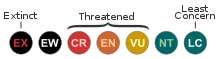
IUCN Red List of Threatened Plants Status :
| Related Plants
|
| Latin Name | Common Name | Habit | Height | Hardiness | Growth | Soil | Shade | Moisture | Edible | Medicinal | Other |
| Alnus acuminata | Alder | Tree | 25.0 |
10-12
| F | LMH | SN | M | 0 | 2 | 3 |
| Alnus cordata | Italian Alder | Tree | 25.0 |
5-9
| F | MH | SN | DMWe | 0 | 0 | 4 |
| Alnus glutinosa | Alder, European alder , Common Alder, Black Alder | Tree | 25.0 |
3-7
| F | MH | SN | MWe | 0 | 3 | 5 |
| Alnus hirsuta | | Tree | 18.0 |
3-7
| | MH | SN | MWe | 0 | 0 | 2 |
| Alnus incana | Grey Alder, Speckled alder, Thinleaf alder, White Alder | Tree | 18.0 |
2-6
| F | MH | SN | DMWe | 1 | 0 | 3 |
| Alnus jorullensis | Mexican alder, Evergreen Alder | Tree | 25.0 |
7-12
| F | LMH | SN | MWe | 0 | 0 | 3 |
| Alnus maritima | Seaside Alder, Beach Alder | Tree | 9.0 |
3-7
| M | MH | N | MWe | 0 | 0 | 3 |
| Alnus maximowiczii | | Tree | 9.0 |
4-8
| | MH | SN | MWe | 0 | 0 | 2 |
| Alnus nepalensis | Nepalese Alder | Tree | 22.0 |
8-11
| F | MH | SN | MWe | 0 | 1 | 3 |
| Alnus nitida | West Himalayan Alder | Tree | 30.0 |
7-10
| | MH | SN | DMWe | 0 | 1 | 3 |
| Alnus rhombifolia | White Alder | Tree | 12.0 |
8-11
| F | MH | SN | MWe | 1 | 2 | 2 |
| Alnus rubra | Red Alder, Oregon Alder | Tree | 20.0 |
6-8
| F | MH | SN | MWe | 2 | 2 | 4 |
| Alnus rugosa | Speckled Alder | Tree | 22.0 |
2-6
| F | MH | SN | MWe | 0 | 2 | 3 |
| Alnus serrulata | Smooth Alder, Hazel alder | Shrub | 4.5 |
3-9
| | MH | N | MWe | 0 | 2 | 2 |
| Alnus sinuata | Sitka Alder | Shrub | 4.0 |
2-9
| F | MH | SN | MWe | 1 | 1 | 3 |
| Alnus tenuifolia | Mountain Alder, Thinleaf alder | Tree | 9.0 |
5-7
| F | MH | SN | MWe | 1 | 2 | 3 |
| Alnus viridis crispa | American Green Alder | Shrub | 3.0 |
4-8
| | MH | SN | MWe | 1 | 2 | 3 |
|
Growth: S = slow M = medium F = fast. Soil: L = light (sandy) M = medium H = heavy (clay). pH: A = acid N = neutral B = basic (alkaline). Shade: F = full shade S = semi-shade N = no shade. Moisture: D = dry M = Moist We = wet Wa = water.
Now available:
Food Forest Plants for Mediterranean Conditions
350+ Perennial Plants For Mediterranean and Drier Food Forests and Permaculture Gardens.
[Paperback and eBook]
This is the third in Plants For A Future's series of plant guides for food forests tailored to
specific climate zones. Following volumes on temperate and tropical ecosystems, this book focuses
on species suited to Mediterranean conditions—regions with hot, dry summers and cool, wet winters,
often facing the added challenge of climate change.
Read More
Expert comment
Author
(Thunb.)Steud.
Botanical References
1158200
Links / References
For a list of references used on this page please go here
Readers comment
© 2010, Plants For A Future. Plants For A Future is a charitable company limited by guarantee, registered in England and Wales. Charity No. 1057719, Company No. 3204567.