Translate this page:
Summary
Physical Characteristics

 Agrimonia pilosa is a PERENNIAL growing to 0.6 m (2ft). It is in flower from June to August, and the seeds ripen from August to September. The species is hermaphrodite (has both male and female organs) and is pollinated by Bees, flies. The plant is self-fertile.
Suitable for: light (sandy), medium (loamy) and heavy (clay) soils. Suitable pH: mildly acid, neutral and basic (mildly alkaline) soils. It can grow in semi-shade (light woodland) or no shade. It prefers dry or moist soil.
UK Hardiness Map
US Hardiness Map
Synonyms
A. dahurica.
Plant Habitats
Cultivated Beds;
Edible Uses
Edible Parts: Leaves Seed
Edible Uses:
Young leaves - cooked[177]. Seed - dried and ground into a meal[179]. Mixed with noodles[177].
References More on Edible Uses
Medicinal Uses
Plants For A Future can not take any responsibility for any adverse effects from the use of plants. Always seek advice from a professional before using a plant medicinally.
Analgesic Antibacterial Antiinflammatory Antipyretic Astringent Cardiotonic Dysentery Haemostatic
Hypoglycaemic Vasoconstrictor Vermifuge
The stems and the leaves are analgesic, antibacterial, anti-inflammatory, antipyretic, astringent, cardiotonic, haemostatic, hypoglycaemic, taenicide and vasoconstrictor[147, 176, 218, 279]. The plant is used in the treatment of abdominal pain, sore throat, headaches, bloody and mucoid dysentery, bloody and white discharge and heat-stroke[147, 272]. It is used in Korea to treat parasitic worms, bois and ezema[279]. The leaves are rich in vitamin K and are used to promote blood clotting and control bleeding[238]. The plant contains agrimonin, this is haemostatic, cardiotonic and lowers blood sugar, though it can also produce palpitations and congestion of the blood in the face[176]. The root ia astringent, diuretic and tonic[272]. It is used in the treatment of coughs, colds, tuberculosis and diarrhoea[272]. The root juice is used in the treatment of peptic ulcer[272]. A paste of the root is used to treat stomach ache[272]. Plants are harvested as they come into flower and can be dried for later use[238].
References More on Medicinal Uses
The Bookshop: Edible Plant Books
Our Latest books on Perennial Plants For Food Forests and Permaculture Gardens in paperback or digital formats.

Edible Tropical Plants
Food Forest Plants for Hotter Conditions: 250+ Plants For Tropical Food Forests & Permaculture Gardens.
More

Edible Temperate Plants
Plants for Your Food Forest: 500 Plants for Temperate Food Forests & Permaculture Gardens.
More

More Books
PFAF have eight books available in paperback and digital formats. Browse the shop for more information.
Shop Now
Other Uses
References More on Other Uses
Cultivation details
Succeeds in most soils, preferring a calcareous soil[200]. Prefers a sunny position[200]. The ssp. A. pilosa japonica. (Miq.)Nakai. is used medicinally in China[176].
References Carbon Farming Information and Carbon Sequestration Information
Temperature Converter
Type a value in the Celsius field to convert the value to Fahrenheit:
Fahrenheit:
The PFAF Bookshop
Plants For A Future have a number of books available in paperback and digital form. Book titles include Edible Plants, Edible Perennials, Edible Trees,Edible Shrubs, Woodland Gardening, and Temperate Food Forest Plants. Our new book is Food Forest Plants For Hotter Conditions (Tropical and Sub-Tropical).
Shop Now
Plant Propagation
Seed - can be sown in spring or autumn, either in pots in a cold frame or in situ. It usually germinates in 2 - 6 weeks at 13°c[133], though germination rates can be low, especially if the seed has been stored[244]. A period of cold stratification helps but is not essential. When grown in pots, prick out the seedlings when they are large enough to handle and plant them out in late spring or early summer. Division in autumn[200]. Very easy, the divisions can be planted straight out into their permanent positions.
Other Names
If available other names are mentioned here
Native Range
TEMPERATE ASIA: Russian Federation-Western Siberia (Western Siberia), Russian Federation-Eastern Siberia (Eastern Siberia), Mongolia, Russian Federation-Far East (Far East (north)), China (throughout), Japan (Hokkaidô, Honshu, Kyushu, Shikoku), Korea, South TROPICAL ASIA: Bhutan, India, Nepal, Myanmar, Thailand (north), Vietnam (north) EUROPE: Finland, Poland, Russian Federation (European part), Ukraine, Romania
Weed Potential
Right plant wrong place. We are currently updating this section.
Please note that a plant may be invasive in one area but may not in your area so it's worth checking.
Conservation Status
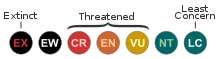
IUCN Red List of Threatened Plants Status :
Growth: S = slow M = medium F = fast. Soil: L = light (sandy) M = medium H = heavy (clay). pH: A = acid N = neutral B = basic (alkaline). Shade: F = full shade S = semi-shade N = no shade. Moisture: D = dry M = Moist We = wet Wa = water.
Now available:
Food Forest Plants for Mediterranean Conditions
350+ Perennial Plants For Mediterranean and Drier Food Forests and Permaculture Gardens.
[Paperback and eBook]
This is the third in Plants For A Future's series of plant guides for food forests tailored to
specific climate zones. Following volumes on temperate and tropical ecosystems, this book focuses
on species suited to Mediterranean conditions—regions with hot, dry summers and cool, wet winters,
often facing the added challenge of climate change.
Read More
Expert comment
Author
Ledeb.
Botanical References
5058200
Links / References
For a list of references used on this page please go here
Readers comment
© 2010, Plants For A Future. Plants For A Future is a charitable company limited by guarantee, registered in England and Wales. Charity No. 1057719, Company No. 3204567.