 |
|
|
 |
| http://commons.wikimedia.org/wiki/User:Pethan |
Translate this page:
Summary
Physical Characteristics

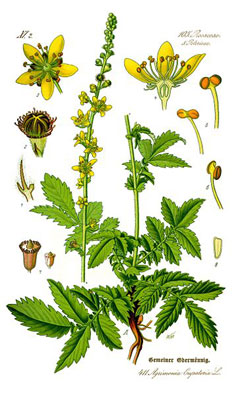
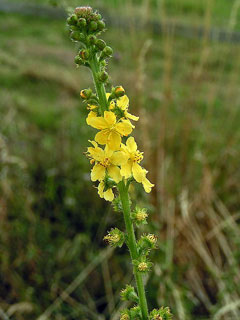
 Agrimonia eupatoria is a PERENNIAL growing to 0.6 m (2ft) by 0.5 m (1ft 8in).
It is not frost tender. It is in flower from June to August, and the seeds ripen from August to September. The species is hermaphrodite (has both male and female organs) and is pollinated by Bees, flies. The plant is self-fertile.
Suitable for: light (sandy), medium (loamy) and heavy (clay) soils. Suitable pH: mildly acid, neutral and basic (mildly alkaline) soils and can grow in very alkaline soils.
It can grow in semi-shade (light woodland) or no shade. It prefers dry or moist soil.
UK Hardiness Map
US Hardiness Map
Synonyms
Agrimonia odorata.
Plant Habitats
Meadow; Hedgerow; East Wall. In.
Edible Uses
Edible Parts: Seed
Edible Uses: Tea
A refreshing tea is made from the fresh or dried leaves, flowers and stems[2, 183]. It can be drunk hot or cold[183]. It was formerly very popular either on its own or added to China tea, having a peculiar delicacy and aroma[4]. Seed - dried and ground into a meal. A famine food, used when all else fails[179]. This report could refer to A. pilosa. Ledeb. (q.v.).
References More on Edible Uses
Medicinal Uses
Plants For A Future can not take any responsibility for any adverse effects from the use of plants. Always seek advice from a professional before using a plant medicinally.
Antiaphonic Antidiarrhoeal Astringent Bach Blood purifier Cholagogue Diuretic Hepatic
Skin Tonic Vulnerary
Medical part: the flowering plant cut an inch or 2 above the ground and dried. Agrimony has long been used as a popular domestic herbal remedy[4]. An astringent and mildly bitter herb, it is a helpful remedy for diarrhoea and a gentle tonic for the digestion as a whole[254]. The whole plant is antiaphonic, astringent, blood purifier, cholagogue, diuretic, tonic and vulnerary. It contains up to 5% tannin, which has a strongly astringent effect[244]. When taken internally, an infusion of the plant has a great reputation in the treatment of jaundice and other complaints of the liver[4, 7, 9, 13, 14, 21, 165], it is also used to treat diarrhoea and as a gargle for sore throats[244]. Externally, a strong decoction is used to treat wounds, skin problems, haemorrhoids etc[4, 7, 238, 244]. The plant is harvested in late spring and early summer and can be dried for later use[9]. The plant is used in Bach flower remedies - the keywords for prescribing it are 'Mental torture' and 'Worry, concealed from others'[209]. Contraindicated for hypersensitivity to plants from rose family. Contraindicated in pregnancy and during lactation[301]. The German Commission E Monographs, a therapeutic guide to herbal medicine approve Agrimonia eupatoria for diarrhoea, inflammation of the skin, inflammation of the mouth and pharynx (see [302] for critics of commission E).
References More on Medicinal Uses
The Bookshop: Edible Plant Books
Our Latest books on Perennial Plants For Food Forests and Permaculture Gardens in paperback or digital formats.
Edible Tropical Plants
Food Forest Plants for Hotter Conditions: 250+ Plants For Tropical Food Forests & Permaculture Gardens.
More
Edible Temperate Plants
Plants for Your Food Forest: 500 Plants for Temperate Food Forests & Permaculture Gardens.
More
More Books
PFAF have eight books available in paperback and digital formats. Browse the shop for more information.
Shop Now
Other Uses
Dye
A yellow dye is obtained from the root[1, 24, 57] - from whole plant according to other report,[4, 46] - and from the leaves according to another[148]. Harvested in autumn[115], the yellow becomes deeper the later that the plant is harvested[4].
Special Uses
Scented Plants
References More on Other Uses
Cultivation details
Easily grown in most soils[133, 200], preferring a calcareous soil[13]. Thrives in a dry lightly shaded position[14], though it prefers full sun[238]. Plants usually self-sow quite freely when growing in a suitable position[238]. The seeds are contained in burrs that can easily attach themselves to clothing or animal's fur, thus transporting them to a new area where they can germinate and grow[244]. The cultivar 'Sweet scented' is popular in France for making tea because the whole plant is sweet scented and the flowers have a spicy apricot-like fragrance[183].
References Carbon Farming Information and Carbon Sequestration Information
Temperature Converter
Type a value in the Celsius field to convert the value to Fahrenheit:
Fahrenheit:
The PFAF Bookshop
Plants For A Future have a number of books available in paperback and digital form. Book titles include Edible Plants, Edible Perennials, Edible Trees,Edible Shrubs, Woodland Gardening, and Temperate Food Forest Plants. Our new book is Food Forest Plants For Hotter Conditions (Tropical and Sub-Tropical).
Shop Now
Plant Propagation
Seed - can be sown in spring or autumn, either in pots in a cold frame or in situ. It usually germinates in 2 - 6 weeks at 13°c[133], though germination rates can be low, especially if the seed has been stored[244]. A period of cold stratification helps but is not essential. When grown in pots, prick out the seedlings when they are large enough to handle and plant them out in late spring or early summer. Division in autumn[200]. Very easy, the divisions can be planted straight out into their permanent positions.
Other Names
If available other names are mentioned here
Native Range
TEMPERATE ASIA: Afghanistan, Cyprus, Iran, Iraq, Israel, Lebanon, Syria, Turkey, Russian Federation-Ciscaucasia (Ciscaucasia), Armenia, Azerbaijan, Georgia, Russian Federation (Dagestan), Russian Federation-Western Siberia (Western Siberia (south)), Kazakhstan (southeast), Kyrgyzstan, Tajikistan, Turkmenistan, China (Xinjiang Uygur Zizhiqu) EUROPE: Denmark, Finland, United Kingdom, Ireland, Norway, Sweden, Austria, Belgium, Switzerland, Czech Republic, Germany, Hungary, Netherlands, Poland, Slovakia, Russian Federation (European part), Belarus, Estonia, Lithuania, Latvia, Moldova, Ukraine (incl. Krym), Albania, Bulgaria, Greece, Croatia, Italy (incl. Sardinia, Sicily), North Macedonia, Montenegro, Romania, Serbia, Slovenia, Spain (incl. Baleares), France (incl. Corsica), Portugal AFRICA: Spain (Canarias), Portugal (Madeira Islands), Algeria (north), Morocco, Tunisia
Weed Potential
Right plant wrong place. We are currently updating this section.
Please note that a plant may be invasive in one area but may not in your area so it's worth checking.
Conservation Status
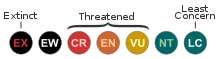
IUCN Red List of Threatened Plants Status :
Growth: S = slow M = medium F = fast. Soil: L = light (sandy) M = medium H = heavy (clay). pH: A = acid N = neutral B = basic (alkaline). Shade: F = full shade S = semi-shade N = no shade. Moisture: D = dry M = Moist We = wet Wa = water.
Now available:
Food Forest Plants for Mediterranean Conditions
350+ Perennial Plants For Mediterranean and Drier Food Forests and Permaculture Gardens.
[Paperback and eBook]
This is the third in Plants For A Future's series of plant guides for food forests tailored to
specific climate zones. Following volumes on temperate and tropical ecosystems, this book focuses
on species suited to Mediterranean conditions—regions with hot, dry summers and cool, wet winters,
often facing the added challenge of climate change.
Read More
Expert comment
Author
L.
Botanical References
17200
Links / References
For a list of references used on this page please go here
Readers comment