 |
|
(c) Jan Kola |
 |
| http://www.flickr.com/photos/89972501@N00/158904375 |
Translate this page:
Summary
Bloom Color: Pink, White.
Main Bloom Time: Early summer. Form: Irregular or sprawling, Upright or erect.
Physical Characteristics

 Actinidia kolomikta is a deciduous Climber growing to 10 m (32ft 10in) at a medium rate.
See above for USDA hardiness. It is hardy to UK zone 4 and is not frost tender. It is in flower in June, and the seeds ripen from October to November. The species is dioecious (individual flowers are either male or female, but only one sex is to be found on any one plant so both male and female plants must be grown if seed is required). and is pollinated by Bees, insects. The plant is not self-fertile.
Suitable for: light (sandy), medium (loamy) and heavy (clay) soils. Suitable pH: mildly acid, neutral and basic (mildly alkaline) soils. It can grow in semi-shade (light woodland) or no shade. It prefers moist soil.
UK Hardiness Map
US Hardiness Map
Synonyms
Kolomikta mandschurica. Regel. Trochostigma kolomikta. Rupr.
Plant Habitats
Woodland Garden Sunny Edge; Dappled Shade; South Wall. By. West Wall. By.
Edible Uses
Edible Parts: Fruit Leaves
Edible Uses:
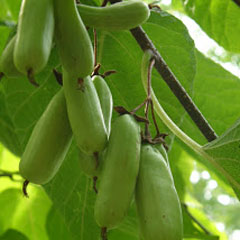
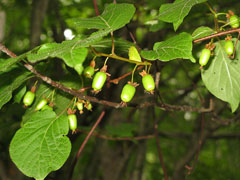
Fruit - raw, cooked or dried for later use[1, 3, 105, 183]. Sweet and agreeable[1, 74]. It contains up to 5 times the vitamin C of blackcurrants[74]. The ovoid fruit is hairless and pale orange when fully ripe and is up to 25mm in diameter[266]. It contains a number of small seeds, but these are easily eaten with the fruit[K]. Young leaves - cooked[105, 177]. Used as a potherb or added to soups[183]. One report suggests the its Content of vitamin C in berries is 1520mg in 100grams of fruit.
References More on Edible Uses
Medicinal Uses
Plants For A Future can not take any responsibility for any adverse effects from the use of plants. Always seek advice from a professional before using a plant medicinally.
Vitamin C
None known
References More on Medicinal Uses
The Bookshop: Edible Plant Books
Our Latest books on Perennial Plants For Food Forests and Permaculture Gardens in paperback or digital formats.
Edible Tropical Plants
Food Forest Plants for Hotter Conditions: 250+ Plants For Tropical Food Forests & Permaculture Gardens.
More
Edible Temperate Plants
Plants for Your Food Forest: 500 Plants for Temperate Food Forests & Permaculture Gardens.
More
More Books
PFAF have eight books available in paperback and digital formats. Browse the shop for more information.
Shop Now
Other Uses
References More on Other Uses
Cultivation details
Landscape Uses:Arbor. Prefers a sound loamy neutral soil[11, 200]. Succeeds in semi-shade but full sun is best for fruit production[200]. Another report says that the plant prefers semi-shade[160]. Prefers a sheltered position[200]. When grown in a sunny position the leaves normally develop a strong variegation[219]. Prefers a neutral soil, plants become more variegated when they are grown in a limy soil[200]. Very cold resistant, dormant plants are hardy to at least -30°c but new growth in spring can be cut back by late frosts[74, 160, 200]. Plants grow well on a wall and can also be grown into trees[1]. Cats are very fond of this plant and can damage it by scratching it etc[1, 3, 200]. A very ornamental plant[1], there are some named varieties that have been selected for their edible fruit[183, 200]. The form most often cultivated in this country is a male and it is quite possible that all the plants grown here have been developed from a single clone[219]. Often confused with the closely related A. polygama, but it can be distinguished by its leaves which are heart-shaped at the base whilst those of A. polygama are tapered[219]. Fruits are produced on second year wood or on fruit spurs on older wood[126], any pruning is best carried out in the winter[219]. The flowers are sweetly scented[184]. This is a climbing plant, supporting itself by twining around branches etc[200]. Plants in this genus are notably resistant to honey fungus[200]. Dioecious. Male and female plants must be grown if seed is required. Special Features:Not North American native, Fragrant flowers, Attractive flowers or blooms. The plant is heat tolerant in zones 12 through 1. (Plant Hardiness Zones show how well plants withstand cold winter temperatures.
Plant Heat Zones show when plants would start suffering from the heat.
The Plant Heat Zone map is based on the number of "heat days" experienced in a given area where the temperature climbs to over 86 degrees F (30°C).
At this temperature, many plants begin to suffer physiological damage. Heat Zones range from 1 (no heat days) to 12 (210 or more heat days).
For example Heat Zone. 11-1 indicates that the plant is heat tolerant in zones 11 through 1.) For polyculture design as well as the above-ground architecture (form - tree, shrub etc. and size shown above) information on the habit and root pattern is also useful and given here if available. Woody. Growth habit is a single or multiple shooting vine from a crown [1-2]. In garden design, as well as the above-ground architecture of a plant, root structure considerations help in choosing plants that work together for their optimal soil requirements including nutrients and water. The root pattern is branching: a heart root, dividing from the crown into several primary roots going down and out [2-1].
References Carbon Farming Information and Carbon Sequestration Information
Temperature Converter
Type a value in the Celsius field to convert the value to Fahrenheit:
Fahrenheit:
The PFAF Bookshop
Plants For A Future have a number of books available in paperback and digital form. Book titles include Edible Plants, Edible Perennials, Edible Trees,Edible Shrubs, Woodland Gardening, and Temperate Food Forest Plants. Our new book is Food Forest Plants For Hotter Conditions (Tropical and Sub-Tropical).
Shop Now
Plant Propagation
Seed - sow spring in a greenhouse[133]. It is probably best if the seed is given 3 months stratification[113], either sow it in a cold frame as soon as it is ripe in November or as soon as it is received. Fresh seed germinates in 2 - 3 months at 10°c, stored seed can take longer[133]. When they are large enough to handle, prick the seedlings out into individual pots and grow them on in light shade in the greenhouse for at least their first winter. When the plants are 30cm or more tall, plant them out into their permanent positions in late spring or early summer, after the last expected frosts[K]. Most seedlings are male[126]. The seedlings are subject to damping off, they must be kept well ventilated[113]. Cuttings of softwood as soon as ready in spring in a frame[K]. Cuttings of half-ripe wood, July/August in a frame. Very high percentage[113]. Cuttings of ripe wood, October/November in a frame.
Other Names
If available other names are mentioned here
Arctic Beauty, Kolomikta, Aktinidija, Kishmish, Manchurian gooseberry, Miyama-mata-tabi [1-4].
Native Range
TEMPERATE ASIA: Amur, China, Gansu Sheng, Hebei Sheng, Heilongjiang Sheng, Hokkaidô, Honshu, Hubei Sheng, Japan, Jiangsu Sheng, Jilin Sheng, Korea, Korea, Kurile Islands, Liaoning Sheng, North, Primorye, Sakhalin, Shaanxi Sheng, Shanxi Sheng, Sichuan Sheng, South, Yunnan Sheng,Russian Federation.
Weed Potential
Right plant wrong place. We are currently updating this section.
Please note that a plant may be invasive in one area but may not in your area so it's worth checking.
Conservation Status
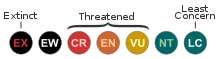
IUCN Red List of Threatened Plants Status : This taxon has not yet been assessed.
Growth: S = slow M = medium F = fast. Soil: L = light (sandy) M = medium H = heavy (clay). pH: A = acid N = neutral B = basic (alkaline). Shade: F = full shade S = semi-shade N = no shade. Moisture: D = dry M = Moist We = wet Wa = water.
Now available:
Food Forest Plants for Mediterranean Conditions
350+ Perennial Plants For Mediterranean and Drier Food Forests and Permaculture Gardens.
[Paperback and eBook]
This is the third in Plants For A Future's series of plant guides for food forests tailored to
specific climate zones. Following volumes on temperate and tropical ecosystems, this book focuses
on species suited to Mediterranean conditions—regions with hot, dry summers and cool, wet winters,
often facing the added challenge of climate change.
Read More
Expert comment
Author
(Maxim.&Rupr.)Maxim.
Botanical References
1158200
Links / References
For a list of references used on this page please go here
Readers comment